
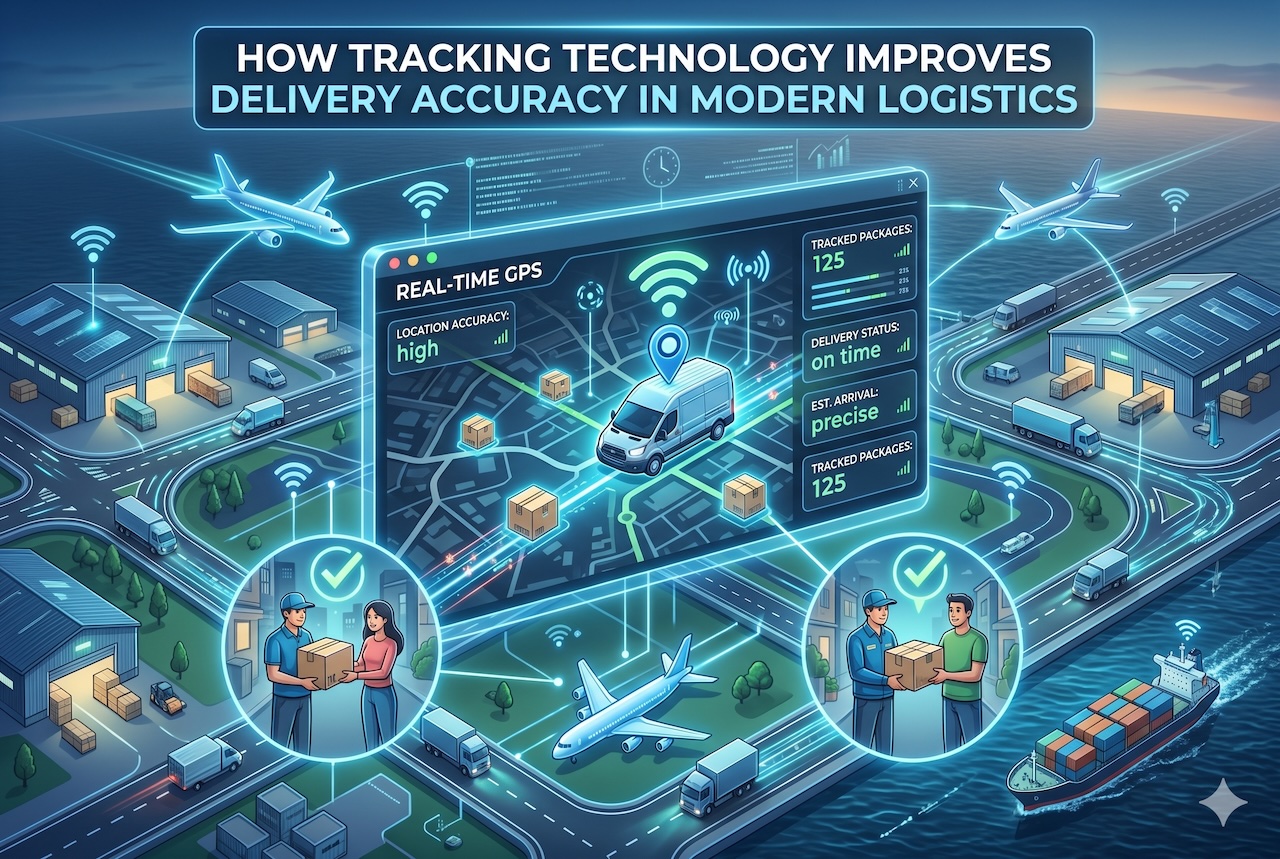
Delivery accuracy has become one of the most important measures of logistics performance. Customers expect orders to arrive on time, at the right location, in the right condition, and with clear updates along the way. For businesses, even small delivery errors can lead to lost time, higher costs, customer complaints, and damaged trust.
Modern logistics teams are responding by using tracking technology to make delivery operations more visible and reliable. From warehouse scans to freight status updates, tracking tools help businesses understand where goods are, what stage they are in, and whether action is needed before a problem affects the customer.
For companies managing inventory, dispatch, and fulfillment, a warehouse management software can provide real-time stock visibility by linking warehouse activity to more accurate delivery planning.
Delivery accuracy begins long before a vehicle reaches the customer. It starts with knowing exactly what is picked, packed, loaded, and shipped.
Why Delivery Accuracy Is Harder to Maintain
Modern logistics has become more complex. Businesses often manage multiple warehouses, suppliers, carriers, delivery partners, order channels, and customer expectations simultaneously. A single delivery may pass through several checkpoints before reaching its destination.
Each handoff creates a chance for error. An item may be picked incorrectly, packed with the wrong order, loaded onto the wrong vehicle, delayed at a transfer point, or delivered to the wrong address.
| Logistics Challenge | Accuracy Risk |
|---|---|
| High order volume | More chances for picking or packing errors |
| Multiple carriers | Less control across the full delivery journey |
| Manual data entry | Higher risk of incorrect information |
| Split shipments | Harder tracking across several packages |
| Multi-warehouse operations | More complex inventory visibility |
| International freight | More checkpoints, documents, and delays |
Without tracking technology, teams often find out about delivery problems too late. By then, the customer may already be affected.
Tracking Technology Creates End-to-End Visibility
The biggest advantage of tracking technology is visibility. Logistics teams can monitor goods as they move through receiving, storage, picking, packing, dispatch, transit, and delivery.
This helps teams identify issues earlier. If an order has been picked but not packed, staff can investigate. If goods are delayed at a warehouse, managers can adjust priorities. If a shipment is stuck in transit, customer service teams can provide a proactive update.
Tracking technology may include:
| Technology | How It Improves Accuracy |
|---|---|
| Barcode scanning | Confirms items at each checkpoint |
| QR codes | Speeds up identification and status updates |
| RFID tags | Tracks goods without manual scanning |
| GPS tracking | Shows vehicle or shipment location |
| Digital proof of delivery | Confirms successful handover |
| Inventory dashboards | Shows stock movement and availability |
The more reliable the tracking data, the easier it is to prevent small mistakes from becoming larger delivery failures.
Better Warehouse Tracking Reduces Fulfillment Errors
Many delivery problems begin inside the warehouse. If the wrong item is picked or the wrong quantity is packed, the delivery will be inaccurate before it even leaves the building.
Tracking technology improves warehouse accuracy by making each step verifiable. Staff can scan items during receiving, storage, picking, packing, and dispatch. The system can flag mismatches before the order moves forward.
For example, if a picker scans the wrong product, the system can alert them immediately. If an order requires two units but only one is packed, the system can prevent dispatch until the issue is fixed.
A delivery is only as accurate as the warehouse process behind it.
This is why warehouse visibility is central to modern logistics. Accurate stock records, clear item locations, and scan-based workflows reduce guesswork and help teams fulfill orders correctly the first time.
Freight Tracking Improves Coordination Across Long-Distance Shipments
Delivery accuracy is not only about local deliveries. For businesses moving goods across regions or borders, freight coordination plays a major role.
Freight shipments often involve ports, terminals, customs, carriers, warehouses, and final-mile providers. If visibility is poor, businesses may struggle to know where goods are or when they will arrive.
Modern freight forwarding management processes use smarter shipment coordination to improve communication across these moving parts. Tracking updates can help businesses prepare for arrivals, manage customer expectations, and reduce delays caused by missing information.
| Freight Tracking Benefit | Business Impact |
|---|---|
| Shipment status visibility | Fewer blind spots during transit |
| Estimated arrival updates | Better planning for receiving teams |
| Document tracking | Reduced customs and compliance delays |
| Carrier coordination | Smoother handoffs between partners |
| Exception alerts | Faster response to delays or disruptions |
When freight data is accurate, businesses can plan downstream operations more effectively. Receiving teams can prepare space, warehouse managers can schedule labor, and customer-facing teams can communicate with confidence.
Real-Time Updates Help Teams Act Faster
In logistics, timing matters. A delivery issue that is discovered early can often be fixed. A problem discovered after the customer complains is much harder to manage.
Real-time tracking updates help teams respond quickly. If a shipment is delayed, the business can adjust delivery promises. If inventory is not available, the warehouse can reroute the order from another location. If a driver is approaching the wrong destination, dispatch teams can intervene before the delivery fails.
This speed is especially important for industries handling time-sensitive goods, such as retail, healthcare, manufacturing, food distribution, and replacement parts.
Real-time tracking also improves internal communication. Instead of different teams relying on separate spreadsheets, emails, and phone calls, everyone can work from the same delivery status.
Proof of Delivery Strengthens Accountability
Delivery accuracy does not end when goods arrive. Businesses also need confirmation that the delivery was completed correctly.
Digital proof of delivery can include a recipient's name, signature, timestamp, photo, GPS location, or delivery notes. These records help confirm that an item reached its intended destination and was properly handed over.
This is useful when resolving disputes. If a customer claims an order did not arrive, the business can check the delivery record. If goods were damaged, notes and photos can support the investigation. If a delivery went to the wrong location, GPS data can help identify what happened.
| Proof of Delivery Record | Why It Matters |
|---|---|
| Timestamp | Confirms delivery time |
| Signature | Confirms recipient handover |
| GPS location | Verifies delivery address |
| Photo evidence | Shows package placement or condition |
| Driver notes | Captures exceptions or access issues |
Accountability improves when every handoff is documented.
Tracking Data Improves Forecasting and Planning
Tracking technology does more than monitor individual shipments. It also creates data that businesses can use to improve future performance.
Logistics managers can review delivery success rates, common points of delay, carrier performance, warehouse processing times, and order accuracy trends. These insights help businesses identify where accuracy problems are most likely to occur.
For example, data may show that one warehouse has more picking errors than others, one carrier has frequent late deliveries, or certain delivery routes experience regular delays. With this information, managers can take targeted action instead of relying on assumptions.
| Metric | What It Reveals |
|---|---|
| Order accuracy rate | How often do customers receive the correct goods |
| On-time delivery rate | Whether delivery promises are being met |
| Picking error rate | Warehouse fulfillment accuracy |
| Transit delay frequency | Carrier or route performance |
| Failed delivery rate | Address, access, or communication issues |
| Return reasons | Patterns linked to delivery or fulfillment errors |
Better data leads to better decisions.
Customer Communication Becomes More Reliable
Customers want visibility. They want to know when their order has shipped, where it is, and when it will arrive. Poor communication can make even a minor delay feel worse.
Tracking technology improves the customer experience by enabling clearer updates. Businesses can send shipment confirmations, estimated delivery windows, and delay alerts. This reduces uncertainty and lowers the number of “Where is my order?” inquiries.
Accurate communication also protects trust. Customers are often more understanding of delays when they receive timely and honest updates. What frustrates them most is silence or conflicting information.
Automation Reduces Human Error
Manual logistics processes create opportunities for mistakes. Staff may type a tracking number incorrectly, update the wrong order status, forget to notify a customer, or miss a delivery exception.
Automation reduces these risks by connecting tracking events to system updates. When an item is scanned, the order status can update automatically. When a shipment reaches a checkpoint, the system can trigger a notification. When a delivery is completed, proof of delivery can be stored against the order record.
This reduces repetitive admin and helps teams focus on exception management rather than routine updates.
Tracking Technology Is Now a Competitive Advantage
In modern logistics, delivery accuracy is not only an operational goal. It is a competitive advantage.
Businesses that know where goods are, confirm each handoff, communicate clearly, and respond quickly to issues can provide a more reliable service. They also reduce the hidden costs of mistakes, including re-deliveries, refunds, customer support time, lost inventory, and damaged relationships.
Tracking technology helps create that reliability. It connects warehouse activity, freight movement, delivery execution, and customer communication into a more transparent process.
As logistics networks become more complex, accuracy will depend on visibility. Companies that invest in better tracking will be better prepared to deliver the right item, to the right place, at the right time, with fewer surprises.
Featured Image generated by Google Gemini.
Share this post
Leave a comment
All comments are moderated. Spammy and bot submitted comments are deleted. Please submit the comments that are helpful to others, and we'll approve your comments. A comment that includes outbound link will only be approved if the content is relevant to the topic, and has some value to our readers.
Comments (0)
No comment