
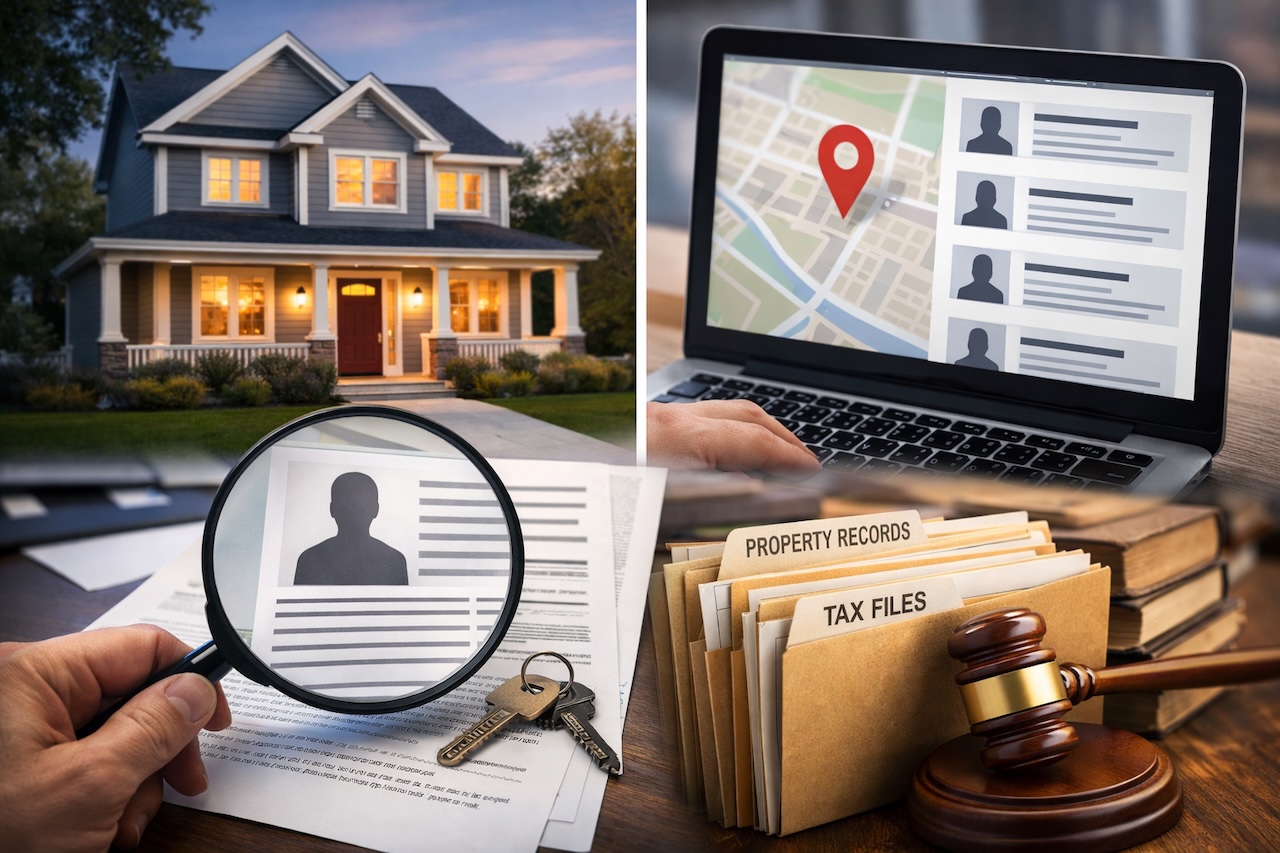
You can find out who lives at a certain address online by using a reverse address lookup tool, looking at public county tax assessor records, or searching state voter registration databases.
A physical address search is different from an IP address search because it looks up public records to find out who owns a property, who lives there now, and who lived there in the past. An IP address search only gives you a general area, like a city or zip code. IP addresses alone cannot tell you the exact house number or who lives there; you need to use public record databases.
What does a Reverse Address Lookup do?
A reverse address lookup is a type of investigation that lets you search data by address. It can help you learn more about a property and the people who live there. You don't look up a person's name to find their address; instead, you look up the address to find out who lives there.
These databases combine publicly available information from sources at the local, state, and federal levels.
What a full reverse address lookup can tell you:
- Current and Past Residents: The names of people who live at the address, including tenants, owners, and family members.
- History of Property Ownership: deeds, dates of sale, and prices from previous sales.
- Financial and Tax Records: The estimated value of the property, its parcel numbers, and its history of property taxes.
- Contact Information: Phone numbers and email addresses of the people who live there.
- Demographic Data: The age and voter registration status of the people who live there.
How to Conduct a Reverse Address Search Effectively?
Finding accurate resident data requires knowing exactly which databases to query. When you search for something on a search engine, you often get messy or old results. Instead, focus on certain public and private record sources. These are the four most trustworthy ways:
Search County Assessor Websites
Most local governments provide free online access to property tax records. By visiting your local county tax assessor or property appraiser's website, you can input a street address to uncover the legal owner of the property. This is a highly accurate and legally verified method. However, tax records identify the legal owner or property management company, meaning they will not necessarily show you the current renters occupying the space.
Use specialized public record aggregators
The best way to get the most complete data is through public records aggregators. These platforms automatically gather billions of pieces of information from voter registrations, utility databases, census records, and court documents. By searching for data by address, you can quickly make detailed reports on current residents, past tenants, and their contact information, like phone numbers. This is the quickest way to go from owning a home to living in it every day.
Look in digital postal directories
You can use traditional digital directories, like the modern versions of the Whitepages, to check if a certain name is still linked to a certain house number and street. They aren't as complete as an aggregator tool, but they are a good, low-effort way to quickly check basic residency.
Use Search Engine Dorking
You can use advanced search operators, also known as Google Dorks, to find mentions of addresses in publicly indexed documents like local news stories, minutes from neighborhood association meetings, and municipal PDFs. Searching for the exact address in quotes (for example, "123 Main Street" AND "tenant") can bring up specific people connected to the property that aren't in regular databases.
How to Use Address Lookups the Right Way
When you do online research and use OSINT, it's normal to look at public records. Here are some common and legal reasons to find out where someone lives:
- Before you make an offer on a house, you should learn more about real estate. This means learning about the area, finding out who owns the property, and looking up its tax history.
- Make sure you know who the person is and where they are before you buy or sell something big online. This is a key step in modern cybersecurity and fraud prevention.
- Get in touch with an old friend, family member, or coworker by finding their last address.
- Fraud Prevention: Making sure that a customer or business partner really lives at the address they give you and that it is where they say it is.
- Genealogy is the study of where your ancestors lived and where they lived.
Is it legal and private to do a reverse address lookup?
Yes, it is legal to do a reverse address lookup. All of the information that comes up in these searches comes from public records. In the US, laws like the Freedom of Information Act require that some government records, such as property deeds, tax assessments, and voter registrations, be open to the public.
But there are strict laws about how you can use this information.
The Fair Credit Reporting Act says that standard public record aggregators and reverse lookup tools are not Consumer Reporting Agencies. So, you can't use the information you find to make decisions about insurance underwriting, tenant screening, consumer credit, or hiring people.
Laws against harassment: It is against the law in both the state and the federal government to use public address data to stalk, harass, or scare people.
What could cause an address search to not find anything?
You could enter a real street address and not find anything about the people who live there. Most of the time, this happens for a few reasons:
- A limited liability company or a private trust could own the property. A lot of people use these legal entities to keep their names out of public records.
- Things that have changed recently: It takes time for public records to be changed. Finding a specific tenant isn't always as easy as a quick search. If they just moved in last week, they won’t show up in public databases or voter registries yet — those systems usually take a while to catch up.
- If it’s a brand-new building, there’s another hurdle: digital maps and tax offices might not have even registered the address yet. Plus, many people today are proactive about their privacy; if they’ve opted out of data broker sites, they simply won't appear in a standard search.
Summary: Safely Navigating Address Data
IP addresses are not street addresses: IP tools provide network locations, not specific house numbers. You must rely on public record databases for physical addresses.
Use the right tool for the job: County assessor sites are best for finding legal property owners, while dedicated reverse lookup tools are best for finding current renters and contact info.
Understand the limits: Corporate ownership, recent moves, and privacy opt-outs can occasionally obscure who lives at a specific property.
Respect privacy laws: Always ensure you are using public record data for legitimate, legal purposes. Never use non-FCRA-compliant data for employment or tenant screening.
Featured Image generated by ChatGPT.
Share this post
Leave a comment
All comments are moderated. Spammy and bot submitted comments are deleted. Please submit the comments that are helpful to others, and we'll approve your comments. A comment that includes outbound link will only be approved if the content is relevant to the topic, and has some value to our readers.
Comments (0)
No comment