
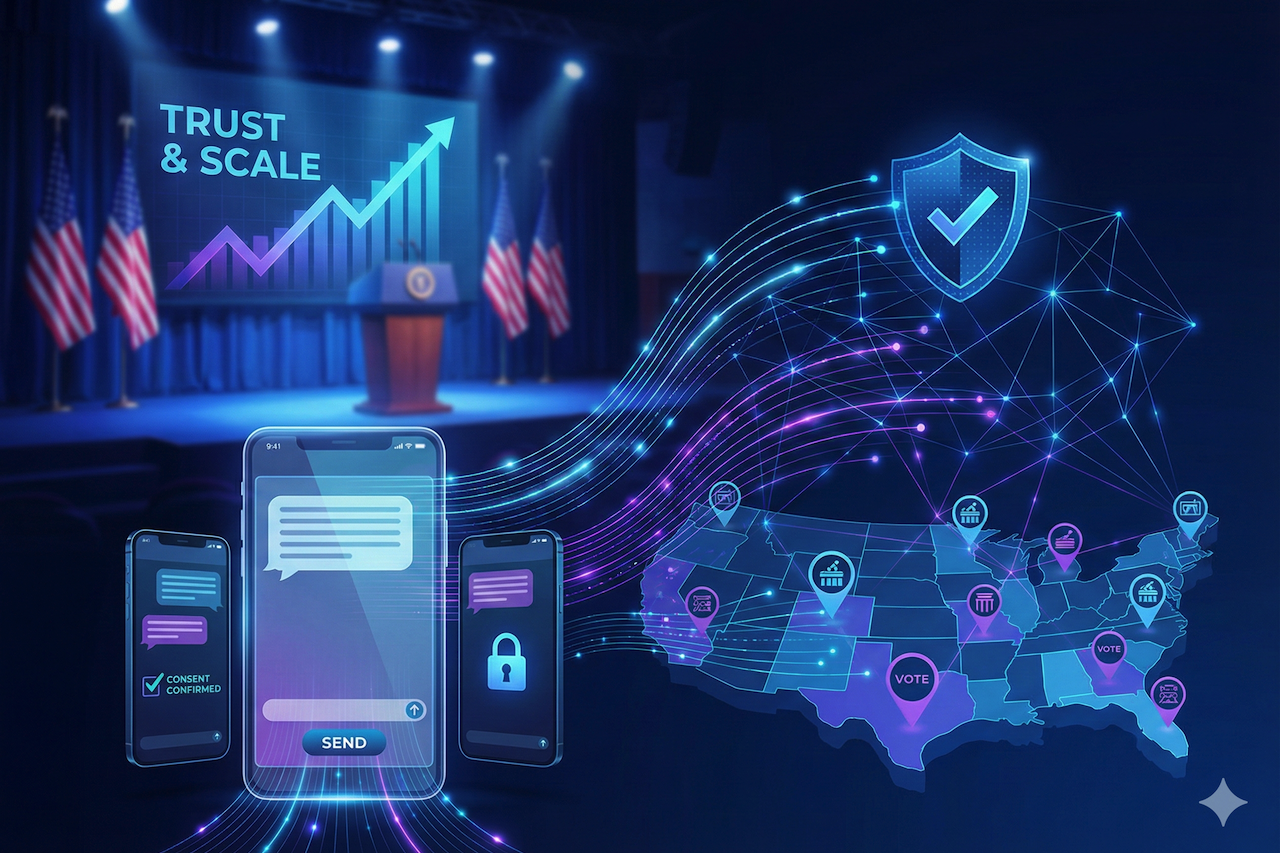
Political SMS outreach can win or lose voter trust in seconds. A single mistake in consent, security, or setup can lead to filtering, audits, or public backlash at the exact moment a campaign needs to reach its peak. This guide explains how campaigns can scale political SMS responsibly without sacrificing speed or effectiveness.
Why Political SMS Outreach Requires Higher Standards
Political SMS outreach faces stricter scrutiny than most other messaging programs. Carriers and regulators closely monitor consent quality, sender identity, and complaint rates, especially during election cycles.
Campaigns that approach SMS casually often experience blocked traffic or degraded delivery. Higher standards are not optional; they are essential for reliability and credibility.
Capturing Consent That Holds Up Under Review
Consent must be explicit, provable, and tied to a clear user action. Each phone number should be stored with its opt-in source, disclosure language, and timestamp.
Reused lists or unclear sign-up language increase complaints and raise red flags during audits. Strong consent records protect campaigns when questioned by carriers or regulators.
10DLC Registration And Sender Transparency
10DLC registration connects campaign identity to messaging behavior. Accurate use case descriptions and realistic sample messages reduce delays and the risk of rejection.
Messages should also clearly identify the sender in the opening line. Transparency builds trust with voters and reduces opt-out-driven filtering.
Writing Messages That Balance Persuasion And Compliance
Clear copy supports both engagement and compliance. Many campaign teams review political text message examples to understand how tone, disclosure, and opt-out language work together.
Effective messages plainly explain who is texting, why the voter is receiving the message, and what action is being requested. Clarity reduces confusion, complaints, and carrier scrutiny.
Data Minimization And List Hygiene
Collect only the data required to deliver relevant messages. Extra fields add exposure without improving performance and complicate breach response.
Strong list hygiene includes regular suppression syncing, deduplication, and strict opt-out enforcement. Clean data protects sender reputation and voter relationships.
Link Safety And Location Awareness
Links strongly influence filtering decisions. Dedicated domains, HTTPS, and consistent URL paths help establish trust with carriers over time.
Location-aware tools from iplocation.net allow teams to see how links resolve across regions. This reduces unexpected delivery issues caused by redirects or regional filtering behavior.
Internal Security Controls That Matter

Image by Bing.
Many SMS failures originate from internal access gaps. Shared credentials, weak passwords, and unsecured devices create avoidable risks.
Campaigns should enforce these baseline controls:
- Multi-factor authentication for all platforms
- VPN use for remote staff and volunteers
- Elimination of shared logins across tools
Basic training on phishing and device hygiene further reduces preventable incidents.
Auditing Vendors Before Scaling Volume
Vendor review should happen before volume increases. Campaigns should confirm, in writing, encryption standards, access controls, and log retention policies.
Suppose a provider cannot clearly explain how suppression handling or audit trails work; overall risk increases. Transparent vendors support long-term program stability.
Encryption And Retention Discipline
Voter data requires strong protection. Encryption should be used both at rest and in transit, with tightly restricted access to keys.
Clear data retention schedules reduce exposure when devices are lost or accounts are compromised. Retaining less data limits damage during incidents or audits.
Monitoring Complaints And Delivery Signals
Complaint rates provide early warning signs. Sudden spikes usually indicate copy problems, consent gaps, or technical issues.
Addressing these signals promptly preserves the sender's reputation and prevents broader carrier intervention during peak outreach periods.
Incident Response Planning For Campaign Teams
Incident response plans should be documented and accessible. Teams need clarity on who pauses traffic, who contacts vendors, and who communicates internally.
Fast coordination limits downtime and demonstrates accountability during carrier or regulatory reviews.
Ongoing Training And Documentation
Training should be continuous, not just a one-time onboarding task. Short refreshers before major sends reduce mistakes in fast-paced campaign environments.
Centralized documentation ensures continuity when staff or volunteers change. Well-documented programs remain defensible across election cycles.
Protecting Trust While Scaling Political SMS Outreach
Political SMS outreach remains effective when compliance and security are treated as ongoing practices throughout every stage of a campaign’s lifecycle. Clear consent, secure links, and disciplined data handling protect both delivery and voter trust.
Teams can further strengthen these safeguards by regularly reviewing workflows, auditing tools, and maintaining clear internal communication channels.
Featured Image generated by Google Gemini.
Share this post
Leave a comment
All comments are moderated. Spammy and bot submitted comments are deleted. Please submit the comments that are helpful to others, and we'll approve your comments. A comment that includes outbound link will only be approved if the content is relevant to the topic, and has some value to our readers.
Comments (0)
No comment