
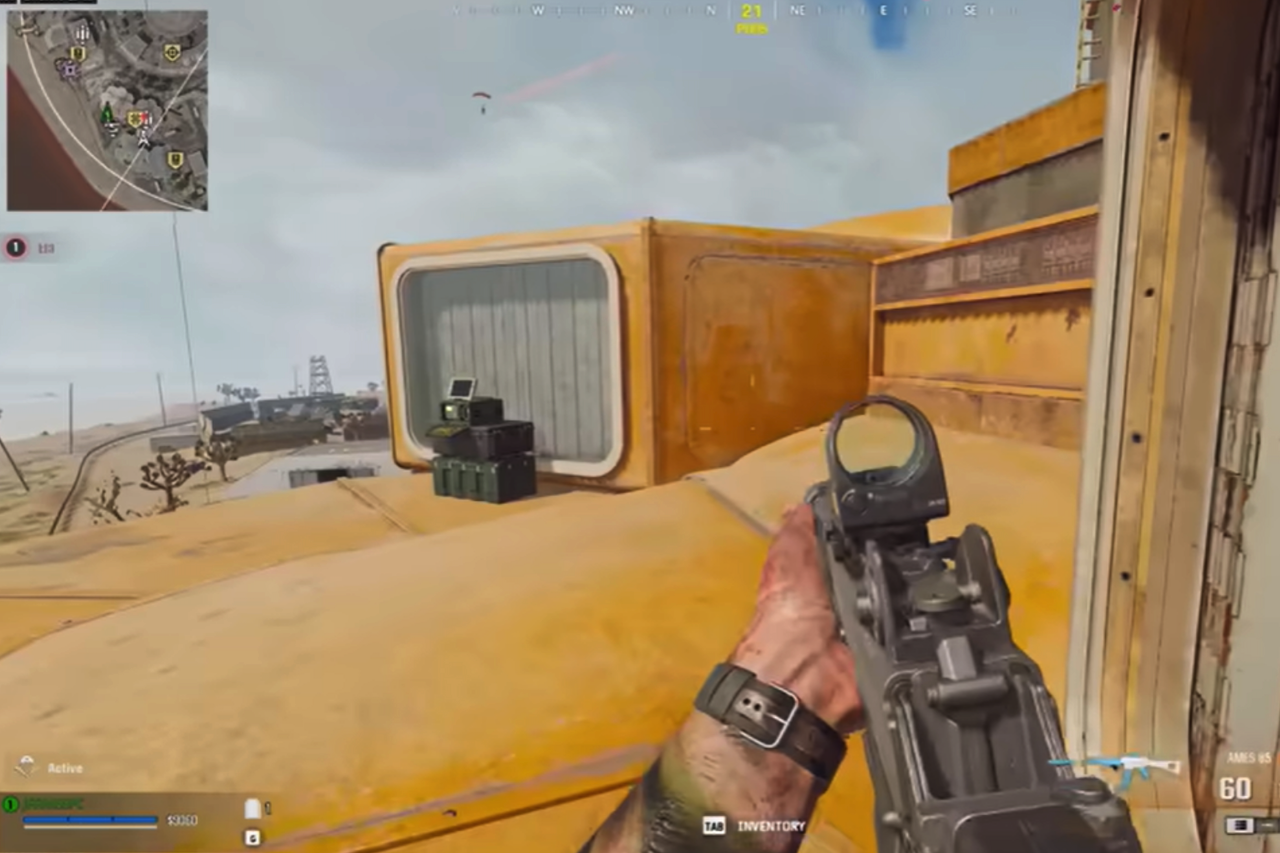
Look, if you're reading this, chances are you've been melted by some kid with laser-beam tracking while you're spraying bullets into the stratosphere. You're not alone—somewhere between 70-80% of Warzone players say aiming is their biggest problem, way before game sense or positioning even enters the conversation.
Here's the thing, though: better aim isn't some mystical gift. It's a skill you can actually develop, and it doesn't take as long as you'd think.
The Brutal Truth About Warzone Aim
Let's get something straight right off the bat. The top 1% of players? They're sitting at 25-35% accuracy with K/D ratios above 2.0. Average players hover around 15-20%. That gap might seem massive, but here's what nobody tells you—most of that difference comes down to three things: proper settings, consistent practice habits, and understanding how aim actually works in this game.
And yes, 60% of your fights occur between 10-30 meters. That's the MG range, where tracking matters way more than flicking. If you're trying to get better at sniping before you can nail close-range battles, you're trying to run before you can walk.
Settings That Actually Matter (Not Just Copy-Paste Pro Configs)
Everyone wants to know what sensitivity the pros use. But here's the misconception—unthinkingly copying someone else's settings ignores your monitor, FOV, controller, and entire setup. What works for them might tank your performance.
That said, there are actual principles that work.
Controller Players: Dead Zones Are Your Secret Weapon
Set your minimum dead zone between 0.05 and 0.10. Not higher, not lower. Why? Because this range gives you the best of both worlds—no stick drift, but maximum responsiveness. Your max left stick dead zone should sit around 60.
For ADS sensitivity, you want 0.65-0.80. This creates that "sticky" feeling when you're tracking targets. One pro player put it perfectly: "Higher dead zone, especially on your minimum, allows your aim to feel more sticky. It allows you to slow down on the target."
Use the Dynamic Aim Response Curve. Turn Target Aim Assist to "On." This isn't cheating; it's optimizing the rotational aim assist that's built into the game. When paired with proper strafing and movement, this setup can boost your close-range tracking effectiveness by 20-30%.
FOV and Scope Consistency Nobody Talks About
Set your FOV to 100-120. A higher FOV means better peripheral vision, but it also affects your sensitivity to touch. Once you pick your FOV, stick with it across sessions—your muscle memory needs consistency.
Here's the kicker: Use the same scope magnification across all your weapons. If you're running a 1.3x VLK on your AR, use similar magnifications on your SMG builds. Switching between wildly different zoom levels forces your brain to recalibrate mid-match, which tanks your reaction time by roughly 15%.
The 8-Minute Drill That Actually Works
A recent study of pro players found that just 8 minutes of focused aim training can improve your accuracy by 91%. Not over weeks—immediately. But it's not random shooting. It's specific centering drills.
Before you even jump into Warzone, spend five to eight minutes doing this: aim at head height, pre-aim corners, and practice holding your crosshair where enemies' heads will be. Don't shoot yet—just center. Just hold.
Why does this work? Because most aiming problems aren't tracking problems; they're positioning problems. You're starting with your crosshair pointed at the floor, then trying to flick up to the head. By the time you're on target, you're already taking damage.
Pros don't have faster reflexes. They're just already aiming at the right spot before the fight starts.
Movement Integration: The Missing Piece
Here's where most aim guides fail you. They treat aiming like a stationary skill. But in Warzone, you're moving during every gunfight, and so is your target.
Slide canceling isn't just for montages. According to competitive players, "Slide cancelling allows us to get our crosshairs out, shoot much quicker, making us a harder target to hit." You're leveraging the aim assist rotation while making yourself 2-3x harder to track.
The basic pattern: jump-slide around corners, ADS while airborne, land already firing. Your aim assist kicks in during the strafe, giving you that rotational lock-on. Without movement, you're a stationary target trying to hit a moving one. With movement, you're both moving—but aim assist helps you track.
For those curious about the technical side of competitive play, some players explore advanced gameplay discussions and resources on platforms such as Battlelog, though most improvement still comes from mastering core mechanics and strategy.
Equipment Impact (Yes, It Actually Matters)
Think hardware doesn't matter? Players using 240Hz+ monitors with under 1ms response time show 15-25% better tracking in controlled tests. That's not a placebo; that's physics. You're seeing targets 20-30ms faster, which in a game where time-to-kill is measured in milliseconds, translates to winning fights you'd otherwise lose.
You don't need to drop $800 on a monitor tomorrow. But if you're serious about improvement, understanding that input lag matters is crucial. Mouse polling rate at 1000Hz+, stable 144+ FPS minimum, instant ADS transition—these aren't just nice-to-haves.
Controller Customization That Makes Sense
Aggressive SMG players: short concave left stick, short domed right stick. The shorter throw distance means faster aim adjustments—defensive AR players: short concave left, tall domed right. The height provides greater precision for longer.
And turn off vibration. Completely. It's adding micro-movements you don't need when you're trying to track a sprinting target.
The Myths Destroying Your Progress
"I need to use higher sensitivity to snap faster." Wrong. Too high and you overcorrect on micro-adjustments. Too low, and you can't track close-range targets. The middle ground, what most pros actually use, balances both. One expert noted that "middle ground sensitivity plays perfectly for close and long range... you're moving too fast to stay on target otherwise."
"Jump-peeking always helps": Only if you're pre-aimed at head level. Otherwise, you're hitting leg shots, which increases your time-to-kill and gets you killed.
"Aim assist eliminates the skill gap": Rotational aim assist helps tracking, but you need to trigger it with proper strafing and movement. Mouse and keyboard players rely purely on strafe-shooting. The assist doesn't aim for you—it smooths your existing input.
The Meta You're Actually Playing In
SMGs dominate 2025 Warzone because they require the least precise aim for the distances where most fights happen. Low-recoil models are forgiving. ARs and snipers demand significantly greater precision at effective ranges.
On Rebirth Island and Fortune's Keep, master the slide-cancel around barrels and corners. On the big map, it's all about pre-aiming head glitches and maintaining head-level crosshair positioning. The environment shapes the aim skill you need to develop.
Recent Season 4 and 5 updates have actually improved recoil patterns and refined the Dynamic response curve. Visual recoil is lower with proper FOV settings. The game's more forgiving than it used to be—your improvement ceiling is higher now.
Putting It All Together
Dedicate 30-60 minutes daily to focused practice. Not just playing matches, but deliberate drilling. Your muscle memory gains show up in 1-2 weeks with consistent work. That's not theory—that's what actually happens when you train correctly.
Start with settings optimization, move to centering drills, integrate movement patterns, then take it into live matches. Track your accuracy stats over time. You should see measurable improvement within two weeks if you're following the framework.
The players who dominate aren't gifted. They're systematic. They've optimized their settings, they've drilled the fundamentals until they're automatic, and they understand how the game's systems work under the hood.
Your aim doesn't have to be perfect. It just has to be better than the person you're fighting. And with the right approach, that's completely achievable—starting today.
Disclaimer
This article is provided for informational and educational purposes only. The tips and strategies discussed are intended to help players improve their gameplay through legitimate in-game mechanics, practice, and skill development. References to third-party tools, exploits, or modifications are included for awareness and context only and do not constitute endorsement or encouragement of cheating or violation of any game’s terms of service.
Players should always follow the rules, policies, and community guidelines set by game developers and publishers. Use of unauthorized software, hacks, or cheats may result in account suspension, bans, or other penalties. The publisher of this content is not responsible for any consequences resulting from the use of third-party software or services.
External links are provided for informational purposes only. We do not control or guarantee the accuracy, safety, or reliability of third-party websites. Users should review the policies and risks associated with any external resource independently.
Featured Image generated by Google Gemini.
Share this post
Leave a comment
All comments are moderated. Spammy and bot submitted comments are deleted. Please submit the comments that are helpful to others, and we'll approve your comments. A comment that includes outbound link will only be approved if the content is relevant to the topic, and has some value to our readers.
Comments (0)
No comment