
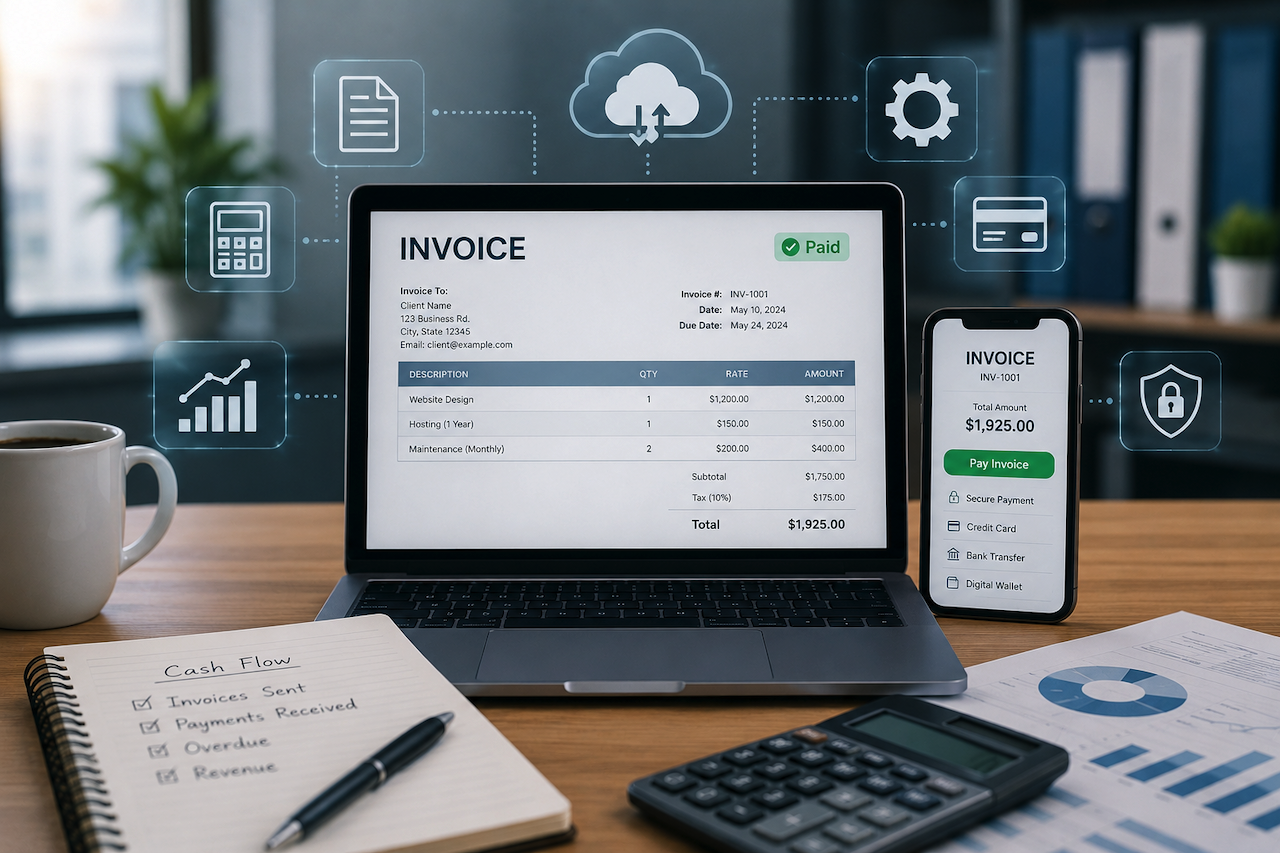
Technology has changed nearly every aspect of business operations, and invoice management is no exception. In the past, invoicing was often considered a repetitive administrative task handled manually through spreadsheets, printed documents, or accounting ledgers. While functional, these traditional methods were time-consuming, error-prone, and difficult to scale as businesses expanded.
Today, technology is transforming invoicing through automation, cloud computing, digital payment integration, and smarter financial workflows. Businesses no longer need to depend on slow manual billing processes when digital systems can handle invoice creation, tracking, storage, and reporting more efficiently.
For companies operating in competitive markets, invoice efficiency is directly connected to cash flow, operational productivity, and customer satisfaction. Delayed invoices can slow payments, disrupt budgeting, and increase administrative workload. This is why many businesses are adopting digital invoicing strategies to improve financial operations and reduce unnecessary inefficiencies.
This article explores how technology is reshaping invoice management and why digital invoicing has become increasingly important for modern business growth.
The Traditional Challenges of Invoice Management
Manual invoice processing creates multiple operational problems for businesses. Traditional systems often require employees to enter customer data manually, calculate taxes, generate invoices individually, and track payments across spreadsheets or paper records.
These methods increase the likelihood of errors such as incorrect billing amounts, duplicate invoices, missing customer details, inaccurate tax calculations, or lost documents. Even small mistakes can delay payments or damage client relationships.
Another challenge is time consumption. Administrative teams often spend excessive hours creating invoices, sending payment reminders, updating payment statuses, and reconciling financial records manually.
Traditional invoicing also creates limited accessibility. Teams working remotely or across multiple departments may struggle to access updated financial records when invoice systems are fragmented or locally stored.
As organizations grow, these inefficiencies become larger operational bottlenecks that slow financial processes and increase costs.
How Technology Has Modernized Invoice Workflows
Modern technology has fundamentally changed invoice workflows by automating repetitive tasks and centralizing financial processes. Businesses can now create, customize, send, monitor, and store invoices digitally through integrated systems rather than relying entirely on manual processes.
Cloud-based invoice platforms allow teams to access billing records securely from multiple locations, improving collaboration between finance departments, managers, and business owners.
Automated invoice templates reduce manual entry by storing recurring customer details, tax settings, service descriptions, and payment terms. This dramatically decreases invoice creation time while improving consistency and accuracy.
Many businesses now use digital invoicing platforms to simplify invoice generation, organize billing records, and improve payment tracking. Platforms such as Zintego are commonly used as examples of tools that support more streamlined and automated invoice workflows.
Technology also allows invoice systems to integrate with accounting software, customer databases, payment gateways, and expense management platforms, creating more connected financial workflows.
Automation Improves Accuracy and Efficiency
One of the greatest advantages of technology-driven invoice systems is automation. Automation reduces dependence on repetitive human input, minimizing mistakes while accelerating workflows.
Automated calculations ensure tax rates, totals, discounts, and payment terms are applied consistently. This reduces common billing errors that often occur in manual systems.
Recurring invoices are especially useful for subscription-based businesses or long-term service agreements. Instead of recreating identical invoices monthly, systems automatically generate and distribute them according to predefined schedules.
Automated reminders also improve collections. Businesses can configure systems to notify customers before due dates, on payment deadlines, or after overdue periods without requiring manual follow-up.
These efficiencies free finance teams from repetitive administrative tasks and allow them to focus on more strategic financial planning.
Cloud Technology Supports Better Accessibility
Cloud computing has become one of the most impactful technological developments in invoice management. Traditional invoice systems stored locally often create access limitations, version conflicts, and backup risks.
Cloud-based platforms solve these issues by storing invoice data securely online. Authorized users can access financial records from multiple devices and locations.
This is particularly valuable for remote teams, freelancers, consultants, and global organizations. Finance managers can review invoice performance, approve billing documents, or monitor payment statuses without being physically present in an office.
Cloud systems also improve data backup and disaster recovery. Businesses reduce the risk of losing critical financial information due to hardware failures or accidental deletion.
Secure cloud storage ensures invoice history remains accessible for audits, tax reporting, and financial analysis.
Payment Integration Accelerates Cash Flow
One major weakness of traditional invoicing is payment friction. Customers often delay payment when invoice processes are inconvenient or unclear.
Modern digital invoice systems reduce this friction by integrating online payment methods directly into invoices. Businesses using tools such as contractor invoice templates can simplify billing workflows while allowing clients to pay through bank transfers, cards, online wallets, or payment gateways with minimal effort.
Simplified payment experiences often lead to faster collections. Businesses can monitor payment statuses in real time and receive automatic confirmations when invoices are paid.
Faster payments improve cash flow stability, which is essential for payroll, operational expenses, vendor payments, and growth investments.
Businesses with healthy cash flow are generally better positioned to scale sustainably.
Data Analytics Strengthens Financial Decision-Making
Modern invoice platforms provide businesses with valuable analytics capabilities. Rather than simply generating invoices, technology systems now offer insights into billing trends, customer payment behavior, overdue balances, and revenue forecasting.
Managers can identify late-paying customers, monitor average payment times, analyze outstanding receivables, and forecast monthly revenue more accurately.
These analytics improve strategic decision-making by providing stronger financial visibility.
For example, a business noticing frequent late payments from specific customers may adjust payment terms or implement deposit requirements.
Data-driven invoice insights help organizations become more proactive rather than reactive.
Security Enhancements Protect Financial Information
Financial data is highly sensitive, making security essential in invoice systems. Modern digital platforms improve invoice security through encryption, access controls, audit logs, authentication systems, and secure cloud infrastructure.
Digital invoice systems reduce risks associated with lost paper records, unauthorized document access, or manual data mishandling.
Role-based permissions ensure only authorized personnel can view or modify financial records.
Cybersecurity features are especially important as businesses increasingly operate digitally and handle client information online.
Protecting invoice data supports compliance, trust, and business continuity.
Technology Skills Are Becoming More Important in Financial Operations
As invoice systems become more technology-driven, finance professionals increasingly benefit from technical literacy.
Understanding cloud platforms, automation tools, API integrations, digital payment systems, and analytics dashboards helps accounting teams work more effectively.
Businesses now value professionals who can bridge financial knowledge with technology skills.
This trend reflects a broader shift in business operations where finance and technology functions are becoming more interconnected.
Professionals comfortable with both financial workflows and digital tools are often better positioned for long-term career growth.
Conclusion
Technology has transformed invoice management from a slow administrative process into a more efficient and strategic business function. Automation, cloud computing, payment integration, analytics, and digital security have made invoicing faster, smarter, and more reliable.
Businesses that embrace digital invoicing practices improve operational efficiency, strengthen cash flow, reduce errors, and deliver better customer experiences.
As technology continues advancing, invoice management will become even more integrated with broader business systems and analytics capabilities.
Organizations that combine financial discipline with modern digital workflows will be better equipped for sustainable growth, stronger operational control, and long-term competitiveness in an increasingly digital business environment.
 FAQs
FAQs
Technology improves invoice speed, accuracy, automation, security, and accessibility while reducing manual workload and operational errors.
Automation reduces repetitive tasks such as calculations, recurring billing, payment reminders, and invoice tracking.
Yes, reputable cloud platforms typically include encryption, backups, authentication, and access controls to protect financial data.
Absolutely. Small businesses often benefit significantly through time savings, faster payments, and better financial organization.
Basic technology knowledge is increasingly valuable as financial operations rely more heavily on digital platforms and automation tools.
Featured Image generated by ChatGPT.
Share this post
Leave a comment
All comments are moderated. Spammy and bot submitted comments are deleted. Please submit the comments that are helpful to others, and we'll approve your comments. A comment that includes outbound link will only be approved if the content is relevant to the topic, and has some value to our readers.
Comments (0)
No comment