
Building a business often feels like a constant balancing act between the vision in your head and the reality of your bank account. It’s easy to get caught up in the digital side of things, especially when we're talking about technical infrastructure and location-based services.
However, the physical foundation of your operation matters just as much as the code you write or the servers you rent. Honestly, we sometimes forget that the "cloud" actually lives in a very loud, very hot room somewhere.
And that is where things get tricky.
For many growing companies, the transition from a small startup to a robust enterprise requires a serious look at how physical assets are acquired and managed. I remember the hum of the laptop at midnight, feeling like the fans were about to lift the desk off the floor. When you’re starting, you might try to make do with what you’ve got. You use the laptop you bought in college or work out of a garage with makeshift desks. But as the workload increases, the limitations of that early gear become obvious.
Have you ever wondered how much your old equipment is actually costing you in lost productivity? Maybe it is more than you think.
You realize that to compete at a higher level, you’ll need specialized tools. This is where the intersection of financial planning and operational necessity becomes critical. You’ve got to decide whether to deplete your cash reserves to buy what you need or to find a more sustainable way to grow. You know, that feeling of watching your savings account dip into the red to buy a piece of hardware that might be obsolete in three years. It is stressful.
Smart growth is rarely about spending money as fast as you make it. It’s about leverage.
Leveraging your data, your location, and your capital allows you to scale without putting the entire enterprise at risk. Many leaders find that spreading the cost of essential upgrades over time is the only way to maintain the liquidity needed for unexpected challenges. If you’re looking at upgrading your physical setup, using an equipment loan payment calculator can help you visualize how these monthly costs fit into your broader operational budget.
But is a massive upfront cost ever really worth the risk to your safety net? Probably not.
This kind of foresight prevents the "growth trap" where a company expands its capacity but kills its cash flow in the process. And that’s the point. Growth should not feel like a suicide mission.
The Hidden Costs of Outdated Tech
In the world of networking and data management, we often talk about latency. We want everything to be faster and more efficient. But we rarely talk about the "latency" caused by aging physical equipment. When your team is fighting with slow hardware or unreliable machinery, you’re losing more than just time. You’re losing morale.
There’s a specific kind of frustration that comes from knowing exactly how to solve a problem but being held back by the tools at hand. You could call it "hardware burnout."
Upgrading isn’t just about having the newest gadgets. It’s about reliability. In an era where being "always on" is the standard, a single point of failure in your physical infrastructure can lead to hours of downtime. For a service provider or a data-focused firm, that downtime translates directly into lost trust. So, investing in the right assets signals to your team and clients that you’re serious about the long haul.
Finding the Right Financial Balance
Once you identify the need for better tools, the conversation naturally shifts to the "how." Most businesses don't have an infinite pool of capital sitting around. Even if they do, tying up all that money in hardware that’ll eventually depreciate isn't always the smartest move.
This is why financing has become a standard part of the scaling process.
The goal is to match the outflow of cash with the inflow of value. If a new piece of technology helps you take on 20% more clients, the revenue from those clients should ideally cover the cost of the technology. By keeping your capital liquid, you’ll remain agile. You can pivot when the market shifts or invest in a sudden marketing opportunity because you didn’t dump all your cash into a server rack or a fleet of vehicles upfront.
Strategic Growth and Global Reach
For a platform focused on global connectivity and location data, the physical and digital worlds are inseparable. Where you place your hardware and how you connect it determines the quality of the user experience. As you scale your physical footprint, you also scale your responsibility.
You’ve got to think about maintenance, energy costs, and the eventual lifecycle of every asset you acquire.
But how do you keep track of all those moving parts without losing your mind?
Planning for this growth requires a blend of technical expertise and financial literacy. You can’t have one without the other. A CTO might know exactly which specs are required for the next phase of the project, but the CFO needs to know how that acquisition will impact the balance sheet over the next three to five years. When these two perspectives align, the company moves forward with confidence rather than hesitation.
Creating a Sustainable Future
Ultimately, the goal of any infrastructure investment is to create a foundation that supports your team’s best work. You want to reach a point where the tools you use are invisible because they work so well. You want to focus on the problems you’re solving for your customers, not the problems your equipment is causing for you.
Taking the time to research, calculate, and plan your next move ensures that you’re building something that lasts. It’s not just about the gear you have today. It’s about the freedom that gear gives you to build the company you want tomorrow. By making informed decisions now, you’re essentially buying yourself the time and space to innovate, lead, and grow in a crowded marketplace.
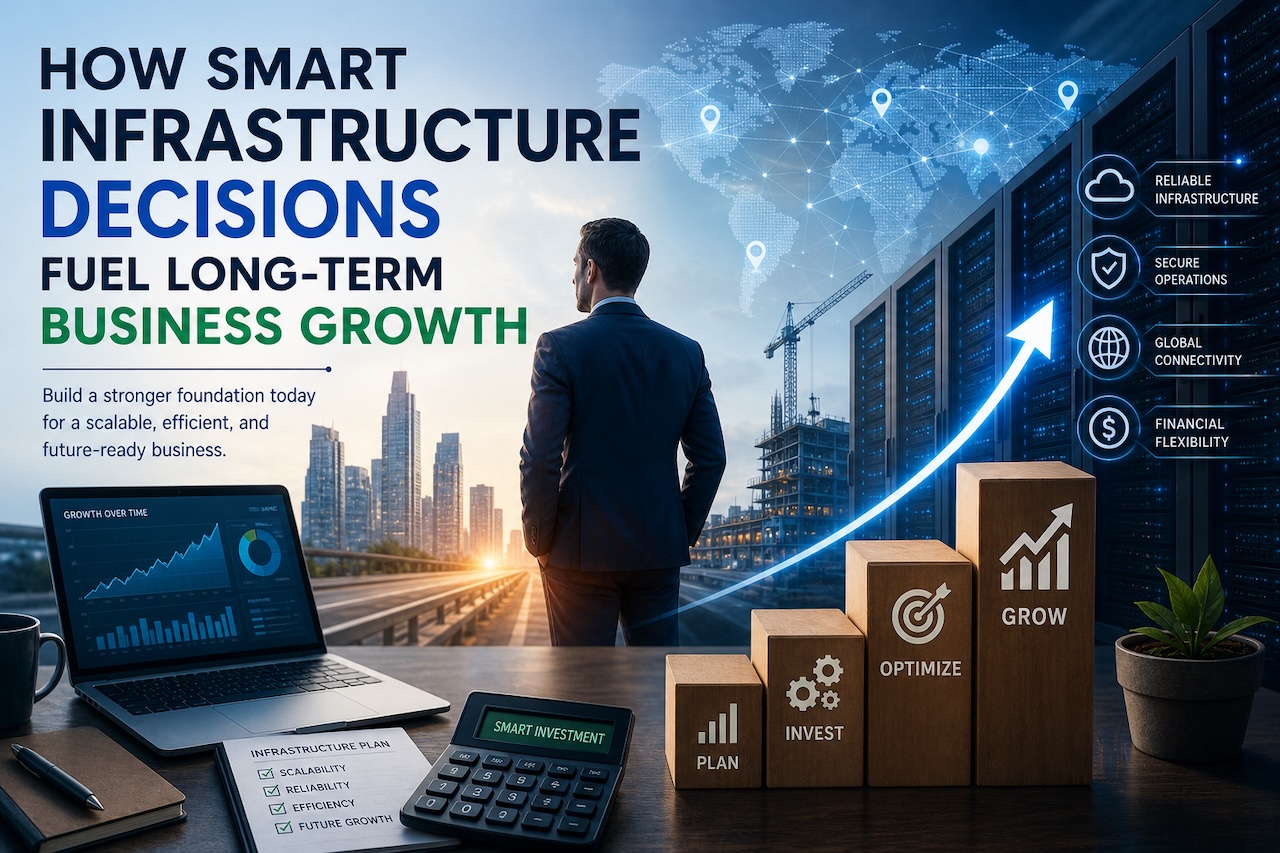
Featured Image generated by ChatGPT.
Share this post
Leave a comment
All comments are moderated. Spammy and bot submitted comments are deleted. Please submit the comments that are helpful to others, and we'll approve your comments. A comment that includes outbound link will only be approved if the content is relevant to the topic, and has some value to our readers.
Comments (0)
No comment