
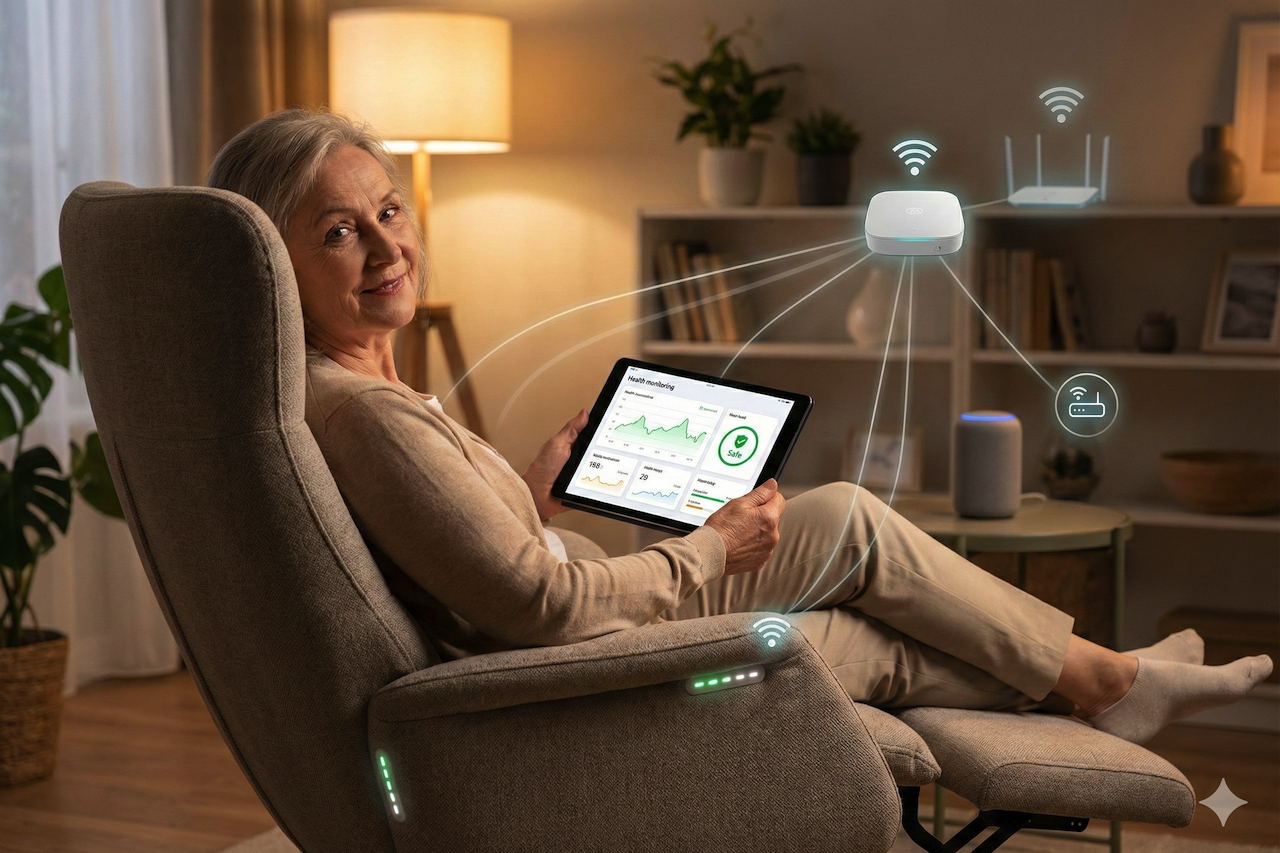
A simple chair has always meant comfort. For many people, it represents rest, stability, and routine. Today, it can also mean protection.
As populations age across the United States and more households adopt smart home technology, home safety has become one of the fastest-growing segments in both healthcare and connected living. More than 55 million Americans are now over the age of 65, and nearly 80 percent prefer to age in place rather than move into assisted living. This growing demand has also increased online searches for solutions such as a “chair for the elderly,” highlighting the need for safer and more supportive home environments. However, the demand for safer and smarter environments is not limited to older adults. Families, individuals recovering from injury, and people managing chronic health conditions are also seeking technology that supports independence and safety at home.
This shift has pushed innovation beyond wearables and security cameras. Now, even something as ordinary as a chair is being redesigned with intelligent IP connectivity to monitor movement, detect risks, and send real-time alerts.
Smart connected chairs are no longer futuristic concepts. They are practical tools designed to reduce falls, monitor behavioral patterns, and connect users, caregivers, and smart home systems through secure internet protocol networks that operate quietly in the background.
Why IP Connectivity Changes the Safety Equation
At the core of these chairs is IP connectivity, meaning they connect to a home network via Wi-Fi or Ethernet and securely transmit data to apps, dashboards, or monitoring services. This connectivity transforms passive furniture into active safety infrastructure.
Here is how IP-enabled chairs strengthen home safety:
- Real-time posture monitoring that detects prolonged inactivity or unsafe sitting positions
- Automatic fall detection using embedded pressure and motion sensors
- Remote alerts sent to caregivers, family members, or monitoring platforms
- Integration with broader smart home systems such as lighting, voice assistants, and emergency response
Unlike traditional alert devices that require manual activation after an incident, connected chairs can detect patterns automatically. If the system detects that a user has attempted to stand and collapsed, or remains immobile for an extended period, alerts can be triggered instantly.
This proactive model significantly reduces response times. Rapid intervention after a fall or mobility event can lower the risk of complications and improve recovery outcomes.
Embedded Sensors and Data Intelligence
Smart connected seating often includes pressure sensors, accelerometers, and, in some cases, heart rate or respiration monitoring embedded directly in the seat or backrest. These sensors collect subtle data points that reveal behavioral trends over time.
For example, a connected chair can identify:
- Gradual declines in mobility
- Increased restlessness that may signal discomfort or pain
- Changes in weight distribution that may indicate balance issues
- Irregular sitting or movement patterns that suggest health or lifestyle concerns
Through IP connectivity, this data is encrypted and transmitted to secure platforms where users, caregivers, or healthcare providers can access insights via mobile or desktop applications. In advanced systems, artificial intelligence models automatically evaluate trends and flag anomalies.
These capabilities extend beyond elderly care. They support rehabilitation after surgery, chronic condition monitoring, workplace ergonomics, and preventive health strategies.
The broader healthcare and wellness implications are substantial. Remote monitoring technologies are projected to grow into a multi-billion-dollar market in the coming decade, driven by rising healthcare costs and demand for home-based care.
Fall Prevention Through Active Assistance
Falls remain one of the leading causes of injury across multiple age groups, especially among older adults and those recovering from medical procedures. Smart connected chairs are designed not only to detect falls but to help prevent them.
Some models include motorized lift functions that gently tilt the seat forward to support standing. When combined with IP connectivity, these features can adapt to individual movement patterns.
If instability is detected, the system may:
- Adjust positioning to provide physical support
- Trigger voice prompts encouraging safer movement
- Notify a caregiver or family member if repeated instability occurs
This layered response system delivers both real-time assistance and long-term monitoring. Instead of reacting after an emergency, the technology works to reduce the likelihood of incidents before they happen.
Integration with Broader Smart Home Ecosystems
IP-connected chairs rarely operate in isolation. They are designed to integrate with smart home environments, including lighting, voice assistants, security systems, and connected medical devices.
For example, if a chair detects that a user is attempting to stand at night, it can activate pathway lighting to reduce trip hazards. It may also coordinate with fall detection systems, wearable devices, or home monitoring services.
This ecosystem approach strengthens overall safety. The chair becomes one node within a larger network that supports daily living, independence, and peace of mind.
Privacy, Security, and Responsible Data Use
As with any connected device, cybersecurity is a critical consideration. Because smart chairs collect behavioral and health-related information, strong privacy and security protections are essential.
Responsible manufacturers prioritize:
- End-to-end encryption
- Secure authentication and access control
- Compliance with healthcare and data protection standards
- Transparent consent and user data controls
Families and consumers evaluating connected safety solutions should assess both hardware capabilities and cybersecurity practices.
Economic and Caregiving Impact
From a cost perspective, smart home monitoring technologies can reduce long-term healthcare expenses by supporting independent living. Instead of continuous in-person supervision, remote monitoring enables timely intervention and reduces hospital admissions.
Insurance providers and healthcare systems are increasingly exploring reimbursement models for remote monitoring solutions. As these technologies demonstrate measurable outcomes, adoption is expected to grow.
For caregivers, especially those supporting loved ones remotely, connected safety systems provide reassurance. Rather than constant check-ins, they receive meaningful alerts only when behavioral changes occur.
A Safer Future, One Seat at a Time
The evolution of everyday furniture into connected safety infrastructure reflects a broader transformation in how we approach health, independence, and home environments.
What was once a simple chair can now serve as a wellness monitor, a fall-prevention system, and a communication hub. By leveraging IP connectivity, smart connected chairs provide continuous, low-friction protection without disrupting daily routines.
As smart homes continue to evolve, innovation does not always require dramatic change. Sometimes it begins with familiar objects, redesigned to support safer and more connected living for people of all ages.
Featured Image generated by Google Gemini.
Share this post
Leave a comment
All comments are moderated. Spammy and bot submitted comments are deleted. Please submit the comments that are helpful to others, and we'll approve your comments. A comment that includes outbound link will only be approved if the content is relevant to the topic, and has some value to our readers.
Comments (0)
No comment