
Paid search has become more competitive, more expensive, and more sensitive to relevance. Generic targeting still gets impressions, but it rarely gets the kind of clicks that turn into useful outcomes.
Geo-targeting gives advertisers a cleaner way to match the message with the market. It uses location-based advertising to connect ad delivery with geography, search behavior, and device signals, then filters spending toward the people most likely to act. In competitive categories, especially services with strong local demand, that kind of targeting does more than improve visibility. It improves efficiency, lead quality, and the odds that a click was worth paying for in the first place.
Agencies working in local SEO and paid advertising, including Hennessey Digital, operate within this exact reality, where local intent and precision targeting can meaningfully improve PPC campaign performance.
What Geo-Targeting Means In PPC Advertising
Geo-targeting PPC is the process of segmenting and serving ads based on location. According to Google, consumers want search ads customized to their city, ZIP code, or immediate surroundings, which says a lot about how much location shapes response.
That can mean country, city, ZIP code, or radius targeting, or exclusion targeting for regions a business does not serve. The mechanism can rely on IP data, GPS signals, device settings, and platform-level behavior patterns.
Geolocation and trajectory-based data have made location-driven advertising more precise and more useful in competitive environments.
The practical value is easy to see:
- A business can show ads only inside its service area
- A brand can adjust ad copy for different cities or regions
- A campaign can compare performance across markets instead of blending everything
- A landing page can reflect local language, local coverage, and local urgency
Regional ad customization matters because relevance improves response. A person searching from one city often has different expectations, different nearby options, and sometimes a different urgency than someone in another market using the same keyword. Strong PPC optimization depends on catching those differences rather than flattening them out.
Local Intent Often Leads To Higher Conversion Rates
Local intent usually signals closer-to-action behavior. 30% of all mobile searches are related to location, and “near me” searches have risen sharply over time. Searches for local places without the phrase “near me” grew faster than those containing it, suggesting users now expect local relevance even when they do not type it explicitly.
That matters because local intent often comes with stronger commercial intent. A user looking for a nearby lawyer, clinic, repair company, or showroom is usually farther along than someone browsing broad category terms. In high-competition areas like legal services, the searcher is often comparing providers, checking availability, or looking for the nearest practical option. Geo-targeting helps campaigns meet that intent with less friction.
A few local-intent patterns tend to produce better conversion potential:
- “Near me” and city-based queries usually indicate immediate need
- Service-area searches often come from users ready to contact a provider
- Local comparison searches usually reflect active evaluation
- Emergency or same-day searches usually reward fast, relevant ads
Location relevance is not a cosmetic detail here. It is a performance signal. Research on location-based advertising has found that proximity to the advertised product or service can improve conversion outcomes, which helps explain why local PPC targeting so often outperforms broader audience reach.
Mobile Devices Have Increased The Importance Of Location Data
Mobile behavior has made geo-targeting harder to ignore. Google’s mobile research found that 82% of smartphone users consult their phones when making in-store purchase decisions, and 34% of online retail purchases now occur on mobile devices. That kind of behavior gives location data greater influence, because the user is often searching while in motion, in public, or while standing close to a decision point.
Mobile location signals include GPS, Wi-Fi, device settings, and app behavior. Those signals help ad platforms understand where a user is and how likely that user is to act now rather than later. For PPC, that opens up several useful tactics:
- Click-to-call ads for immediate contact.
- Radius targeting around a store, office, or service zone.
- Bid adjustments for stronger mobile markets.
- Time-sensitive scheduling tied to local search patterns.
Mobile-first campaigns perform better when the targeting reflects proximity and urgency. A commuter searching from a phone has different needs from a desktop user doing research at home, and location data helps separate those two contexts more cleanly. Google’s local-search research supports that shift by showing how mobile activity and location behavior increasingly overlap.
Geo-Targeting Helps Reduce Wasted Ad Spend
Waste is one of the most common problems in PPC accounts. Ads often show to people outside the service area, users who are too far away to convert, or audiences that match the keyword but not the buying need. Geo-targeting reduces that waste by narrowing delivery to the markets most likely to matter.
Budget efficiency improves in a few clear ways:
- Unqualified traffic drops
- Geographic exclusions prevent spend leakage
- High-value areas receive more attention
- Performance reporting becomes more precise
That sharper structure helps because it makes the data easier to act on. A campaign that covers too many regions can hide strong and weak markets inside the same report. A tighter geo setup separates those outcomes, making optimization more practical and defensible. Better targeting usually improves ROI because the budget goes toward users with a higher chance of converting, rather than being spread across broad, lower-intent traffic.
Link building strategies still fit into this picture as well. Local backlinks from regional publications, chambers of commerce, and community sites can reinforce geographic authority around the same market a PPC campaign is targeting. Paid search and local SEO do different jobs, but they strengthen each other when both point toward the same location signals and the same audience.
AI And Automation Are Improving Location-Based Advertising
AI has made location-based advertising more adaptive. AI-driven personalization tools are built to help marketers create more relevant experiences and better understand conversion behavior. In PPC, that shows up through automated bidding, audience modeling, predictive optimization, and smarter budget movement across geographies.
Machine learning can identify patterns across:
- Location and device type
- Search time and conversion rate
- Local audience behavior
- Performance differences between regions
That matters because not every market behaves the same way. Some areas convert faster, others drive more calls, and others produce higher-quality leads even when volume is lower. AI helps campaigns notice those patterns earlier and respond faster. Location targeting then becomes part of a broader performance system instead of a standalone filter. Research on competitive location-based mobile targeting supports the idea that geolocation-driven strategies have become more effective as data and automation have improved.
Why Geo-Targeting Matters In Competitive Markets
Competitive PPC rewards precision. Broad targeting often pushes advertisers into the same crowded auctions, where costs rise, and relevance gets diluted. Geo-targeting creates a cleaner advantage by focusing spend on places where demand is strongest and where the business can serve users well.
Location-aware campaigns also feel more useful to the searcher. They answer the real question behind the query, which is usually some version of, “Which provider near me can solve this quickly and credibly?” That answer becomes stronger when the ad, the landing page, and the market all line up. The result is a better match between intent and offer, which is exactly where stronger PPC campaign performance usually begins.
Geo-targeting is now part of the core structure of modern digital advertising. It improves audience segmentation, supports IP targeting, strengthens local search intent matching, and helps campaigns use their budgets with greater discipline. For advertisers working in crowded markets, that combination tends to produce cleaner traffic, higher-quality conversions, and more stable performance over time.
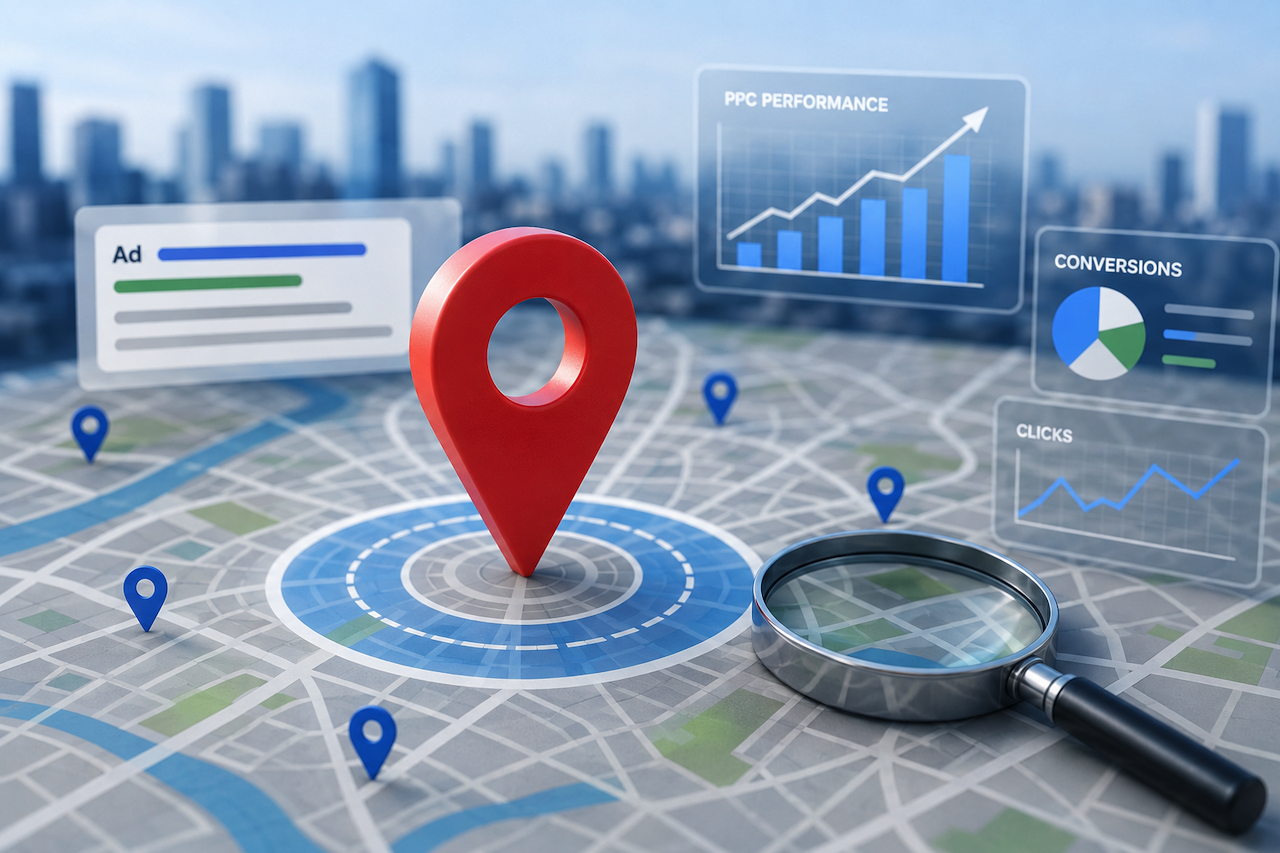
Featured Image generated by ChatGPT.
Share this post
Leave a comment
All comments are moderated. Spammy and bot submitted comments are deleted. Please submit the comments that are helpful to others, and we'll approve your comments. A comment that includes outbound link will only be approved if the content is relevant to the topic, and has some value to our readers.
Comments (0)
No comment