
Note: This article provides general information about how forex cards and exchange rates work. Examples, rates, and product features may vary by country, bank, or provider.
When traveling abroad, your expenses can quickly increase if you are not careful about your currency conversion costs. Whether you are swiping your card at a restaurant, booking a local tour, or withdrawing cash from an ATM, the foreign exchange rate directly affects how much you spend. This is where a forex card becomes a practical and secure solution for international payments.
These cards allows you to load foreign currency at a fixed rate before your trip. By locking in the exchange rate in advance, you protect your travel budget from currency fluctuations. Many banks and financial institutions offer multi-currency forex cards. Providers such as ICICI Bank are one example, depending on region and availability.
To use the card effectively, it is essential to understand how currency exchange rates work. This guide explains exchange rates in simple terms and helps you make informed decisions while travelling.
What Is a Forex Card?
A forex card is a prepaid card that stores foreign currency for international use. It works like a debit card, usable abroad for payments, cash withdrawals, and online transactions.
You load the card before your trip with your chosen currency, such as USD, EUR, GBP, AUD, or any other supported currency. Once loaded, the card can be used across millions of merchants and ATMs worldwide.
These cards offer benefits such as:
- Locked in exchange rates
- Secure and controled spending
- Convenience of cashless travel
- Global acceptance
- Protection against theft or loss through card blocking
Since the card already carries foreign currency, you can make payments without incurring repeated conversion charges.
Understanding the Foreign Exchange Rate
A foreign exchange rate represents the value of one currency relative to another. It determines how much of a foreign currency you receive when converting from your base currency. Exchange rates fluctuate regularly based on economic factors, market demand, and global conditions.
For example:
- If the exchange rate is 1 USD = ₹90, it means you need ₹90 to buy 1 US dollar.
- If the exchange rate is 1 USD = 0.92 EUR, it means you need 0.92 euros to buy 1 US dollar.
Understanding this rate is important because every international transaction involves currency conversion. Even small changes in exchange rates can affect overall travel expenses.
How Exchange Rates Apply to Your Forex Card
A forex card locks in the exchange rate at the time you load the currency. This means the rate remains fixed for your travel spend until you reload or exhaust the balance.
Here is how exchange rates work on your card.
1. Currency Is Loaded at a Fixed Rate
When you load the card card, the bank applies the day’s exchange rate. For example, if you load USD at ₹84 per dollar, the entire balance is converted using this rate. After conversion, your card balance is stored in the foreign currency, which you can spend abroad.
2. No Repeated Conversions on Each Transaction
Since the card already holds foreign currency, most transactions abroad do not require a new currency conversion. This helps you avoid multiple charges that may apply when using other payment cards internationally.
3. Reloading the Card Applies the New Rate
If you reload the card during the same trip, the exchange rate available on the day of reloading applies to the additional amount. As a result, different portions of your balance may be loaded at different rates.
4. Cross-Currency Transactions May Apply Extra Conversion
If you use the card in a currency that is not loaded on the card, a cross-currency conversion occurs. For example, if you hold USD and make a purchase in a European country, the transaction is processed using the applicable exchange rate for that day. This may involve additional conversion fees depending on the bank. Loading multiple currencies can help avoid these charges when traveling to multiple countries.
Why Exchange Rates Keep Changing
Multiple economic and political factors influence exchange rates.
Key factors include:
- Global market demand for the currency
- Economic stability of the country
- Inflation levels
- Interest rates set by the central bank
- Global trade movements
- Investor sentiment
Since these factors change regularly, the exchange rate fluctuates throughout the day. This is why a forex card, which locks the rate at the time of loading, is valid for travelers.
Benefits of Understanding Exchange Rates
Understanding how exchange rates work helps travelers plan better and avoid unnecessary expenses.
1. Accurate Budget Planning
When you load your card at a favorable exchange rate, you can lock in your expenses ahead of time. This makes it easier to plan your travel budget with greater confidence.
2. Protection From Rate Volatility
Currency values fluctuate due to global economic and political events. Locking in an exchange rate in advance helps protect you from sudden increases in foreign currency costs.
3. Easier Timing Decisions for Loading Currency
By monitoring exchange rate trends, you can choose a time when rates appear more stable to load or reload your card, reducing uncertainty.
4. Clearer Understanding of Charges
Knowing how exchange rates and conversions work helps you recognize when cross-currency or additional conversion charges may apply.
Practical Tips to Manage Your Forex Card Wisely
Here are simple tips to make your international payments efficient.
1. Load Your Card in Advance
Avoid last-minute loading, as exchange rates can change significantly within a short period. Loading your card earlier gives you better control over costs.
2. Monitor the Foreign Exchange Rate Regularly
Watch exchange rate movements before loading your card. Many travelers track rates for days or weeks to identify more favorable conditions.
3. Choose a Multi-Currency Card
Multi-currency prepaid travel cards support several currencies on a single card, which can help reduce cross-currency conversion charges when traveling to multiple destinations.
4. Use Your Card for Online International Bookings
You can use the card for hotel reservations, travel bookings, and online purchases made in foreign currencies.
5. Keep a Backup Payment Method
Carry a small amount of cash or an alternative payment option as a backup in case your card is temporarily unavailable.
6. Reload Your Card Digitally if Needed
Many banks allow online reloading through internet banking or mobile apps, making it easier to access additional funds while traveling.
Why Travelers Prefer Forex Cards Over Other Payment Methods
A prepaid travel card offers advantages such as:
- Locked in rates
- Global acceptance
- Enhanced security features
- Ease of tracking expenses
- Lower conversion charges compared to international payment card transactions.
Because the foreign exchange rate is applied only once during loading, the card helps you avoid repeated charges.
Final Thoughts
Understanding how the foreign exchange rate affects your spending is essential for any international traveler. This type of prepaid travel card simplifies this process by locking the rate in advance, providing convenience and helping you avoid unnecessary conversion costs.
Banks like ICICI Bank offer secure, traveler-friendly forex card options with features that support digital loading, multi-currency use, and global accessibility. By understanding how exchange rates work and planning your card use wisely, you can enjoy a smoother, more budget-friendly international travel experience.
Disclaimer
This article is provided for general informational purposes only and does not constitute financial, legal, or banking advice. Exchange rates, fees, product features, and availability may vary by country, financial institution, and provider.
iplocation.net does not endorse, control, or take responsibility for the content, accuracy, or availability of any external websites or third-party links referenced in this article. Users should review the terms, conditions, and policies of any financial product or service directly with the relevant provider before making decisions.
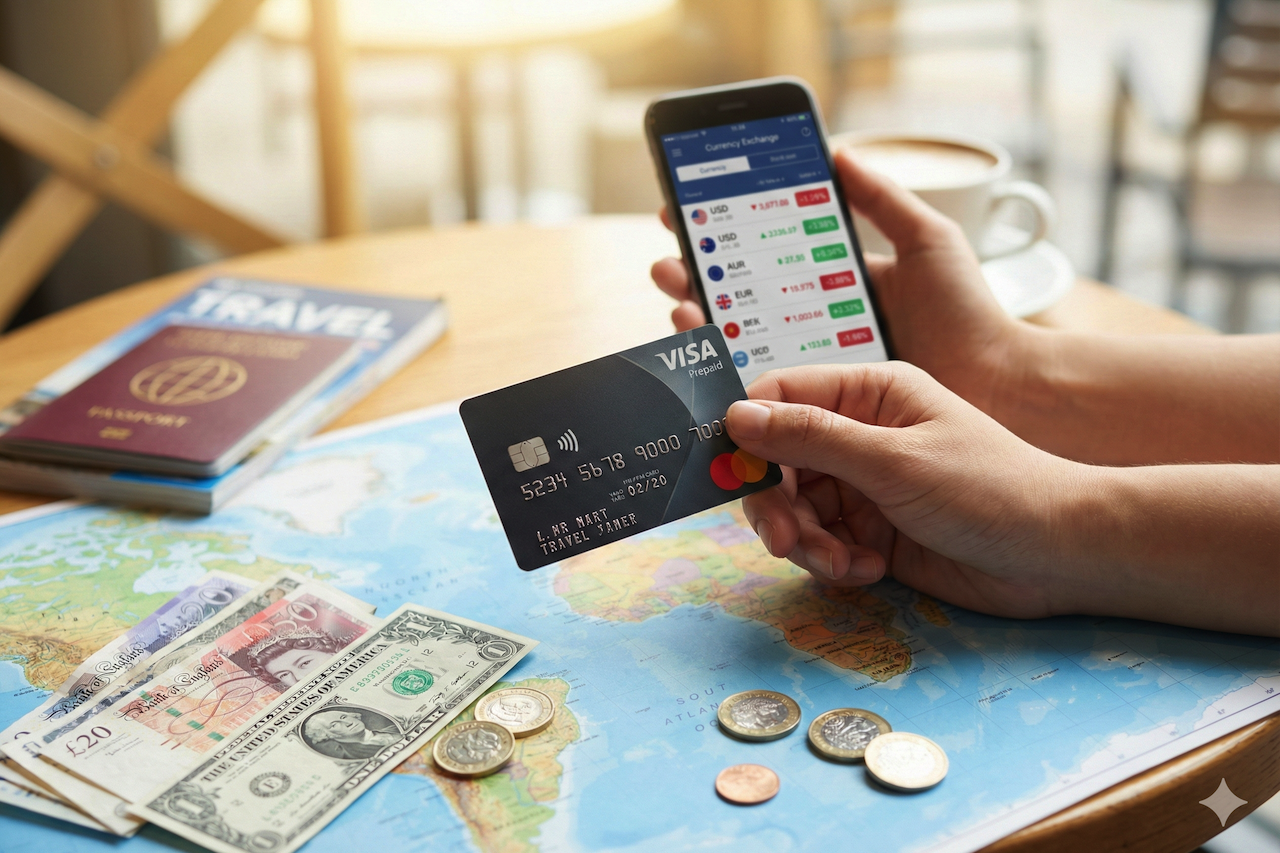
Featured Image generated by Google Gemini.
Share this post
Leave a comment
All comments are moderated. Spammy and bot submitted comments are deleted. Please submit the comments that are helpful to others, and we'll approve your comments. A comment that includes outbound link will only be approved if the content is relevant to the topic, and has some value to our readers.
Comments (0)
No comment