

Buying behavior has changed significantly over the past twenty years. What began as a basic concept—an online transaction—has evolved into a powerful industry that has reached every corner of the world. E-commerce development is not just a passing trend; it reflects how consumer behavior, business needs, and technology have come together to create a new norm.
If you want to stay ahead in this growing space, you need to understand how e-commerce has developed, what drives its growth, and what the future looks like.
A Quick Look Back: The History of E-Commerce
Online shopping history began in 1994 when the first online purchase was made. In the same year, a CD was sold online. This may not seem like a big deal today, but at the time, it was a significant moment. It showed that people could trust the internet to spend money and access information.
The history of online shopping shows how e-commerce progressed beyond the sale of books to the sale of everything, including groceries and cars. By the early 2000s, the landscape shifted as companies like Amazon and eBay took the lead. These websites made online shopping easier and faster. Businesses realized that online stores could operate without physical space and around the clock.
The Rise of Ecommerce and Its Impact
The rise of online shopping happened quickly after the introduction of mobile internet. Smartphones allow people make purchases wherever they want. Online money transfers became secure with the help of payment systems like PayPal and Stripe. Social media networks also began playing a major role, enabling individuals to discover products while browsing their feeds.
E-commerce sales currently stand at $6.8 trillion in the global market today, and this figure continues to rise. By 2027, it is estimated that e-commerce sales may reach up to $8 trillion. This growth shows that buyers are increasingly driven by more than just convenience, speed, and digital access.
Enable Innovation in E-Commerce
The trend in e-commerce today goes beyond just selling—it focuses on applying tools and technology to deliver richer experiences. Many brands now prioritize innovation in online retailing by incorporating AI-supported chatbots, virtual try-ons, and same-day delivery. These features enhance customer satisfaction and help businesses maintain a competitive edge.
Modern e-commerce technology lets brands automate stock updates, send real-time shipping alerts, and handle thousands of orders without human error. These advancements make online shopping smoother and more convenient for customers.
What Drives the Development of E-Commerce
Several factors shape the development of e-commerce today. First, consumers want speed. Fast delivery and simple checkout are key. Second, sellers want to save money and reach more buyers. Online platforms allow small businesses to compete with major brands. Third, there is more trust in e-commerce technology now. People are increasingly confident in online payment systems and data protection methods. Fourth, data plays a crucial role in helping businesses make informed decisions. By tracking customer behavior, companies can offer products that align with buyers’ needs.
How E-Commerce Has Changed the Business Model
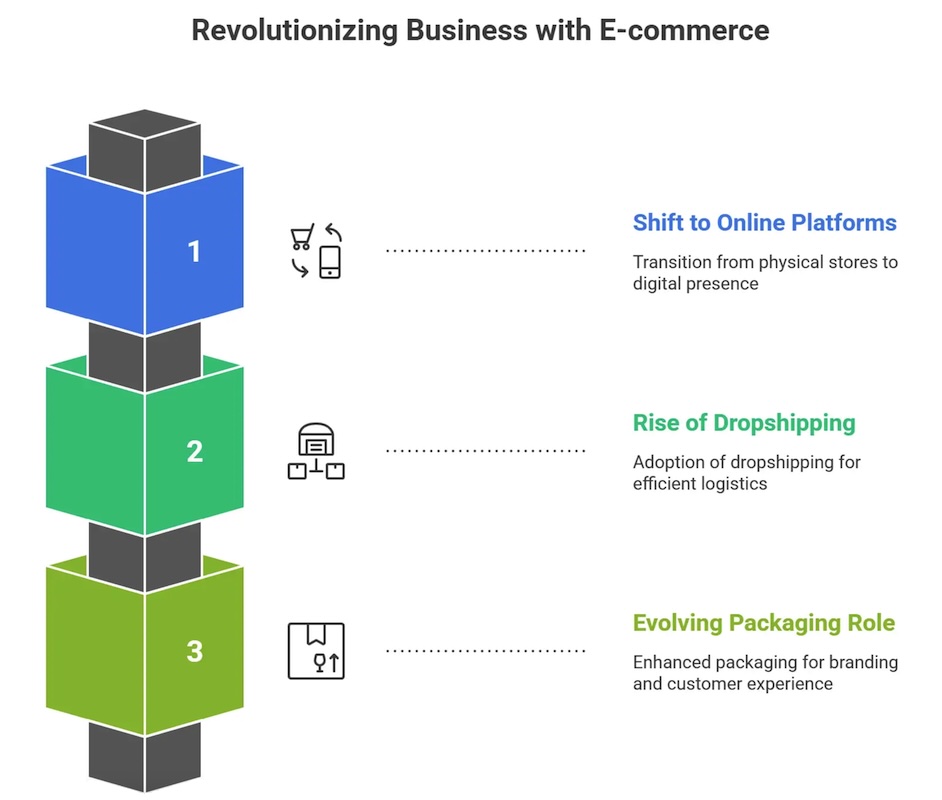
E-commerce has transformed how businesses operate. You no longer need a large physical store to sell your products. Many brands now use dropshipping and third-party warehouse facilities, making it easier to enter the market with lower overhead.
One example is the use of custom rigid box packaging. This type of packaging enhances the unboxing experience for customers while also protecting high-quality products during transit. Packaging now serves not just a protective function, but also plays a role in branding and creating excitement for the customer.
Key E-Commerce Evolution Insights
Let’s take a look at what the data reveals about e-commerce growth:
- 90% of online shoppers expect a reply from customer support within 24 hours
- 60% of buyers prefer shopping on mobile devices over desktops
- 70% of Gen Z discover new brands through social media
These e-commerce evolution insights highlight the growing importance of responsive customer service, mobile optimization, and transparent pricing in achieving success.
Future of E-Commerce Technology
There is a promising future for e-commerce technology. Personalized shopping will increasingly be supported by AI. The use of augmented reality (AR) will allow customers to virtually try out products before buying. Voice search will also become more common with the growing use of smart speakers in homes.
Blockchain technology can be used to ensure secure transactions and trace product origins. Meanwhile, green e-commerce is on the rise, as consumers look for brands that are environmentally friendly in their packaging, delivery methods, and sourcing practices.
The Role of Hosting in E-Commerce Success
Each successful online shop relies on strong infrastructure. It is important to select the appropriate web hosting service. A fast, secure, and reliable host not only enhances performance but also improves page load speed, which plays a major role in retaining customers. The hosting provider you select should also offer protection against cyber threats and ensure your store remains accessible around the clock.
Top hosting options for e-commerce business:
- Shopify
- IONOS
- Bluehost
- Siteground
- A2 Hosting
- GoDaddy
- HostGator
- DreamHost
Bottom Line
E-commerce has come a long way. The e-commerce revolution is a combination of technological advancements and evolving buyer preferences. To succeed, you must prioritize speed, trust, customer service, and smart technology.
Understanding the history of online shopping while focusing on present-day tools is essential. Mobile access, intelligent packaging, fast delivery, and secure payments are emerging as core elements, shaping a new standard for shopping experiences.
As e-commerce technology continues to advance, success will belong to those who remain adaptable and committed to continuous learning. E-commerce is no longer just an alternative; it has become the primary path to business success.
Featured Image by Freepik.
Share this post
Author

Read the latest articles from Mateo Henry
Top Headless CMS for eCommerce Businesses
August 6, 2025
Selling online shouldn’t feel like fighting your own website. But for many e-commerce businesses, updating content, launching a new promo page, or supporting multiple channels feels slow and frustrating. Most of the time, it’s because the content is stuck inside your store platform, with little flexibility. A [...]
Learn moreLeave a comment
All comments are moderated. Spammy and bot submitted comments are deleted. Please submit the comments that are helpful to others, and we'll approve your comments. A comment that includes outbound link will only be approved if the content is relevant to the topic, and has some value to our readers.
Comments (0)
No comment