
The Rising Threat of Fraud in E-commerce
As e-commerce continues its rapid expansion, the sophistication and volume of fraudulent activities are evolving at an unprecedented pace. Industry forecasts indicate that by 2026, global losses from online fraud will surpass $48 billion, marking a steep increase from $32 billion in 2022. This surge underscores the urgent need for e-commerce brands to bolster their fraud-prevention strategies with cutting-edge technologies. Without proactive measures, businesses risk not only financial losses but also irreparable damage to customer trust and brand reputation.
The e-commerce sector is particularly vulnerable because it operates in a digital environment where verifying the legitimacy of users and transactions is inherently challenging. Fraudsters exploit this environment by using stolen credentials, synthetic identities, and sophisticated bots to bypass traditional security measures. In response, companies are increasingly turning to geolocation technology as a cornerstone of their fraud defense arsenal. This technology enables businesses to gain contextual insights about users’ physical locations, which can be pivotal in detecting and preventing fraudulent transactions.
According to recent data, approximately 70% of online merchants have integrated geolocation tools in their fraud prevention strategies, reflecting growing industry confidence in this technology’s effectiveness.
Understanding Geolocation in Fraud Prevention
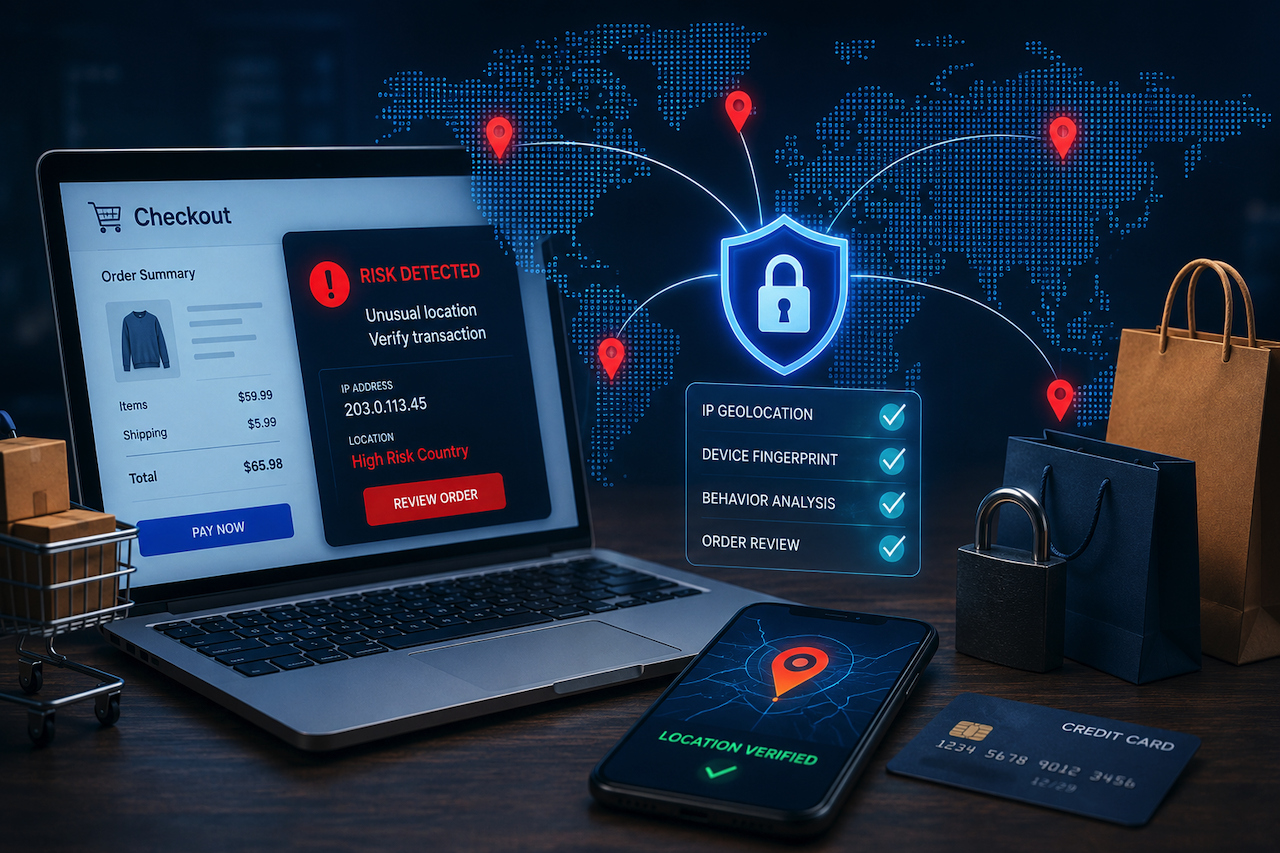
Geolocation technology determines the physical location of a device or user by analyzing IP addresses, GPS data, Wi-Fi triangulation, and other digital markers. For e-commerce platforms, this data is invaluable for establishing the authenticity of user activity. For example, a transaction initiated from an IP address in a high-risk country but paired with a billing address in a different region can raise red flags and trigger additional verification steps.
Incorporating geolocation into a multi-layered security framework enhances fraud detection without sacrificing user experience. Unlike intrusive measures that may inconvenience legitimate customers, geolocation operates seamlessly in the background, providing real-time context to transaction data. When combined with complementary technologies such as device fingerprinting, behavioral analytics, and machine learning algorithms, geolocation enables e-commerce brands to identify suspicious patterns more accurately and respond swiftly.
Businesses employing geolocation have reported up to a 30% reduction in fraud-related chargebacks, highlighting its tangible impact on bottom-line performance. This demonstrates the practical benefits of integrating location data into fraud prevention workflows.
The Role of IT Security Experts in Enhancing Geolocation Measures
Deploying geolocation technology effectively requires more than software alone; it demands specialized IT security expertise to ensure accurate data interpretation, seamless integration with existing systems, and continuous monitoring. E-commerce brands often collaborate with cybersecurity firms specializing in geolocation-based fraud prevention to tailor solutions to their unique needs.
Some e-commerce businesses work with specialized cybersecurity teams, such as IT security by Inspirica IT, to help integrate geolocation analytics into broader fraud-prevention and cybersecurity frameworks. These types of partnerships can support threat monitoring, risk assessment, incident response, and the ongoing management of location-based security systems.
IT security experts also play a crucial role in configuring geolocation parameters to minimize false positives and negatives. Overly aggressive location-based restrictions can frustrate legitimate customers, while lax controls may allow fraudulent transactions to slip through. Skilled professionals balance these considerations by fine-tuning geolocation rules and combining them with other security layers.
Supporting Infrastructure and Tech Support
In addition to cybersecurity expertise, robust technical support is critical to maintaining the effectiveness and reliability of geolocation fraud-prevention tools. E-commerce platforms operate around the clock, and any disruption in fraud detection systems can expose them to increased risk.
Maintaining geolocation-based fraud-prevention systems often requires ongoing monitoring, troubleshooting, and system maintenance to support consistent security performance. For example, NetGreene Solutions' tech support may assist with system updates, troubleshooting, alert management, and ongoing operational maintenance to help reduce downtime and support consistent security performance.
Furthermore, as geolocation technologies evolve to incorporate artificial intelligence and machine learning, technical support teams are essential for managing the complexity of these systems. They help interpret advanced analytics outputs, adjust configurations, respond to emerging fraud trends, and ensure compliance with evolving data privacy regulations.
How Geolocation Enhances Fraud Detection
Geolocation technology offers multiple advantages that make it indispensable in the fight against e-commerce fraud:
- Real-time Location Verification: By instantly confirming whether the user’s device location aligns with billing and shipping addresses, businesses can identify suspicious transactions before processing.
- Risk Scoring Based on Geography: Automated systems assign risk levels to transactions based on the geographic origin, allowing high-risk cases to undergo enhanced scrutiny or manual review.
- Blocking Suspicious Access: Geolocation enables the blocking or flagging of login attempts from blocked or unusual locations, significantly reducing account takeover attempts.
- Behavioral Context: When combined with behavioral analytics, geolocation can detect anomalies such as sudden location changes that are inconsistent with a user’s historical actions.
- Tailored User Experience: Beyond fraud prevention, geolocation helps customize content and offers based on location, improving customer engagement without compromising security.
A report from Cybersource indicates that e-commerce merchants using geolocation and related technologies have seen a 25% decrease in fraud-related chargebacks and a 15% improvement in transaction approval rates, illustrating the dual benefits of security and customer satisfaction.
Case Studies: E-commerce Brands Leveraging Geolocation
Several leading e-commerce brands have demonstrated the effectiveness of geolocation technology in reducing fraud and enhancing customer trust.
A global fashion retailer, for example, implemented geolocation checks to cross-reference IP addresses with billing and shipping information. Within six months, this approach led to a 35% reduction in chargeback rates. The system flagged orders where location discrepancies suggested potential fraud, allowing the retailer to intervene before shipment. This not only saved significant financial losses but also improved customer confidence by ensuring that legitimate orders were processed smoothly.
In another case, a digital marketplace used geolocation data to both detect fraudulent patterns and personalize user experiences. By analyzing location-based behavior, the platform identified unusual purchasing activity associated with fraud, reducing fraud incidents by 28%. Simultaneously, geolocation enabled targeted marketing campaigns and localized promotions, which increased conversion rates by 12%. This case highlights how geolocation can serve dual purposes: security and business growth.
Future Trends in Geolocation and Fraud Prevention
Looking ahead, the role of geolocation in fraud prevention is set to expand and deepen through the integration of emerging technologies.
Artificial intelligence (AI) and machine learning (ML) will play a pivotal role in enhancing geolocation’s capabilities. These technologies can process vast amounts of location data alongside other transaction details to detect subtle anomalies that humans might miss. For example, AI models can learn typical user travel patterns and flag transactions that deviate from these norms, even if the IP address appears legitimate.
Biometric authentication combined with geolocation is another promising trend. By verifying a user’s identity, biometrics, and location, e-commerce platforms can establish greater confidence in the legitimacy of transactions.
At the same time, e-commerce brands must navigate increasingly stringent privacy regulations such as the General Data Protection Regulation (GDPR) in Europe and the California Consumer Privacy Act (CCPA). These laws require transparency in data collection and mandate user consent for the processing of location information. Businesses must design their fraud-prevention strategies to comply with these rules, ensuring that security measures do not infringe on customers' privacy rights.
Conclusion
As 2026 approaches, fraud in the e-commerce sector is poised to become more sophisticated and costly. However, geolocation technology offers a powerful and versatile tool to counteract these threats. By verifying user locations, assigning geographic risk scores, and blocking suspicious activity, e-commerce brands can substantially reduce fraud losses while maintaining a seamless customer experience.
Combining geolocation technology with strong cybersecurity practices can further improve fraud-prevention effectiveness.
Maintaining geolocation tools properly is essential for ensuring consistent fraud detection performance and long-term operational reliability. Ongoing monitoring, system updates, and performance management can help e-commerce businesses maintain security while supporting continued growth.
Moreover, the future of fraud prevention lies in combining geolocation with AI, machine learning, and biometric technologies, while carefully balancing privacy compliance. E-commerce companies that adopt these advanced, integrated solutions will not only protect their revenue but also foster greater customer trust and loyalty.
In the dynamic digital marketplace, staying ahead of fraudsters requires innovation, vigilance, and collaboration. Geolocation technology stands at the forefront of this effort, empowering e-commerce brands to build safer, more resilient online shopping environments as we move into the 2026 era and beyond.
Featured Image generated by ChatGPT.
Share this post
Leave a comment
All comments are moderated. Spammy and bot submitted comments are deleted. Please submit the comments that are helpful to others, and we'll approve your comments. A comment that includes outbound link will only be approved if the content is relevant to the topic, and has some value to our readers.
Comments (0)
No comment