

How Do Hoists Protect Patients and Caregivers?
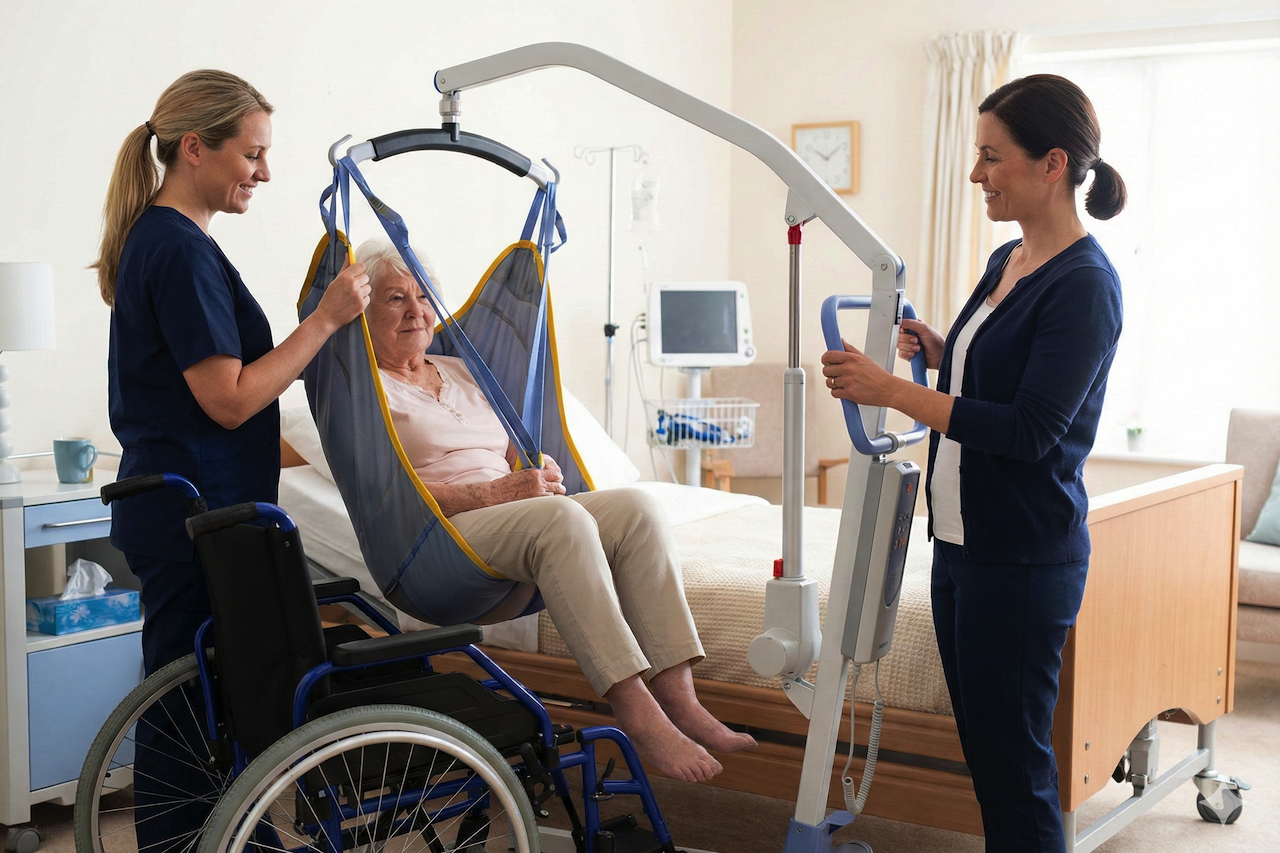
A patient hoist is a highly useful medical device that people outside the healthcare industry sometimes misunderstand. Many assume it is simply an ordinary lifting device used in hospitals. In reality, this device serve a much broader purpose. For individuals who have lost the ability to move independently, this transfer equipment can be a significant support. Not only that, but this medical equipment also makes caregivers' jobs easier and safer. You can easily spot this mobility tool in hospitals, nursing homes, medical clinics, and other home care environments. It can reduce the physical burden of carrying the user. Those unfamiliar with this equipment can find more information about this equipment here. Let's learn more about this device in detail.
What are Patient Hoists?
Patient lift, or hoist, is a common medical device used for individuals with limited mobility or who cannot move independently. If a person cannot walk or stand independently and requires support, caregivers can use a lift to move them safely. With the help of the slings and harnesses attached to this equipment, caregivers can easily relocate the person and move their body parts as required. When used correctly, the device is designed to support safe transfers. Every hospital and medical facility, such as nursing homes and clinics, has this type of device installed to benefit medical staff and care recipients.
Innovation and History
Patient hoists have been around since the 19th century. They have evolved through numerous upgrades and are now extremely reliable pieces of medical equipment. Lord Armstrong created the first version of this device in 1845. At that time, it was only a block-and-tackle device, with several limitations in use. In 1949, Ted Hoyer and his cousin Victor Hildeman created a sling-based version of his device. After a few modifications, it entered the commercial market in 1950. The model was an improved version of the block-and-tackle device used earlier. Many upgrades were made after that, and we now have the current version of this device. Today, this assistive mobility device, often referred to as a hoist for the elderly and patients, is used almost every day in healthcare and home care settings. They are extremely powerful, can carry and support up to 600 pounds, have auto-sensing capabilities that automatically adjust slings, and feature voice-over command functions and hands-free options. All of these features have greatly benefited the medical world and caregivers. Studies report up to 50% fewer injuries during care recipient transfers and a reduction in staffing requirements by approximately 20%.
What is the Importance of a Hoist?
The listing eqipment plays a significant role in supporting elderly, physically disabled, and medically challenged individuals who require caregiver assistance.
Safety of Patients
In medical facilities, you may need to move individuals from one location to another for various reasons. Sometimes, movement becomes difficult when the person cannot move due to a critical injury or is elderly and has lost mobility. In such scenarios, caregivers use hoists to prevent falls, strain, and other transfer-related injuries. Studies have shown that after using lifting equipment, accidents such as skin tears, bruises, falls, and strains during transfers have decreased significantly.
Caregiver Support
Previously, caregivers had to carry patients, which placed significant physical strain on them. They became exhausted during the process and sometimes sustained injuries. Since the introduction of mechanical lifting support, reliance on physical strength has decreased significantly. This device has become a lifesaver for caregivers.
Patient Dignity
Using hoists for individual mobility minimizes direct physical contact during transfers. In the past, manual handling increased the risk of unnecessary contact and awkward positioning. Transfer equipment help preserve personal dignity, respect, and comfort throughout the transfer process.
Cost Savings
Mechanical lifting systems reduce manual dependency. When the device is used for transfers, you don't need multiple people to carry the individual. Rather, you need a trained caregiver who can operate the auto-sensing transfer equipment effectively. When you overcome physical dependency, this reduces workforce requirements, ultimately lowering the overhead costs of hospitals and nursing homes.
What are the Different Types of Hoists You Can Find?
Patient lifts, or hoists, for elderly individuals and medically dependent users are available in several types, each designed to support different mobility needs and care environments.
Mobile Floor Hoists
This is a wheeled lifting system or lift device that can be rolled anywhere. These equipment are ideal for small spaces. You can see mobile floor assistive mobility devices in use in hospitals and care homes. There is a base for this device that you must place under the user's bed. The device includes an attached sling and a hand pendant, with which you lift the individual.
Ceiling Hoists
Such devices move through some tracks that you have to install on the ceiling. There will be a motorised trolley which will transport the user and move through the overhead tracks. The unit can lift to 500 kg and operate very efficiently.
Sit-to-Stand Lifts
Sit-to-stand hoists use a chest support and knee pad to allow individuals to move from a sit to a stand position and vice versa. Individuals who have some leg strength can use this type of support.
Bariatric Hoists
These are heavy-duty hoists, designed for users weighing up to 1,000 lb. The device features a specialized sling and a robust design, and is available in both mobile floor and ceiling track types. The special design evenly distributes the body weight evenly for easy transfer.
Bath Hoists
These hoists are designed to allow users to easily enter and exit pools, spas, and tubs, ensuring a comfortable bath. The device features a rotating seat, a hydraulic system, and remote-control operation for smooth lifting.
Pediatric Hoists
These hoists are specially designed for pediatric use. The lift has manual, hydraulic, and automatic features. Pediatric hoists are also available with mobile or ceiling-track options.
How Does a Hoist Work?
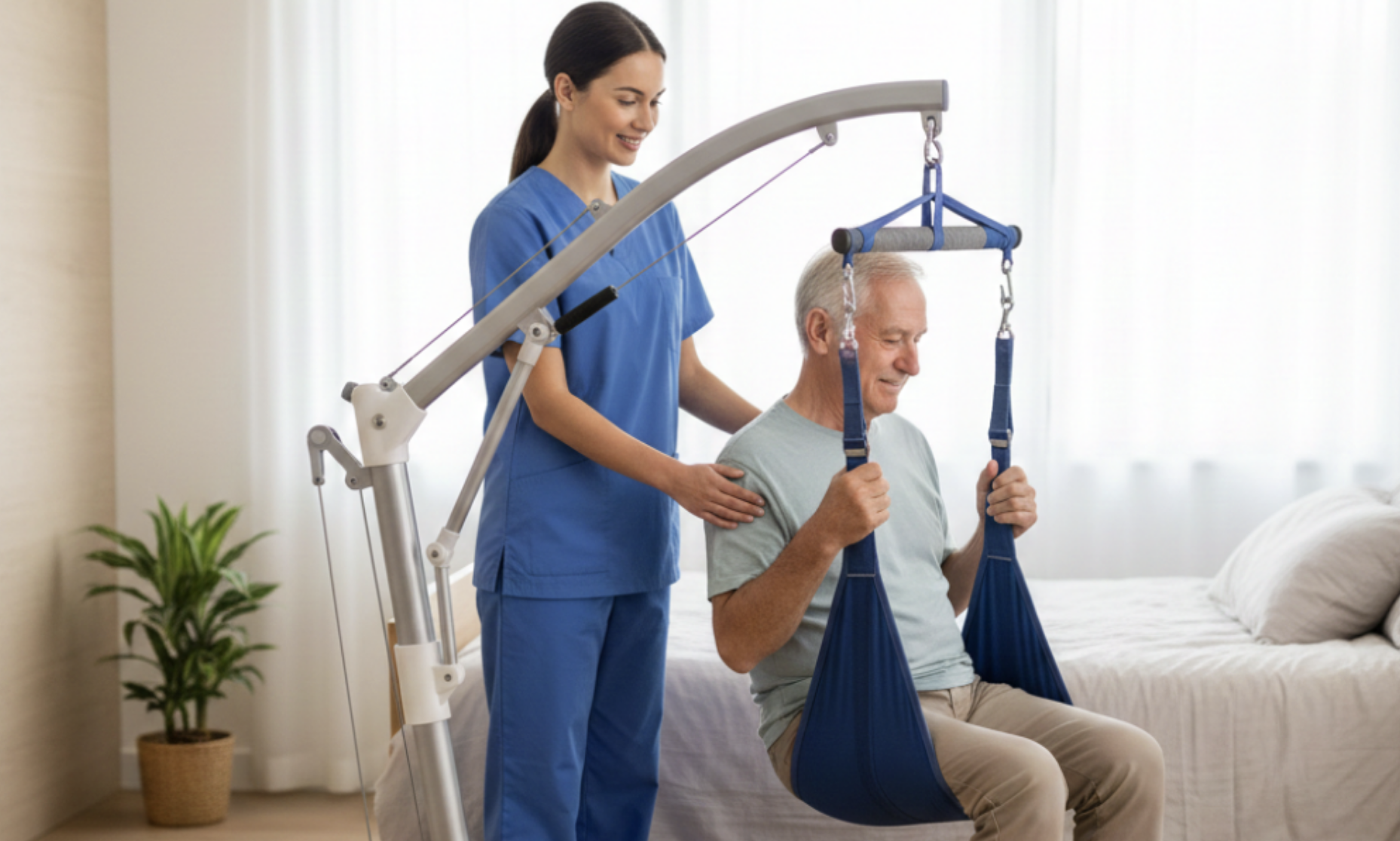
These lifts or hoists can be manual or automatic. Automatic devices use hydraulic or battery-powered systems to enable safe transfers. The equipment typically functions through the following step-by-step process:
- Ensure caregivers are familiar with the device and understand its proper use.
- Select the appropriate device based on individual condition, weight, and level of mobility.
- Confirm exact weight and choose the correct sling accordingly.
- Plan the transfer route in advance and remove any obstacles to ensure a safe movement path.
- Position the equipment correctly, spread the base legs, and engage the brakes to ensure stability.
- Gently roll the individual to one side and position the sling properly beneath them.
- Attach the sling securely and double-check all connections.
- Begin lifting in a controlled and steady manner.
- Lower gently when required, ensuring proper alignment and support before releasing the sling.
Benefits of a Hoist
There are many benefits to using lifting equipment for both patients and caregivers.
Benefits for the Patients
Patients can have a safe, secure, and dignified experience thanks to the hoist system. The device ensures individuals are comfortable during transfer, minimizing the risk of falls, injuries, tissue damage, and other physical harm that can result from manual lifting. They support frequent movement and also influence care recipient independence. Users can participate in a few daily activities without physical dependence. It is very overwhelming for a person to lose their mobility completely. When you depend on others to move even an inch, this could be very disheartening. Using mechanical lifting support can give care recipients greater confidence, reducing reliance on manual assistance.
Benefits for the Caregivers
Previously, when a person's mobility depended entirely on manual lifting, caregivers had to use significant physical strength to lift them. This brought harm to their health. They had to suffer from muscle strains, back pains, and other physical injuries. With hoists, the risk of physical injuries to caregivers have decreased significantly. This equipment saves time and effort. Manual transfers require significant time and effort to lift and move individuals carefully. With the introduction of hoist facilities in the medical field, caregivers can save significant time and energy. You only need a single caregiver to operate the system due to its compactness and versatility. As a result of using lifts, workforce reduction is also possible, which in turn will save significant money.
Safety Checks You Must Follow While Using a Hoist
Performing a thorough check is required when using lifting equipment.
- Move the arms up, down, forward, and backward to ensure smooth operation.
- Inspect the wheels for proper alignment and movement, and remove any debris, dust, hair, or obstructions that may affect mobility.
- Check the main frame and body for physical damage, loose nuts, cracks, or structural defects.
- Examine all cables carefully for signs of wear, damage, or looseness to prevent transfer-related accidents.
- Inspect the sling for wear, fraying, loose stitching, or damage, and confirm the correct size, type, and inspection date.
- Ensure all clips, hooks, and attachment points are secure and free from damage.
- Test the lifting and lowering mechanisms to confirm proper function, including battery-powered or hydraulic systems.
- Check that the brakes engage and release properly to maintain stability during transfers.
- Verify the device is compatible with the selected sling and appropriate for the user's weight.
- Confirm the device is clean and properly disinfected before and after each use.
Conclusion
Because mobility needs vary, caregivers must know how to select the appropriate lifting equipment. Devices designed for elderly users may not be suitable for pediatric care, so understanding the available options is essential. Caregivers should be well trained in proper operation and ensure that regular professional inspections are performed. Since patient safety is always the priority, all equipment must be checked for proper condition before use to help protect both patients and caregivers.
Featured Image generated by Google Gemini.
Related Articles

June 5, 2026
The Side Effects of GLP-1 Weight Loss Medications Some Patients Might Not Be Aware Of
GLP-1 receptor agonist medications have fundamentally changed the weight management landscape. Injectable treatments containing semaglutide and tirzepatide have produced levels...
Read More
November 15, 2025
Home Nursing A to Z: Bringing Quality Care to Your Home
When it comes to maintaining health and comfort at home, having trusted medical support makes all the difference. From post-surgery recovery to elderly care, professional home nurs...
Read More
November 20, 2024
Your Guide To Senior Helplines In Canada: Where To Find Help
Being old isn’t always easy. Sometimes, you deal with problems that influence nearly all areas of your life, such as your health and finances. Throw in loneliness, and things only...
Read More
Comments
Comments are available to signed-in users and are moderated to keep the discussion useful and respectful. Spam, automated submissions, and low-value promotional comments are removed. Outbound links may be approved when they are relevant and genuinely helpful to readers, but they are displayed as plain text rather than clickable hyperlinks.
No comments have been published yet.
Please sign in to submit a comment.