
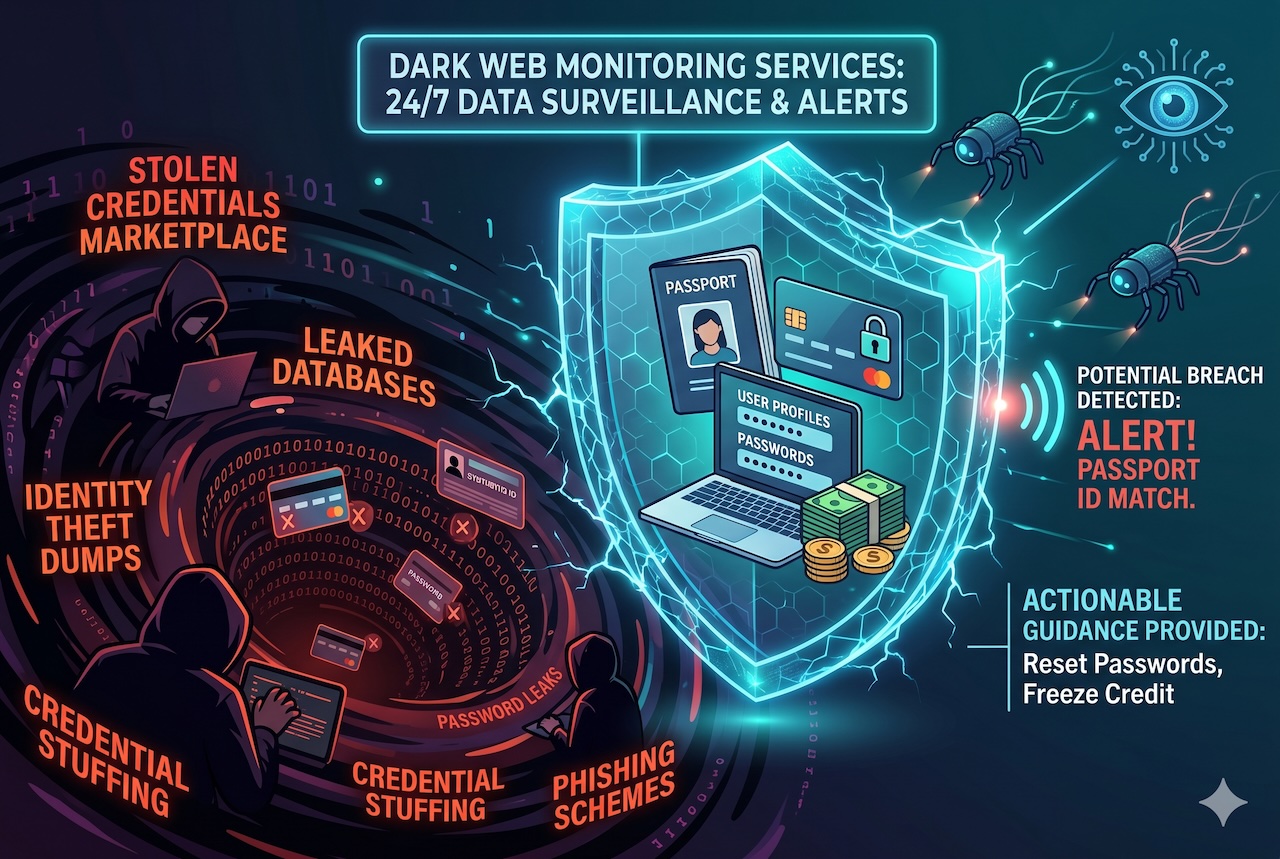
Billions of records get exposed in data breaches every year, and the numbers keep climbing. Stolen credentials, financial details, and personal information find their way into hidden marketplaces that most people will never stumble across. And the scary part? Many victims have no idea until the damage is already done. Fortunately, there are dedicated protective tools to safeguard your data. Knowing how they operate behind the scenes can help you stay one step ahead of identity theft, fraud, and lasting financial harm.
What Happens to Stolen Data
Compromised information rarely sits idle after a breach. Cybercriminals bundle it up and sell it through encrypted forums and underground exchanges. Email-password pairs, Social Security numbers, banking credentials, and medical records all carry a price tag on these platforms. Buyers leverage that data for account takeovers, synthetic identity creation, and targeted phishing campaigns. A reliable dark web monitoring service scans these hidden channels around the clock, sending alerts the moment your information appears. Without that visibility, months or even years can slip by before you realize that your records have been circulating among bad actors.
How Monitoring Tools Detect Exposed Information
Automated Scanning of Hidden Channels
These platforms rely on specialized crawlers that reach encrypted sites, paste repositories, and private chat rooms. The automated systems index leaked databases and cross-reference entries against your registered details. The moment a match turns up, an alert goes out. Speed is critical here; acting quickly can shut down unauthorized access before criminals get a chance to exploit anything.
Credential and Financial Data Tracking
Advanced tools go well beyond email addresses. They track bank account numbers, credit card details, phone numbers, and even passport identifiers. Some also keep tabs on usernames linked to social media or financial platforms. That breadth of coverage means various types of sensitive records get flagged, not just login credentials.
Key Benefits of Continuous Surveillance
Early Breach Detection
Most people hear about a data compromise through news reports or a company email, often weeks after the actual event. Monitoring services shrink that window considerably. Faster detection buys you time to change passwords, freeze credit lines, and contact financial institutions before any unauthorized charges go through.
Reduced Risk of Identity Theft
Identity fraud cost consumers over $43 billion in 2023, based on published research by Javelin Strategy. Ongoing surveillance helps cut that risk by catching exposed records early. With timely alerts, you can take corrective action (for instance, enabling multi-factor authentication or placing fraud alerts on credit files) well before criminals make their move.
Peace of Mind Through Transparency
There is real comfort in knowing a dedicated system is watching for leaked information. Instead of checking manually or simply hoping for the best, you receive direct notifications. That transparency shifts the balance of power away from attackers and puts it back in your hands.
What to Look for in a Monitoring Solution
Not every service delivers the same depth of coverage. A few critical factors separate effective platforms from basic ones.
- Scope of Scanning: Services that cover forums, marketplaces, data dumps, and encrypted messaging platforms offer far broader protection than those limited to surface-level searches.
- Alert Speed: How soon you’re notified is just as important. A tool that pushes notifications within minutes of detection gives you a more favorable window to respond.
- Actionable Guidance: This is what sets robust platforms apart. The best services pair each alert with clear next steps, such as which password to reset or which account to lock down, rather than leaving you to sort things out by yourself.
Practical Steps to Strengthen Personal Security
Monitoring is one piece of a larger puzzle. Pairing it with strong habits makes the protection far more effective. Using unique passwords for every account prevents a single breach from compromising multiple services. Enabling two-factor verification puts another barrier between attackers and private accounts. Regularly reviewing bank and credit card statements helps catch suspicious activity that automated tools might miss.
Freezing credit through the major bureaus is another powerful move. A frozen credit file stops anyone from opening new accounts under a stolen identity, even if they hold every personal detail needed to apply.
Wrapping Up
Hidden corners of the internet remain active marketplaces for stolen personal information, and that reality is not going away anytime soon. Monitoring services function as an early warning system, catching exposed data before criminals can use it. Paired with strict security habits, these tools offer a meaningful line of defense against identity theft and financial fraud. Taking that step today can save real trouble, real money, and a great deal of stress later on.
Featured Image generated by Google Gemini.
Share this post
Leave a comment
All comments are moderated. Spammy and bot submitted comments are deleted. Please submit the comments that are helpful to others, and we'll approve your comments. A comment that includes outbound link will only be approved if the content is relevant to the topic, and has some value to our readers.
Comments (0)
No comment