
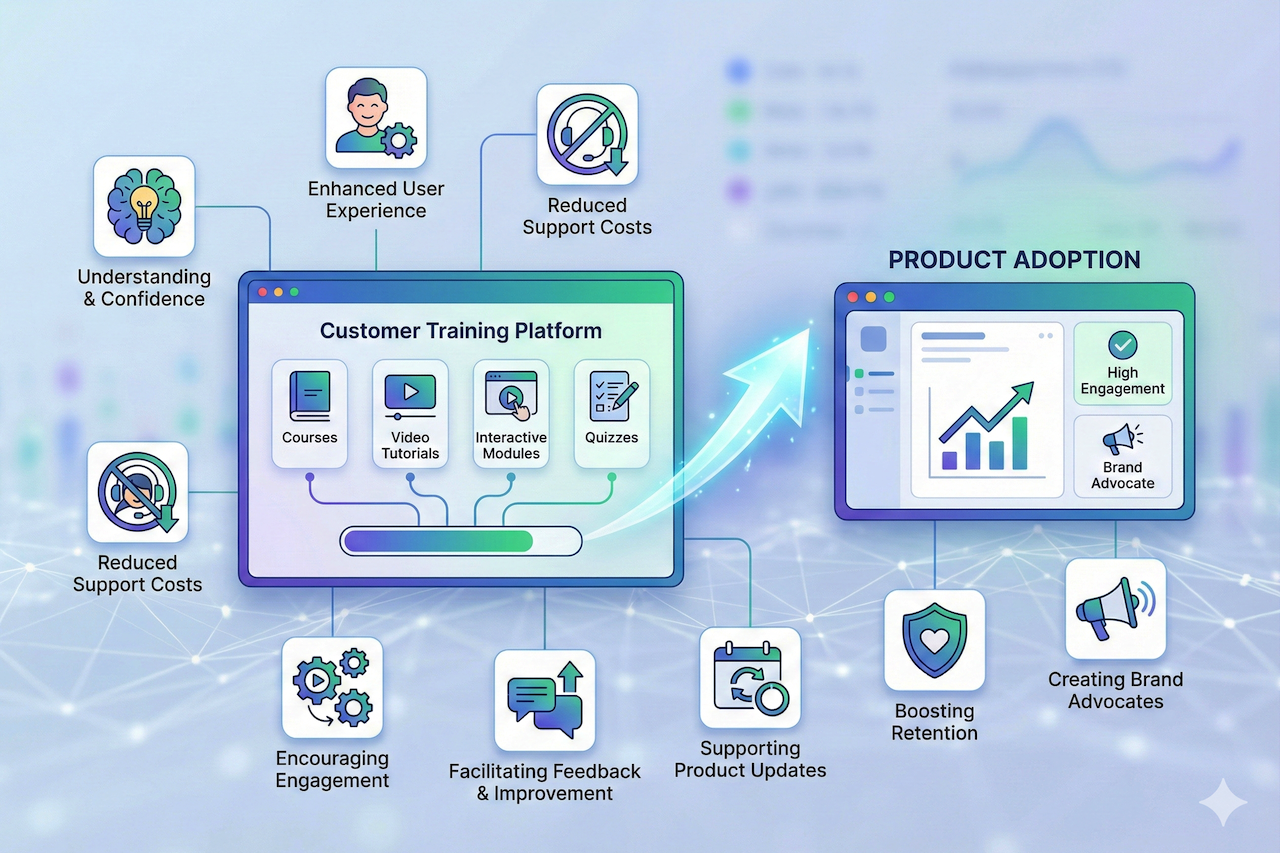
As the marketplace shifts, companies are placing different levels of focus on making sure customers know how to get the most out of their products. Customer training helps deliver the knowledge and skills users need, setting the stage for stronger product adoption. In this article, we will explore how customer training supports adoption and why it is a vital component of your business.
Understanding Customer Training
Customer training can include a range of resources, such as courses, tutorials, videos, guides, and interactive sessions, often delivered through customer training platforms. These platforms help organize and distribute learning content at scale, focusing on helping customers understand a product’s features and benefits. This builds confidence and trust while also strengthening brand loyalty by creating a smoother onboarding and ongoing learning experience.
Enhancing User Experience
A strong user experience is essential. If customers hate using your product, adoption will not happen. Customer training supports customized learning journeys, so users do not have to scroll through content to find what they need. That gives the end user a feeling of connection to the product. It also fuels retention, because once people know how the product works for them, most will stick around.
Building Customer Confidence
When it comes to product adoption, confidence is key. Customer training is a strong way to support a customer-centric journey by giving customers what they need to use a product to its fullest. A confident user is an exploratory user. When people feel capable, they try more features, get better results, and ultimately reach higher satisfaction and stronger brand loyalty.
Reducing Support Costs
When done well, customer education can significantly reduce support costs. When users understand a product, they require less assistance. Training also gives customers self-service resources, reducing the need for your support team to intervene. Fewer support requests translates into saved time and money for businesses.
Encouraging Product Engagement
Engagement is a major part of the product adoption equation. Customer training encourages a “learn and apply” mindset after onboarding. It can include engaging content such as quizzes, short modules, and guided tasks to maintain a healthy level of interaction. As users continue to engage with the product, they build mastery over time, which supports stronger retention.
Facilitating Feedback and Improvement
Customer training can also provide insight into how users perceive your product. When feedback is collected through training touchpoints, it can highlight areas where the product or onboarding experience needs improvement. Companies can apply this knowledge to deliver a better product experience that matches customer needs. When users see their feedback lead to change, they stay. They feel valued.
Supporting Product Updates
Products evolve, so training should evolve too. Customer training helps keep users informed when new features are released or workflows change. New functionality can be introduced in a user-friendly way, without overwhelming customers. Companies should also refresh training materials to reflect new features as they emerge. This approach is less intrusive, keeps users confident, and reduces friction during updates.
Boosting Customer Retention
Acquiring new customers matters, but onboarding and ongoing success are just as important. User engagement and satisfaction often depend on the quality of training customers receive. Offering continuous learning increases value over time. The longer you provide that value, the more you build relationships with customers. The more engaged they are, the more likely they are to become long-term customers.
Creating Brand Advocates
When customers know what to expect and how to get results, they often become your best advertisers. Training can work as long as you support each user with a good learning experience. Satisfied users share what works, and word of mouth can take a company further than the company can reach alone. This helps support growth by creating buzz through customer recommendations.
Conclusion
Customer training is instrumental in driving product adoption. It enhances the user experience, builds confidence, and reduces support costs. It also encourages engagement and feedback, supporting ongoing product and onboarding improvements. Customer training helps users stay informed about updates, increases retention, and turns satisfied customers into brand advocates. For companies looking to make their mark, investing in customer training is a practical place to start, because adoption begins when customers are not only aware of your product, but confident using it.
Featured Image generated by Google Gemini.
Share this post
Leave a comment
All comments are moderated. Spammy and bot submitted comments are deleted. Please submit the comments that are helpful to others, and we'll approve your comments. A comment that includes outbound link will only be approved if the content is relevant to the topic, and has some value to our readers.
Comments (0)
No comment