
Why do some online stores grow rapidly while others struggle to keep up? The difference lies in the platform behind the store. Customers today expect lightning-fast performance, personalized experiences, and seamless navigation every time they shop. Off-the-shelf solutions may launch a store quickly, but they often hit a growth ceiling, limiting your ability to innovate or scale. Custom ecommerce development changes the game; it can transform ordinary stores into high-performance engines built to handle traffic surges, automate complex operations, and deliver tailored experiences that keep customers coming back. With a custom solution, scaling isn’t just an option; it’s inevitable.
Why Generic Ecommerce Platforms Can Limit Growth
Off-the-shelf platforms such as Shopify, WooCommerce, or Magento are often used as an initial step for many businesses. While these platforms offer convenience and speed, they will have certain limitations. For starters, there is usually limited design flexibility with pre-made templates. This makes it difficult for brands to visually differentiate themselves. The performance may also be intermittent, particularly during peak traffic periods, such as seasonal sales or promotions. Also, numerous features depend on third-party extensions, which may lead to compatibility issues, higher costs, and security risks. While suitable for initial store launches, these platforms often create roadblocks for businesses aiming to grow rapidly, innovate freely, or deliver unique customer experiences. Custom ecommerce development overcomes these obstacles by creating a solution that meets your business requirements.
What Are the Benefits of Custom Ecommerce Development
Custom development enables businesses to create a platform that best suits their objectives and customer demands. So it’s not just about aesthetics; it also offers technical functionality, operational effectiveness, and strategic flexibility that generic platforms do not.
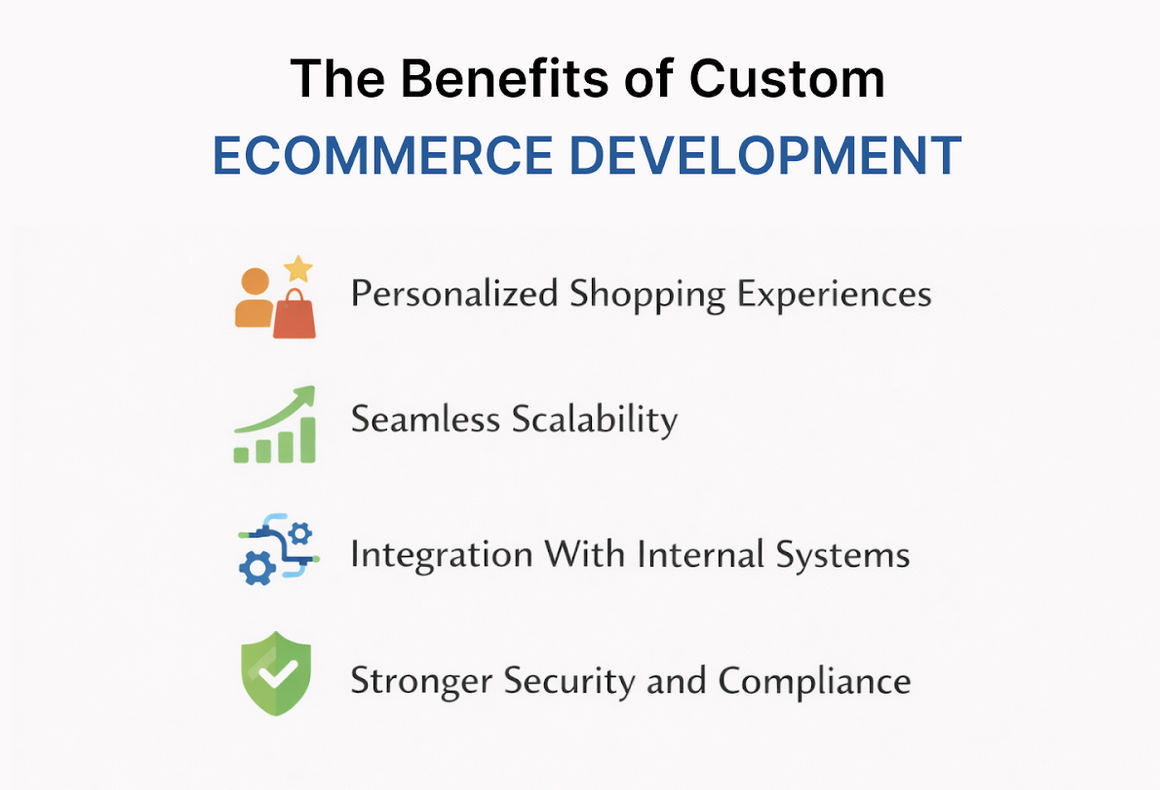
Personalized Shopping Experiences
Each brand has its unique products, workflow, and customer behaviors. These platforms enable businesses to implement highly personalized shopping experiences. From AI-powered product recommendations to dynamic pricing, personalization keeps customers engaged, drives conversions, and builds brand loyalty.
Seamless Scalability
Handling high traffic without affecting performance is critical for growth. Custom-built platforms can be designed to handle thousands of simultaneous users, ensuring high page load speeds and a hassle-free checkout process. So, in the event of a flash sale or even a seasonal peak, companies can expand operations without fear of slowing down or experiencing downtime.
Integration With Internal Systems
Modern businesses are dependent on various inventory, analytics, and customer management tools. These platforms integrate seamlessly with ERPs, CRMs, payment gateways, and analytics applications. This creates an integrated system that minimizes manual labor, enhances operational efficiency, and enables information-led decision-making.
Stronger Security and Compliance
Online stores that handle sensitive customer data make security their top priority. Custom solutions enable businesses to implement high-level encryption and secure payment systems, and to adhere to regulations such as PCI-DSS and GDPR. The dependency on third-party plugins is also minimized, which means there is a low risk of vulnerabilities being exposed, helping build customer trust and long-term retention.
Custom vs Off-the-Shelf Ecommerce: A Direct Comparison
To better understand the advantages of a custom-built platform, consider the following comparison with generic solutions:
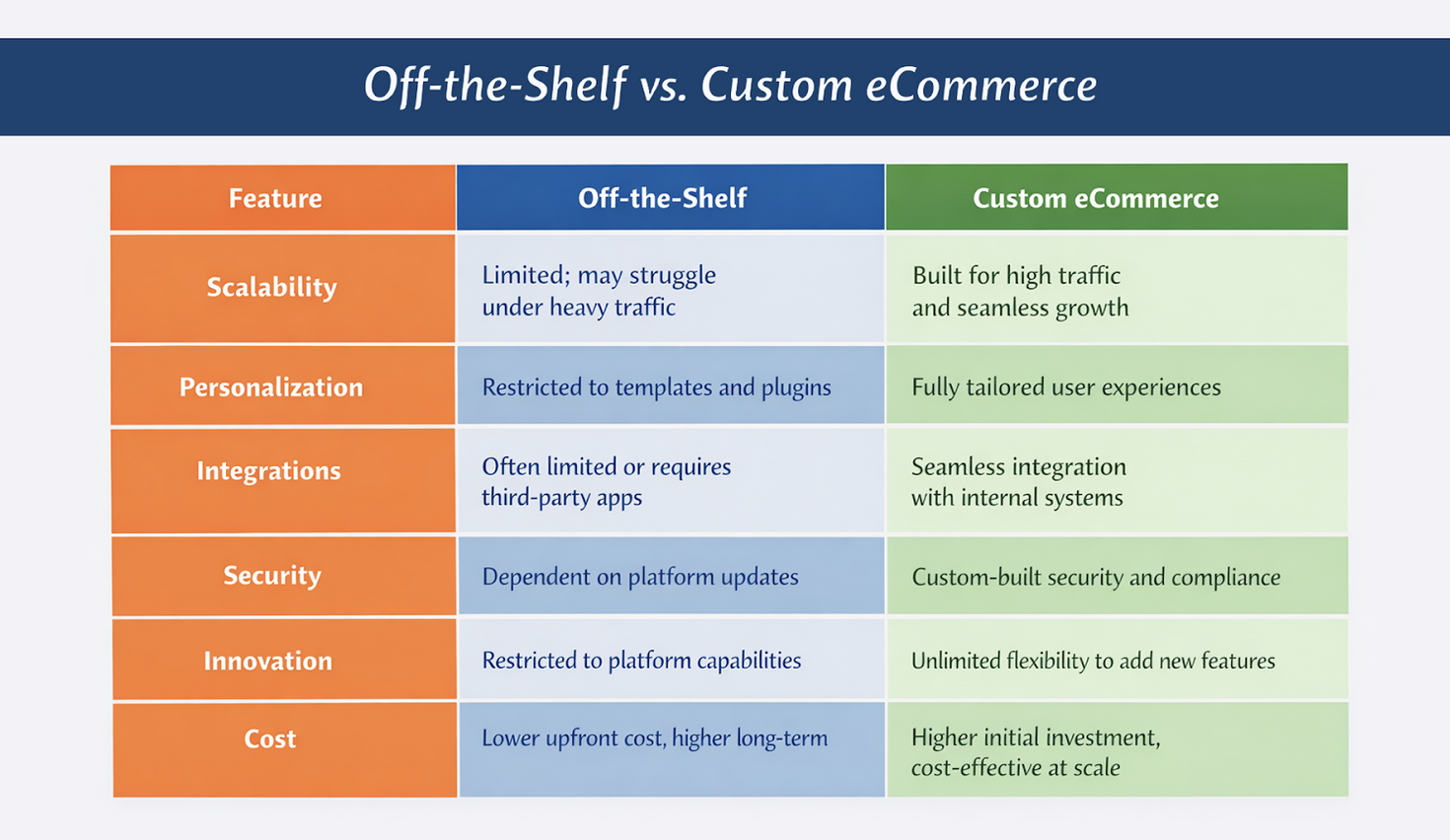
This table highlights that off-the-shelf solutions may be suitable for quick deployment. Custom-built platforms provide the flexibility, security, and performance needed to scale efficiently and sustainably.
Transforming Operational Challenges Into Growth
Custom-built platforms turn bottlenecks into advantages. Brands can make checkout flows smoother to reduce cart abandonment, use AI recommendations to increase average order value, and personalize the user experience across the customer journey.
Expanding globally is easier with a custom solution. Multi-language, multi-currency, and region-specific features can be included from the start. This lets businesses enter new markets without having to rebuild their platform. By aligning technology with business needs, these platforms turn operational challenges into opportunities for growth.
Real-World Impact: How Brands Scale Faster With Custom Development
Several businesses have successfully leveraged custom-built solutions to accelerate growth:
- High-Traffic Retailers: Optimized server architecture and front-end performance allow millions of users to shop simultaneously during flash sales without downtime.
- Subscription-Based Businesses: Platforms automatically manage recurring billing, personalized offers, and retention strategies.
- Global Brands: Multi-region support, including languages, currencies, and compliance requirements, enables seamless international expansion.
In every case, the custom platform did more than support growth; it actively enabled it, creating a foundation for scalability, improved performance, and enhanced customer satisfaction.
Conclusion
Custom development is a strategic investment for businesses that want to scale faster, perform better, and deliver memorable customer experiences. Unlike generic platforms, these platforms provide the flexibility, performance, security, and integration capabilities needed to support rapid growth.
By offering tailored shopping journeys, optimized performance during peak traffic, and the ability to innovate continuously, custom-built online stores transform from simple online shops into dynamic growth engines. Businesses investing in custom solutions aren’t just keeping pace with the market; they’re building platforms designed to expand, adapt, and thrive in an increasingly competitive digital landscape.
Share this post
Leave a comment
All comments are moderated. Spammy and bot submitted comments are deleted. Please submit the comments that are helpful to others, and we'll approve your comments. A comment that includes outbound link will only be approved if the content is relevant to the topic, and has some value to our readers.
Comments (0)
No comment