
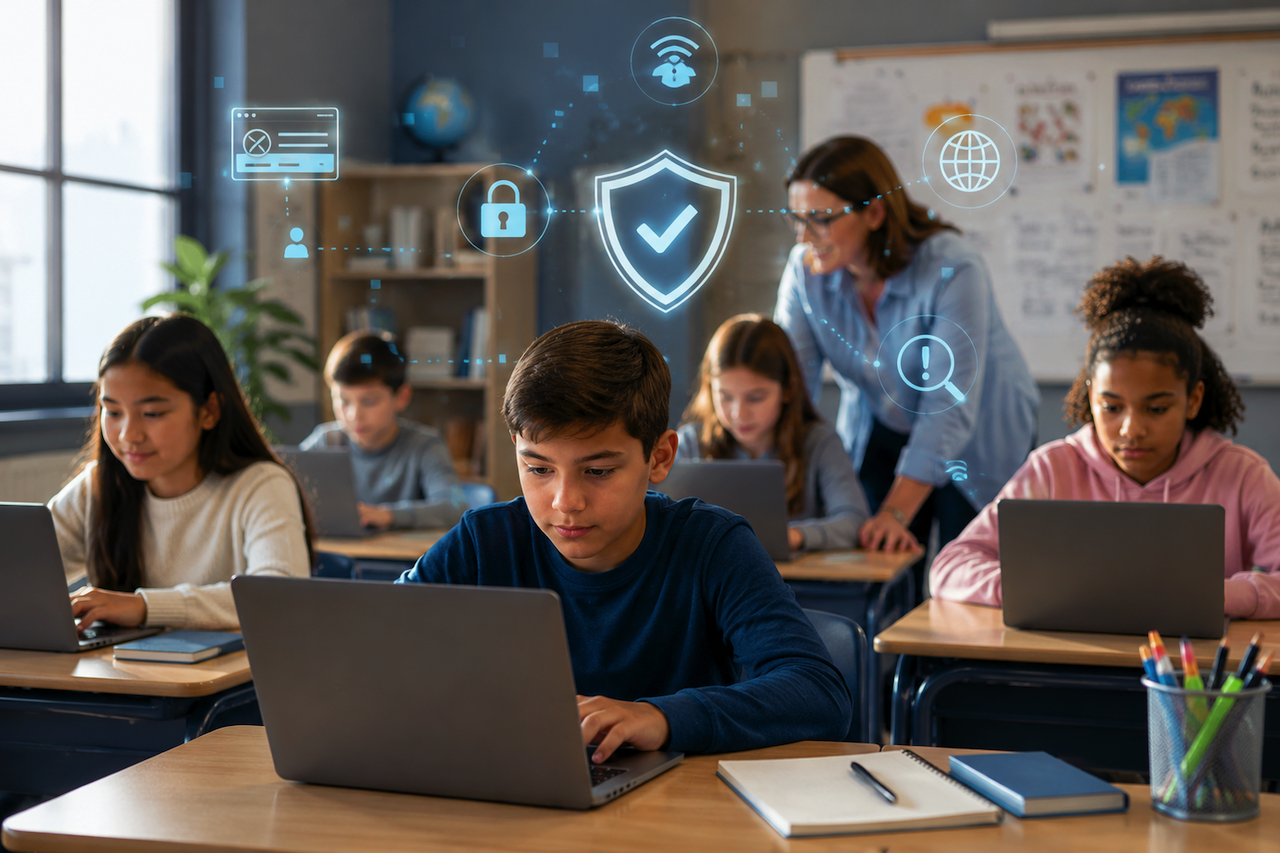
Students access vast amounts of information and collaborative platforms daily. This exposure brings specific risks. They encounter inappropriate material, cyberbullying, phishing attacks, and other online threats regularly. Managing these risks requires structured boundaries and a broader approach to digital safety. Content filtering software is one of several tools schools may use alongside cybersecurity practices, online safety policies, and digital citizenship programs to help create safer learning environments.
Remote learning introduces additional complications. When students log into online tutoring platforms from home networks, they often lack the protections found on campus. Schools increasingly rely on a combination of content filtering, cybersecurity practices, acceptable-use policies, and digital citizenship programs to help create safer learning environments. These measures help protect students while they complete assignments or receive academic support.
The Growing Need for Digital Safety
Technology adoption in education has accelerated rapidly over the last five years. Cybersecurity analysts note that schools frequently experience targeted attacks. Students remain among the most vulnerable users within these environments. They also face risks associated with the content they consume and the platforms they use.
Viewing violent or explicit material can contribute to emotional distress and other negative outcomes. Cyberbullying presents another persistent threat and may directly affect academic performance and mental health. Establishing clear boundaries and promoting responsible technology use helps schools mitigate these issues and maintain safer digital learning environments.
The Role of Content Filtering
Content filtering is one of several approaches schools use to manage online activity. These systems evaluate web traffic against predefined rules. When a user requests a website, the destination may be checked against categories associated with inappropriate content, gambling, malware, phishing, or other online risks.
Modern filtering approaches do not rely exclusively on static lists. Many systems analyze web pages dynamically, helping identify inappropriate material on newly created websites and user-generated platforms. When used alongside broader cybersecurity and educational initiatives, content filtering can help reduce exposure to harmful online content.
Key Components of Effective Online Safety Programs
Administrators often rely on several capabilities to support student safety and network security:
- Access Controls: Rules can be tailored to different age groups, user types, or devices. High school students may receive broader access than elementary students.
- Real-Time Threat Detection: Dynamic analysis can help identify emerging threats before they reach users.
- Monitoring and Reporting: Activity data may help administrators identify potential safety concerns and unusual behavior patterns.
- Encrypted Traffic Inspection: Since much of today's web traffic is encrypted, additional security measures may be required to detect threats hidden within HTTPS connections.
Enhancing Academic Focus and Productivity
Student safety is a primary objective, but maintaining academic focus is also important. The internet provides access to countless resources, yet it also contains numerous distractions. Social media, gaming platforms, and entertainment sites can interfere with learning when used inappropriately during instructional time.
Many schools restrict access to non-educational sites during school hours to help students concentrate. This practice is especially relevant in one-to-one device environments, where every student has access to a laptop or tablet. Without appropriate safeguards, these devices can become sources of constant distraction.
Usage insights may also help educators better understand how students interact with educational resources. These observations can support lesson planning and identify opportunities for additional academic support.
Addressing Privacy and Security Concerns
Online safety measures raise valid questions about student privacy. Schools must balance protection with digital autonomy. Transparency helps maintain that balance. Administrators should communicate their monitoring policies clearly so that parents and students understand what information is collected and how it is used.
Protecting student data is both a legal and ethical responsibility. Browsing histories, activity logs, and behavioral alerts may contain sensitive information. Educational institutions should ensure that their practices comply with applicable privacy regulations and follow sound cybersecurity principles.
The infrastructure supporting these protections also requires rigorous security. Schools should carefully evaluate third-party services and verify that providers maintain appropriate security standards. As cybersecurity risks in procurement workflows continue to receive greater attention, educational institutions are increasingly expected to assess potential security implications before deploying new technologies.
The Role of Network Intelligence
Understanding the origin of web traffic can improve online safety. Network intelligence provides additional context by analyzing connection patterns and identifying potentially risky activity.
If a connection originates from a known malicious source or uses techniques commonly associated with cybercrime, security systems can respond automatically. This helps reduce the risk of malware infections, phishing attacks, and data breaches.
Artificial intelligence and behavioral analysis are increasingly used to identify anomalous activity that traditional rule-based systems may miss. These technologies help educational institutions adapt to evolving cyber threats. Similar advances can be seen in how AI is changing IP tracking, allowing security systems to analyze connection patterns more effectively and identify potentially suspicious behavior in real time.
Beyond the Classroom
Hybrid learning models extend education beyond traditional school networks. Students access resources from home networks, public Wi-Fi, and mobile connections. This decentralization creates additional security challenges.
Cloud-based services and remote-management tools help schools maintain consistent protections regardless of where students connect. This allows students to access educational resources more safely while supporting modern learning models.
Fostering Digital Citizenship
Technology alone cannot solve online safety challenges. It must be supported by comprehensive education in digital citizenship.
Students need to understand how to evaluate online information, recognize phishing attempts, protect personal information, and make responsible decisions online. These skills help prepare students to navigate digital environments safely both in school and beyond.
Content filtering can support this educational process. When a student attempts to access restricted content, schools can use the opportunity to explain acceptable-use policies and reinforce responsible online behavior.
Conclusion
The internet is a standard tool in modern education, but maintaining a safe digital learning environment requires ongoing effort. Content filtering can play an important role, but it works best when combined with cybersecurity practices, clear policies, transparency, and digital citizenship education.
As digital platforms continue to evolve, schools must adapt their approaches to online safety. A balanced strategy that combines protection, education, and responsible technology use can help students benefit from digital learning while reducing potential risks.
Featured Image generated by ChatGPT.
Share this post
Leave a comment
All comments are moderated. Spammy and bot submitted comments are deleted. Please submit the comments that are helpful to others, and we'll approve your comments. A comment that includes outbound link will only be approved if the content is relevant to the topic, and has some value to our readers.
Comments (0)
No comment