
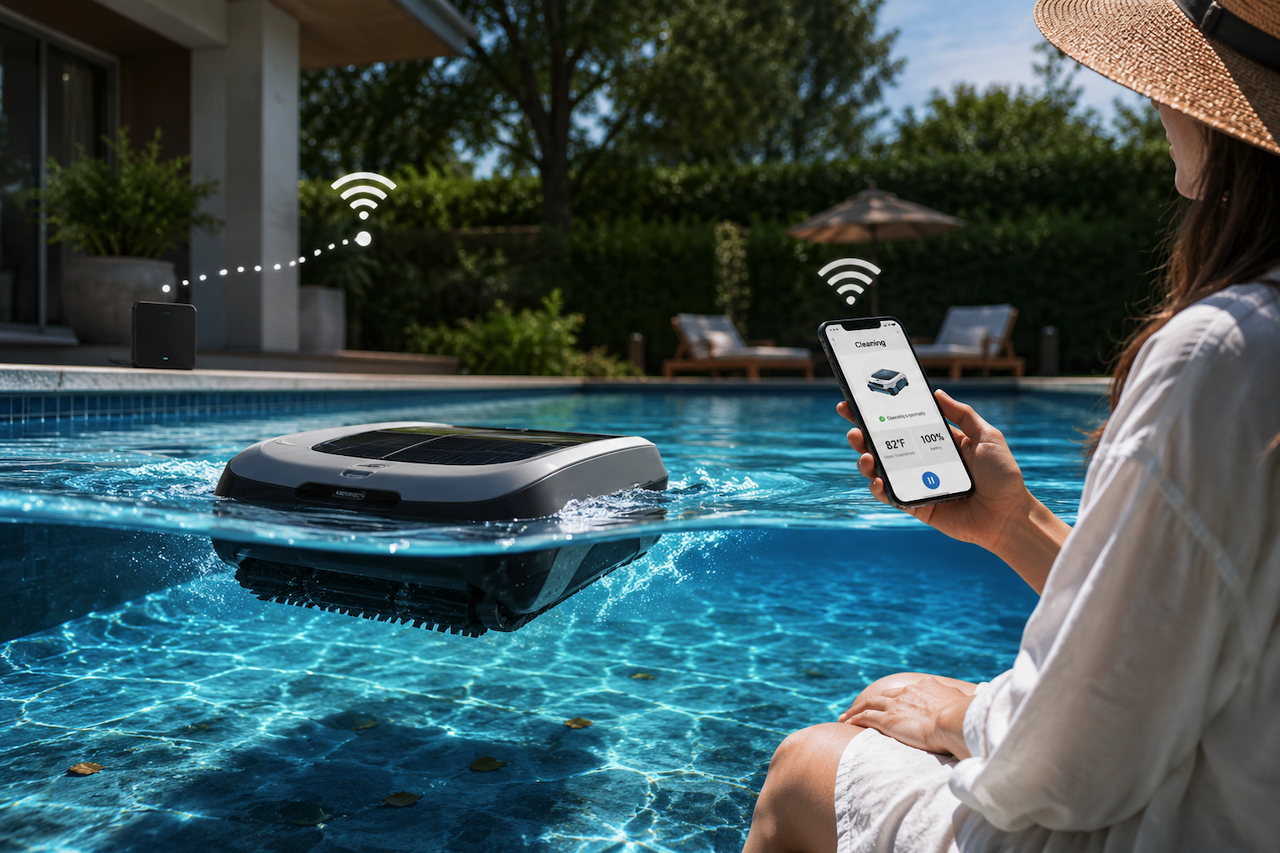
The robotic pool cleaner market has expanded steadily over the past decade, with most advancements focused on navigation systems, battery efficiency, debris handling, and motor design. While these incremental updates have improved usability, broader architectural changes within the category have remained relatively limited.
More recently, some manufacturers have started introducing features commonly seen in other smart-home categories, including gateway-assisted connectivity, remote telemetry, and adaptive scheduling systems.
Although the product itself is only one example within a broader market shift, the technologies being introduced reflect larger trends in outdoor automation, energy management, and connected-device reliability.
The Limitations of Traditional Wi-Fi Connectivity
Many connected robotic pool cleaners rely on direct Wi-Fi communication between the device and a residential router. In practice, outdoor connectivity often becomes unreliable because backyard signal strength can degrade due to walls, landscaping, distance, or interference.
This creates a common issue for connected outdoor devices: smart features depend heavily on stable communication, but the networking environment itself is often inconsistent.
To address this, some newer systems are introducing gateway-assisted connectivity instead of relying solely on direct Wi-Fi. In this setup, a bridge device inside the home communicates with the robotic cleaner using protocols designed for longer outdoor range and more stable communication.
From a technical perspective, gateway-assisted communication may provide several operational advantages:
- Reduced dependence on backyard Wi-Fi strength
- More stable telemetry and status reporting
- Improved reliability for scheduling features
- Fewer app disconnection issues during operation
As more outdoor smart devices enter the consumer market, gateway-assisted connectivity may become increasingly common in categories where traditional Wi-Fi coverage is inconsistent.
Why Weather-Adaptive Scheduling Matters
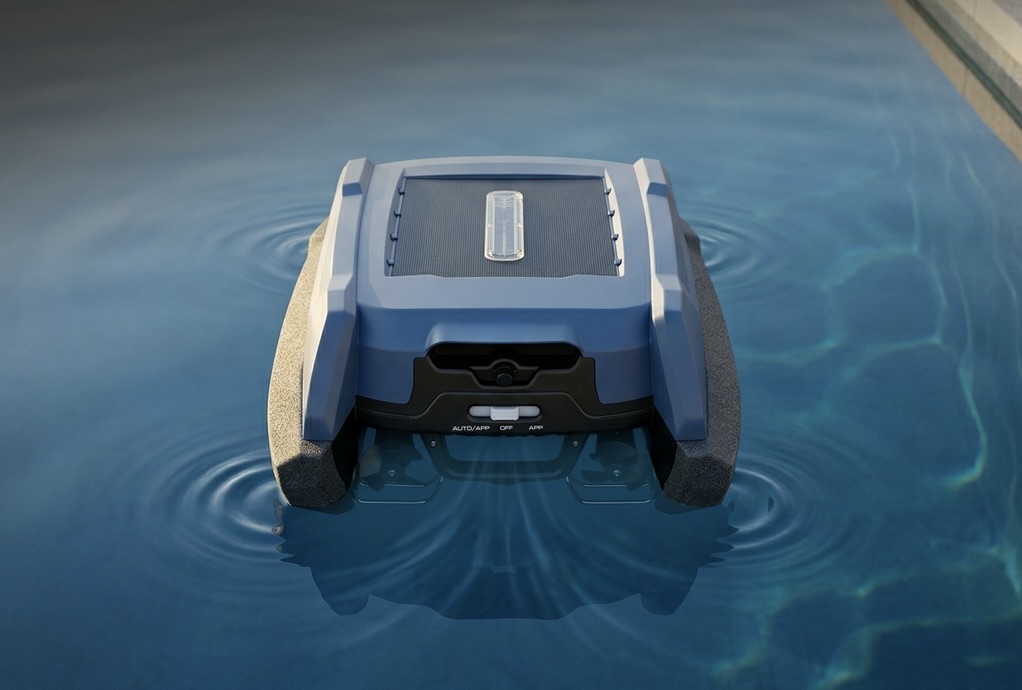
Solar-powered robotic devices operate within constantly changing energy conditions. Available charging capacity can vary significantly depending on cloud cover, shade, seasonality, and pool placement.
Many existing robotic pool skimmers operate on fixed schedules regardless of weather conditions. This can create inconsistent cleaning cycles during extended cloudy periods or result in under-utilized battery capacity during strong sunlight conditions.
Weather-adaptive scheduling attempts to address this limitation by adjusting cleaning schedules based on projected sunlight availability and battery conditions.
Depending on implementation, these systems may support:
- Forecast-aware cleaning schedules
- Battery preservation during lower sunlight periods
- More consistent operation across changing weather conditions
- Scheduling adjustments based on local environmental conditions
Adaptive scheduling concepts are already widely used in categories such as irrigation systems, HVAC automation, and smart lighting. Their appearance in robotic pool cleaning reflects a broader shift toward predictive automation in connected consumer hardware.
Broader Trends in Robotic Pool Cleaner Design
In addition to connectivity improvements, robotic pool cleaner manufacturers continue refining several core hardware features across the category.
Common developments now include:
- Dual-motor systems for improved maneuverability
- Compatibility with both chlorine and saltwater pools
- Soft-touch or low-profile housings designed to reduce surface contact issues
- Tool-free debris basket removal systems
- Hybrid charging approaches combining solar and wired charging
- Remote monitoring features such as temperature and cleaning status updates
Rather than replacing previous generations of robotic pool cleaners entirely, many newer products build incrementally on established hardware platforms while adding software-driven automation and connectivity layers.
Operational Implications for Pool Service Businesses
Connected robotic pool cleaners may also influence how pool maintenance companies and property managers approach routine service operations.
Potential operational impacts include:
- Reduced surface debris accumulation between scheduled maintenance visits
- Remote visibility into device activity and pool conditions
- Additional setup and troubleshooting requirements for connected hardware
- Lower manual intervention during changing weather conditions
Vacation-rental properties and pools with inconsistent maintenance schedules may see particular interest in automated surface-cleaning systems that continue operating between service visits.
At the same time, connected pool devices may introduce new technical considerations involving app configuration, connectivity troubleshooting, firmware updates, and network reliability.
The Direction of the Category
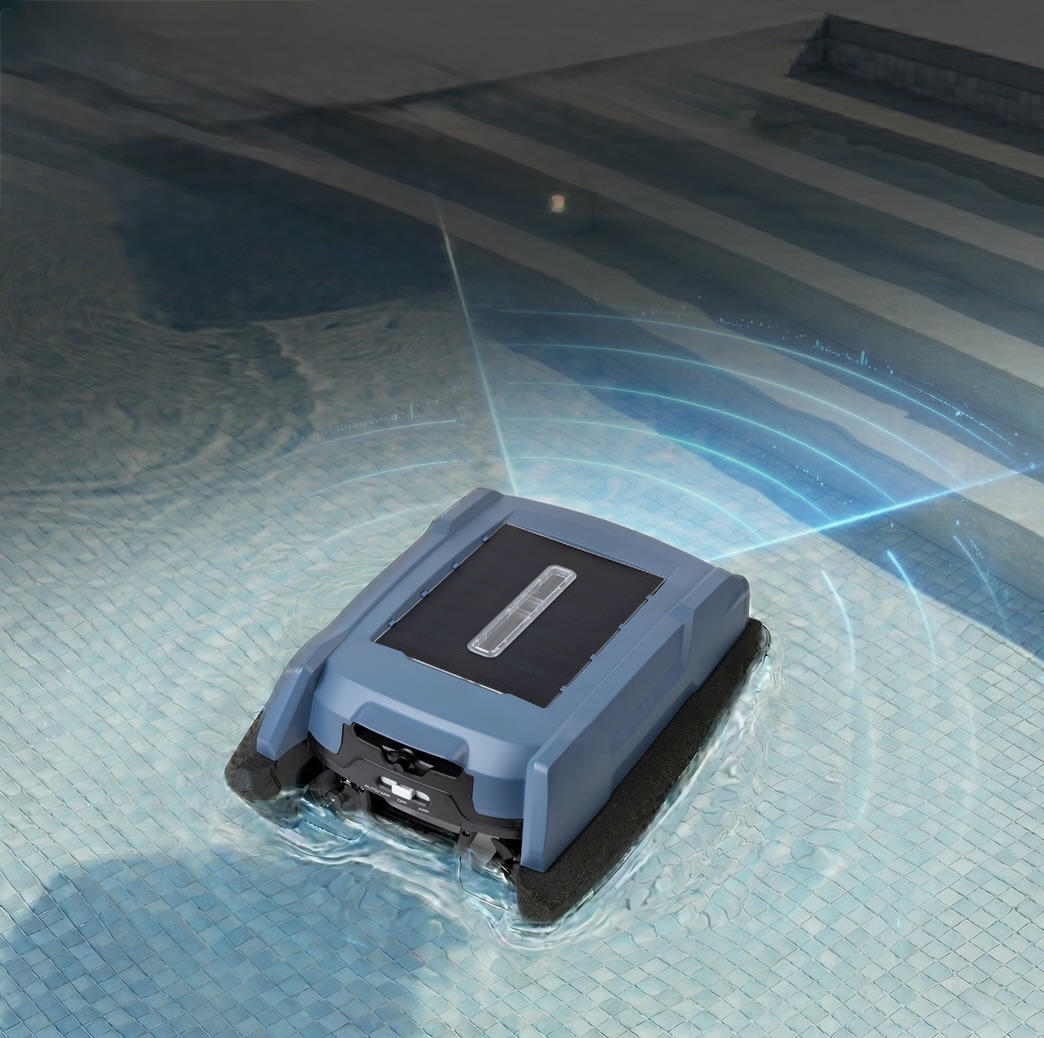
The robotic pool cleaner market appears to be moving toward deeper integration with broader smart-home ecosystems. Features such as adaptive scheduling, remote telemetry, gateway-assisted communication, and predictive automation are becoming more visible across newer product releases.
Whether these technologies become standard expectations across all pricing tiers will depend on long-term reliability, consumer adoption, and cost efficiency. However, the broader direction of the category increasingly mirrors trends already established in other connected-home device segments.
Conclusion
Robotic pool cleaning systems are gradually evolving from isolated automation devices into more connected and adaptive platforms. Gateway-assisted communication and weather-aware scheduling represent two examples of how manufacturers are attempting to improve reliability, energy efficiency, and operational consistency in outdoor environments.
Products such as the Betta Neo reflect how these concepts are starting to appear in consumer pool-cleaning hardware through features such as connected monitoring, adaptive scheduling, and hybrid charging approaches.
As smart-home technologies continue expanding into specialized consumer hardware categories, connected robotic pool cleaners may become increasingly common among residential pool owners, service providers, and property managers looking for more automated maintenance workflows.
Disclaimer
This article is intended for informational and industry discussion purposes only. Product references are provided as examples of broader trends within the robotic pool cleaner category and should not be interpreted as endorsements.
Specifications, features, and availability may change over time. Readers should verify technical details directly with manufacturers before making purchasing decisions.
IPLocation.net is not responsible for the accuracy, availability, performance, or claims associated with any third-party products or services mentioned in this article.
Featured image generated by ChatGPT.
Share this post
Leave a comment
All comments are moderated. Spammy and bot submitted comments are deleted. Please submit the comments that are helpful to others, and we'll approve your comments. A comment that includes outbound link will only be approved if the content is relevant to the topic, and has some value to our readers.
Comments (0)
No comment