

How AI Music Generators Are Evolving in 2026
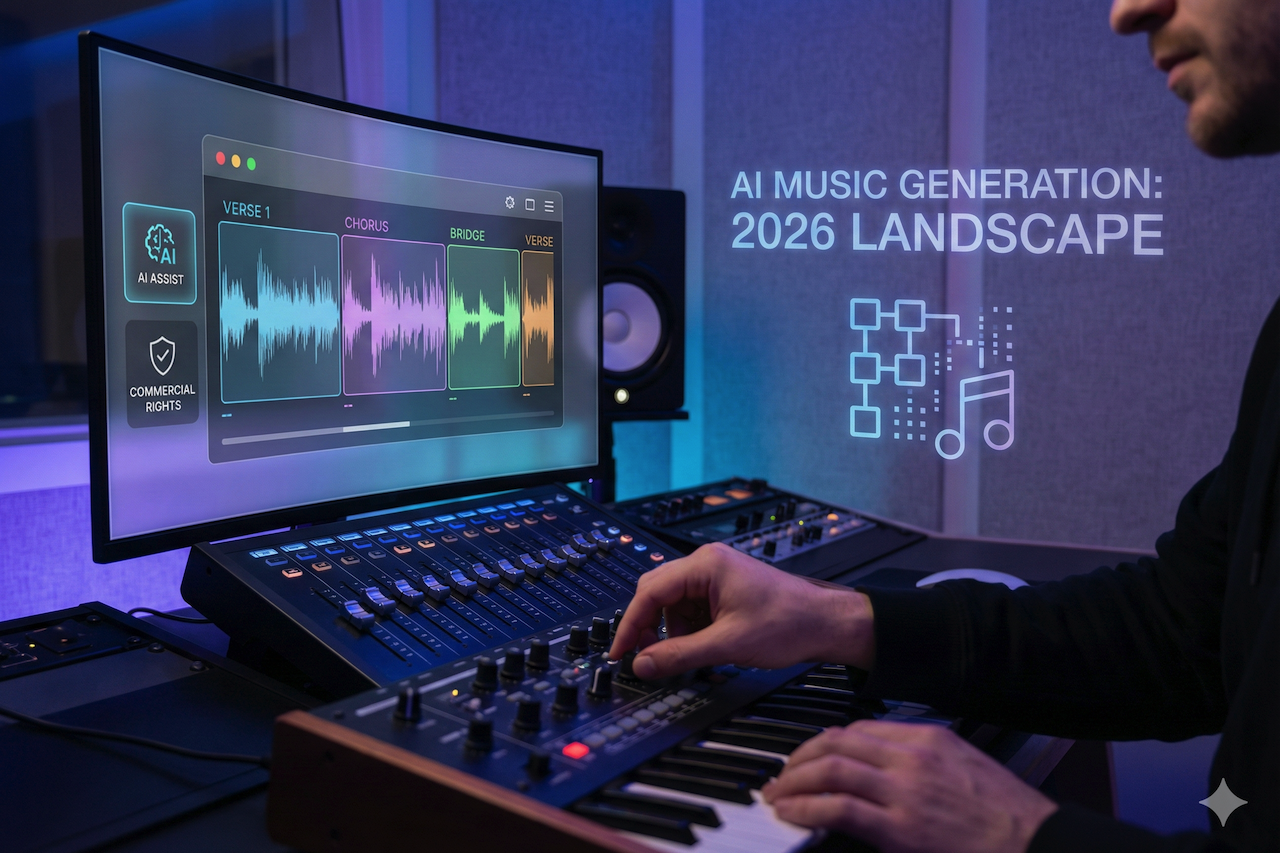
In 2026, the landscape of digital music production has shifted significantly. The industry has moved beyond an era when AI music was largely viewed as a novelty or a tool for generating short, experimental clips. Today, content creators, game developers, and background music producers increasingly look for tools that offer precision, structural control, and clear usage rights. While the market is filled with fast-generation solutions, tools that balance creative flexibility with commercial practicality remain relatively limited.
Testing a range of current platforms and feature updates shows that some AI music ecosystems are beginning to address these needs more comprehensively than others. Modern music generation engines increasingly aim to support workflows that move from text input to usable audio output while providing clearer guidance around ownership and reuse. AI music platforms illustrate this broader shift in how AI music generation is evolving in 2026.
Moving Beyond Random Output
Early AI music tools were often criticized for what many users described as a “slot machine effect,” where results varied widely with little control over structure or intent. As expectations have matured, creators increasingly seek predictable workflows and repeatable outcomes.
The design of the AI music generator reflects that shift by separating the generation process into different usage paths. This approach is intended to support both users who need quick results and those who require more detailed control over composition.
Dual Modes and Workflow Flexibility
A common design pattern among newer tools is the use of multiple generation modes to accommodate different creative needs.
For users seeking fast background music, such as for short video intros or podcast segments, simplified modes typically offer a limited set of parameters, including genre, mood, vocal presence, and ambience. An instrumental-only option is often included to avoid AI-generated vocals entirely, which can be useful when clean background music is required.
More advanced modes are designed for users who want greater influence over structure and content. These modes prioritize control over speed and are better suited for longer or more narrative-driven compositions.
Extended Lyric Input and Structural Control
One persistent limitation in AI music generation has been restricted lyric input. Many tools limit context to short sections, making it difficult to generate cohesive full-length songs.
Some newer generators now support extended lyric input, up to several thousand characters, which allows users to include complete song structures, longer narratives, or detailed thematic progressions in a single generation. Support for common structural markers such as verses, choruses, and bridges helps maintain continuity throughout the track.
Optional lyric assistance features are also becoming more common. These tools can generate draft lyrics based on selected moods or genres, helping users overcome writer’s block, though the output often still benefits from human refinement.
Commercial Rights and Usage Considerations
Copyright and licensing remain central concerns for AI-generated music. Increased legal scrutiny around training data and usage rights has made transparency in this area especially important.
Many platforms now state that users retain commercial usage rights for generated tracks, including use in monetized content and distribution on digital platforms. For creators working in professional or client-facing environments, this clarity helps reduce uncertainty. However, users should still review current terms and applicable regulations to ensure compliance with their specific use cases.
Integration Within a Broader Toolset
Rather than functioning as standalone generators, many AI music engines are now part of broader audio toolsets. Generated tracks can often be further processed using features such as stem separation, vocal removal, or basic mixing controls.
In some cases, users can extract MIDI data from generated audio for use with external instruments or digital audio workstations. This type of integration reflects a broader trend toward keeping AI-assisted workflows contained within a single environment, reducing the need to move between multiple services during early-stage production.
Observed Strengths and Limitations
Common strengths include:
- Extended lyric input that supports full-length compositions
- Clearly defined commercial usage claims
- Iterative editing options that allow refinement without restarting
- Visual history and lyric tracking that assist with organization
Limitations to consider:
- Credit-based generation may require planning for frequent or high-volume use
- Browser-based operation depends on stable internet access, which may not suit all production preferences
Concluding Observations
The AI music landscape in early 2026 is defined by rapid feature expansion and increasing specialization. While many tools continue to focus on speed or novelty, others are beginning to address longer-term production needs such as structure, editability, and rights management.
Viewed in this context, modern AI music generators illustrate a shift toward supporting professional workflows rather than replacing traditional creative processes outright. For creators evaluating AI-assisted composition, understanding these design choices is often more important than focusing on any single platform.
As AI music technology continues to evolve, its most practical applications are likely to remain those that complement human creativity, provide transparent usage terms, and integrate smoothly into existing workflows rather than attempting to replace them entirely.
Featured Image generated by Google Gemini.
Related Articles
February 23, 2026
AI Music Video Generators Transforming Digital Content Creation and Engagement
In today’s digital landscape, content is no longer defined by text and static visuals alone. Video has become the dominant format for communication, marketing, and online engagemen...
Read More
October 8, 2025
10 Realistic AI Avatar Generators of 2025
Not a long time ago, the avatar was once seen as a blue-skinned character from a movie. What was once a term reserved for blue-skinned movie characters, the word avatar now represe...
Read More
November 26, 2024
AI Response Generators Transforming Online Search and Privacy
AI response generators are reshaping digital interactions, offering a seamless blend of speed and accuracy. As these technologies advance, they promise not only to enhance online s...
Read More
Comments
Comments are available to signed-in users and are moderated to keep the discussion useful and respectful. Spam, automated submissions, and low-value promotional comments are removed. Outbound links may be approved when they are relevant and genuinely helpful to readers, but they are displayed as plain text rather than clickable hyperlinks.
No comments have been published yet.
Please sign in to submit a comment.