
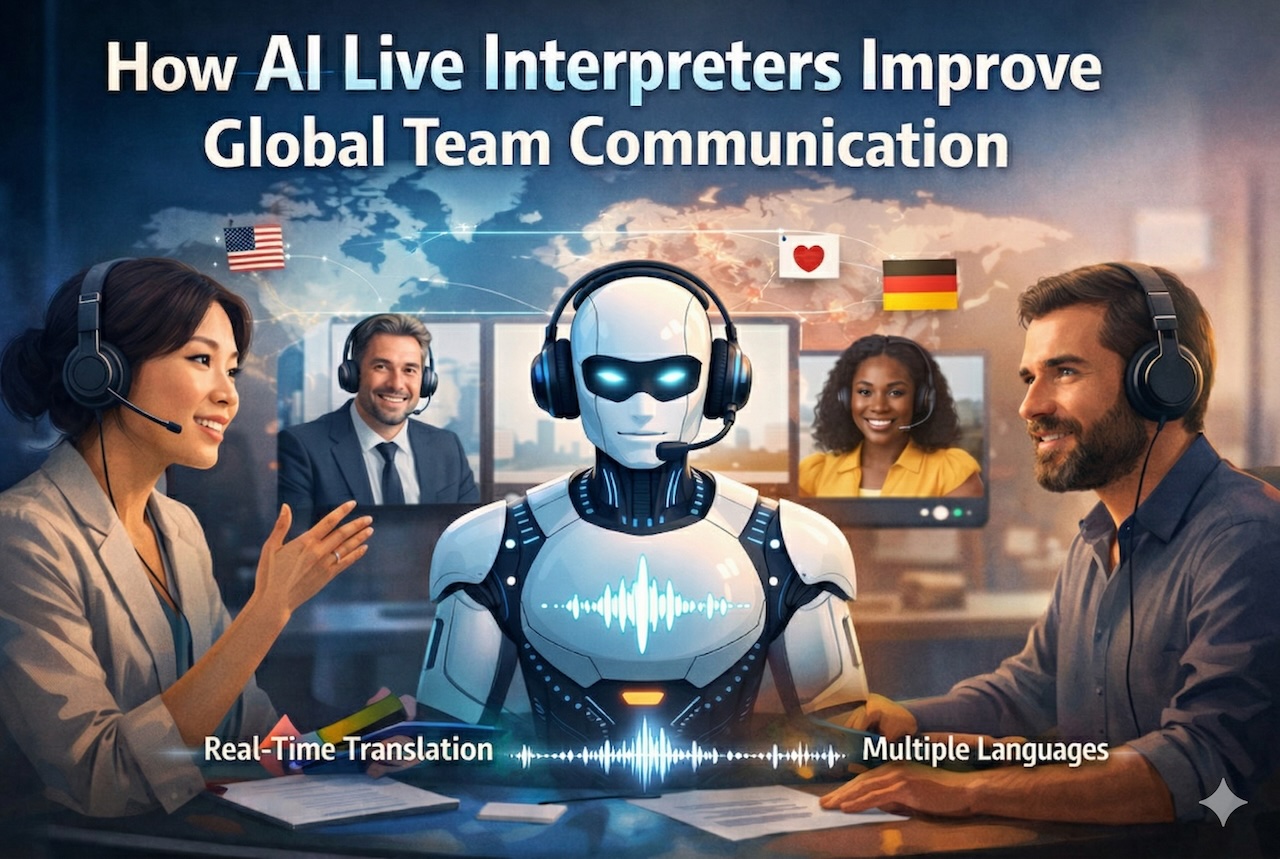
Global team communication is becoming faster, more natural, and far less dependent on language fluency. AI live interpreters are removing the pauses and friction that used to define multilingual meetings.
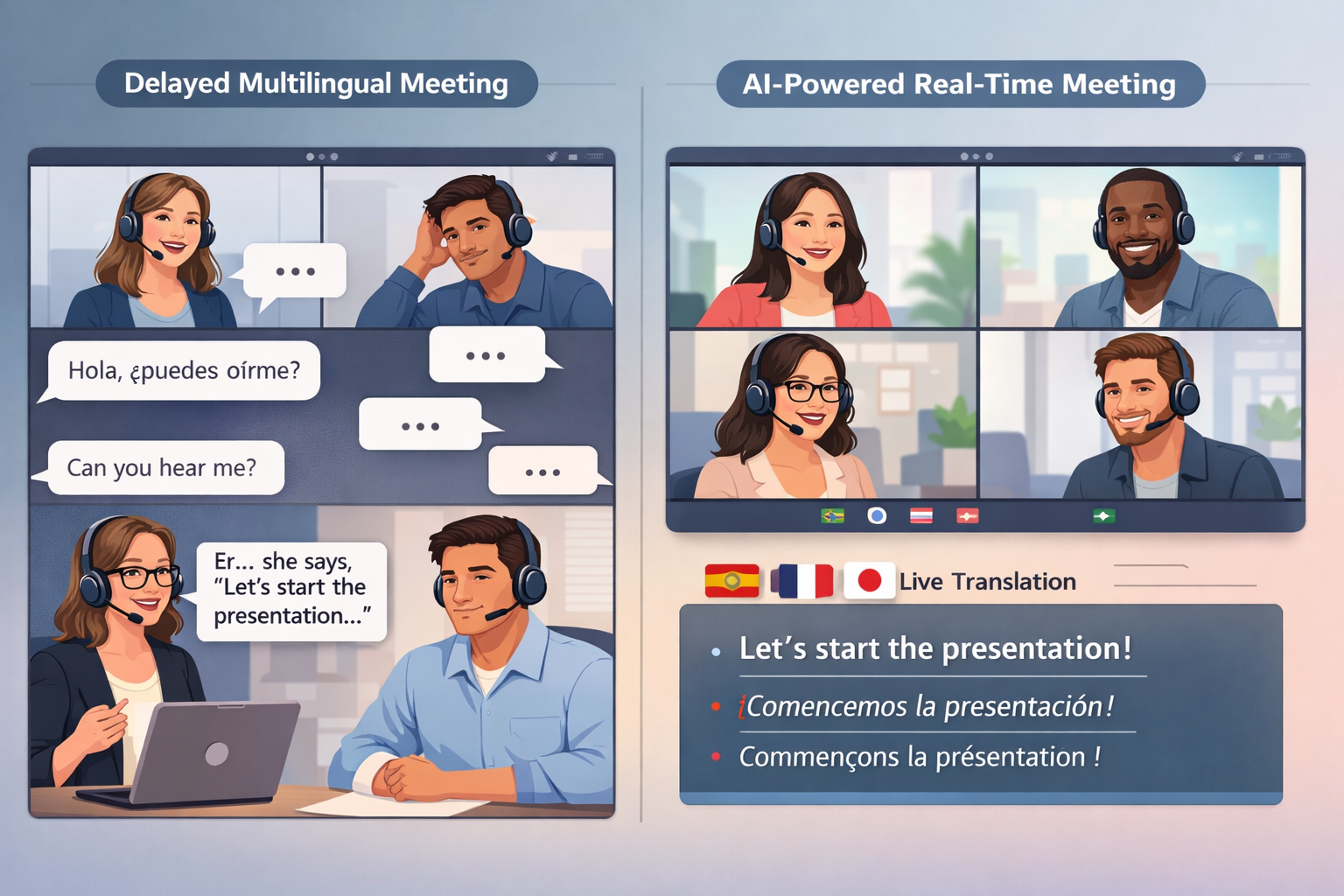
A few years ago, multilingual meetings had a very specific rhythm. Someone would speak, a human interpreter would listen, then translate after a pause. The process worked, but it slowed everything down and made conversations feel slightly disconnected.
That model is now shifting. AI live interpreters are entering meetings directly and translating speech in near real time. Instead of waiting, people speak continuously, and the interpretation keeps up. The result is a conversation that feels fluid rather than segmented.
This is not a small improvement. It changes how quickly teams align, how naturally they interact, and how inclusive discussions become across regions.
What Does an AI Live Interpreter Actually Do?
An AI live interpreter listens to spoken language and converts it into another language instantly, either as synthesized speech or real-time subtitles.
Unlike traditional tools, an AI interpreter does not require speakers to pause or adjust their pace. The system processes speech continuously and delivers translated output with minimal delay, often within a couple of seconds.
In more advanced setups, multiple languages can be handled at once. A meeting with participants speaking English, Japanese, and Spanish can run without interruption, with each person receiving the conversation in their preferred language.
For remote teams, an AI interpreter removes the need to manage interpretation as a separate layer. There is no additional coordination, no interpreter track, and no structural slowdown. The conversation flows as if everyone is speaking the same language.
What Specific Problems do AI Live Interpreters Solve for Remote Teams?
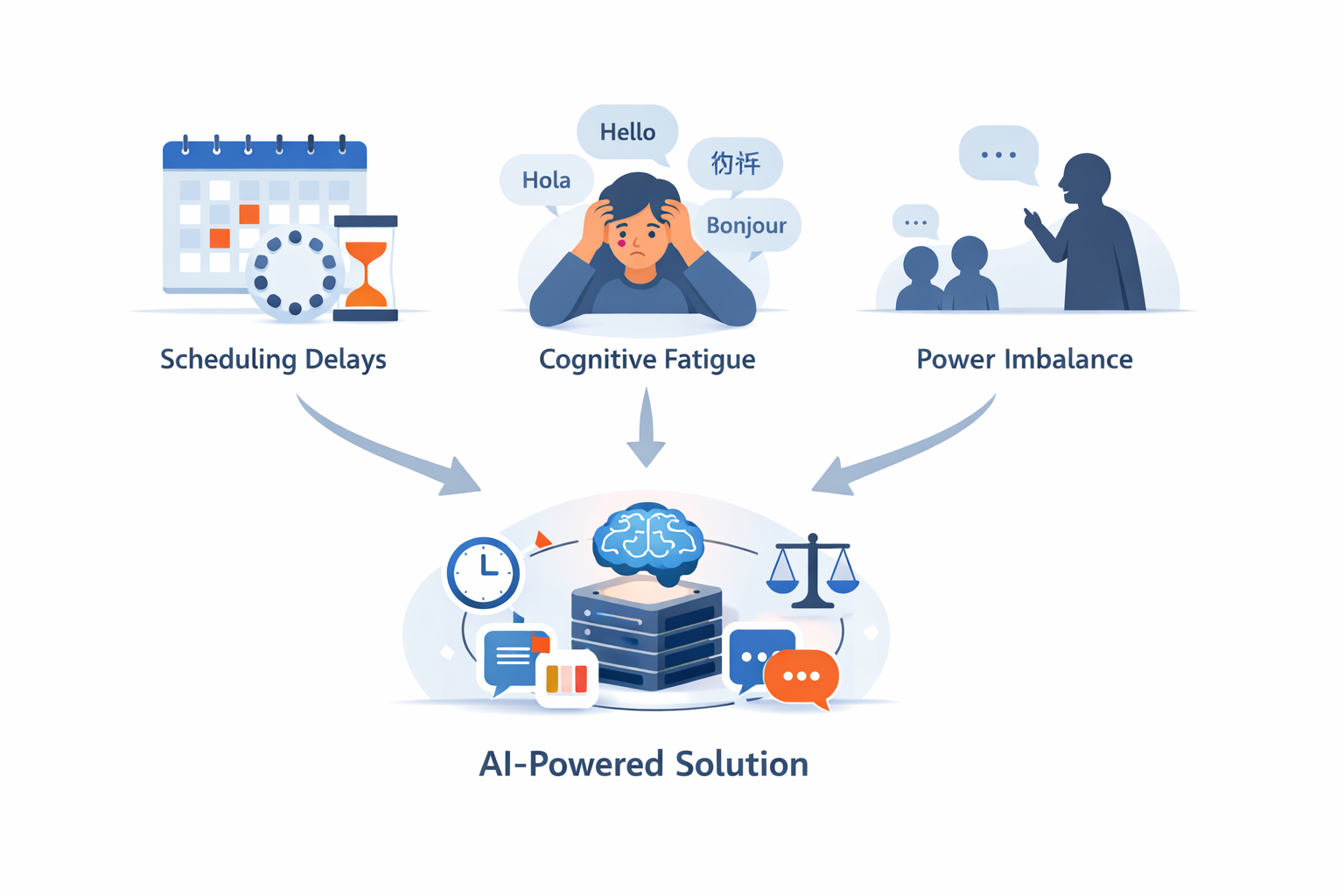
1. The Scheduling Problem
Teams must book human interpreters in advance. For common language pairs, this usually requires one to two days of lead time in a good week. For less common pairs, such as Japanese-English or Korean-Portuguese, the wait can stretch to a week or more. Spontaneous calls, quick syncs, and impromptu decisions cannot wait for interpreter availability.
AI live interpreters remove this constraint completely. A team in Osaka can initiate a call with a partner in Berlin at 9:00 AM without any advance arrangement. The interpretation is available instantly.
2. The Cognitive Fatigue Problem
Multilingual meetings exhaust participants more than monolingual ones. When people work in a second or third language, they spend cognitive resources on language processing instead of focusing on the discussion itself. Research in applied linguistics shows that non-native speakers in professional settings often miss nuance, speak less, and disengage earlier than native speakers.
AI live interpreters shift this burden. When participants receive real-time interpretation in their strongest language, they follow discussions more closely, respond more confidently, and stay engaged for longer.
3. The Power Asymmetry Problem
Language differences create a quiet imbalance in meetings. Native speakers communicate faster, express ideas more precisely, and tend to dominate discussions. Non-native speakers often wait for a gap that rarely appears.
AI live interpretation reduces this imbalance significantly. When a participant in Tokyo speaks in Japanese and colleagues in New York or London understand instantly, the structural disadvantage disappears. Ideas surface on their own terms, not limited by who speaks English most fluently.
Where AI Interpretation Has Overtaken the Human Alternative?
AI interpretation has already overtaken human interpreters in most everyday business communication. For standard professional use cases, the accuracy gap has narrowed significantly, making AI reliable enough for daily operations. Teams now use it not just for cost savings, but because it enables faster, always-available communication without disrupting workflow.
It performs especially well in structured, repeatable interactions where clarity and speed matter more than deep contextual nuance.
- Team meetings and internal syncs where discussions follow predictable formats
- Project updates and status reviews that rely on clear, direct language
- Product feedback sessions where multiple stakeholders can contribute quickly
- Technical discussions with defined terminology and context
- Onboarding calls that involve standard explanations and workflows
- Customer support interactions that require fast, accurate responses
For high-frequency global communication, the cost advantage is also significant. A full month of AI-powered interpretation across meetings typically costs less than hiring a human interpreter for a single session, making it a practical default for most teams.
Where do Human Interpreters Still Have an Edge?
Human interpreters still have an edge in high-stakes, high-risk situations where accuracy, context, and accountability are critical. AI can process language effectively, but it cannot fully replicate human judgment under pressure.
This becomes essential in environments like legal proceedings, medical consultations, or diplomatic negotiations, where even a small misinterpretation can have serious consequences. Human interpreters bring cultural awareness, contextual understanding, and real-time decision-making that AI systems are still developing.
AI also struggles in edge cases, such as:
- Highly idiomatic expressions that do not translate directly
- Strong regional dialects with nuanced variations
- Rapid code-switching between languages mid-sentence
For most teams, the decision is not binary. AI handles everyday communication efficiently, while human interpreters remain critical for situations where precision and responsibility matter most.
What Changes When Teams Actually Use AI Live Interpreters?
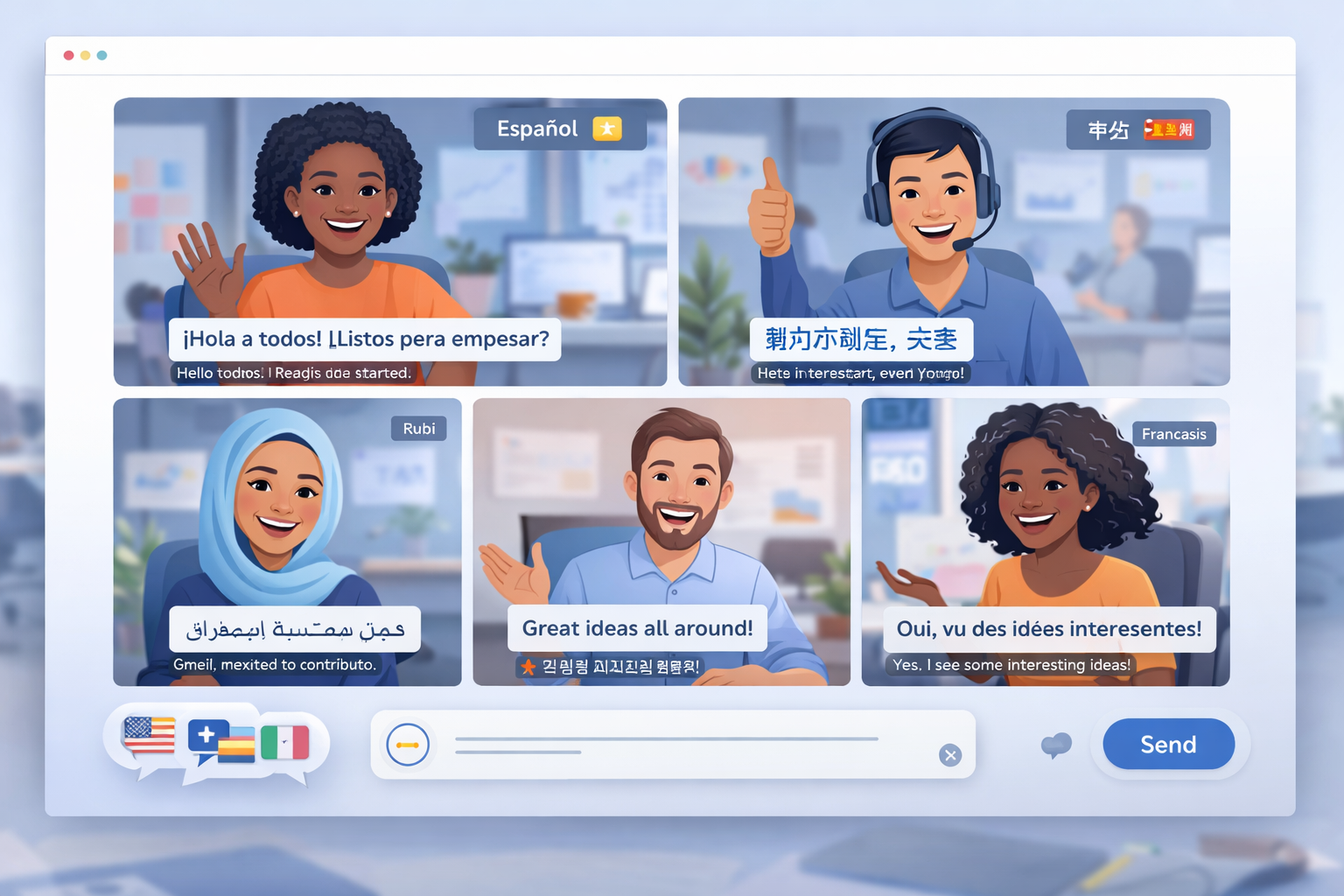
Teams become more inclusive, more participative, and more aligned once they start using AI live interpreters. The most immediate change is that non-native speakers contribute more actively.
Meetings begin to reflect a wider range of perspectives instead of being driven by the most fluent speakers. Decisions improve because they incorporate input from across regions, rather than from a single language group.
There is also a noticeable shift in team dynamics. When people can communicate naturally in their own language and still be understood instantly, interactions feel more human. Even small moments like humor or casual conversation start to carry across languages, strengthening relationships and trust within distributed teams.
What Should You Look for in an AI Live Interpreter for Your Team?
You should look for a solution that supports real-time, multi-language communication without adding friction to your existing workflow. The goal is not just accurate translation, but seamless conversation.
The most important factors to evaluate include:
- Language coverage that matches your team’s actual language needs
- Support for simultaneous multi-language conversations in a single meeting
- Direct integration with platforms like Zoom, Google Meet, or Microsoft Teams
- Privacy setup, especially whether the tool requires a visible bot in meetings
- Low latency, ideally under three seconds, to maintain natural conversation flow
Choosing the right tool ensures that communication feels immediate and intuitive, rather than delayed or mechanical.
Why do AI Live Interpreters Matter for Global Teams?
AI live interpreters are one piece of a broader transformation in how distributed teams operate. But they are a significant piece, because language has always been the most fundamental barrier to genuine global collaboration, and that barrier is measurably lower than it was two years ago.
Recent research supports the AI shift, showing that modern AI translation systems have significantly improved in understanding context, nuance, and even idiomatic language. It also points toward the rise of multimodal translation, combining voice and visual inputs to enable more natural, real-time communication.
The teams that are moving quickly on this are not doing it because it is cheaper, though it is. They are doing it because it changes what is possible inside a meeting. And in a world where global teams are the default rather than the exception, what is possible inside a meeting is what the business can actually do.
Images generated by ChatGPT.
Share this post
Leave a comment
All comments are moderated. Spammy and bot submitted comments are deleted. Please submit the comments that are helpful to others, and we'll approve your comments. A comment that includes outbound link will only be approved if the content is relevant to the topic, and has some value to our readers.
Comments (0)
No comment