
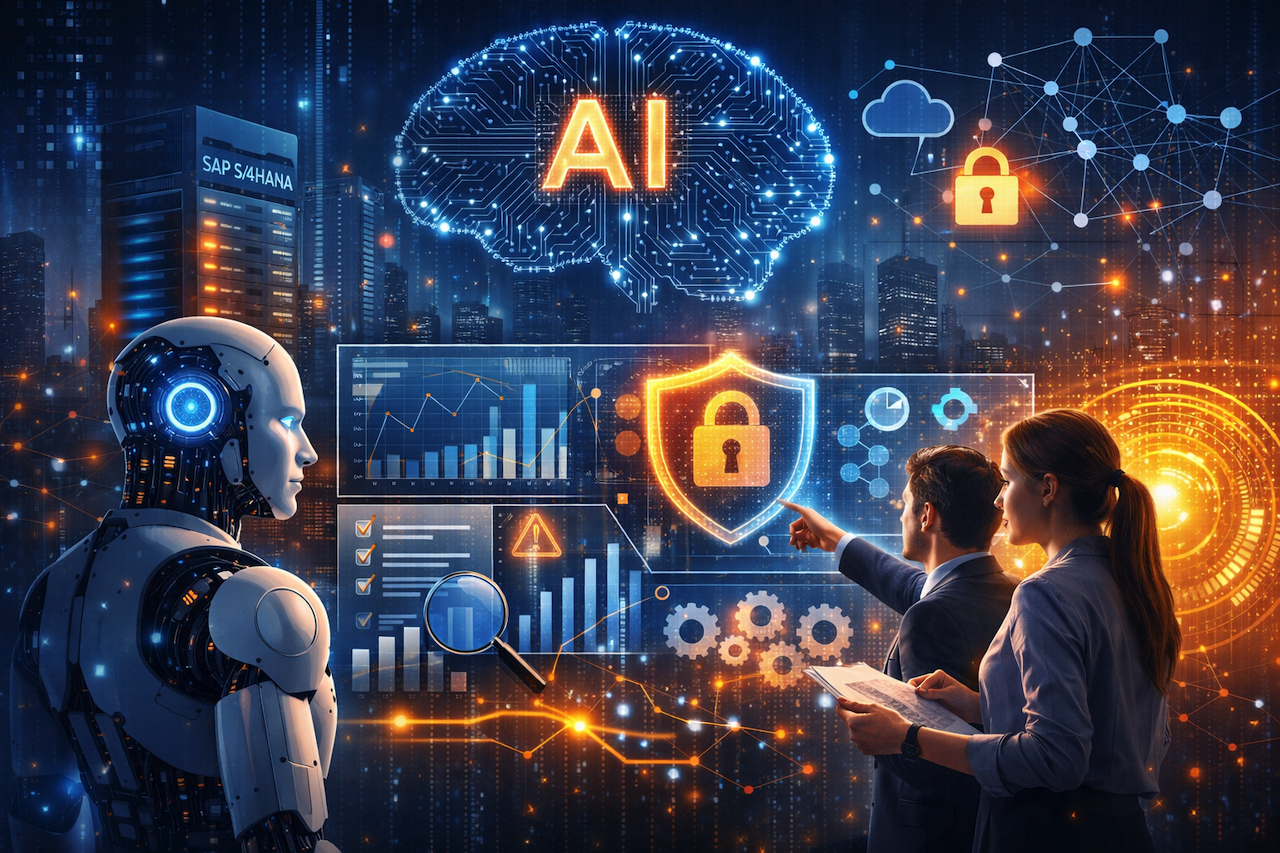
Businesses are undergoing significant change, and one of the main contributors to this transformation is Artificial Intelligence (AI). As technology becomes increasingly advanced and integrates with SAP systems, many professionals across different departments want to understand what this means for their roles, especially within environments like SAP S/4HANA.
Some individuals are excited about the possibilities AI brings and see it as a way to make their work easier and more meaningful. Others are uncertain and worry that it could eventually replace them. However, the situation is not as dire as some believe. In fact, it is quite the opposite. Artificial intelligence is not replacing professionals in the way many expect. Instead, it is changing how work is performed, as with any new SAP system, particularly SAP S/4HANA. Rather than replacing people, AI is making work easier and faster through automation features such as auto-posting, which can automatically handle routine system entries within SAP.
Less Firefighting in Daily Operations
Traditionally, many professionals handle their work by addressing unexpected issues that arise daily. This is often referred to as “firefighting.” Common issues include:
- Data inconsistencies
- System mismatches
- Missing or incomplete records
- Process delays
- Reporting bottlenecks
These issues require individuals to review records to identify and correct problems. This ongoing troubleshooting can become stressful and time-consuming, preventing teams from focusing on more strategic activities such as planning, optimization, or performance analysis. However, with the integration of AI into SAP systems, many of these issues are detected much earlier, often before they escalate.
For instance, AI tools continuously monitor transactions and data flows within the system. They analyze patterns, identify unusual activity or inconsistencies, and notify users accordingly. In some cases, AI systems can even correct minor issues automatically. As a result, teams no longer need to spend significant time manually reviewing data. Instead, they are alerted to the most critical issues that require attention.
For example, instead of spending time correcting errors, teams can focus on analyzing trends such as:
- Where operational inefficiencies occur
- Which processes are no longer effective
- What areas can be improved
This shift enables teams to contribute more strategically to the organization.
Continuous Processing and Reduced Period-End Pressure
Another area where AI is having a major impact is in periodic reporting and closing processes. Traditionally, period-end activities are among the most stressful times for teams, requiring multiple tasks to be completed within tight deadlines, including:
- Reconciling records
- Posting adjustments
- Reviewing reports
- Verifying data accuracy
Since these tasks are often concentrated at the end of a reporting period, they create significant pressure. AI is changing this by introducing continuous processing.
Instead of waiting until the end of the cycle, teams can monitor and validate data continuously. Errors and inconsistencies are detected in real time, allowing workloads to be distributed more evenly.
By adopting continuous processing, organizations can benefit from:
- Reduced pressure during reporting periods
- Faster reporting cycles
- Improved data accuracy and reliability
With more timely access to information, teams can support decision-making in near real time and play a more active role in shaping business strategy.
Proactive Resource and Risk Management
AI is also changing how organizations manage resources and risks. Previously, many of these processes were manual and time-consuming, requiring teams to review records, monitor activities, and assess risks.
With AI integrated into SAP systems, these processes can now be automated and enhanced. Examples include:
- Data reconciliation
- Forecasting and planning
- Risk analysis
- Anomaly and fraud detection
- Resource optimization
AI systems can analyze large volumes of data from multiple sources to identify risks and opportunities that may not be immediately visible. Instead of spending time reviewing raw data, professionals can focus on interpreting insights and taking action.
This shift allows teams to become proactive rather than reactive, anticipating potential issues and improving operational performance.
AI also plays an important role in managing cybersecurity risks within SAP environments. By monitoring access patterns, detecting unusual system behavior, and identifying unauthorized activity, it helps organizations reduce cybersecurity risk and respond to potential threats before they escalate. This added layer of intelligence strengthens both operational resilience and data security.
The Skills Professionals Will Need in the Future
As AI becomes more integrated into business processes, the skills required are also evolving. While domain expertise remains important, professionals will need to develop additional capabilities to work effectively with AI.
Key skills include:
- Analytical thinking
Since AI handles many repetitive tasks, professionals can focus more on interpreting results and making informed decisions. It is also important to understand, at a general level:
- How AI analyzes data
- How machine learning identifies patterns
- How to validate AI-generated insights
Strong communication and strategic thinking skills are also becoming essential, as professionals are increasingly expected to translate insights into actionable business decisions.
The role is shifting from routine execution to strategic contribution. Those who adapt to new technologies will find themselves playing a more important role in driving growth and efficiency.
The Bottom Line
Artificial intelligence is transforming how work is performed within SAP systems. It is not replacing professionals but enabling them to focus on higher-value activities by reducing manual, repetitive tasks.
The benefits are clear:
- Less manual work
- Fewer unexpected issues
- Faster and more accurate decision-making
- Greater focus on strategy and improvement
As these technologies continue to evolve, operations will shift from reactive problem-solving to proactive planning. Professionals will spend less time fixing issues and more time helping organizations understand performance, manage risks, and plan for the future.
In this evolving environment, Artificial Intelligence acts as a powerful tool that enhances human work rather than replacing it.
Featured Image generated by ChatGPT.
Share this post
Author

Read the latest articles from Emma Jonesn
AI Receptionist Technology: How AI Is Transforming Business Automation
April 27, 2026
Businesses today face continuous demands for quick customer service delivery while they must maintain control over their operational expenses. The existing reception desks and call handling systems face challenges in meeting the rising demands of modern customers. Businesses now use AI Receptionist technology to [...]
Learn more.NET Development and AI: Building Intelligent, Scalable Applications

December 24, 2025
In today’s rapidly evolving digital environment, organizations are increasingly seeking intelligent and adaptable software architectures to remain competitive. This demand has elevated the role of .NET development as a foundation for building scalable, secure, and future-ready applications. When combined with A [...]
Learn moreLeave a comment
All comments are moderated. Spammy and bot submitted comments are deleted. Please submit the comments that are helpful to others, and we'll approve your comments. A comment that includes outbound link will only be approved if the content is relevant to the topic, and has some value to our readers.
Comments (0)
No comment