

How AI Agents Automate Complex Business Processes
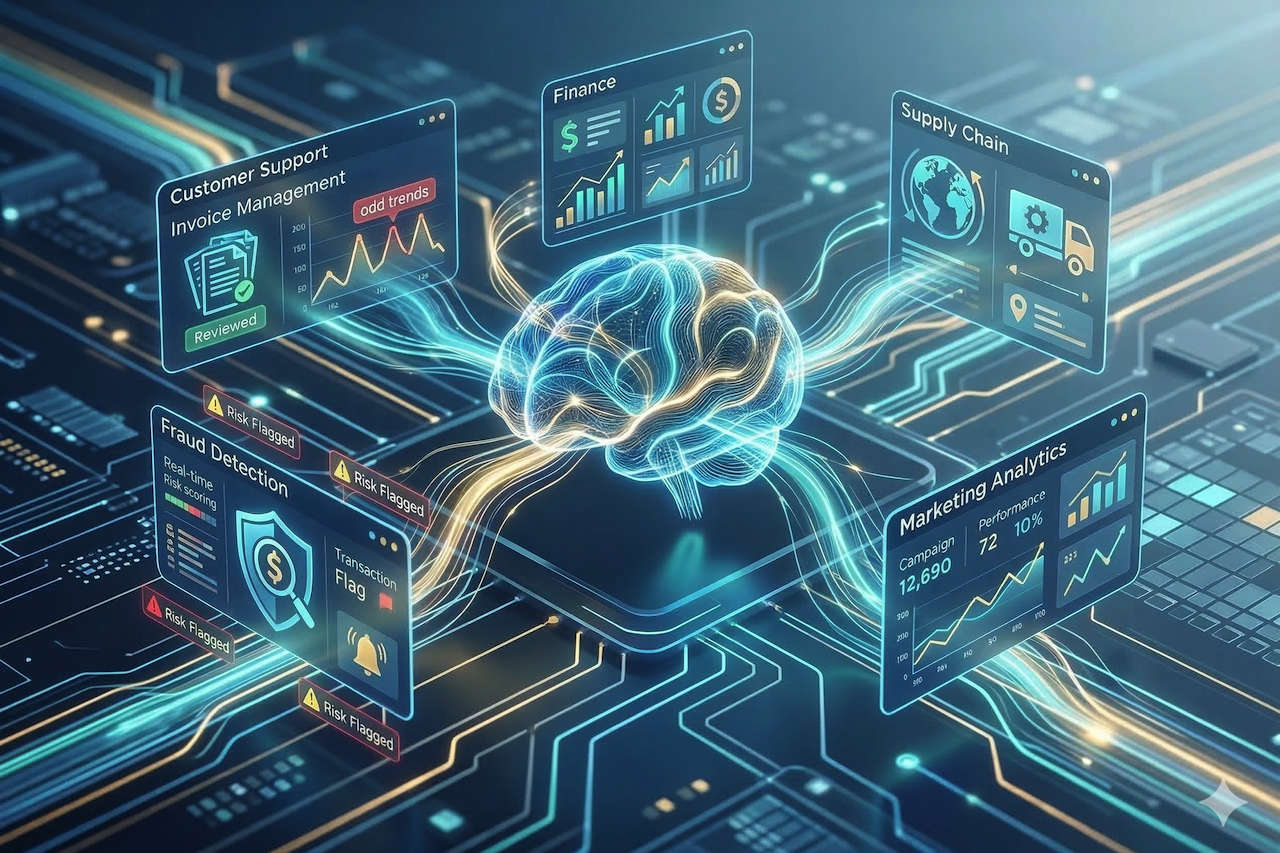
Every business has to deal with dozens of operational processes daily. These include customer support, financial reports, supply chain updates, marketing analytics, and more. Most of these processes involve integrating multiple tools and departments. Manual processing can be time-consuming, increase operational costs, and more.
This is where AI and machine learning technologies come into the picture. AI agents are used to gather data from multiple sources, automate tasks, make decisions based on patterns, and act appropriately.These AI agents can learn from historical data and improve over time using machine learning. Smart automation can assist enterprises in thriving with greater speed, precision, and effectiveness.
What Are AI Agents in Business Automation?
AI agents are defined as intelligent software capable of observing data, analyzing patterns, and acting on it without human intervention. Unlike other automated software that follows a predefined set of instructions, AI agents can adapt based on data insights.
Businesses use AI and machine learning technologies to develop AI agents capable of interacting with various digital systems.
Some of the activities that AI agents perform include:
- Processing customer service requests
- Managing order processing workflows
- Monitoring of operational data
- Automating data entry and reporting
- Supporting decision-making using predictive models
These features enable companies to go beyond simple automation and use intelligent process management.
How AI Agents Handle Complex Business Processes
The AI agents are capable of automating multi-step workflows that previously required human supervision. The agents retrieve data, evaluate the conditions, and execute the action according to the rules.
1. Data Collection and Integration
The AI agents integrate multiple business applications, such as CRM, accounting, and analytics systems. This enables AI agents to retrieve data from all connected applications.
2. Decision-Based Workflow Automation
AI agents examine newly received data and determine the appropriate course of action based on insights from machine learning models. This capability allows automation across tasks that previously required manual review.
3. Continuous Learning
AI agents use machine learning to enhance their performance. As they process new data, they improve their ability to recognize patterns and make more accurate predictions.
4. Process Monitoring and Optimization
AI agents monitor operational workflows and highlight inefficiencies. This helps businesses identify areas that need improvement and optimize processes more effectively.
Traditional Processes vs AI Agent Automation
| Business Process | Traditional Workflow | AI Agent Automation |
|---|---|---|
| Customer Support | Manual ticket sorting and responses | AI agents categorize requests and trigger responses automatically |
| Data Reporting | Employees compile reports from multiple systems | AI agents collect data and generate reports instantly |
| Order Processing | Manual verification and data entry | Automated validation and order updates |
| Fraud Detection | Human review of transactions | AI agents analyze patterns and flag risks in real time |
This comparison shows how AI and machine learning simplify processes that once required heavy manual effort.
Real Business Areas Where AI Agents Deliver Results
AI-powered automated systems are already being used across numerous industries.
Customer Service
AI agents categorize customer support requests, answer frequently asked questions, and forward complex requests to human teams. This reduces response time and improves service consistency.
Finance Operations
Automated systems monitor payments, review invoices, and identify odd trends. Machine learning models improve accuracy in financial monitoring.
Marketing Operations
AI agents process campaign data, track customer interactions, and produce reports on campaign performance. The marketing department can now concentrate on strategy instead of data processing.
Supply Chain Management
Automated agents use machine learning models to monitor packages, validate inventory levels, and forecast demand trends.
Why Businesses Are Investing in AI and Machine Learning
Industries seeking growth frequently encounter operational difficulties. By managing repetitive tasks, AI-driven automated systems mitigate stress during operations.
Key advantages include:
- Reduced manual workload
- Faster data processing
- Improved decision support
- Scalable operational workflows
- Higher productivity across teams
Organizations that invest in AI and machine learning gain greater visibility across operations and stronger control over business processes.
Final Thoughts
The role of AI agents is changing how companies handle complex workflows. This is made easier by machine learning, which analyzes information and takes actions aimed at improving processes.
For organizations aiming to streamline workflows and manage large-scale operations efficiently, investing in AI and machine learning technologies offers a practical path to smarter, more connected business processes.
Featured Image generated by Google Gemini.
Related Articles

November 15, 2025
AI Agents: The Future of Business Automation and Customer Engagement
As companies are stepping into the era of digital transformation, AI has been a foundational force leading them on. It is not only there in the backdrop of the processes, but is al...
Read More
October 21, 2025
AI Agents for Business Operations
In modern business environments, teams face increasing pressure to manage information, systems, and tasks efficiently. To address these challenges, many organizations are adopt...
Read More
May 6, 2025
Emerging Trends in AI and Machine Learning for Business Solutions
Businesses today face a tough challenge: staying ahead in a fast-moving world of technology. Many struggle to keep up with tools that seem too complex or overwhelming. Partnering w...
Read More
Comments
Comments are available to signed-in users and are moderated to keep the discussion useful and respectful. Spam, automated submissions, and low-value promotional comments are removed. Outbound links may be approved when they are relevant and genuinely helpful to readers, but they are displayed as plain text rather than clickable hyperlinks.
No comments have been published yet.
Please sign in to submit a comment.