
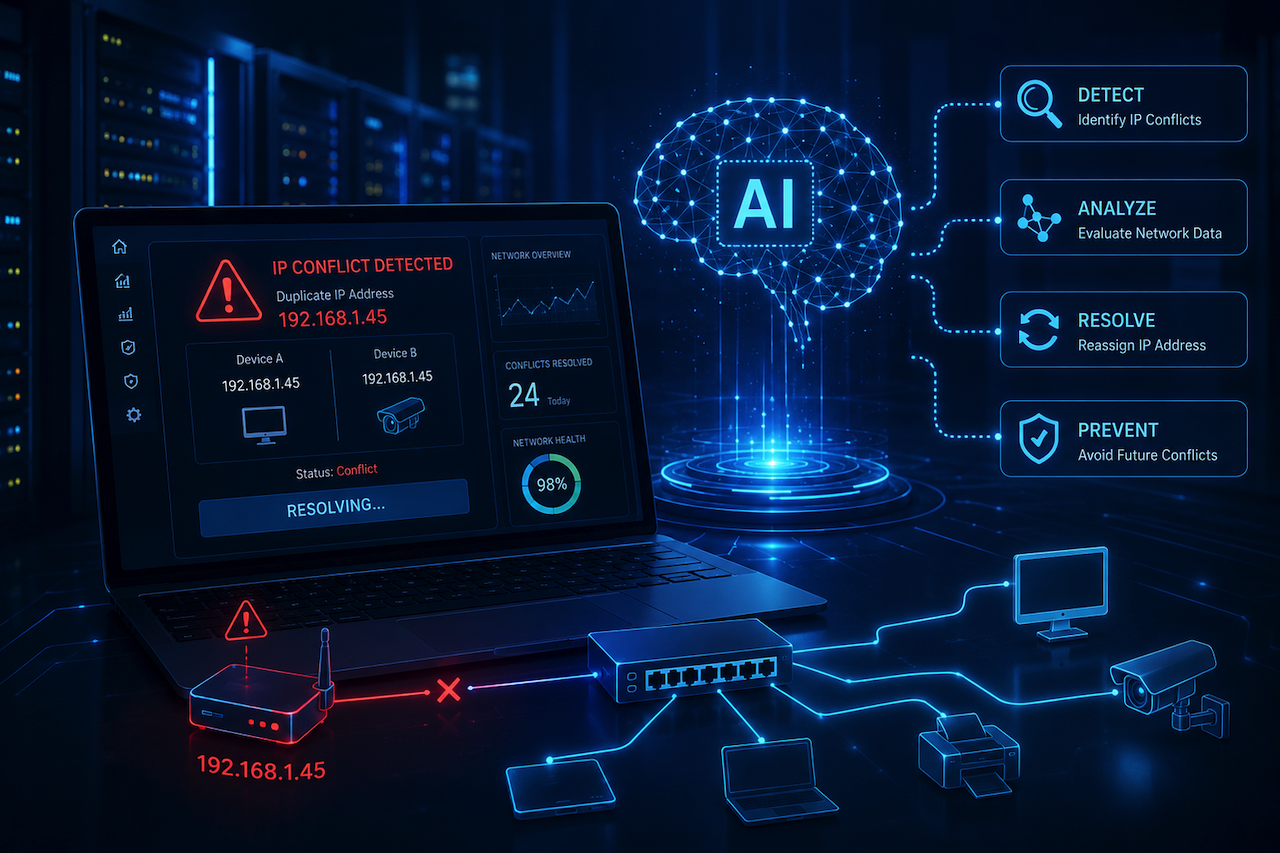
The Growing Complexity of IP Conflict Management
In today’s digitally interconnected world, IP (Internet Protocol) conflicts have become an increasingly common and critical challenge for enterprises. An IP conflict occurs when two devices on the same network are assigned the same IP address, leading to communication errors, network downtime, and reduced productivity. As businesses scale and network architectures grow more complex, traditional manual approaches to resolving IP conflicts have proven inefficient, slow, and prone to human error.
According to a recent survey, over 70% of IT professionals reported that network conflicts, including IP conflicts, are a significant cause of downtime in their organizations, leading to an average loss of 4.5 hours of productivity per month per affected employee. This data highlights the urgent need for more agile and automated solutions that can keep pace with the demands of modern network environments.
The proliferation of connected devices, cloud computing, and remote workforces has increased the complexity of IP address management. Static IP allocations and manual DHCP configurations are no longer sufficient to handle the dynamic nature of today’s networks. This complexity often results in IP conflicts that disrupt critical business operations, degrade user experiences, and increase operational costs.
Artificial intelligence (AI) agents are now emerging as game-changers in real-time IP conflict management. These intelligent systems leverage machine learning, data analytics, and automation to detect, diagnose, and resolve IP conflicts faster than any human administrator could. By integrating AI agents into network management workflows, organizations can minimize downtime, improve reliability, and optimize resource allocation.
Many enterprises are adopting AI-driven approaches to improve IP address management and reduce network conflicts. Some organizations use managed IT environments, such as tech managed by TVIT, to help support automation, network monitoring, and the integration of AI tools into existing infrastructure.
AI-Driven Detection and Resolution of IP Conflicts
One key advantage of AI agents is their ability to monitor network traffic and IP address allocations at scale continuously. Traditional IP conflict detection often relies on manual log reviews and reactive troubleshooting, delaying identification until users experience network problems. In contrast, AI agents use pattern recognition and anomaly detection algorithms to flag potential IP conflicts in real time proactively.
For example, when two devices are assigned the same IP address, an AI agent can immediately detect unusual traffic patterns or error messages and pinpoint the source of the conflict. It can then automatically initiate corrective actions, such as reassigning IP addresses or updating DHCP leases, without requiring human intervention. This proactive approach significantly reduces the mean time to resolution (MTTR).
Organizations utilizing AI-powered IP management tools have reported up to a 60% reduction in network downtime caused by IP conflicts. These improvements translate directly into increased operational efficiency and lower IT support costs, enabling IT teams to focus on more strategic initiatives rather than firefighting network issues.
Enhancing Network Security Through AI
Beyond conflict resolution, AI agents help enhance overall network security by detecting unauthorized devices attempting to use IP addresses within the corporate network. Unrecognized devices can pose significant security risks, ranging from data breaches to network outages caused by malicious or misconfigured hardware.
By continuously analyzing device behavior and IP usage patterns, AI systems can identify rogue devices and alert administrators or isolate these threats automatically. This real-time vigilance is especially important as remote work and Internet of Things (IoT) devices expand the attack surface, creating additional entry points for cyberattacks.
Furthermore, AI-driven IP management supports compliance with regulatory standards by maintaining accurate network inventories and logs. This helps organizations prepare for audits and ensure data integrity, which is vital for industries such as finance, healthcare, and government sectors where data privacy and security are paramount.
Some organizations use providers such as ChaceTech when implementing AI-driven approaches to network management and infrastructure security. Leveraging AI in IP management can help optimize network operations while strengthening defenses against emerging cyber threats in increasingly complex network environments.
The Role of AI in Scaling Network Management
As enterprises grow, their networks become increasingly complex, often spanning multiple geographic locations, cloud platforms, and device types. Managing IP addresses and resolving conflicts manually in such environments can be overwhelming, leading to errors and prolonged downtime.
AI agents excel in scaling network management by automating routine tasks such as IP address assignment, conflict detection, and resolution. They leverage historical data and contextual information to make intelligent decisions that align with organizational policies and network architecture.
Additionally, AI systems can integrate with existing network management tools, providing a unified dashboard for administrators to monitor network health, receive alerts, and generate reports. This centralized visibility improves decision-making and accelerates response times.
A recent industry report estimates that AI-powered automation could reduce network management labor costs by up to 40% by 2024, enabling IT teams to redirect efforts toward innovation and strategic growth. This trend underscores the growing importance of AI in optimizing network operations.
The Future of IP Conflict Management with AI
As AI technology continues to evolve, its role in managing IP conflicts will become even more sophisticated. Future advancements may include predictive analytics to anticipate IP conflicts before they materialize, self-healing networks that automatically reconfigure IP assignments, and deeper integration with cloud and edge computing environments.
The rise of software-defined networking (SDN) and network function virtualization (NFV) also complements AI agents by providing programmable network infrastructure that can dynamically adjust IP allocations in response to AI insights. This synergy empowers organizations to maintain highly resilient and adaptive networks that can quickly respond to changing conditions.
Moreover, AI-driven IP management is expected to incorporate natural language processing and conversational interfaces, enabling administrators to interact with network systems more intuitively. This will further reduce the complexity of network management and democratize access to advanced capabilities.
Industry forecasts suggest that by 2025, over 80% of network management tasks will be augmented or fully automated by AI technologies. This shift will free IT teams to focus on strategic initiatives while AI agents handle routine conflict resolution and network optimization, ultimately driving greater business agility.
Conclusion
The management of IP conflicts has traditionally been a cumbersome and reactive process. Still, AI agents are transforming this landscape by enabling real-time detection, automated resolution, and enhanced network security. By adopting AI-powered IP management solutions, enterprises can reduce downtime, improve operational efficiency, and strengthen cybersecurity postures.
Modernizing IT infrastructure and adopting AI-driven network management strategies can play an important role in improving operational efficiency, reducing network conflicts, and supporting more resilient network environments.
Embracing AI agents for IP conflict management is no longer optional; it is a strategic imperative for organizations aiming to thrive in an increasingly complex and connected digital ecosystem. With AI at the helm, networks become smarter, more secure, and more resilient, ensuring business continuity and competitive advantage in the digital age.
Featured Image generated by ChatGPT.
Share this post
Leave a comment
All comments are moderated. Spammy and bot submitted comments are deleted. Please submit the comments that are helpful to others, and we'll approve your comments. A comment that includes outbound link will only be approved if the content is relevant to the topic, and has some value to our readers.
Comments (0)
No comment