
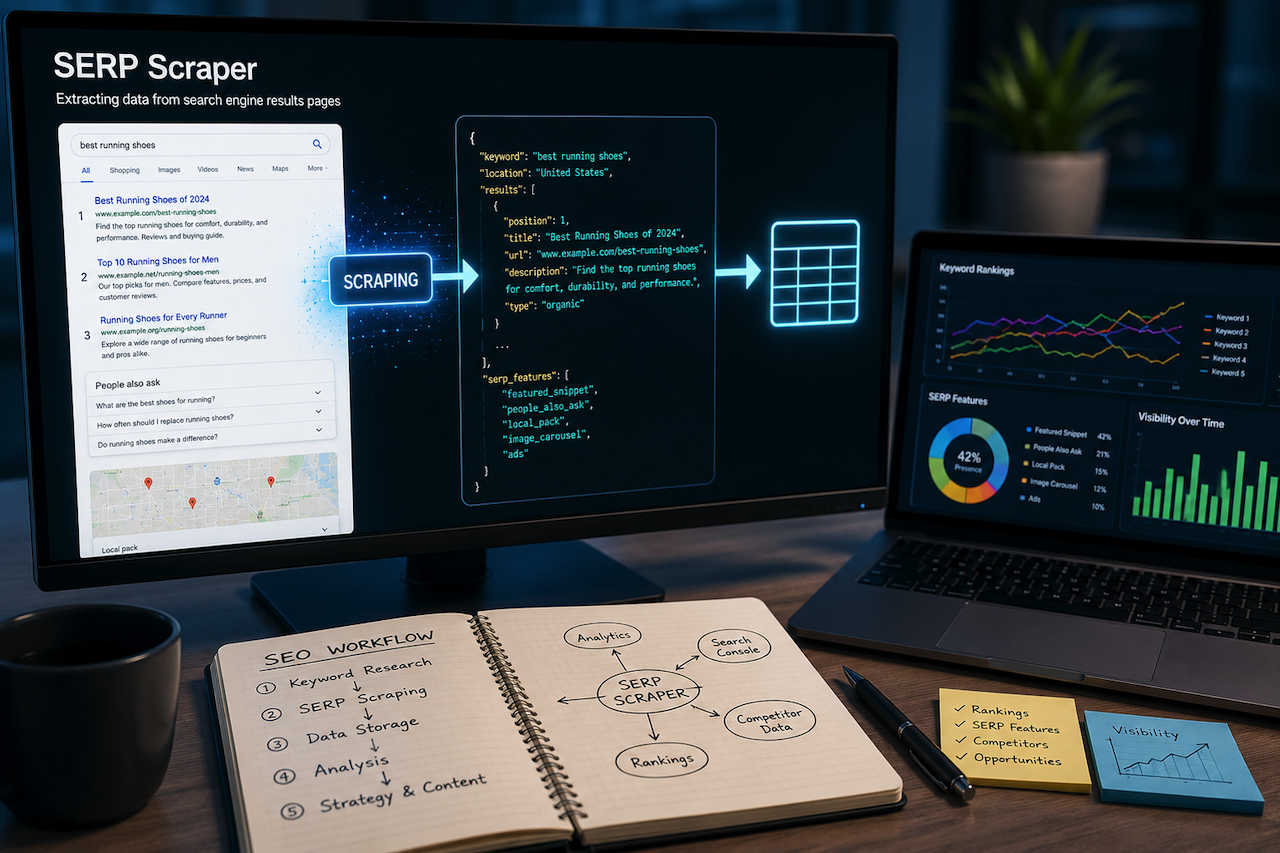
A SERP scraper is a tool that pulls structured data from Google's search engine results pages. SEO teams use it to track rankings, study competitors, and watch how the search landscape shifts week to week. The data it returns isn't anything magical; it's what you'd see when you open Google yourself, just collected at scale and turned into rows you can actually work with. A solid workflow built to scrape Google search results turns what used to take days of manual checking into a few hours of clean, structured data.
Why Manual Checking Stops Working
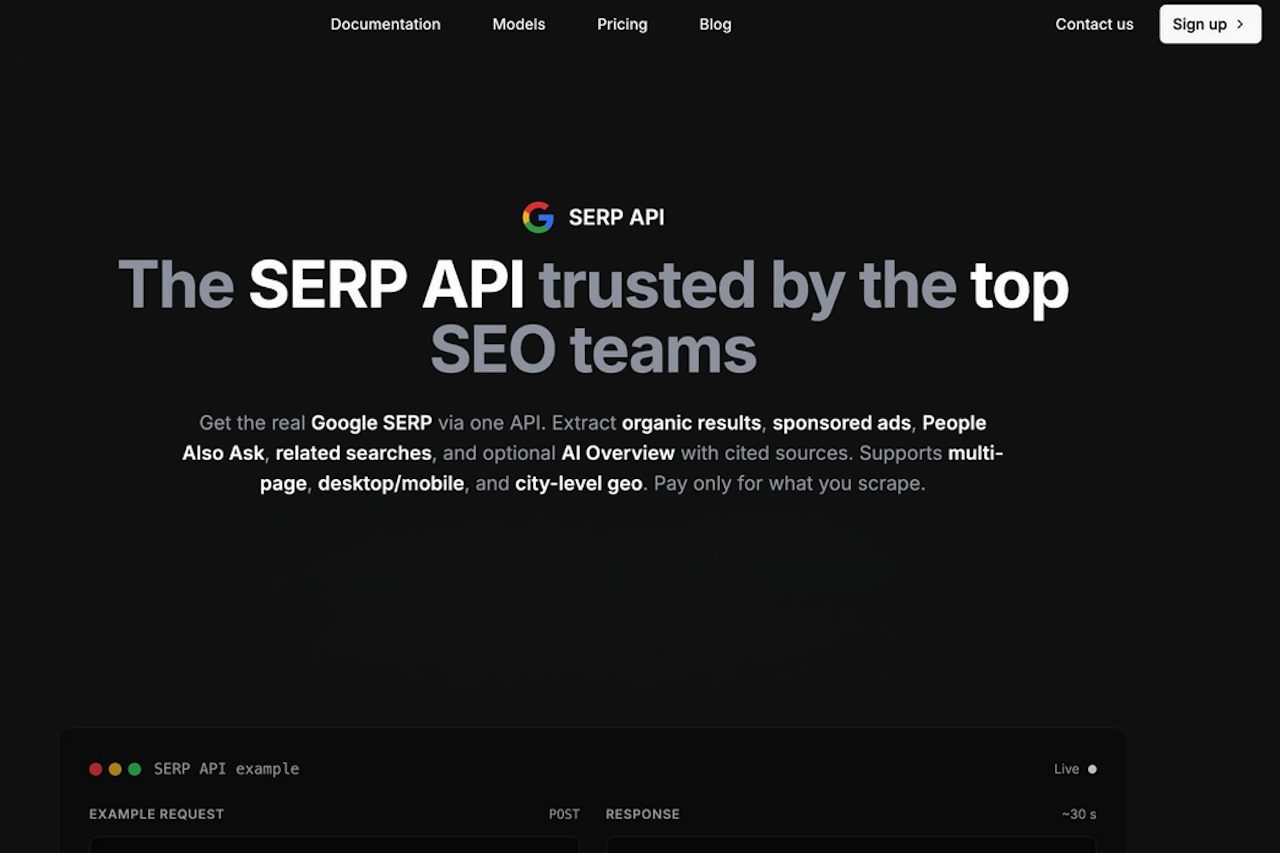
Manual checking falls apart fast. If you're tracking 200 keywords across five countries with personalization stripped out, a browser and a spreadsheet won't get you there. A scraper handles the volume, removes the noise from your local search history, and gives you a clean snapshot of what real users in a specific location are seeing. Most SEO platforms have a scraper running under the hood, even if they don't advertise it. When you log into Ahrefs, Semrush, or any rank tracker and see position changes overnight, something is going out and fetching those SERPs on a schedule. The difference between using a finished platform versus running your own scraper usually comes down to control and cost. Off-the-shelf tools give you dashboards. A custom setup, or a focused API such as cloro.dev, gives you whatever schema you want, scraped at whatever cadence you need, for whatever queries you care about.
What a Scraper Actually Pulls
A scraper typically returns the following from each results page:
- Organic listings with their URL, title, meta description, and position
- Featured snippets, People Also Ask boxes, and knowledge panels
- Local pack results when the query has geographic intent
- Image carousels, video results, and shopping listings
- Ads, both top-of-page and bottom, with their displayed copy
That last point matters more than people realize. SERP features push organic results down the page, so a position-three ranking with a featured snippet sitting above it isn't the same as a clean position-three ranking. Tracking SERP features alongside positions tells you the real story of visibility.
Competitor Research at Scale
Competitor research is where scrapers earn their keep. Run a few hundred queries in your niche, pull the top ten results for each, and you've got a map of who keeps showing up. The domains that appear across dozens of unrelated keywords are usually the ones worth studying. From there, you can pull their top pages, their content patterns, and the SERP features they're winning. You also get to see how Google interprets intent for different query types. Some keywords pull up commercial pages, others bring up forums, video carousels, or AI Overviews. That mix tells you what kind of asset you actually need to build, instead of guessing based on keyword volume alone.
Ranking Surveillance and Drop Diagnosis
Ranking surveillance is the other big use case. Daily or weekly scrapes give you a baseline, and when something drops, you can usually see whether it was a Google update, a competitor pushing harder, or a SERP feature eating your click share. Without that historical data, you're guessing. Pair the scrape output with your search console clicks and impressions, and you can isolate cause from coincidence. A position drop with no change in impression usually indicates a new SERP feature. A position drop with falling impressions means real ranking loss, and that's the one worth investigating.
Things to Know Before You Build or Buy
A few practical points worth understanding upfront:
- Google doesn't love being scraped, so aggressive requests get blocked, and any serious setup needs rotating proxies and reasonable rate limits.
- The HTML on results pages changes, parsers break, and maintenance is part of the deal, whether you build it yourself or pay someone else to build it.
- Localized results matter because scraping from a US data center and calling it "UK rankings" yields bad data, and geo-targeted proxies fix this.
- JavaScript rendering is sometimes needed for newer SERP elements, which makes scraping heavier and slower.
These aren't dealbreakers, but they explain why "just scrape Google" turns into a real engineering project once you push past a few hundred queries a day.
Build It or Buy It
The build-versus-buy decision usually comes down to scale. If you're tracking a few hundred keywords for one or two clients, a paid tool is cheaper and faster. If you're running an in-house SEO team at a larger company, or you're an agency with specific reporting needs, a custom scraper paired with a database and your own dashboards starts making sense. The upfront cost is real, but the per-query cost drops to almost nothing once the system is running. For most people, the right answer is somewhere in the middle. Use a commercial tool for daily tracking and a lightweight custom setup for the one-off research jobs that don't fit a dashboard. That was why you're not paying enterprise pricing for occasional deep dives, and you're not maintaining infrastructure to check a few rankings.
Treat the Scraper as One Input
Treat the scraper as one input among several. Combine its output with your analytics, your Search Console data, and your own judgment about the market. The numbers tell you what's happening on the page. Why it's happening and what to do about it are still your job. A scraper makes data collection fast and repeatable, freeing you up to spend time on the work that actually moves rankings: better content, smarter internal linking, and pages that match what searchers are really looking for.
Conclusion
SERP scrapers have become an important part of modern SEO workflows, helping teams collect large-scale search data more efficiently than manual tracking methods ever could. From competitor analysis and ranking surveillance to SERP feature monitoring, scraping tools provide valuable visibility into how search results evolve over time.
However, scraper data works best when combined with analytics, search performance metrics, and strategic decision-making. Whether businesses choose commercial SEO platforms or custom-built scraping systems, the goal remains the same: understanding search behavior more clearly and using that information to improve visibility, content strategy, and long-term search performance.
Featured Image generated by ChatGPT.
Share this post
Leave a comment
All comments are moderated. Spammy and bot submitted comments are deleted. Please submit the comments that are helpful to others, and we'll approve your comments. A comment that includes outbound link will only be approved if the content is relevant to the topic, and has some value to our readers.
Comments (0)
No comment