
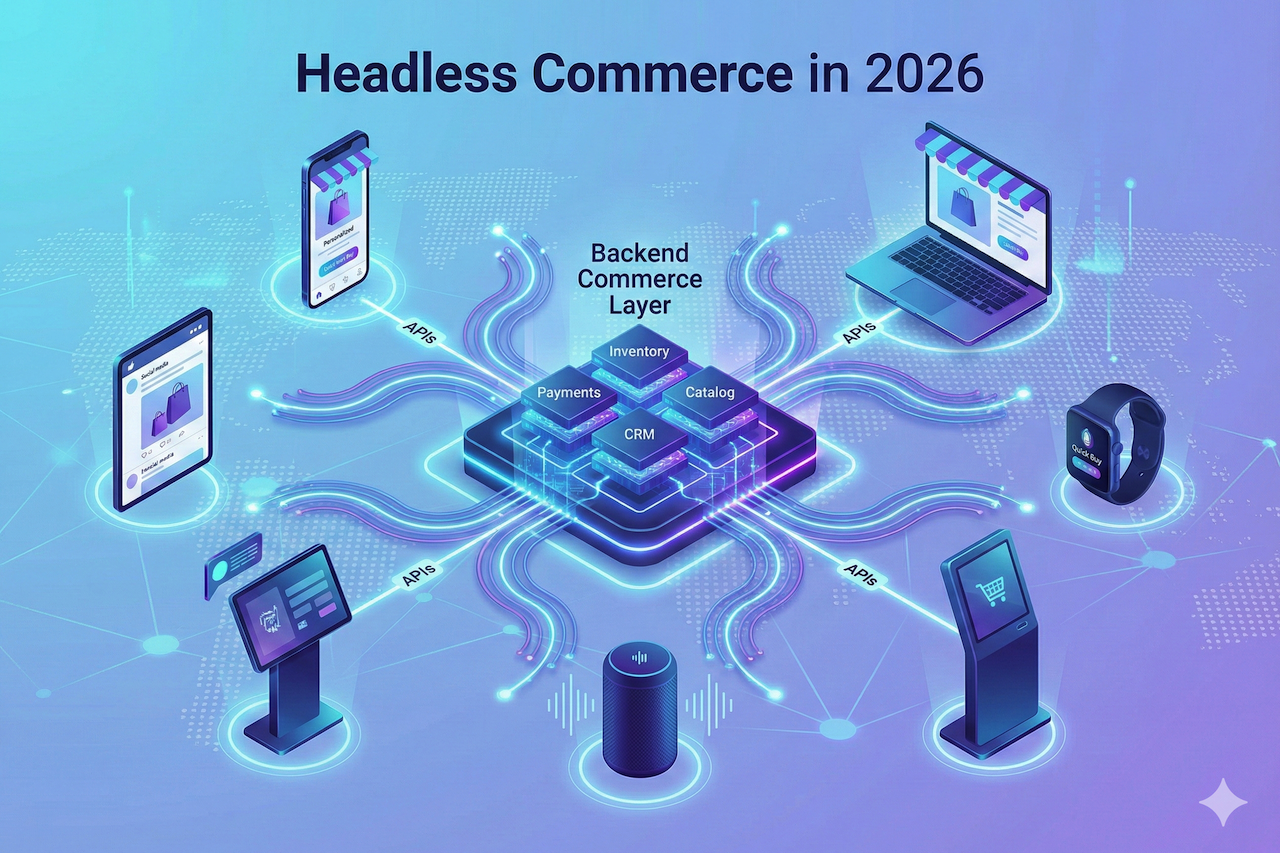
In 2026, headless commerce is no longer a new phenomenon; it has become the cornerstone on which modern commerce brands operate. As customer experiences expand across websites, mobile apps, marketplaces, social commerce, in-store environments, and emerging digital touchpoints, traditional commerce platforms are struggling to keep pace.
Organizations no longer need just an online store. They need a scalable commerce ecosystem capable of powering multiple experiences simultaneously. Headless commerce and modern headless commerce development approaches enable this shift. By decoupling the customer experience layer from business logic, brands gain the flexibility to innovate, personalize, and maintain consistency across all channels.
Omnichannel growth in 2026 is increasingly built on a headless strategy. It is becoming the default operating model for digital-first organizations.
Why Headless Commerce Is Becoming the Default Choice in 2026
Before exploring architecture and use cases, it is important to understand why headless commerce is no longer optional. The shift is not driven solely by technological trends. It reflects deeper structural changes in how customers interact with brands.
Headless commerce addresses limitations that traditional monolithic platforms can no longer support. Several key factors are driving this transformation.
1. Omnichannel Is No Longer Optional
By 2026, customers interact with brands across multiple touchpoints during a single purchase journey. A user may discover a product on social media, compare prices on marketplaces, research on a website, and complete the purchase through a mobile app.
Headless commerce supports this behavior by enabling multiple frontends to operate on a unified backend.
- Consistent product data across channels
- Unified pricing and inventory
- Seamless cart and checkout experiences
- Faster rollout of new digital channels
Without a headless architecture, managing omnichannel complexity becomes inefficient and prone to data inconsistency.
2. Frontend Flexibility Drives Faster Innovation
Traditional commerce platforms tightly couple frontend templates with backend logic. As a result, even minor interface changes often require backend adjustments, slowing innovation.
Headless commerce separates these layers, allowing frontend teams to experiment freely using modern frameworks such as React, Vue, and Next.js.
This leads to:
- Faster UI experimentation
- Rapid A/B testing
- Improved performance optimization
- Reduced time-to-market for new features
In 2026, speed is a competitive advantage. Headless architectures make this agility possible.
3. Performance Expectations Are Higher Than Ever
Customers expect near-instant digital experiences. Even small delays can significantly impact conversion rates.
Headless commerce improves performance by:
- Delivering lightweight frontend experiences
- Using API-driven data delivery
- Leveraging CDN infrastructure
- Supporting mobile-first optimization
This architecture enables brands to deliver fast, scalable experiences without compromising backend stability.
How Headless Commerce Architecture Works
Understanding headless commerce requires a high-level view of its layered architecture. The model separates commerce capabilities into independent components connected through APIs.
Backend Commerce Layer
The backend manages core business functionality, including:
- Product catalogs
- Pricing and promotions
- Inventory management
- Cart and checkout
- Order processing
This layer remains stable regardless of how many customer experiences are connected to it.
API Layer
APIs act as the bridge between the frontend and backend. They enable secure and flexible data exchange, supporting:
- Channel-agnostic commerce
- Third-party integrations
- Scalable system architecture
API-first design is central to modern headless commerce environments.
Frontend Experience Layer
This is where customer experiences are built. Each frontend can be tailored to a specific channel, such as:
- Web storefronts
- Mobile apps
- Smart devices
- In-store kiosks
- Voice interfaces
These experiences operate independently while relying on the same backend logic.
Business Benefits of Headless Commerce in 2026
Headless commerce is not only a technical model. It also delivers measurable business value. Organizations adopt this approach because it supports long-term growth and adaptability.
1. True Omnichannel Consistency
All channels operate on shared commerce logic, eliminating silos and inconsistencies.
This results in:
- Unified inventory
- Consistent pricing
- Coordinated promotions
- Stronger customer trust
Consistency becomes especially important for global brands.
2. Stronger Personalization Capabilities
Headless environments integrate easily with personalization engines, customer data platforms, and analytics tools.
Brands can:
- Deliver personalized experiences across channels
- Adapt offers in real time
- Respond dynamically to customer behavior
The free flow of data improves accuracy and relevance.
3. Easier Integration with Modern Ecosystems
Commerce in 2026 depends on interconnected systems such as payments, marketing, logistics, and analytics.
Headless commerce simplifies this complexity by:
- Using standardized APIs
- Reducing platform lock-in
- Supporting composable commerce strategies
This flexibility allows organizations to evolve their technology stack over time.
Key Considerations for Headless Commerce Adoption
While headless commerce offers flexibility, it also introduces architectural and operational complexity. Organizations must take a strategic approach to maximize long-term value.
Key areas of focus include:
- Architecture and scalability planning
- Selecting the right backend and designing for future channel expansion.
- Frontend experience optimization
- Delivering fast, search-optimized, and user-friendly digital experiences.
- Integration and data orchestration
- Ensuring reliable real-time data flow between systems such as CRM, ERP, and inventory platforms.
- Governance and operational stability
- Maintaining performance, security, and consistency as the ecosystem grows.
Without strong planning, headless environments can become overly complex.
Who Should Adopt Headless Commerce in 2026?
Headless commerce is no longer limited to large enterprises. It is especially valuable for:
- Brands expanding into multiple regions
- Organizations launching new digital channels
- Performance-driven companies
- Businesses prioritizing long-term scalability
For many organizations, headless architecture is becoming essential to future growth.
Conclusion
Headless commerce is no longer a trend in 2026. It has become a strategic foundation for delivering faster experiences, enabling omnichannel engagement, and supporting continuous innovation.
As customer expectations evolve, traditional monolithic commerce platforms struggle to provide the flexibility and performance required for modern digital ecosystems. Headless commerce enables organizations to build scalable, adaptable, and future-ready infrastructure.
Organizations that approach headless commerce with a clear strategy, strong architecture, and long-term vision will be best positioned to compete in an increasingly dynamic and experience-driven market.
Featured Image generated by Google Gemini.
Share this post
Leave a comment
All comments are moderated. Spammy and bot submitted comments are deleted. Please submit the comments that are helpful to others, and we'll approve your comments. A comment that includes outbound link will only be approved if the content is relevant to the topic, and has some value to our readers.
Comments (0)
No comment