
Hiring people sounds simple on paper. A role opens up, resumes arrive, interviews happen, and someone joins. In reality, the process is often messy and time-consuming. Work deadlines do not wait, projects need hands on the ground, and internal teams are already stretched thin. Seasonal demand, urgent initiatives, and compliance requirements add even more pressure.
As a result, many businesses look beyond traditional in-house hiring models. Instead of managing every step internally, organizations increasingly adopt structured workforce approaches, often working with a recruitment agency, to reduce friction in hiring and workforce management. These approaches go beyond simply filling vacancies. They help businesses stay focused on core operations while ensuring the right people are available at the right time.
Today, the priority for many organizations is not aggressive hiring or rapid expansion. It is reliable, timely, and compliant workforce planning that keeps operations running smoothly without creating unnecessary internal overhead.
Understanding External Workforce Models
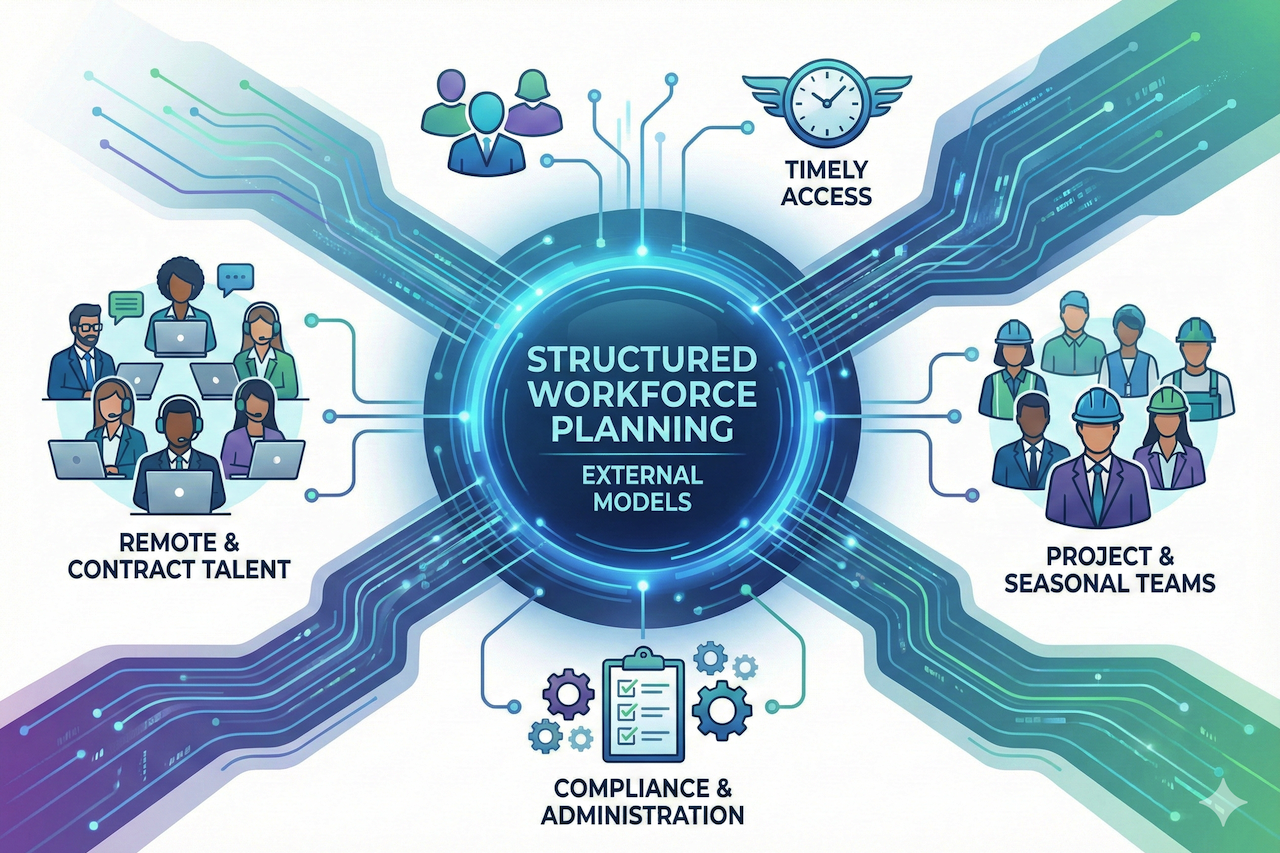
External workforce models allow businesses to bring in temporary or contract professionals without expanding permanent headcount. In these arrangements, employment administration, payroll processing, and compliance responsibilities are handled outside core operational teams.
Rather than managing recruitment, onboarding, payroll, insurance, and regulatory requirements entirely in-house, companies centralize these functions through defined workforce structures designed to reduce administrative complexity.
Key characteristics of this workforce model include:
- Workers are engaged through non-permanent employment structures
- Payroll, labor documentation, and compliance are handled through centralized processes
- Businesses gain access to ready-to-work professionals
- Hiring timelines become shorter and more predictable
These models are often aligned with specific industries such as IT, manufacturing, retail, or logistics, where role requirements and workload fluctuations are well understood. For organizations managing variable demand, this approach provides flexibility without long-term commitments.
When External Workforce Support Makes Sense
Certain business conditions clearly indicate the need for alternative hiring approaches. These scenarios are common across industries and company sizes.
Structured workforce models are often useful when:
- A short-term project requires a large number of skilled workers quickly
- Operations are seasonal and do not justify permanent headcount
- Specialized expertise is needed for a limited duration
- Internal teams lack time or tools to manage hiring efficiently
- Reducing HR administration, insurance, and compliance burden is a priority
In many cases, companies face sudden hiring needs. Delays caused by resume screening, interviews, and paperwork can slow operations. Structured workforce planning helps bridge this gap by enabling faster access to qualified professionals.
Industry familiarity also plays an important role. Workforce models designed around specific sectors help reduce onboarding friction and skill mismatches.
What to Evaluate When Adopting Workforce Models
Not all workforce approaches deliver the same outcomes. Selecting the right structure requires careful evaluation based on operational needs.
Industry Alignment
Experience within a specific industry allows for more accurate role alignment and fewer hiring errors. Familiarity with common challenges improves placement quality.
Process Maturity
Well-defined systems and workflows support consistency and reliability. Reviewing operational processes and long-term outcomes helps assess effectiveness.
Screening and Qualification Standards
Clear screening practices help ensure candidate suitability. These often include:
- Skill validation
- Structured interviews
- Background and reference checks
Thorough evaluation reduces turnover and re-hiring costs.
Flexibility and Adaptability
Every organization has unique requirements. Effective workforce structures adapt to project timelines, skill needs, and operational constraints rather than applying rigid models.
Best Practices for Managing Flexible Workforce Structures
Successful workforce management depends on clarity and coordination. Organizations that integrate workforce planning into their operational strategy often achieve better outcomes.
Define Role Requirements Clearly
Clear expectations around skills, experience, and duration improve candidate quality and reduce delays.
Maintain Ongoing Communication
Regular feedback and updates help refine workforce planning and improve alignment over time. Responsiveness leads to faster, more accurate staffing decisions.
When managed effectively, structured workforce approaches allow internal teams to focus on execution while staffing needs are addressed in the background.
Conclusion
Workforce challenges today extend beyond hiring alone. Speed, compliance, flexibility, and cost control all play equally important roles. Relying solely on traditional hiring structures can place unnecessary strain on teams and slow business momentum.
By adopting flexible workforce models and structured planning approaches, organizations can scale responsibly, manage risk, and maintain operational continuity. Shifting focus from reactive hiring to strategic workforce planning allows businesses to meet demand without compromising efficiency or control.
Featured Image generated by Google Gemini.
Share this post
Leave a comment
All comments are moderated. Spammy and bot submitted comments are deleted. Please submit the comments that are helpful to others, and we'll approve your comments. A comment that includes outbound link will only be approved if the content is relevant to the topic, and has some value to our readers.
Comments (0)
No comment