
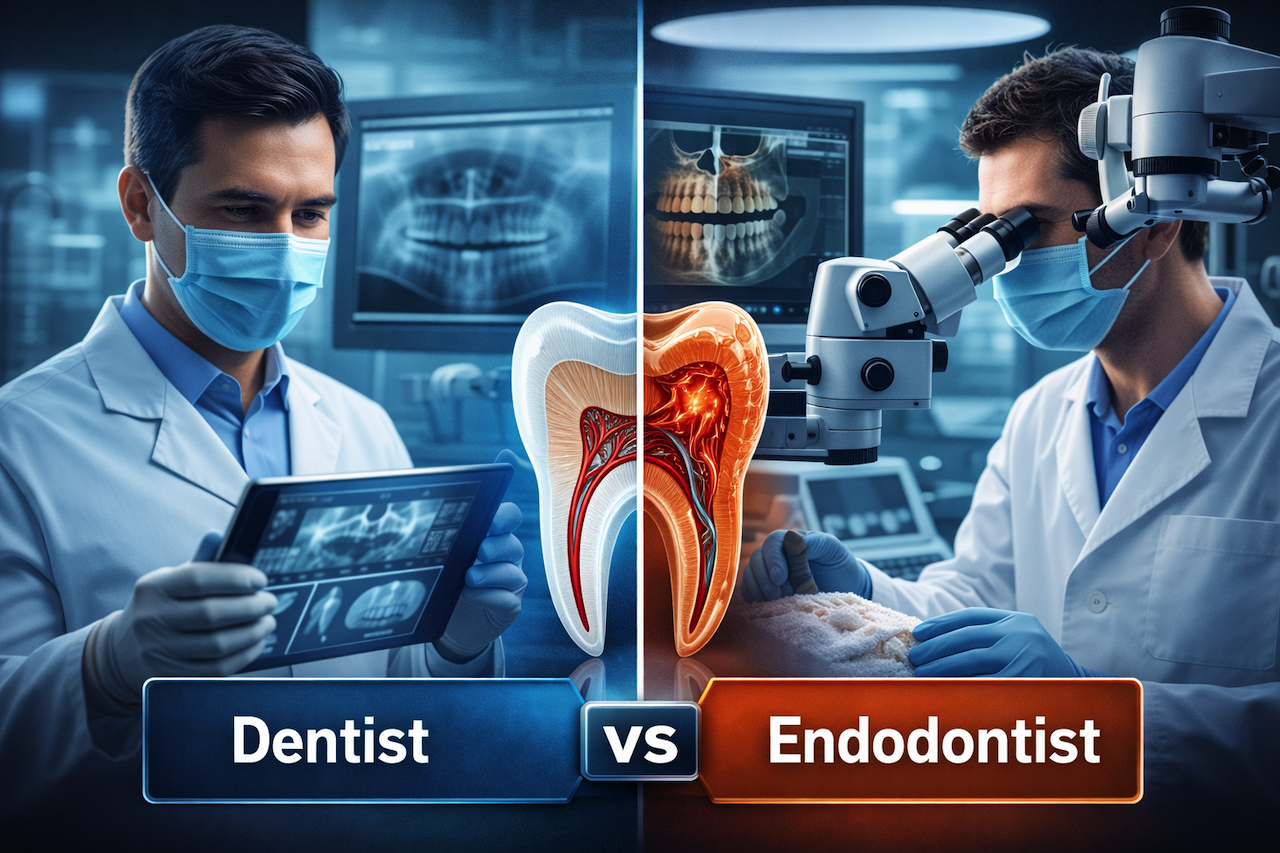
You’re sitting in a dental chair, staring at a screen displaying a high-resolution image of your tooth. Your dentist zooms in, rotates the scan, and points to something you can barely see—a tiny infection deep inside.
Then you hear two words: “You may need an endodontist.”
At that moment, a question naturally comes to mind: Isn’t a dentist enough? What’s the difference and why does it matter?
In today’s world, dentistry isn’t just about drills and fillings anymore. Advanced imaging, precision tools, and specialized expertise power it. Understanding the difference between a general dentist and an endodontist is no longer just about roles; it’s about who uses which technology to solve your problem more effectively.
Let’s break it down in a way that actually makes sense for you.
What Is an Endodontist in Modern Dentistry?
An endodontist is a specialist focused on diagnosing and treating problems inside the tooth—specifically the pulp, nerves, and root canal system. But in today’s tech-driven landscape, their role goes far beyond traditional treatment.
They operate at the intersection of clinical expertise and advanced dental technology.
Precision Diagnosis Using Digital Imaging
Endodontists rely on 3D imaging systems like CBCT (Cone Beam Computed Tomography) to detect infections that traditional X-rays might miss. This allows for earlier detection, more accurate diagnosis, and highly targeted treatment planning tailored to each patient.
Microscopic Root Canal Treatment
Unlike standard procedures, endodontists use dental operating microscopes to view the tooth’s internal structure in extreme detail. This level of magnification helps them treat complex canal systems with unmatched precision, reducing the risk of missed infections or the need for retreatment.
AI-Assisted Treatment Planning
In some modern clinics, artificial intelligence is being integrated to analyze scans and assist in identifying abnormalities. This enhances decision-making and improves the predictability of outcomes in procedures like root canal therapy.
Minimally Invasive Techniques
Advanced tools allow endodontists to preserve more of the natural tooth structure. This not only improves recovery time but also ensures long-term durability and function.
What Does a General Dentist Do?
Your general dentist is still your primary care provider, but their role has evolved significantly with technology.
Preventive Care Powered by Innovation
Routine checkups now include digital scans, early cavity-detection systems, and even AI-supported diagnostics. These tools help dentists identify problems before they become serious.
Restorative Procedures with Modern Tools
From tooth-colored fillings to same-day crowns using CAD/CAM technology, general dentists handle a wide range of treatments with improved speed and accuracy.
First Line of Digital Diagnosis
When you report symptoms like pain or sensitivity, your dentist uses imaging and diagnostic tools to assess the issue. If the problem goes deeper into the tooth, they’ll refer you to an endodontist for specialized care.
Key Differences Between an Endodontist and a Dentist
The difference today isn’t just about what they do; it’s about how they do it.
Scope of Practice
General dentists manage overall oral health. Endodontists specialize in the internal anatomy of the tooth, focusing on complex infections and nerve-related issues.
Level of Technical Expertise
Endodontists undergo additional years of specialized training, often centered around advanced tools, microscopic techniques, and precision procedures.
Technology Utilization
While both use modern equipment, endodontists typically operate with higher-end, specialized technology designed specifically for internal tooth treatment.
Complexity of Cases
Dentists handle routine and moderately complex procedures. Endodontists step in when cases involve deep infections, unusual root structures, or failed previous treatments.
When Should You See an Endodontist?
Technology helps identify problems earlier—but knowing the symptoms still matters.
Persistent Tooth Pain
If pain doesn’t go away, even after basic treatment, it may indicate deeper issues within the pulp that require specialized intervention.
Lingering Sensitivity
When sensitivity to hot or cold lasts longer than expected, it often points to nerve involvement—something an endodontist is specifically trained to treat.
Swelling or Infection
Modern imaging can reveal infections before they become visible, but physical symptoms like swelling are clear indicators that immediate care is needed.
Failed Previous Treatments
If you’ve had a root canal before but still experience discomfort, advanced retreatment techniques can help resolve lingering issues.
Why Technology Is Changing Dental Outcomes
This is where things get interesting.
Technology isn’t just improving convenience; it’s transforming success rates.
Higher Accuracy, Better Results
With 3D imaging and magnification, endodontists can locate and treat even the most complex root canal systems.
Reduced Treatment Time
Advanced tools streamline procedures, making them faster and more efficient without compromising quality.
Improved Patient Comfort
Minimally invasive techniques reduce trauma to surrounding tissues, leading to less discomfort and quicker recovery.
The Patient Journey: Then vs Now
Let’s compare a typical experience.
Traditional Approach
You visit a dentist, get a basic X-ray, and undergo treatment based on limited visibility. Complex cases may require multiple visits or referrals after initial attempts.
Modern Tech-Driven Approach
Today, your dentist uses digital scans to quickly identify the issue. If needed, you’re referred to an endodontist who uses advanced imaging and microscopic tools to treat the problem with precision—often in fewer visits and with better outcomes.
Local SEO Perspective: Finding Tech-Advanced Dental Care Near You
When you search for terms like “endodontist near me” or “advanced root canal treatment,” you’re not just looking for proximity; you’re looking for capability.
What to Look For
Advanced Technology Integration
Choose clinics that use digital imaging, microscopes, and modern diagnostic tools. These technologies directly impact treatment accuracy.
Specialist Collaboration
Clinics that combine general dentistry with specialized care offer a more seamless patient experience.
Patient-Centered Experience
Technology should enhance—not replace—the human aspect of care. Look for providers who balance innovation with clear communication.
For patients seeking a modern, tech-forward approach, providers like Nuffield Dental integrate advanced tools with personalized care to ensure precise diagnosis and effective treatment.
The Future of Endodontics: What’s Next?
Dentistry continues to evolve rapidly.
AI and Predictive Diagnostics
Artificial intelligence is expected to play a larger role in predicting dental issues before symptoms even appear.
Robotics in Precision Procedures
Robotic-assisted tools are being developed to enhance accuracy in delicate procedures such as root canals.
Personalized Treatment Plans
With data-driven insights, treatments will become increasingly tailored to individual patient needs, improving outcomes and efficiency.
Choosing Smarter Care in a Digital Age
Your oral health decisions today are no longer just about choosing a provider; they’re about choosing the right combination of expertise and technology.
A general dentist keeps your oral health on track. An endodontist steps in when precision matters most, when the problem lies beneath the surface.
By understanding this difference, you’re not just reacting to dental issues; you’re making smarter, more informed decisions that protect your long-term health.
Because in a world driven by technology, better tools don’t just improve treatment; they improve your experience.
Featured Image generated by ChatGPT.
Share this post
Leave a comment
All comments are moderated. Spammy and bot submitted comments are deleted. Please submit the comments that are helpful to others, and we'll approve your comments. A comment that includes outbound link will only be approved if the content is relevant to the topic, and has some value to our readers.
Comments (0)
No comment