
Understanding the Importance of Data Discovery
Organizations are inundated with vast amounts of information generated daily from various sources. This deluge of data presents both an opportunity and a challenge. On one hand, organizations have access to unprecedented insights that can drive innovation and strategic decision-making. On the other hand, the sheer volume of data can overwhelm teams, making it difficult to find and utilize the most relevant information. This is where the importance of data discovery comes into play. Efficient data discovery enables organizations to sift through their data resources to locate, understand, and use information effectively.
Data discovery goes beyond mere data access; it involves exploring and analyzing data to uncover patterns and insights that inform business strategies. In this context, leveraging tools such as data catalogs is essential for fostering a culture of data-driven decision-making. Data catalogs provide a comprehensive inventory of available data assets within an organization, facilitating more straightforward navigation and understanding.
Enhancing Collaboration Through Data Accessibility
Collaboration is the backbone of innovation. When departments work in silos, the potential for cross-pollination of ideas diminishes significantly. A data catalog serves as a centralized repository that enhances collaboration by providing easy access to data assets across various departments. By breaking down barriers to data access, teams can share insights and findings more readily, leading to collaborative problem-solving and innovation.
For instance, marketing and sales teams can collaborate more effectively by accessing customer data and purchasing patterns stored in a data catalog. This shared understanding allows for more targeted marketing strategies and personalized customer experiences. Moreover, the ability to access a common data source reduces the chances of miscommunication and discrepancies, ensuring that all teams are aligned in their efforts.
Fostering Data-Driven Decision-Making
For organizations to thrive in a competitive environment, decision-making must be grounded in reliable data. A well-implemented data catalog plays a crucial role in promoting a culture of data-driven decision-making. By providing users with tools to discover and analyze data, organizations empower employees at all levels to make informed decisions grounded in insights rather than intuition.
Organizations can leverage the power of data catalogs to drive strategic innovations, identify market trends, and assess customer preferences. By democratizing data access, data-driven insights can emerge across departments, leading to innovative ideas and strategies that may not have been evident in a traditional top-down decision-making structure.
Ensuring Data Quality and Compliance
As organizations rely more on data for their strategic initiatives, ensuring data quality and compliance becomes paramount. A data catalog allows organizations to maintain a clear overview of their data assets, including metadata, lineage, and quality metrics. By providing visibility into available data assets, organizations can proactively identify and address data quality and compliance issues.
Compliance with data privacy regulations, such as GDPR or CCPA, is a critical concern for organizations across sectors. A data catalog helps organizations document their data assets, understand data provenance, and ensure compliance with legal obligations. This proactive approach not only mitigates risks but also builds trust with customers who are increasingly concerned about how their data is managed and protected.
Driving Innovation with Advanced Analytics
The integration of a data catalog with advanced analytics tools can significantly enhance an organization's ability to drive innovation. By cataloging data from various sources, organizations can harness the power of machine learning and artificial intelligence to extract insights and identify previously hidden trends. Advanced analytics allows organizations to anticipate customer needs, optimize operations, and even predict market shifts, all of which are critical to maintaining a competitive edge.
For instance, retail organizations can analyze purchasing behavior data to identify buying patterns that inform inventory management and marketing strategies. By leveraging insights derived from a well-structured data catalog, organizations can react swiftly to changing market dynamics and customer preferences, which is essential for sustaining growth and innovation.
Cultivating a Data-Driven Culture
Empowering data discovery is not solely dependent on technology; it also requires cultivating a data-driven culture within the organization. Training employees to use data catalogs effectively is crucial to maximizing their potential. Organizations can invest in workshops, seminars, and training programs to educate employees on data literacy, the importance of data governance, and best practices for data use.
Encouraging curiosity and experimentation among employees will foster an environment where data is actively sought out and leveraged for diverse business challenges. When employees are encouraged to engage with data, they can propose innovative solutions and contribute to the organization's strategic objectives. This culture of data engagement ultimately leads to continuous improvement and innovation at all levels.
Prioritize your Business
As organizations continue to navigate the complexities of the digital age, empowering data discovery through effective data management practices becomes imperative. By leveraging data catalogs, organizations can enhance collaboration, promote data-driven decision-making, ensure data quality, and drive innovation. In doing so, they position themselves to harness the full potential of their data assets, leading to strategic business innovations that can redefine competitive advantages in the marketplace. The path forward is clear: organizations that prioritize data discovery will not only survive but also thrive in the evolving business landscape.
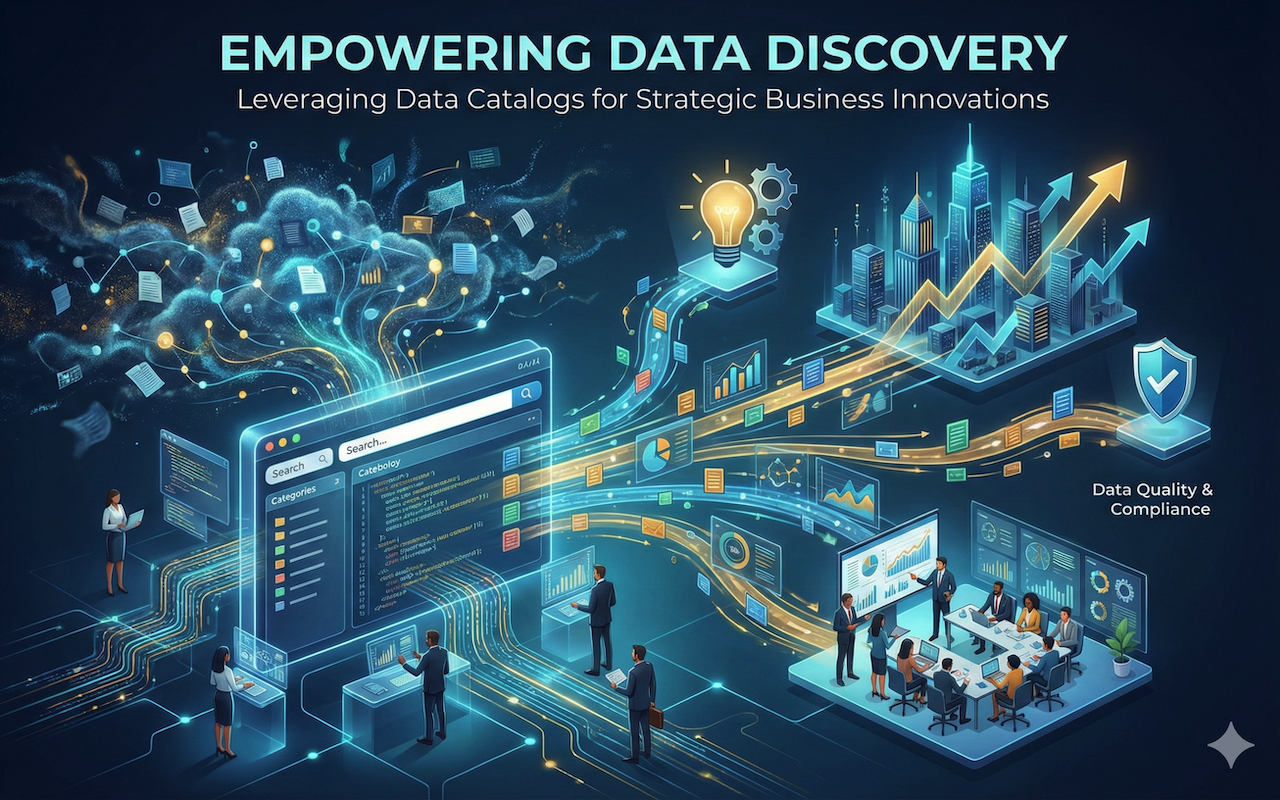
Featured Image generated by Google Gemini.
Share this post
Leave a comment
All comments are moderated. Spammy and bot submitted comments are deleted. Please submit the comments that are helpful to others, and we'll approve your comments. A comment that includes outbound link will only be approved if the content is relevant to the topic, and has some value to our readers.
Comments (0)
No comment