
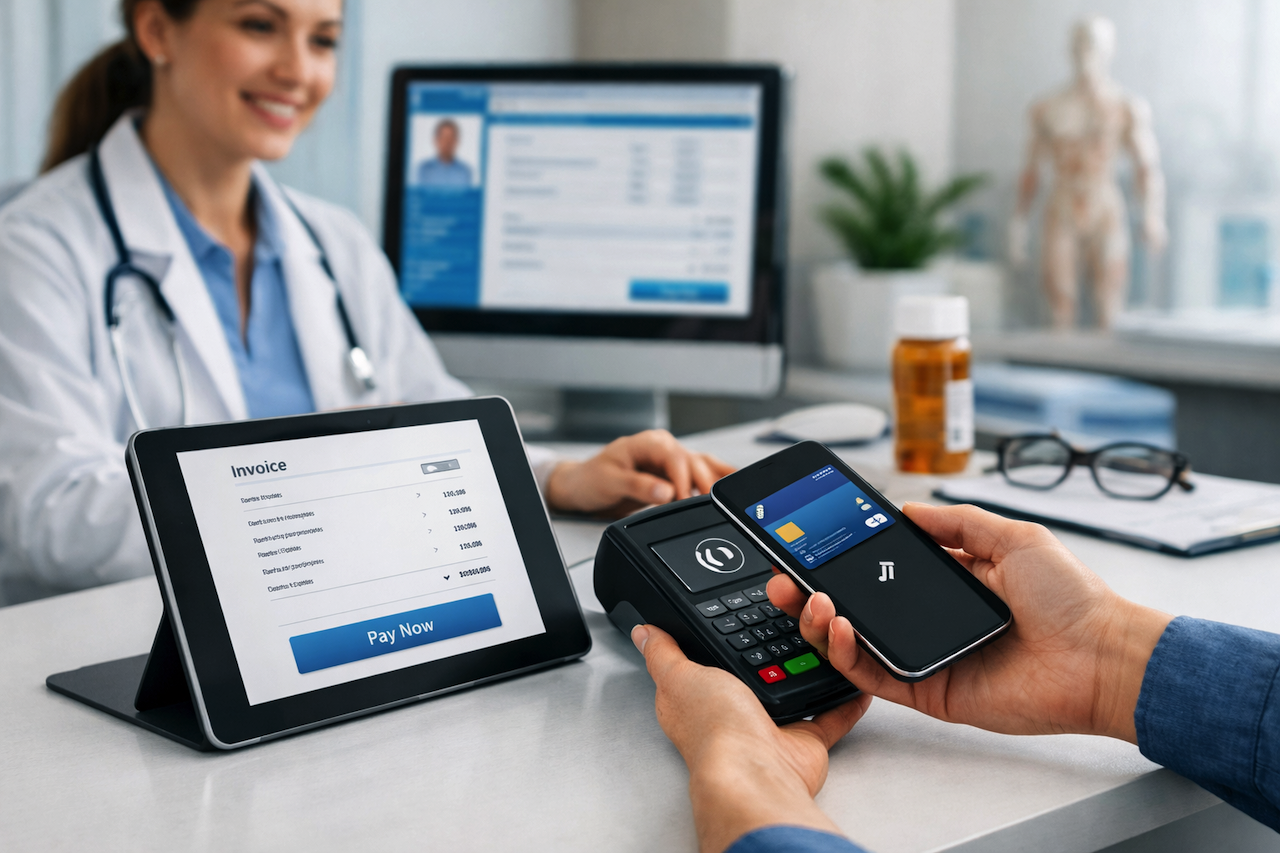
Following the trend of digital services now part of everyday life, private clinics are increasingly focusing on the overall patient experience. Many people already use apps to manage medical records, book appointments online, and even pay for services with cards or mobile wallets. So, clinics are starting to adopt more practical ways to interact with patients. Modern healthcare payment solutions are helping bring appointment booking, checkout, invoicing, and follow-up together into a single, simplified system.
There is also a growing push toward stronger digital health infrastructure and broader EMV readiness. The focus is on creating a solid foundation for faster, more flexible checkouts in private care businesses.
The Changing Way Patients Pay for Healthcare
The truth is, for patients, the experience in private healthcare matters just as much as the quality of treatment. And they’ll pay a premium for that. People are tired of slow appointment confirmations, bad communication, and messy pricing.
Because of that, many growing practices are rethinking how their administrative side works. They are starting to adopt a similar digital experience to the ones offered by services like banking and travel platforms, but for efficiency.
Modern Healthcare Payment Solutions for Clinics
When it comes to payment, healthcare providers are actively seeking solutions that do more than just accept a card at reception. The business model now needs tools for:
- Pre-visit deposits for booked procedures
- Front-desk checkout for same-day services
- Remote links for the convenience of patients who prefer to pay later
- Recurring charges for ongoing care or treatment bundles
- A self-service area where receipts and invoices are easy to find
By using this approach, the staff can now spend more time helping patients, rather than repeatedly dealing with routine business operations.
Maintaining transparent payment and billing processes helps keep the financial records clear. After all, it’s way easier to manage a business when the entire financial workflow is in one place.
How Clinics Can Start Accepting New Payment Methods
Patients want familiar choices. That means credit cards, mobile payments, and the ability to quickly and securely keep a card on file, along with simple online invoices and appointment confirmations. That expectation aligns with broader market trends, where EMV adoption is widespread and digital wallet and contactless use continue to expand. For private practices, Apple Pay and similar options are a natural extension of modern reception work rather than a niche add-on.
Perks of a Unified Payment Solution for Private Care
For many private clinics, payment administration is still fragmented. Deposits may be handled in one system, in-person payments in another, and reporting in a third. That setup creates unnecessary complexity for front-desk teams and limits managers' visibility. A unified payment system solves that problem. Staff can quickly track charges, completed payments, and outstanding amounts without switching between tools. That’s all about stronger operational control, fewer administrative errors, and a more consistent payment experience for patients.
What about Enhancing the Patient Payment Experience?
In private healthcare, convenience is part of perceived quality. A patient can be happy with the doctor and still leave frustrated if payment, billing, or follow-up feels disorganized. Well-run practices handle the financial side with the same care as treatment: clearly, professionally, and without delay.
Improving Healthcare Payment Options at the Point of Care
In-clinic payment options always matter. The most effective setup usually includes:
- Tap-to-pay at the desk
- A secure link sent by text or email
- Digital receipts
- An online portal for previous invoices
This approach helps different age groups and comfort levels without slowing the queue. For higher-fee procedures, staff can also explain the estimate, expected deductible, and any subsequent charges before the patient leaves, reducing later disputes and improving collection. That way, the conversation feels much more natural and clear.
How Payment Flexibility Can Improve Patient Revenue
Flexibility can protect and accelerate your revenue cycle. Many patients do not reject treatment because they doubt its value; they hesitate because the cost lands all at once. Clear payment plans, staged invoicing, and partial prepayment can remove that barrier professionally.
And it’s also good for the clinics, which can now pursue more predictable cash flow by using these methods to promote packages, follow-up visits, and longer treatment plans. Payment flexibility will often give patients the reassurance they need to move forward rather than delay the decision.
Streamlining the Healthcare Payment Processing Journey
But it’s not just about speeding up the checkout; the goal is having a smoother path from estimate to receipt. When all the process — quote, confirmation, receipt, and remaining amount — is handled in a unified system, it’s easier to streamline handoffs and reduce missed steps while avoiding friction on the management side.
Optimize the Billing and Payment Process
The truth is that it’s rather difficult to grow a business when one struggles with manual back-office routines. Doesn’t matter if big or small, any clinic will leak time and margin if staff spend too many hours creating invoices and matching records by hand. At some point, those small inefficiencies start to feel really expensive.
How Clinics Use Automation in Billing and Payments
The strongest platforms reduce manual workload by automating the entire billing and payment process — invoice creation, reminders before due dates, and recurring charges for ongoing treatment. As a result, they end up with simpler medical bills and far less avoidable admin. All that reclaimed time and saved energy come back into scheduling, service recovery, and communication with patients.
Secure Healthcare Payment Solutions for Every Provider
But let’s not forget that security cannot be treated as an afterthought. Any truly modern setup needs to support compliance, role-based access, encrypted data, and reliable protection of sensitive data from the start. With that in mind, a cloud-based environment can be especially useful for practices that want/need less local IT burdens and faster upgrades. For the business, this approach’s focus is confidence: a safer process that still feels easy for both providers and patients.
Helping Patients and Providers Stay on the Same Page
From a consumer’s point of view, the payment process feels safer when staff have accurate information at hand. Having access to invoices, payment status, due dates, and prior notes helps them explain charges clearly and answer questions without hesitation.
The goal is to increase engagement and eliminate awkward follow-up calls, promoting a more professional way to handle questions and discuss timing, which is known to be a source of frustration in health systems.
Modernizing Your Healthcare Billing Infrastructure
It’s impossible for a private clinic or any other business to scale while relying on outdated administrative practices. For services to expand, the core infrastructure needs to keep up with volume, support new workflows, and leave room for growth.
Solutions to Help Scale Your Specialized Clinic
Specialized clinics, such as fertility centers and orthopedic practices, rarely fit a generic model. They all handle different visit patterns and package structures. Because of that, they need a payment solution that supports things like deposits, recurring sessions, and clinical-specific workflows without forcing the business into awkward workarounds.
With the right payment options, clinics get more control over their daily operations while maintaining a high standard of service. It also helps leadership standardize office routines without compromising what makes the clinic distinctive.
Upgrading Legacy Payment Systems for Digital Velocity
Here we go! Let’s compare where older setups create drag:
| Legacy setup | Modern approach |
|---|---|
| Standalone terminal | Connected checkout plus online links |
| Manual invoice entry | Automated rules |
| Separate reports | Shared dashboards |
| Monthly clean-up | Ongoing reconciliation |
Real-Time Data for Better Healthcare Billing
Getting reports in real time is a must when dealing with a big volume of financial transactions. Clinics don’t have to wait until the end of the month anymore. Now they can watch transaction patterns, overdue amounts, refunds, and service-line performance in real time.
This makes it easier to plan more accurately and make informed operational decisions. It can also show which services need improvement.
Final Thoughts
The digital transformation of healthcare payments is no longer optional for private clinics aiming to grow and deliver a better patient experience. From streamlined billing and flexible payment options to automated workflows and real-time insights, modern payment systems play a critical role in both operational efficiency and patient satisfaction.
By adopting a unified and secure payment infrastructure, clinics can reduce administrative burden, improve transparency, and create a smoother financial journey for patients. As expectations continue to evolve, those who invest in modern payment solutions will be better positioned to scale, build trust, and deliver consistent, high-quality care.
 FAQs
FAQs
Start by looking at every stage at which payment occurs — before the appointment, at the front desk, after treatment, and through remote follow-up. After that, choose a system that supports those steps in one place, especially one that reduces manual tasks.
Look for features that improve day-to-day clinic work. They should provide options like online and in-person payments, payment links, recurring charges, reporting, software integration, and reliable security settings. A good system processes payments while making routine tasks easier for staff and reducing avoidable errors.
Convenience now influences trust, so clinics need to use solutions that make the final step feel fast, fair, and easy to understand. By improving the patient experience, they encourage follow-through and referrals.
Featured Image generated by ChatGPT.
Share this post
Leave a comment
All comments are moderated. Spammy and bot submitted comments are deleted. Please submit the comments that are helpful to others, and we'll approve your comments. A comment that includes outbound link will only be approved if the content is relevant to the topic, and has some value to our readers.
Comments (0)
No comment