
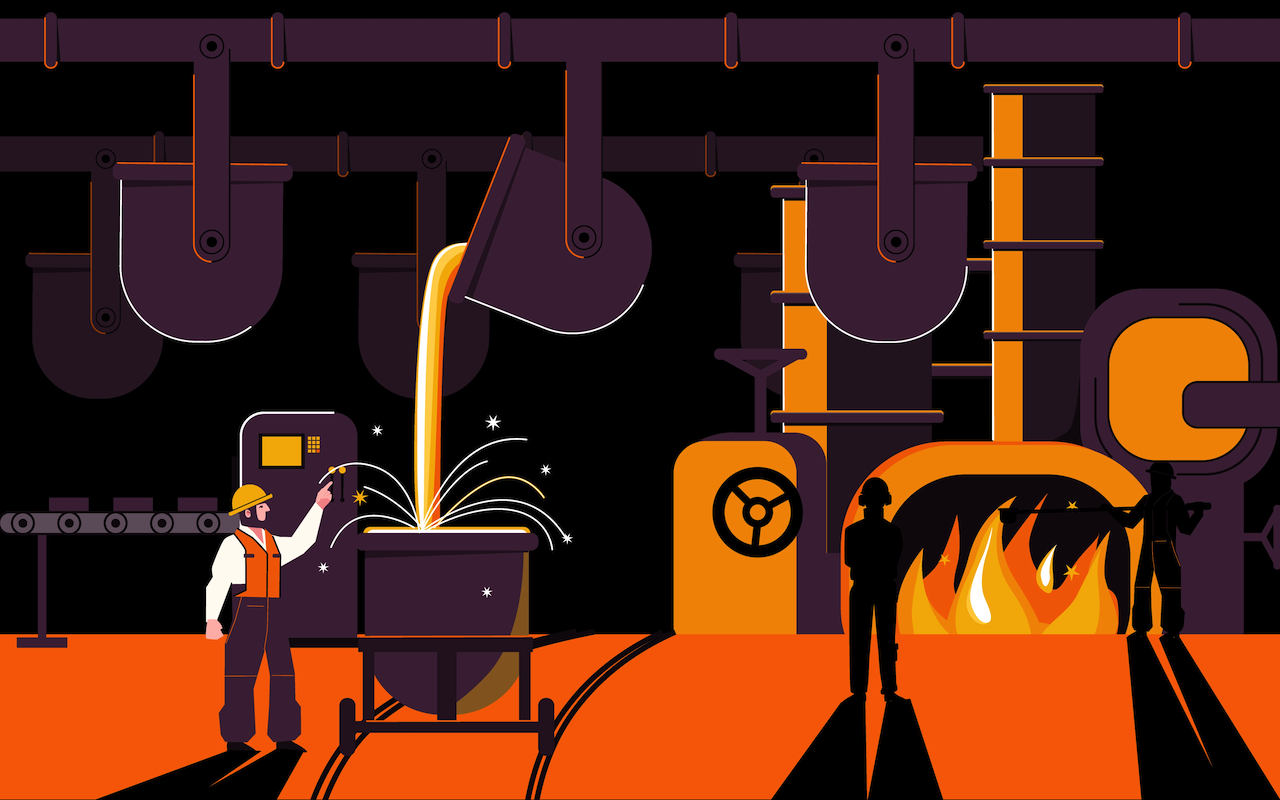
Fundamentals of Die Casting Technology
Die casting technology allows you to create precise metal components efficiently. This section covers key principles, the evolution of the process, and important terminology that will help you understand die casting better.
Key Principles and Definitions
Die casting is a manufacturing process where molten metal is injected into a mold cavity under high pressure. This method ensures that parts are created with excellent dimensional accuracy. With its ability to make complex shapes, die casting is widely used across many industries.
Key principles include:
- Pressure: Applying high pressure to force the metal into the mold improves the detail and finish of the part.
- Speed: The process is fast, allowing for high-volume production.
- Material Use: Common metals used include aluminum, zinc, and magnesium.
These principles make die casting a preferred choice in manufacturing.
Historical Evolution and Milestones
The history of die casting dates back to the 19th century. The first significant development occurred in 1838 when machinery was created for molding movable type for printing.
Important milestones include:
- 1849: The first patent for a hand-operated die casting machine was granted.
- 1885: Otto Mergenthaler's invention of the Linotype machine revolutionized typesetting and showcased die casting's potential.
These innovations laid the groundwork for modern die casting processes, which have evolved significantly over the years.
Essential Die Casting Terminology
To understand die casting better, it’s helpful to know some important terms related to the process.
- Mold Cavity: The hollow space within the mold that forms the shape of the part.
- Die: The tool used to create the mold, typically made from hardened steel.
- Runner: The channel that directs molten metal into the mold cavity.
- Ejector Pins: These push the finished part out of the mold once it has cooled.
Familiarizing yourself with these terms will make it easier to grasp the details of die casting and its applications.
Core Die Casting Processes
In die casting, different methods are used to create precise metal parts. Each process has unique features and advantages that make it suitable for various applications. Let's take a closer look at three core die casting processes.
High-Pressure Die Casting Overview
High-pressure die casting (HPDC) is one of the most common methods for producing metal components. In this process, molten metal is injected into a mold cavity under high pressure, typically ranging from 1,500 to 20,000 psi.
This high pressure ensures that the metal fills every part of the mold, including intricate details. The molds, often made from steel, are reusable and designed for high-volume production.
HPDC is widely used for creating parts in automotive and electronics industries due to its ability to produce complex shapes with tight tolerances. Common materials include aluminum, zinc, and magnesium alloys.
Gravity Die Casting Explained
Gravity die casting relies on gravity to fill the mold cavity with molten metal. Instead of using high pressure, this method allows metal to flow into the mold due to gravity, making it simpler and more cost-effective.
This technique is ideal for larger components where less pressure is needed. The molds, usually made from steel, can be reused many times.
Gravity die casting works well with metals like aluminum and copper, making it suitable for a range of applications. Although it may not achieve the same fine detail as HPDC, it offers a good balance of quality and efficiency.
Vacuum Die Casting Basics
Vacuum die casting is a specialized technique where a vacuum is created in the mold during the injection of molten metal. This process helps to reduce air pockets and improve the integrity of the final product.
By using a vacuum, defects like porosity are minimized, resulting in stronger and more reliable parts. This method is particularly useful for high-performance applications in aerospace and automotive sectors.
The vacuum process usually works with aluminum, magnesium, and zinc alloys. It can be more costly than other methods, but the benefits often outweigh the expenses due to the high-quality output.
In summary, knowing these core die casting processes will help you choose the best method for your specific needs.
Material Selection for Die Casting
Choosing the right material for die casting is essential for achieving strong, durable parts in mass production. The materials you select will impact everything from the production process to the quality of the final product. Two popular choices are aluminum alloys and zinc/magnesium, each with unique advantages.
Aluminum Alloys and Their Advantages
Aluminum alloys are favored in the die casting process for several reasons. They are lightweight yet strong, making them perfect for applications like engine blocks where weight reduction is key.
Advantages of aluminum alloys:
- Corrosion Resistance: Aluminum naturally forms a protective oxide layer.
- Good Mechanical Properties: They maintain strength at high temperatures.
- Cost-Effective: They provide a balance of performance and cost, suitable for mass production.
Aluminum alloys can be shaped into complex forms, ensuring precision in details. The high fluidity of molten aluminum allows for excellent mold filling, which reduces defects.
Zinc and Magnesium in Die Casting
Zinc and magnesium are also widely used in die casting, especially when specific properties are needed. These metals offer unique benefits that can enhance your projects.
Key benefits:
- Zinc:
- Excellent corrosion resistance
- Good strength and hardness
- Short cycle times due to lower melting points
- Magnesium:
- Very low density, which is great for lightweight applications
- High strength-to-weight ratio for durable parts
Both zinc and magnesium can significantly improve the performance of die-cast components. They also facilitate quicker production cycles, making them ideal for high-volume manufacturing where efficiency is crucial.
Die Casting Process Workflow
In the die casting process workflow, there are three main steps. Each step plays a crucial role in turning raw materials into high-quality metal parts. Understanding these processes helps you ensure efficiency and precision in manufacturing.
1. Mold Design and Preparation
The first step involves designing the mold, which is essential for creating the desired part shape. You start with selecting the right material, usually steel, due to its durability. The mold consists of two halves and must be designed to allow easy ejection of the final product.
During preparation, you check the mold for proper alignment and fit. It's important to ensure that the mold cavity is accurately shaped to avoid issues later. This step often involves cooling systems to control the temperature of the molten metal. Proper cooling will ensure consistent quality and shape in each part you produce.
2. Metal Injection and Solidification
Once your mold is ready, the next phase is metal injection. You will heat the chosen metal alloy until it is molten. Then, using a die casting machine, the molten metal is injected into the mold cavity under high pressure. This pressure forces the liquid metal into all areas of the mold, ensuring a precise fit.
After injection, you need to let the metal cool and solidify. The cooling time can vary, but quick cooling is often preferred for mass production. The result is a solid metal part that retains the exact shape of the mold.
3. Finishing and Quality Control
The last step is finishing and quality control. Once the parts are ejected from the mold, they go through processes like trimming and machining. This removes any excess material, ensuring that each part meets specifications.
Quality control is essential here. You need to inspect each piece for defects, such as surface imperfections or dimensional inaccuracies. This can involve using measuring tools or visual inspections. Maintaining strict quality checks ensures that the parts are reliable and meet industry standards.
Applications Across Industries
Die casting technology plays a vital role in various industries. It allows for the production of precise and durable components that meet specific needs. Let's explore its applications in automotive, consumer electronics, and aerospace sectors.
Automotive Components
In the automotive industry, die casting is essential for creating strong and lightweight parts. Components like engine blocks, gearbox cases, and housings are often made using this method.
Die casting allows manufacturers to produce these parts with high dimensional accuracy. This ensures that they fit perfectly and function reliably.
Mass production is another benefit, allowing carmakers to keep up with demand. Using die-cast aluminum helps improve fuel efficiency and reduces overall vehicle weight. In turn, this meets both performance and safety standards effectively.
Consumer Electronics Products
Die casting also finds significant use in consumer electronics. Parts for devices such as smartphones, laptops, and home appliances benefit from this technology.
For example, enclosures and frames made through die casting are known for their strength and aesthetic appeal. These components are designed to protect delicate electronics while also looking good.
The high production rates and consistent quality ensure that manufacturers can deliver products efficiently. Additionally, die casting allows for intricate designs, making your devices not only functional but also attractive.
Aerospace and Defense Uses
In aerospace and defense, precision is crucial. Die casting meets this need by producing reliable components for aircraft and spacecraft.
Parts like structural frames, brackets, and housings are often made using high-quality aluminum die casting. These materials provide both strength and lightweight characteristics.
The ability to create complex shapes allows for innovations in design. With mass production, engineers can manufacture these components quickly without sacrificing quality. This is essential for meeting strict safety and performance regulations in the industry.
Emerging Trends and Advanced Technologies
The die casting industry is adapting to new technologies to improve efficiency and sustainability. Key developments include the integration of additive manufacturing and 3D printing, the rise of smart factories, and ongoing automation efforts. Each of these trends plays a crucial role in how die casting is evolving.
Additive Manufacturing and 3D Printing Integration
Additive manufacturing and 3D printing are becoming essential in die casting. These technologies allow you to create complex shapes and designs with less material waste.
- Reduced Lead Times: You can prototype and produce parts faster compared to traditional methods.
- Customization: Each part can be tailored more easily to meet specific needs.
By using 3D printing, you improve design freedom and reduce the need for multiple tooling setups. This leads to lower costs and higher efficiency in production.
Smart Factories and Industry 4.0
Smart factories are revolutionizing the die casting sector by combining physical and digital systems. Industry 4.0 emphasizes connectivity, bringing in technologies like the Internet of Things (IoT) and artificial intelligence (AI).
- Real-Time Monitoring: You can track performance and quality metrics instantly.
- Predictive Maintenance: Smart tools can predict when machines will need repairs, reducing downtime.
This interconnectedness enhances overall productivity and streamlines operations, making your workflow much smarter and more efficient.
Automation and Sustainability Initiatives
Automation in die casting focuses on improving efficiency while being eco-friendly. Advanced robotics and automated systems help to reduce human error and speed up production times.
- Enhanced Efficiency: Automation allows for continuous production, maximizing output.
- Low Environmental Impact: Sustainable practices include reducing energy consumption and minimizing waste.
These initiatives not only boost your productivity but also show customers your commitment to environmental responsibility, making your operations sustainable and future-ready.
Conclusion
Die casting stands as a critical pillar in modern manufacturing, offering unmatched speed, precision, and scalability for producing metal components across industries. From its foundational principles and versatile processes to its expanding role in automotive, electronics, and aerospace applications, die casting continues to push the boundaries of what's possible in industrial production. As manufacturers embrace advancements like additive manufacturing, smart factory integration, and sustainable automation, die casting is poised to become even more efficient and adaptable. Understanding this evolving technology empowers businesses to make informed decisions, improve product quality, and remain competitive in an increasingly fast-paced and innovation-driven landscape.
Featured Image by Freepik.
Share this post
Leave a comment
All comments are moderated. Spammy and bot submitted comments are deleted. Please submit the comments that are helpful to others, and we'll approve your comments. A comment that includes outbound link will only be approved if the content is relevant to the topic, and has some value to our readers.
Comments (0)
No comment