
Winning in today’s e-commerce meat grinder isn't about having the prettiest storefront; it’s about who has the sharpest "information radar." Period. We’ve moved way beyond the era where you could just list a product and pray for the best. Now, if you aren't turning raw metrics into a battlefield strategy, you’re basically a sitting duck. Why do some brands explode into household names while others just… fade? It usually boils down to their data backbone – or lack thereof.
Running a shop without deep-dive analytics is like trying to navigate a minefield in the dark. While wearing a blindfold. It’s chaotic, right? Roughly 22% of retailers actually feel they’ve nailed their conversion goals, which is a pretty grim stat when you think about it. Most are just guessing. I saw a case recently where a small-scale electronics brand saved over €15,000 in a single month simply by stopping their "gut-feeling" discounts. It wasn't luck – it was just cold, hard data finally being put to work.
Cracking the Code of Pricing Intelligence
The heartbeat of any digital shop is the price tag. But here’s the kicker: in a world where everyone has fifty tabs open, your price isn't just a number – it’s a signal. Smart operators utilize competitor price tracking to make sure they aren’t accidentally pricing themselves into oblivion. It isn't just about being the "cheap option" (which is often a one-way ticket to bankruptcy), but about being the logical choice at the exact micro-second a customer decides to pull the trigger.
Consider the logic behind EU 261/2004 – okay, I know that’s about flight delays, but the core principle is the same: transparency and fairness. In the retail world, "Dynamic Pricing" is the law of the land. If your prices are static while your rivals are shifting theirs forty times a day based on supply and demand, well, you’re playing checkers while they’re playing high-stakes poker.
Why Real-Time Aggression Wins
Manual price checks? Forget it. That’s a relic from 2015. If you aren't monitoring the digital shelf in real-time, you're leaving money on the table.
- The "Out-of-Stock" Pivot: If your main rival runs out of a best-seller, your system should bump your price by 5% instantly. That’s pure margin.
- Safety Netting: Setting rigid "price floors" so your automated tools don't accidentally join a race to the bottom that kills your profit.
- Sentiment Spikes: Realizing a product is trending on social media and adjusting the "premium" before the wave crashes.
Beyond the Spreadsheet: The Human-Data Hybrid
While the numbers give you the "what," the "why" requires a bit more soul. High-performance retail requires a mix of data and what I call "market intuition." Some call it burstiness – the ability to pivot from deep technical analysis to snappy, human-centric marketing in a heartbeat. One lifestyle brand saw a 14% lift in loyalty just by admitting in their emails that their data told them people were tired of boring sales. "We know you're over it," they said. Refreshing, isn't it?
Actually, around 63% of shoppers now expect brands to basically read their minds. Creepy? Maybe. Effective? Absolutely. Digital Shelf Monitoring ensures you aren't just "there," but that you're visible where it counts. If you’re buried on page four of a search result because your data didn't catch a keyword shift, you might as well be invisible.
Leveraging Predictive Patterns
Predictive analytics is basically your business crystal ball. By stitching together past seasonal ebbs and current social buzz, you can stock up on "the next big thing" before your competitors even know it exists.
- Spotting "micro-trends" in search volume before they hit the mainstream.
- Adjusting inventory based on weirdly specific correlations (like how rain in London spikes umbrella sales in New York – it happens!).
- Mapping the "competitor analysis software" landscape to see who’s encroaching on your niche.
- Fine-tuning your ad spend so you aren't shouting into the void when your audience is asleep.
Navigating the Competitive Jungle with Surgical Precision
Think about your own buying habits. You don't just click the first ad you see. You hunt. You compare. You look for that specific "feeling" of getting a deal. This "messy middle" of the purchase journey is where data-savvy retailers eat their competitors for breakfast. By using automated precision, you can drop the right price at the right time.
Take a look at a medium-sized fashion retailer I followed – they didn't just slash prices across the board. They used data to find the "anchor products" that customers were most sensitive about, kept those low, and actually raised prices on the accessories. The result? A 12% jump in gross profit without increasing their traffic by a single person. It’s about being a sniper, not a machine gunner.
Final Thoughts
Shifting to a data-first model isn't just a "tech thing" – it’s a survival thing. It’s the difference between thriving and just barely keeping your head above water. Moving away from the "I think this will work" mindset toward "I know this will work" because the data says so is the ultimate level-up. The tools are ready, the market is waiting, and honestly? The competition is probably already halfway there. So, dive in, get your hands dirty with some metrics, and watch your margins finally start to breathe. Catch you on the leaderboard!
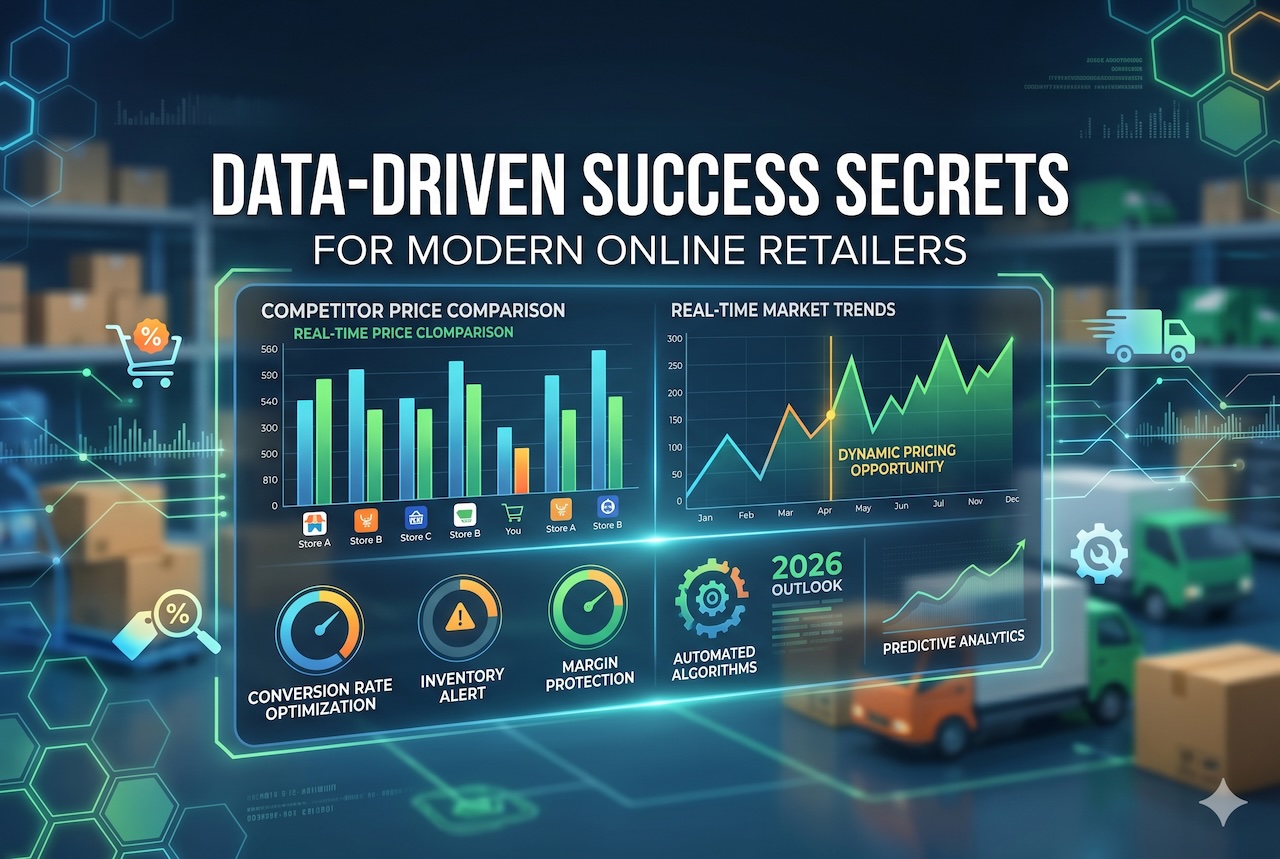
Featured Image generated by Google Gemini.
Share this post
Leave a comment
All comments are moderated. Spammy and bot submitted comments are deleted. Please submit the comments that are helpful to others, and we'll approve your comments. A comment that includes outbound link will only be approved if the content is relevant to the topic, and has some value to our readers.
Comments (0)
No comment