
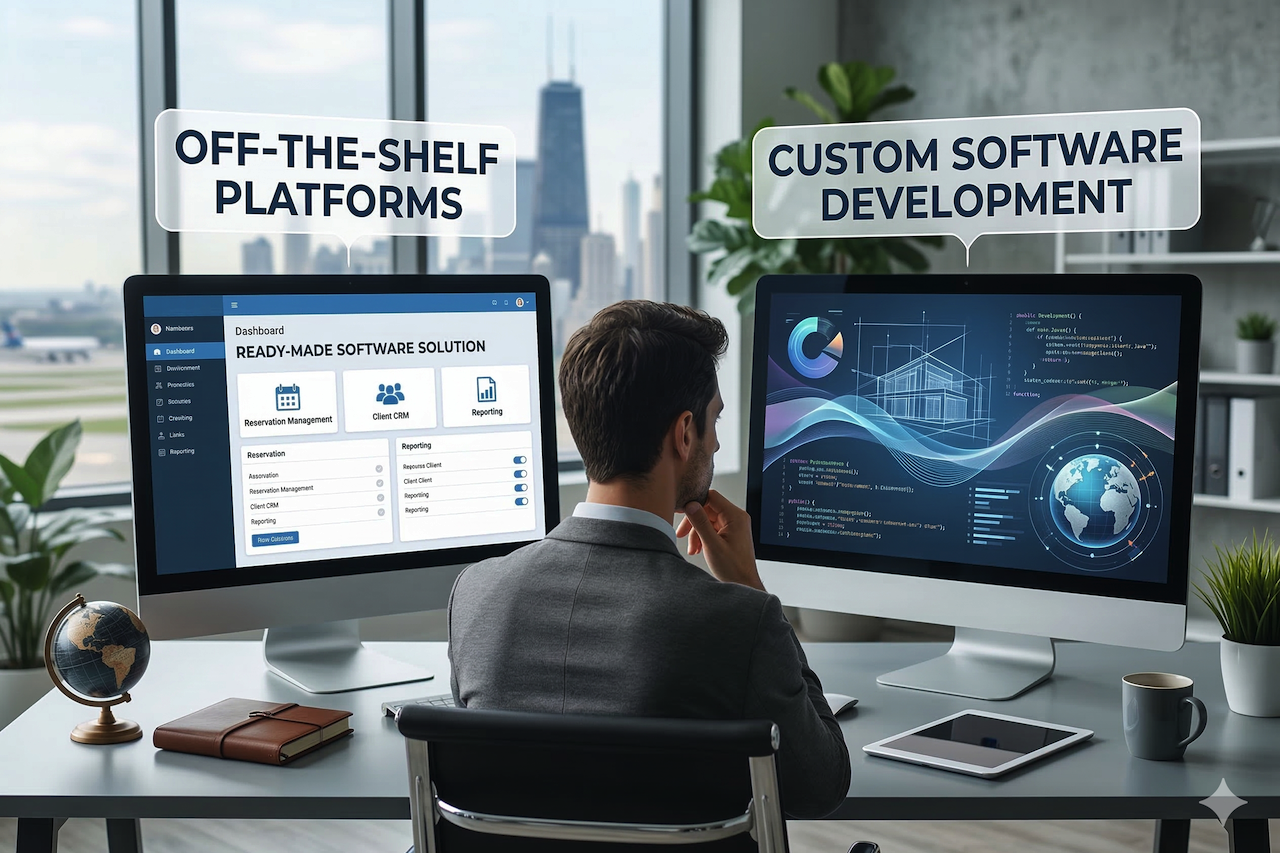
Modern travel agencies rely on technology as a core part of their operations. Travel agencies, tour operators, and booking platforms need software solutions that help them manage systems efficiently, improve customer experiences, and support business growth. As a result, many businesses explore options such as travel software development services alongside off-the-shelf platforms. However, when choosing the right software, organizations often face a key decision: should they build a custom solution or rely on ready-made software? This article explores both approaches, along with their advantages, limitations, and practical implications.
Understanding the Options
1. Off-the-Shelf Software
Off-the-shelf software refers to pre-built solutions that are ready to use immediately. Many businesses use reservation management systems, customer relationship management (CRM) platforms, and booking engines that are designed to handle common industry needs. These solutions provide a familiar framework that reduces the need for building systems from scratch.
Advantages
- Quick deployment: Systems can be up and running within days or weeks.
- Lower upfront cost: Suitable for startups and small to medium-sized businesses with limited budgets.
- Reliability: Vendors typically provide ongoing maintenance, updates, and support.
- Proven features: Includes commonly used tools such as booking engines, payment integrations, and reporting dashboards.
Disadvantages
- Limited customization: May not fully support unique workflows or specialized services.
- Generic experience: Similar platforms are widely used, making differentiation harder.
- Scalability constraints: Growing businesses may outgrow these systems over time.
- Hidden costs: Subscription fees, add-ons, and integrations can increase total costs.
- Vendor dependency: Businesses rely on third-party providers for updates and changes.
2. Custom Software
Custom software is built specifically to align with a business’s operational needs. It can range from tailored booking systems to fully integrated travel management platforms designed around specific workflows and customer experiences.
Advantages
- Tailored functionality: Features are designed to match specific business processes and requirements.
- Competitive edge: Unique capabilities can help differentiate a business in the market.
- Scalability and flexibility: Systems can evolve as business needs grow or change.
- Integration-ready: Can connect with APIs, payment systems, and analytics tools more seamlessly.
- Enhanced security: Security measures can be designed based on specific operational requirements.
Disadvantages
- Higher initial investment: Requires more resources upfront compared to ready-made solutions.
- Longer deployment time: Development may take weeks or months.
- Maintenance responsibility: Ongoing updates and support must be managed internally or through partners.
- Resource demands: Requires planning, coordination, and technical expertise throughout the lifecycle.
When to Choose Off-the-Shelf Solutions
Off-the-shelf software may be a practical option if:
- The business is small or in its early stages
- A quick solution is needed for basic booking and management
- IT resources are limited
- Operational needs are similar to standard industry practices
- A proven system with an established user base is preferred
Some widely used platforms in the travel industry include Travelport, Amadeus, and Sabre. These systems are known for reliability, strong support, and broad integration capabilities. Their widespread adoption also makes it easier to find trained professionals familiar with them.
When to Consider Custom Software
A custom approach may be more suitable if:
- The business requires specialized workflows
- Full control over user experience and branding is important
- Rapid growth or expansion into new markets is expected
- Integration with unique third-party systems is required
- Long-term flexibility and adaptability are priorities
Companies like Klook and GetYourGuide have used custom platforms to support personalized experiences, multi-channel bookings, and mobile-first access. This approach allows for faster feature development and a more consistent brand experience across touchpoints.
The Bottom Line
There is no one-size-fits-all solution. Off-the-shelf software can be a strong starting point for small to medium-sized businesses that need quick, reliable systems with lower upfront costs. However, these solutions may limit flexibility over time.
Custom software, on the other hand, offers greater adaptability and long-term scalability, making it more suitable for businesses with complex requirements or growth-focused strategies.
Ultimately, the decision depends on your business goals, available resources, and long-term vision. Whether the priority is operational efficiency or building a flexible foundation for future growth, choosing the right approach can have a lasting impact on how effectively your business evolves.
Featured Image generated by Google Gemini.
Share this post
Leave a comment
All comments are moderated. Spammy and bot submitted comments are deleted. Please submit the comments that are helpful to others, and we'll approve your comments. A comment that includes outbound link will only be approved if the content is relevant to the topic, and has some value to our readers.
Comments (0)
No comment