
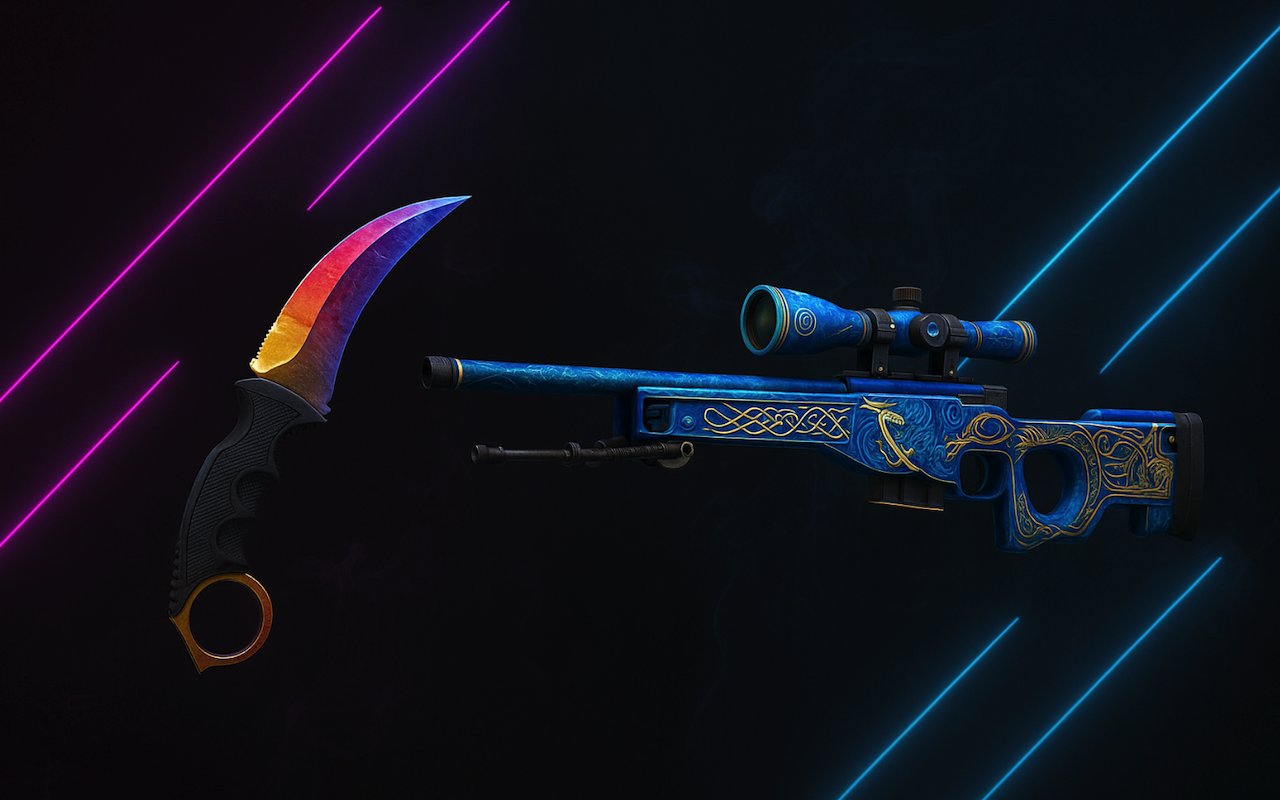
The prices of CS2 skins can blow your mind at first glance. These virtual weapon finishes have evolved from simple cosmetics to valuable digital assets since their introduction in the 2013 Arms Deal update. Some rare skins now sell for hundreds of thousands of dollars. That's right, people pay real money for virtual gun paint.
The CS2 skin economy confused me initially. I couldn't understand why some skins cost pennies while others were priced higher than cars. The CSGO skins float value makes a big difference; it ranges from 0 (Factory New) to 1 (Battle-Scarred). Factory New items typically cost 2-10 times more than their Battle-Scarred counterparts. Rarity significantly impacts CSGO skin values, and unique patterns and discontinued items command exceptionally high prices. The M4A4 Howl stands out as a prime example. It became the only contraband rarity gun skin in the game, and its value continues to rise.
Players who want to enter the scene need to find the right place for CS GO trade. CSGO skin marketplaces, such as Market CSGO, serve as central hubs where collectors and players trade these digital assets. CSGO skin marketplaces reveal how wear levels, stickers, and pattern variations affect buyer preferences. CS2 lets you customize almost everything beyond weapons. Smart decisions in this volatile digital economy depend on understanding these price drivers.
What Makes A CS2 Skin Valuable?
You might wonder why some digital pixels on a gun can cost more than your car. CS2 skins follow clear patterns, and knowing how to spot them can save you from wasting money on duds or missing potential gold mines.
Rarity and Drop Rates
CS2's rarity system creates a value hierarchy with seven distinct tiers: Consumer Grade (white), Industrial Grade (light blue), Mil-Spec (blue), Restricted (purple), Classified (pink), Covert (red), and Exceedingly Rare (gold/yellow), which applies to knives and gloves. The drop rates are brutal. Covert items show up with only a 0.64% chance, while the sought-after knives and gloves appear in just 0.26% of case openings.
This lack of availability sends prices sky-high. The AWP Gungnir serves as a perfect example-with only about 3,350 skins worldwide, its value towers above other rare items. Players browsing CSGO items notice that discontinued collections create even more scarcity, since their supply stays fixed forever.
Weapon Popularity and Demand
The CS2 economy values weapons differently. AK-47 and AWP skins fetch higher prices because players use these guns most often in matches. Traders who participate in CSGO trade see these weapons as "blue chip" investments. Items like AWP Dragon Lore, Karambit Fade, and M9 Bayonet Doppler continue to grow steadily in price.
The market follows simple economics: a bigger player base means more people want items with limited supply. The skin market has grown so much that it topped $5 billion in capitalization, and some traders now manage their collections like stock portfolios.
Visual Appeal and Uniqueness
A skin's looks play a huge role in what people will pay. Skins with intricate patterns, detailed artwork, and matching themes tend to grab attention and command premium prices. Special effects like holographic elements make these skins pop during gameplay.
Unique patterns can make a skin's value skyrocket. A standard Bayonet Fade costs plenty, but a "100% fade" version with pattern number 34 sells for a lot more. CSGO skin marketplaces show that pattern-based items like Case Hardened can vary wildly in price based on their blue percentage alone.
How Float Value and Wear Affect Prices
Float values make all the difference between a $10 item and a $1,000 gem in CS2 skin prices. Players often misunderstand these values.
What is Float Value in CS2?
A float value shows up as a decimal number between 0 and 1 that tells you how worn your skin looks. This value is assigned the moment you unbox the item or receive it as a drop, and it never changes. The closer the number is to 0, the cleaner the skin looks and the fewer scratches it has. This number remains constant—you can use the weapon, trade it, or add stickers, and the float value stays the same.
These tiny float differences can make prices skyrocket on CSGO skins. Random assignment of float values during drops makes specific ranges hard to find. CSGO traders will pay huge premiums to get their hands on ultra-low floats (0.000x).
Wear Levels: Factory New to Battle-Scarred
CS2 breaks down float values into five wear categories:
- Factory New (0.00-0.07): Pristine condition, minimal scratches
- Minimal Wear (0.07-0.15): Minor marks, still looks clean
- Field-Tested (0.15-0.37): Noticeable wear but design intact
- Well-Worn (0.37-0.44): Heavy wear, faded colors
- Battle-Scarred (0.44-1.00): Extensive damage, significant scratches
Factory New has the smallest range (0.07) while Battle-Scarred covers more than half the possible values (0.56). This makes lower wear levels harder to find.
Why Some High-Float Skins Are More Expensive
Some battle-scarred skins cost more than their cleaner versions. The "Blackiimov" AWP Asiimov stands out-collectors love its completely blacked-out scope at high float values. Case Hardened or Rust Coat patterns look more unique and eye-catching as their float values increase.
Traders on CSGO item marketplaces specifically search for these rare high-floats. The AK-47 Head Shot with a float of 0.99999988, CS2's highest possible, sells for over $5,000 even though it's technically the worst condition.
Finish Styles and How They Wear Over Time
Skin designers create different finish styles that wear in unique ways. The AK Empress gets darker at higher float values without showing many scratches. The USP-S Orion shows scratches even in Factory New condition.
Some skins come with “float-caps,” meaning you’ll only find them in certain wear ranges. Doppler knives only exist in Factory New or Minimal Wear because they need that glossy look.
The Role of Patterns, Stickers, and Special Features
CS2 skin prices can be mind-blowing, but most players miss the intricate details behind their value. The market goes far beyond simple rarity tiers, with an underground economy that thrives on patterns, stickers, and special features.
Pattern Templates and Rare Variations
CS2 assigns random pattern numbers between 0-1000 to every skin that appears in-game. These numbers determine how the skin's image wraps around the weapon model and creates unique variations. Pattern-based skins like Case Hardened can see massive price jumps based on these numbers. The legendary AK-47 Case Hardened with pattern #661, known as the "Scar Pattern," commands astronomical prices due to its blue concentration. Some Galil Sandstorms look completely different despite having the same name.
CSGO skin marketplaces show these pattern differences clearly, which explains why similar weapons can have vastly different prices. Blue Gem patterns often sell for 10-100x more than standard versions.
Sticker Rarity and Placement Impact
The February 2024 "Call To Arms" update changed stickers completely. Players can now add up to five stickers anywhere on their weapons. Stickers were previously limited to preset locations. Seven material types exist for stickers, ranging from common Paper to rare Lenticular ones.
Rare stickers like Katowice 2014 can significantly boost a weapon's value. CSGO traders know that a Howling Dawn sticker alone costs about $1,250.
StatTrak and Souvenir Skins Explained
StatTrak technology makes weapons more valuable by adding a kill counter. These special versions display an orange LED that shows your confirmed kills, unlike regular skins.
Souvenir skins form a premium category that players can only get from souvenir packages during major events. They come with special stickers you can't find anywhere else, but players can't use them in trade-up contracts.
Limited and Discontinued Skins
CS2's rarest items are those that players can't get anymore. The M4A4 Howl became "Contraband" after copyright issues forced a redesign, which permanently limited its supply. Collections like the Dragon Lore create extreme value since new ones can't be created; their source maps no longer exist.
Market Behavior and Price Trends
Money talks in the CS2 marketplace, and right now it's screaming at record levels. The skin economy has exploded to an unprecedented $5 billion market cap. Digital pixels now perform better than many traditional investments.
Supply and Demand in the CS2 Market
Simple economics controls CS2 skin prices, but this market is anything but straightforward. Skin values tend to rise after cases stop dropping. Collectors quickly buy up rare items with limited availability, which naturally pushes prices higher. CSGO marketplaces shows how supply changes make prices jump or fall almost instantly. The discontinued Cobblestone collections create massive price pressure because their supply never increases.
The market's liquidity is vital too. Valve's trade protection system caused a $615 million market cap drop as trades got stuck in limbo.
How Updates and Events Move Prices
Game updates can shake up CS2 prices dramatically. A single weapon rebalance—like the M4A1-S buff—can significantly boost skin values. Major tournaments also impact the sticker market, causing trading volume to surge during these events.
Steam’s seasonal sales flood the market with newly unboxed skins, temporarily driving prices down. Prices typically drop first, followed by an increase in the availability of rare items. Over time, the market usually rebalances.
Historical Price Trends of Popular Skins
The EsportFire 300 index shows skin prices have climbed steadily since late 2024. They hit record highs by January 2025 with a 15% increase. CS2 skin investments have beaten traditional markets, growing 17.4% over 90 days while the S&P 500 fell 12.42%.
CSGO traders have watched "blue chip" skins grow consistently. The AWP Dragon Lore (Factory New) grew 4.03% monthly.
Community Influence and Hype Cycles
Streamers and content creators can make or break the market. A single "underrated skins" video can cause prices to jump 30-50% in just one day. CSGO item prices climb almost immediately when pro players show off specific skins during tournaments.
Chinese buyers have stirred up the market. Their coordinated purchases have caused quick price spikes in gloves (25-50%) and Doppler knives (13-31%). Some wealthy groups can control market segments because the CS2 economy is relatively small.
Conclusion
CS2 skins are far more complex than most gamers initially realize. Small details like float values and pattern templates can turn an ordinary skin into one worth thousands of dollars. For example, the price gap between a standard Case Hardened and a blue gem with pattern #661 is enormous—even though they’re technically the same item.
You need to understand this ecosystem before jumping into CS GO trade. The market follows predictable patterns: limited supply pushes prices higher, game updates shift demand, and pro player preferences influence trends. While prices can be volatile day-to-day, the broader trend shows CS2 skins outperforming some traditional investments—up 17.4%, compared to the S&P 500’s 12.42% decline.
CSGO items demonstrate that wear levels can be deceptive. Factory New doesn’t always mean the highest value. The so-called Blackiimov AWP, for example, shows how high-float Battle-Scarred skins can fetch premium prices. These unexpected price dynamics add to the intrigue of the skin economy.
The market’s explosive growth to a $5 billion valuation has turned what began as in-game cosmetics into a legitimate alternative asset class. Many players now approach skins like collectibles or even stock portfolios. CSGO marketplaces have evolved to offer sophisticated tools for analyzing float values, pattern indexes, and historical price data.
Community trends heavily influence this market. Staying connected through streamers, forums, and major tournaments helps spot the next big skin before prices surge. Whether you’re investing, trading, or simply admiring a Dragon Lore, understanding what drives CS2 skin prices offers a definite advantage in this fast-moving digital economy.
Disclaimer
The information in this article is for informational purposes only and does not constitute financial or investment advice. Readers are responsible for complying with all applicable laws, platform terms of service, and regional regulations related to digital item trading. CSGO and CS2 item markets, including third-party platforms mentioned in this article, operate independently and are not affiliated with this publication. Prices, availability, and market behavior are subject to change and may involve risk. IPLocation.net does not endorse or take responsibility for the content, accuracy, or legality of external links or third-party services referenced in this article.
Share this post
Leave a comment
All comments are moderated. Spammy and bot submitted comments are deleted. Please submit the comments that are helpful to others, and we'll approve your comments. A comment that includes outbound link will only be approved if the content is relevant to the topic, and has some value to our readers.
Comments (0)
No comment