
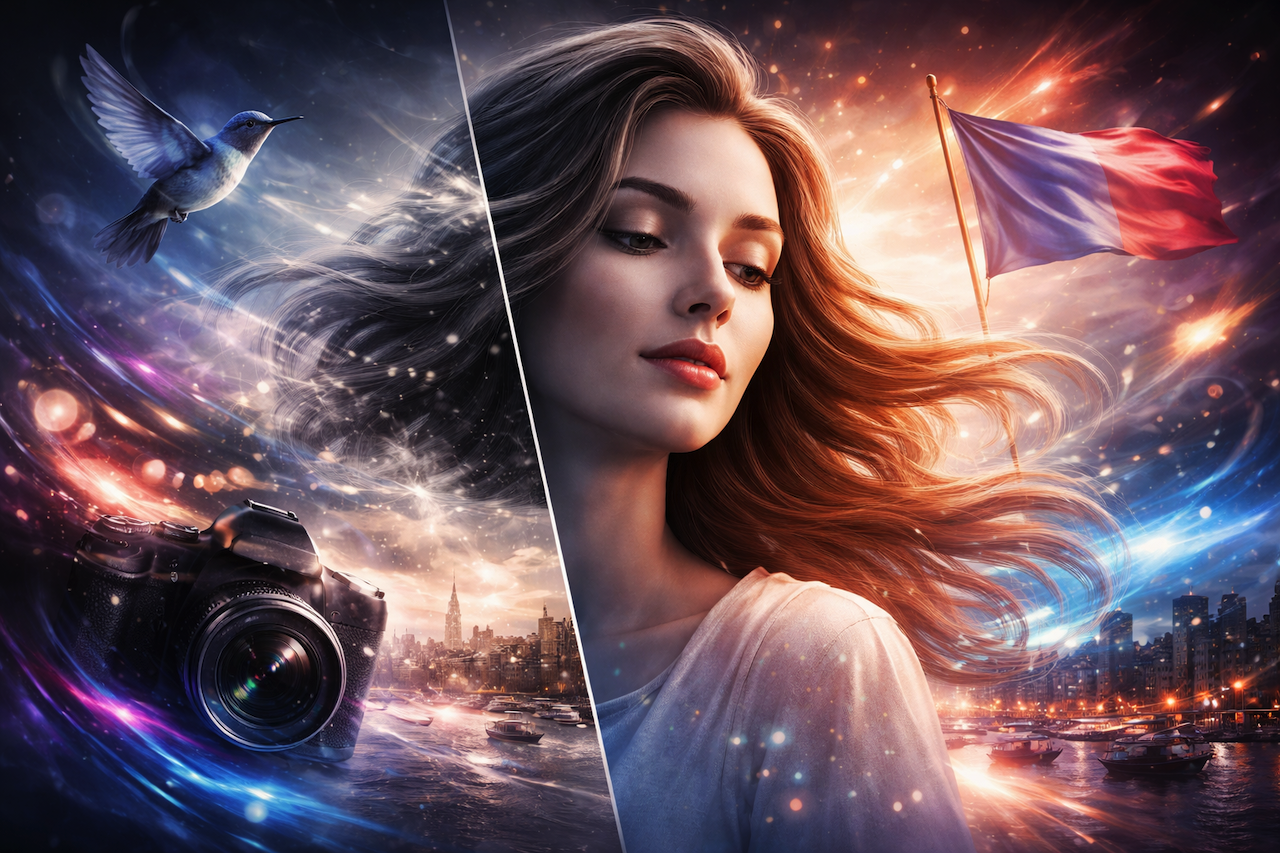
For over a century, the line between still photography and moving pictures was sharp and definitive. A photograph captured a single, immutable slice of time—a frozen expression, a cresting wave, a fleeting shadow. Video, conversely, captured the flow of time itself. To move from the former to the latter required entirely different tools, workflows, mindsets, and usually, vastly different budgets.
Today, that sharp line is blurring into a fascinating gradient. The emergence of artificial intelligence models capable of inferring and generating motion from static images is not merely a technical achievement; it represents a fundamental shift in how creators interact with visual media. This technology, broadly known as image-to-video generation, is democratizing animation and allowing creators across disciplines to rethink what a "still image" actually is.
The Mechanics of Motion
To understand why this is such a significant leap, it helps to understand the complexity of the problem being solved. When a human looks at a photograph of a flag blowing in the wind, our brains instantly understand the physical context. We know the fabric is pliable, we know wind exerts force, and we can easily imagine how that flag would flap and ripple over the next ten seconds.
Computers, historically, had no such intuition. To a computer, that flag was just a grid of colored pixels. To animate it, a human artist had to define the flag's geometry manually, set keyframes, map textures, and simulate physics—a laborious process requiring specialized software such as After Effects or Maya.
Generative AI changes this paradigm entirely. Through training on massive datasets of video clips, these neural networks have essentially learned a simplified version of physics and spatial awareness. They understand that water flows, fire flickers, clouds drift, and faces express emotion in specific, predictable patterns.
When you feed a static image into a modern image to video AI system, the model doesn't just stretch pixels. It analyzes the image's context—identifying subjects, backgrounds, lighting sources, and implicit physics—and then generates entirely new frames that predict what should happen next. The model hallucinates the motion, frame by frame, maintaining visual consistency with the original prompt.
Beyond the Novelty: Real-World Impact
While creating surreal, trippy animations for social media is a popular use case, the real-world applications of this technology are far more substantive. The ability to quickly and cheaply generate motion from stills is solving long-standing problems across multiple industries.
Archival Revival and Historical Storytelling
Documentary filmmakers and historians often rely heavily on archival photographs. Traditionally, bringing these stills to life involved the "Ken Burns effect", slow pans and zooms across a static image. While effective, it remains inherently two-dimensional.
Now, archival photos can be given subtle, realistic motion. A portrait from the 1920s can show the subject blinking or shifting their gaze. A photograph of a historical cityscape can feature rolling clouds or moving water. This subtle animation creates a stronger emotional connection for the viewer, making history feel less distant and more visceral. It bridges the gap between the static past and the dynamic present.
Product Visualization and E-Commerce
The e-commerce sector is experiencing a rapid transformation in how products are displayed. A static product shot, no matter how beautifully lit, often fails to convey texture, scale, or functionality.
Instead of organizing expensive video shoots for every product variant, brands are utilizing AI to animate existing photography. A still shot of a silk scarf can be animated to show how the fabric catches the light as it moves. A photograph of a watch can have its second hand tick smoothly. These micro-animations increase user engagement and provide a richer shopping experience without the overhead of traditional video production.
Empowering Independent Creators
Perhaps the most significant impact is on independent creators—writers, podcasters, musicians, and small business owners who need compelling visual content but lack the resources for full-scale video production.
Consider a musician releasing a new track. They may have a striking piece of cover art, but promoting music on platforms like YouTube or TikTok requires video. By using an image to video AI tool, they can transform that static album cover into a looping, atmospheric visualizer that matches the song's mood, creating professional-grade assets in minutes rather than days.
The Evolution of Control: From Randomness to Direction
The earliest iterations of image-to-video models were often unpredictable. You provided an image, clicked generate, and crossed your fingers, hoping the AI would interpret the scene correctly. Sometimes it did; often, it created bizarre, morphing anomalies where limbs melted into backgrounds or physics broke down.
The current generation of tools represents a massive leap forward in user control. Creators are no longer just rolling the dice; they are acting as directors. Modern interfaces allow users to specify exactly what they want through detailed text prompts or intuitive control mechanisms.
Motion Brushes and Regional Control
One of the most powerful advancements is the introduction of "motion brushes." Instead of animating the entire image, a user can paint a mask over specific areas, like a river in a landscape, and tell the AI to animate only that region, dictating the direction and speed of the flow.
Camera Controls
Creators can now dictate virtual camera movements. Want a slow tracking shot that pushes into a static portrait? Or a dramatic pan across an illustrated sci-fi cityscape? These parameters can be set precisely, allowing for cinematic movements that were previously impossible to extract from a flat image.
Navigating the Challenges and Ethics
As with any transformative AI technology, the rise of image-to-video generation is accompanied by significant challenges and ethical considerations.
The most pressing issue is the potential for misuse in creating deepfakes or non-consensual manipulated media. The ability to take a photograph of a real person and easily generate a video of them moving or speaking is a powerful tool that bad actors can exploit. The industry is currently grappling with how to implement robust safeguards, watermarking systems, and authentication protocols to verify media provenance.
Furthermore, there is an ongoing, complex debate regarding copyright and the datasets used to train these models. Many artists have raised concerns that their copyrighted works were used in training data without permission or compensation. The legal landscape surrounding generative AI remains unsettled, and how these issues are resolved will shape the future development of the technology.
The Future of Visual Storytelling
We are only at the beginning of this technological curve. The distinction between a "photo" and a "video" is becoming less about the medium itself and more about the creator's intent.
In the near future, we can expect these models to become faster, more temporally consistent (reducing the "flicker" or morphing artifacts common in current AI video), and capable of generating longer sequences. We will likely see tighter integration with traditional editing software, where AI motion generation becomes just another standard tool alongside color grading and sound mixing.
For creators, the message is clear: the barriers to entry for animation and video production have been irrevocably lowered. The ability to tell dynamic, moving stories is no longer gated by budget or specialized technical skills. It is limited only by imagination.
Featured Image generated by ChatGPT.
Share this post
Leave a comment
All comments are moderated. Spammy and bot submitted comments are deleted. Please submit the comments that are helpful to others, and we'll approve your comments. A comment that includes outbound link will only be approved if the content is relevant to the topic, and has some value to our readers.
Comments (0)
No comment