
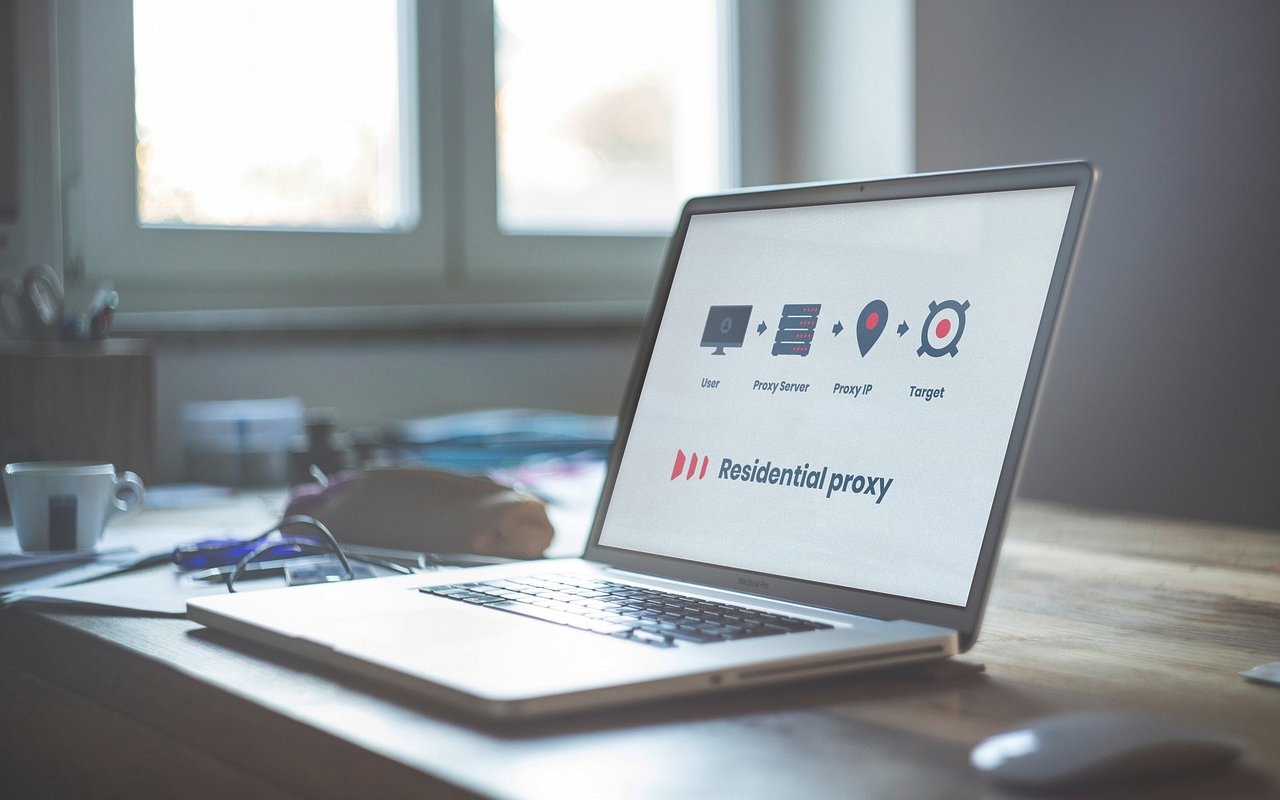
When your work depends on accessing accurate, location-based content, such as testing how a site loads in New York versus Tokyo or monitoring how your ads appear across different regions, you need more than a basic proxy. You need a residential proxy with true geographic precision.
Unlike traditional VPNs or datacenter proxies, residential proxies assign you an IP address from a real user on a real network. That means websites can’t easily detect or block your traffic, and more importantly for location testing, your IP is actually mapped to the correct location.
This guide explores residential proxy providers in 2025 that strike a balance between geolocation precision, performance, and usability.
What Are Residential Proxies and Why Do They Matter for Geo Accuracy?
A residential proxy routes your web traffic through an IP address assigned to a real household by an internet service provider (ISP). These IPs are seen by websites as ordinary users, which gives them a major edge in terms of stealth and authenticity.
Where datacenter IPs often trigger blocks or serve skewed content, especially for ad and location testing, residential IPs show you what a real person in that city or country would see. That’s crucial for geolocation accuracy.
You’ll benefit from residential proxies if you need to:
- Preview how localized content appears in different cities or regions
- Verify if an IP’s physical location aligns with its digital footprint
- Test geofencing rules, regional redirects, or multi-language site versions
- Collect accurate location-specific search results or market data
The key is using a provider with truly accurate IP sourcing and that’s where the right proxy network makes all the difference.
How We Evaluated the Top Proxy Services
Not every proxy provider is suitable for location-based work. Some offer large IP pools but lack targeting accuracy. Others have complicated setups that aren’t helpful for quick geo tests. Here’s what we focused on:
- IP Geolocation Accuracy: Do their IPs match their claimed city or region?
- Network Performance: Are the proxies responsive and stable during browsing or automation?
- Session Control: Can you switch IPs or hold a session as needed for consistent testing?
- Geo-Targeting Options: Can you choose IPs by country, city, or ASN?
- Ease of Use: Is the dashboard intuitive? Do they offer good documentation and support?
5 Best Residential Proxy Services to Consider in 2025
Whether you’re verifying how a site performs across different cities or ensuring your IP location data matches real-world targeting, these providers deliver the tools and precision you need.
1. NetNut
Best for: Geo‑accuracy and consistent performance
NetNut residential proxies are designed for tasks that require accurate geo-targeting. The service uses IP addresses sourced directly through ISPs, which ensures that the IP addresses you’re using are legitimately tied to the claimed physical location.
City-level targeting was tested across several major global hubs and showed consistent geolocation accuracy. The session setup process is simple, with a dashboard designed for ease of use. Whether you're testing ad localization or validating IP region compliance, NetNut makes the job simple.
Highlights:
- True ISP-sourced IPs (no peer-to-peer networks)
- Fast switching between sticky and rotating sessions
- City, ASN, and country-level targeting
- Excellent documentation and live support
- Stable sessions with verified IP mapping
Perfect for: Web developers, marketers, or compliance testers who need reliable geolocation results without the learning curve.
2. Bright Data
Best for: Filtering and precision targeting
Bright Data is known for offering extensive configurable proxy networks. With over 70 million IPs and advanced geo-filtering options, it’s a strong choice for users who want complete control over where their requests come from.
Bright Data gives you access to residential IPs that can be filtered by city, ASN, ISP, and even mobile carrier. However, the interface and setup process can feel dense for new users; it’s best suited for those with technical experience.
Highlights:
- Extremely granular geo-targeting options
- Huge IP pool with consistent location accuracy
- Built-in browser and testing tools
- Full transparency around sourcing and compliance
Perfect for: Advanced users running large-scale, multi-region testing, or scraping campaigns.
3. Oxylabs
Best for: Enterprise-scale location testing
If your team is conducting location-based data collection at scale—think competitive analysis, regional pricing research, or ad placement validation, Oxylabs is a great match. Its massive IP pool is backed by serious infrastructure, with tools tailored for high-throughput tasks.
The service also offers excellent session stability and city-level targeting, which is ideal for workflows that need automation combined with geolocation precision.
Highlights:
- Over 100 million residential IPs
- Geo-targeting options that hold up under scale
- Excellent uptime and session persistence
- Support for enterprise-level data workflows
Perfect for: Data teams, researchers, and marketing ops running high-volume, geo-sensitive operations.
4. Proxyrack
Best for: Budget-friendly accuracy
Proxyrack offers a strong balance between price and performance, with a focus on clean, rotating residential IPs. While it doesn’t offer the same deep targeting as NetNut or Bright Data, its IP geolocation is generally accurate and more than sufficient for many standard regional tests.
If you’re running lightweight verification tasks or need an affordable way to access global content without heavy resource demands, Proxyrack is a solid pick.
Highlights:
- Reliable IP rotation
- Access to global IP coverage
- Simple user interface
- Lower entry pricing for solo users and small teams
Perfect for: Startups, freelancers, and testers who need good geo performance without enterprise complexity.
5. SOAX
Best for: City-level verification and clean IPs
SOAX focuses on precision and IP cleanliness. Every proxy in their network is tested for accurate location reporting and they offer targeting down to the city and ISP level. That makes SOAX a favorite for ad verification, localization QA, and any task where regional targeting can’t be left to chance.
The dashboard is clean, the network is stable, and the transparency around IP sourcing adds peace of mind for compliance-heavy use cases.
Highlights:
- Verified residential IPs
- Easy-to-use geo filters
- Stable session control
- High trust score among compliance-focused teams
Perfect for: Marketing departments, QA testers, and compliance managers handling region-specific tasks.
Choosing A Residential Proxy Server
Geolocation testing isn’t just for global corporations anymore. Whether you're managing localized campaigns, tracking regional traffic, or validating IP-based redirects, residential proxies give you the power to simulate real user experiences from nearly anywhere.
Each provider on this list brings something unique, whether it’s scale, pricing flexibility, or advanced filtering. Select a service that aligns with your project requirements and test content as it appears from various locations.
 FAQs
FAQs
Yes, residential proxy IPs can be accurately geolocated when sourced from real devices connected through local ISPs. This typically results in IP addresses that reflect the true physical location of the user. Accurate geolocation is important for tasks such as ad verification, market research, or content testing across regions. Many businesses, such as Glow Directory, use such proxies to simulate access from specific cities or countries.
Absolutely. Residential proxies are ideal for simulating local users in different areas, helping you verify regional redirects, pricing changes, and site language settings.
Rotating IPs change with each request, which is useful for scraping or avoiding detection. Sticky IPs remain consistent for longer sessions, making them better for testing login flows or user-specific interactions.
Not necessarily. The accuracy of geolocation depends more on the quality and reliability of IP sourcing and targeting options than on the sheer size of the proxy pool. A smaller network with verified, accurately mapped IPs can often provide more consistent results than a larger but less curated pool.
Use a service like IPLocation.net to check the actual IP details of your proxy. Match it against the targeting you selected. If it’s accurate, the provider is doing things right.
Featured Image by Pixabay.
Share this post
Leave a comment
All comments are moderated. Spammy and bot submitted comments are deleted. Please submit the comments that are helpful to others, and we'll approve your comments. A comment that includes outbound link will only be approved if the content is relevant to the topic, and has some value to our readers.
Comments (0)
No comment