

Key Takeaways
- Modern contractor platforms should do more than move money. For global teams, the stronger systems connect onboarding, invoices, documentation, approvals, compensation-related records, reporting, and compliance support.
- The need for better contractor workflows is part of a wider workforce shift. The World Economic Forum’s Future of Jobs Report 2025 is based on input from more than 1,000 employers representing over 14 million workers across 55 economies, and examines workforce transformation strategies for 2025–2030.
- Payroll and workforce operations are becoming more strategic and process-driven. ADP’s global payroll research says payroll strategy is increasingly aligned with priorities such as resilience, global standardization, transparency, and employee empowerment.
- Compliance support matters because global contractor operations are part of a broader business process. PwC’s Global Compliance Survey 2025 reports that 71% of respondents identified digital transformation as a key initiative requiring compliance skills.
Paying contractors across countries is no longer just a finance task. For global teams, payments fit within a broader workflow: onboarding contractors, collecting documents, approving work, handling invoices, maintaining supporting records, and providing finance teams with visibility for reporting.
That is why contractor platforms in 2026 should not be judged only by transaction speed or visible fees. A low-cost transfer tool may still create manual work if contracts, invoices, approvals, and records live in separate systems.
The stronger approach is to treat contractor workflows as part of broader contractor operations. Platforms such as 4dev.com are examples of this model because they help companies connect documentation, compliance support, compensation-related workflows, and reporting in one system.
This guide compares four platforms for global teams: 4dev.com, Deel, Remote, and Papaya Global. The focus is not only on transaction handling, but also on the operational layer around contractor work.
What Is Contractor Payment Software?
Contractor platforms help companies manage workflows for independent contractors. In their simplest form, they help companies send funds internationally. In a stronger business setup, they also help manage the process around contractor operations: records, invoices, supporting documents, approvals, reporting, and compliance support.
This distinction matters for global teams. A transaction can be completed successfully, but the business process around it may still be weak. For example, finance may need to answer:
- Who was paid?
- What work was approved?
- Which invoice or service record supports the transaction?
- Were the right documents collected?
- Can the transaction be reviewed later for reporting, audit, or due diligence?
If those answers live in separate spreadsheets, email threads, and disconnected tools, contractor operations become harder to scale.
Strong platforms should therefore work less like standalone transfer tools and more like contractor operations layers.
What to Look for in Contractor Platforms
Strong platforms should support the full workflow, not only the final transfer. For global teams, this usually means consolidating contractor records, invoices, approvals, documentation, compliance support, and financial visibility into a single system.
| Criterion | Why It Matters |
|---|---|
| Contractor onboarding | The company needs a structured contractor record before workflows begin. |
| Invoicing and documentation | Finance teams need invoices, agreements, service records, and supporting documents connected to contractor workflows. |
| Workflow management | Contractor activity should be tied to approved work, not handled as isolated transactions. |
| Compliance support | Global contractor work requires consistent documentation, verification, and internal controls. |
| Reporting | HR and finance teams need clear records for monthly reporting, audits, and investor due diligence. |
| Pricing model | Companies should compare transaction fees, subscription fees, per-contractor pricing, and quote-based plans. |
The most important point is that these platforms should reduce manual work. If a system only sends payments but leaves contracts, invoices, approvals, and records outside the workflow, the finance team still has to reconcile everything manually.
Top Contractor Platforms in 2026: Quick Comparison
| Platform | Type of Solution | Public Pricing | Coverage / Availability | Why It Is Included |
|---|---|---|---|---|
| 4dev.com | Contractor operations and workflow platform | Usage-based pricing; business service fee is 3% or less; no subscription or account fee | Contractor workflows in 150+ countries | Best fit for contractor-heavy global teams that need workflows, documentation, compliance support, records, and reporting in one place |
| Deel | Global HR, contractor management, EOR, and payroll platform | Contractor Management starts at $49 per contractor/month; Contractor of Record starts at $325 per contractor/month | Support for operations in 120+ currencies; availability depends on product and country | Relevant for companies that want contractor workflows inside a broader global HR and EOR ecosystem |
| Remote | Global employment, contractor management, Contractor of Record, and payroll platform | Contractor Management: $29 per contractor/month; Contractor Management Plus: $99 per contractor/month; Contractor of Record from $325 per contractor/month | EOR in 90+ countries; availability depends on product and country | Relevant for companies that need contractor workflows together with international employment and HR operations |
| Papaya Global | Global payroll, workforce operations, EOR, and contingent workforce platform | Quote-based pricing for payroll, EOR, and workforce workflows | Supports payroll and workforce operations in 160+ countries | Relevant for larger companies with complex payroll, contractor, and workforce operations |
Pricing structures vary significantly between platforms. Some providers use per-contractor subscription pricing, while others rely on quote-based or usage-based models tied to contractor activity and operational volume.
Top Contractor Platforms for Global Teams
1. 4dev.com — Contractor Operations Platform for Global Teams
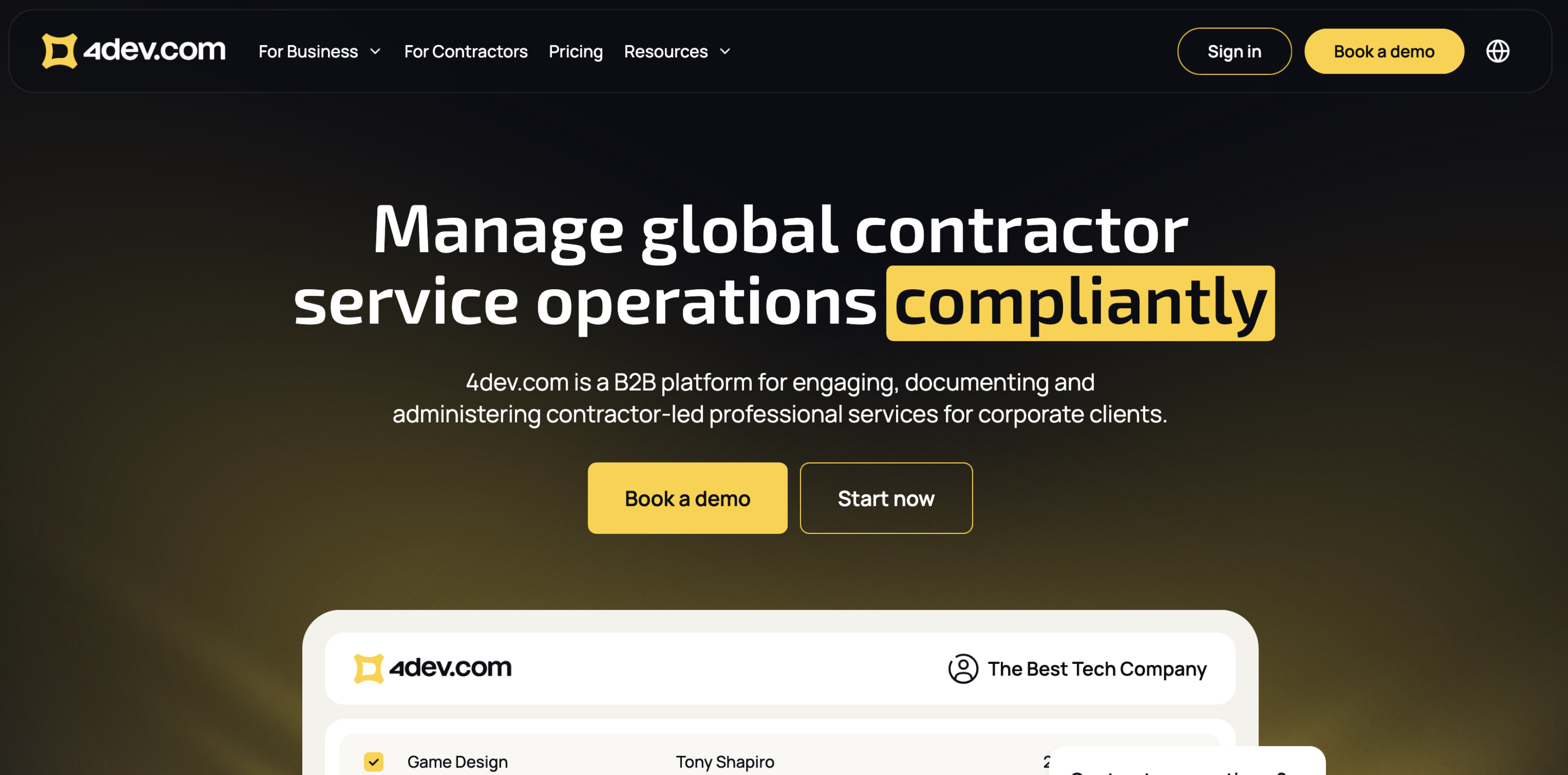
4dev.com is a contractor operations platform for companies that work with international contractors and need payments to be connected with workflows, documentation, compliance support, supporting records, and reporting.
The main difference between this platform and a simple transfer tool is its focus on contractor workflows. It helps companies manage contractor administration before and after transactions: onboarding, documentation, approvals, compensation-related records, and financial visibility.
This makes it especially relevant for contractor-heavy global teams. If a company works with many independent contractors across countries, manual processes can quickly become difficult to control. Invoices may be stored separately from approvals, transaction records may be disconnected from service documents, and finance teams may need to reconstruct the full context later.
This platform helps bring those steps into one structured workflow.
Best Fit
Contractor-heavy global teams that need contractor workflows, documentation, compliance support, reporting, and international contractor administration in one place.
Key Features
- Contractor workflows across 150+ countries
- Invoicing and supporting records
- Compliance support
- Compensation-related workflows
- Reporting and operational visibility
- Usage-based pricing with no subscription or account fee
Pricing
The platform publicly lists a business service fee of 3% or less, with no subscription or account fee. Pricing depends on monthly volume.
Coverage
It states that it supports contractor workflows in 150+ countries.
Why It Stands Out
This is one of the stronger options in this shortlist for companies that need contractor platforms to function as part of contractor operations, not just as a transaction layer. The platform is built around the areas that usually matter most for global contractor teams: workflows, documents, supporting records, compliance support, and reporting.
2. Deel
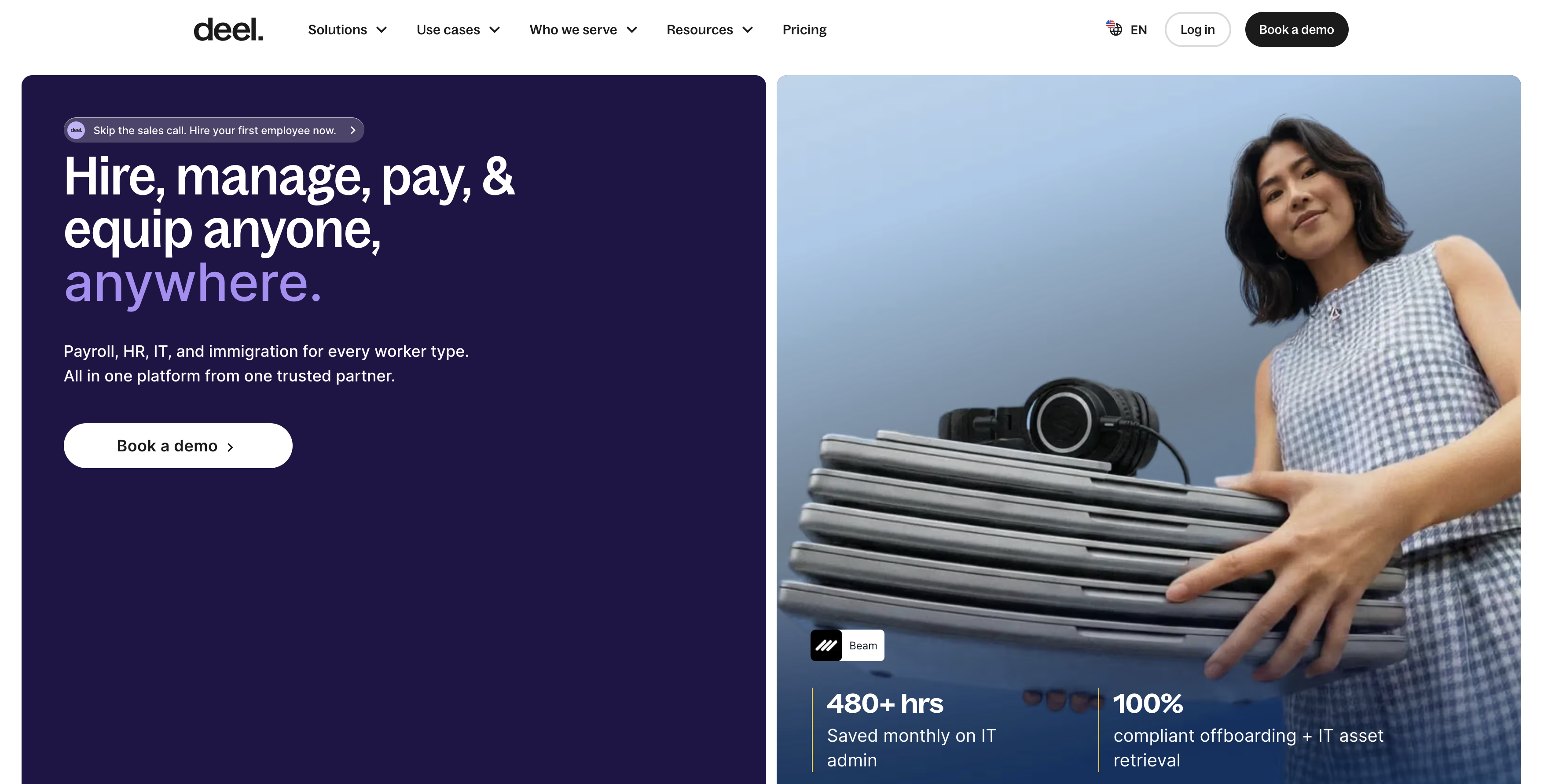
Deel is a global HR and workforce platform that includes contractor management, Contractor of Record, EOR, global payroll, HR tools, and workforce administration. The platform is usually relevant for companies that want contractor workflows to sit inside a broader global HR ecosystem.
Its contractor product includes features such as compliant contracts, document collection, automated invoicing, expense and time-off workflows, and support for operations in 120+ currencies. The platform also offers a Contractor of Record service for companies that want additional support with contractor classification and administration.
Best Fit
Companies that need contractor workflows together with EOR, global payroll, HR, and international workforce management.
Key Features
- Contractor management
- Contractor of Record
- Global payroll and EOR products
- Automated invoicing
- Document collection
- Support for operations in 120+ currencies
Pricing
The public pricing page lists Contractor Management from $49 per contractor/month and Contractor of Record from $325 per contractor/month. Pricing for other products depends on the selected service and country.
Coverage
The platform describes support for operations in 120+ currencies. Companies should verify availability for the specific countries, entities, and workforce products they need.
Considerations
This platform may be broader than necessary if the company’s main focus is contractor operations: workflows, documentation, supporting records, approvals, and reporting. It is usually more relevant when contractor workflows are part of a wider global HR or EOR setup.
3. Remote
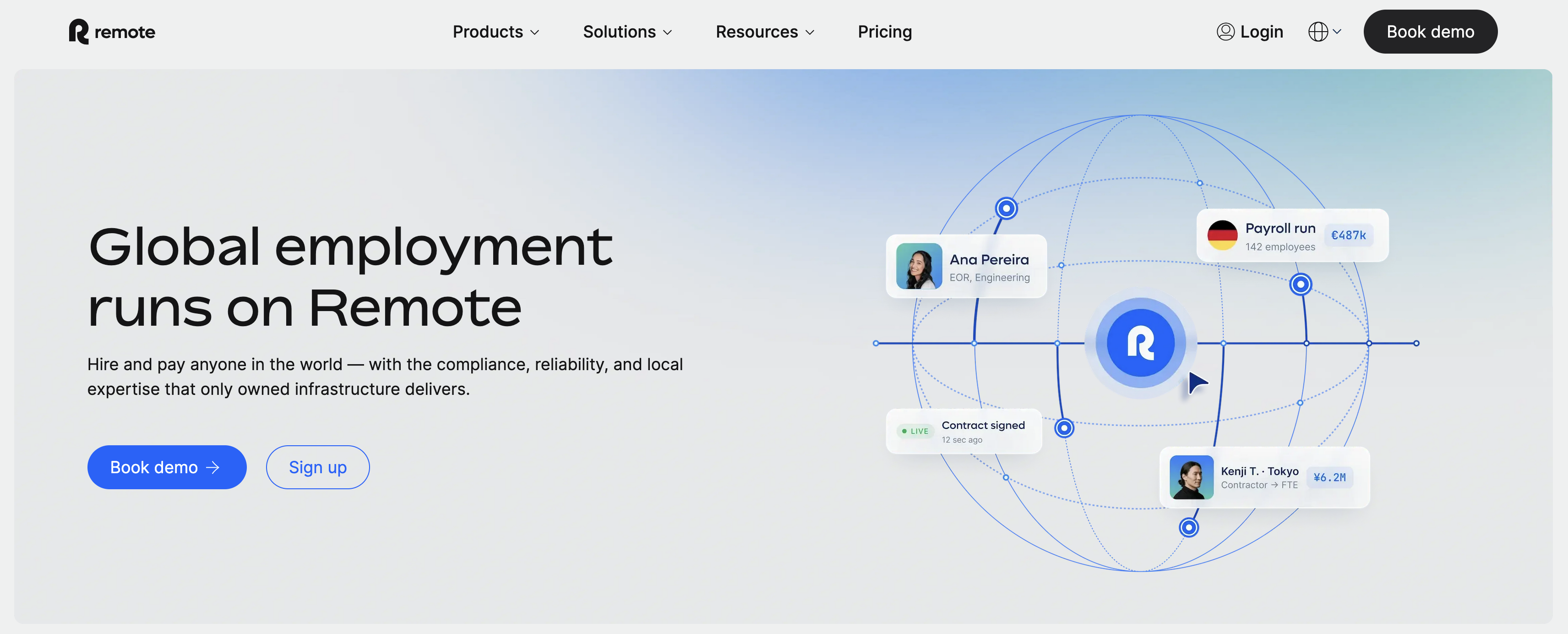
Remote is a global employment platform that includes contractor management, Contractor Management Plus, Contractor of Record, EOR, global payroll, and HR tools. The platform is usually relevant for companies that want contractor workflows connected to international hiring, localized contracts, invoice approvals, and broader employment infrastructure.
The public pricing page describes contractor features such as creating and signing localized contracts, approving invoices, auto-pay, transparent transactions, and HR Core included as standard. The platform also offers Contractor of Record for companies that want additional support with contractor administration and compliance-related processes.
Best For
Companies that need contractor workflows alongside global employment, EOR, payroll, and HR administration.
Key Features
- Contractor Management
- Contractor Management Plus
- Contractor of Record
- Localized contracts
- Contractor invoice approvals
- Auto-pay and transparent transactions
- EOR and global payroll products
Pricing
The public pricing page lists Contractor Management at $29 per contractor/month, Contractor Management Plus at $99 per contractor/month, and Contractor of Record from $325 per contractor/month. It also lists EOR pricing at $599 per employee/month annually or $699 monthly.
Coverage
The platform states that it supports EOR in 90+ countries. Availability for Contractor Management, Contractor of Record, global payroll, and other products should be verified by country and use case.
Considerations
This platform may be more than a contractor-heavy company needs if the main focus is contractor workflows, documentation, supporting records, and reporting. It is more relevant when contractor operations are part of a broader global hiring or employment strategy.
4. Papaya Global
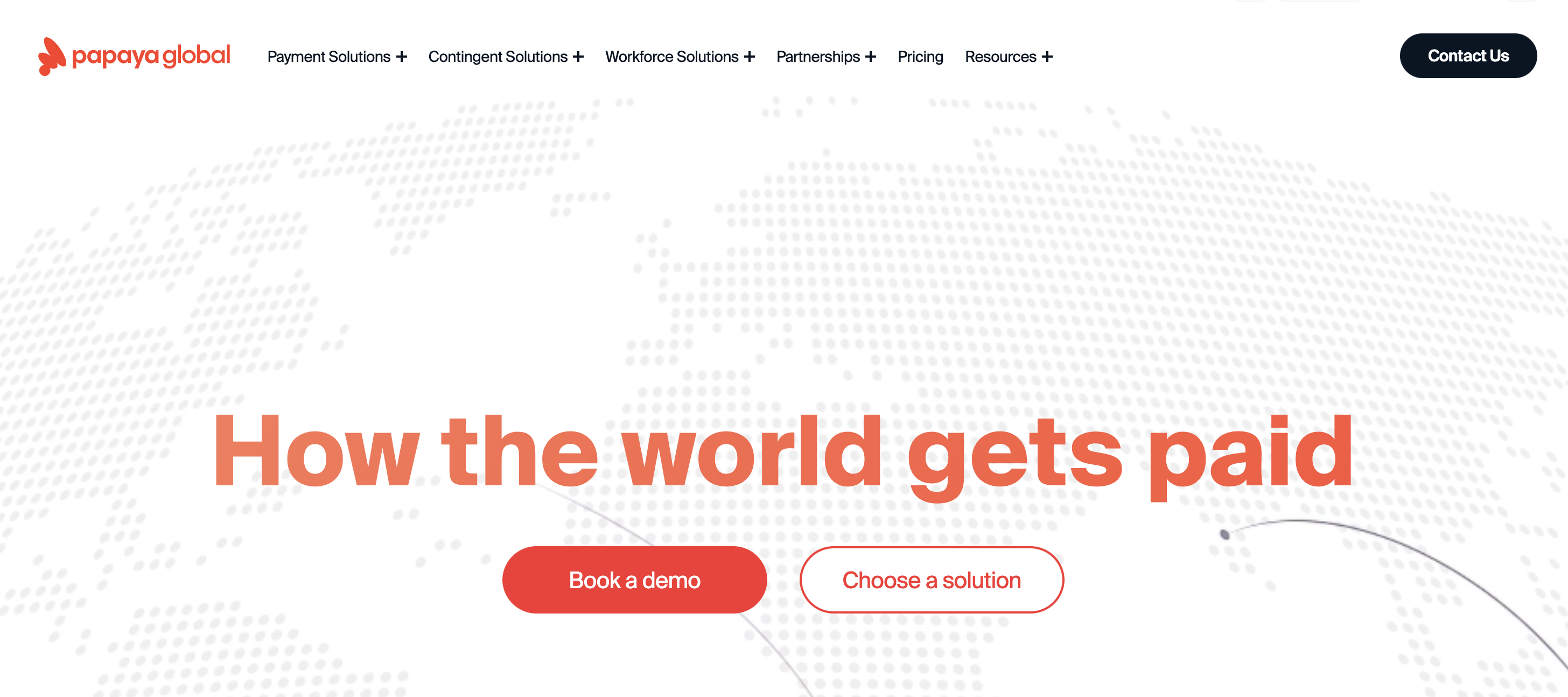
Papaya Global is a global payroll, workforce operations, EOR, and contractor platform. The platform is most relevant for larger companies that need contractor workflows as part of a wider payroll, workforce management, and finance operations setup.
The official pricing page presents workforce operations, global payroll, and EOR as quote-based products rather than simple public plans. Official materials also describe support for mass transactions, tracking, payroll, and workforce operations across broad international coverage.
Best For
Mid-sized and enterprise companies that need global payroll, workforce operations, contractor workflows, and broader finance operations in one system.
Key Features
- Global payroll
- Workforce operations
- EOR products
- Mass transaction workflows
- Transaction tracking
- Reporting and analytics
Pricing
The platform uses quote-based pricing for EOR, global payroll, and workforce workflows. Companies need to request pricing based on workforce size, countries, products, and operational needs.
Coverage
It states that it supports payroll and workforce operations in 160+ countries. Product availability and coverage should be confirmed for each specific use case.
Considerations
This platform may be better suited to larger companies with complex global payroll and workforce operations. For contractor-heavy teams that primarily need contractor workflows, documentation, supporting records, compliance support, and reporting, a more focused contractor operations platform may be easier to evaluate and adopt.
Final Thoughts
Managing international contractors is no longer just about sending funds across borders. For global teams, the larger challenge is organizing workflows, documentation, approvals, compliance support, and reporting in a way that scales operationally. The right platform depends on the company’s size, workforce structure, and operational needs, but the strongest systems are those that reduce manual work while improving visibility across contractor operations.
 FAQs
FAQs
The best platform depends on the company’s workforce model. If the company primarily works with international contractors, the strongest option is usually a platform that connects workflows, invoicing, documentation, compliance support, reporting, and financial visibility in one system.
Platforms differ in focus. Some emphasize global HR and employment infrastructure, while others focus more specifically on contractor operations and workforce workflows.
Companies usually manage international contractors through bank transfers, payment services, contractor platforms, contractor management systems, or broader global HR and EOR tools. The right option depends on payment frequency, contractor volume, required documents, countries, and internal approval processes.
Many companies now use platforms that connect onboarding, documentation, approvals, supporting records, compliance-related workflows, and reporting in one place.
Payroll software usually focuses on employees: salary calculations, payroll runs, taxes, benefits, and employment records. Contractor platforms focus on independent contractors: invoices, service agreements, approvals, supporting documents, workflow management, and contractor records.
Some platforms are designed primarily for employee payroll, while others are built around contractor operations and international contractor administration.
These platforms can help companies manage contractor operations as part of a broader business process. Depending on the system, this may include workflows, documentation, compliance support, supporting records, compensation-related actions, approvals, and reporting.
For global teams, this can reduce scattered manual work and provide HR, finance, and operations teams with better visibility into who is being paid, what work was approved, and which records support each transaction.
Featured Image generated by ChatGPT.
Share this post
Author

Leave a comment
All comments are moderated. Spammy and bot submitted comments are deleted. Please submit the comments that are helpful to others, and we'll approve your comments. A comment that includes outbound link will only be approved if the content is relevant to the topic, and has some value to our readers.
Comments (0)
No comment