
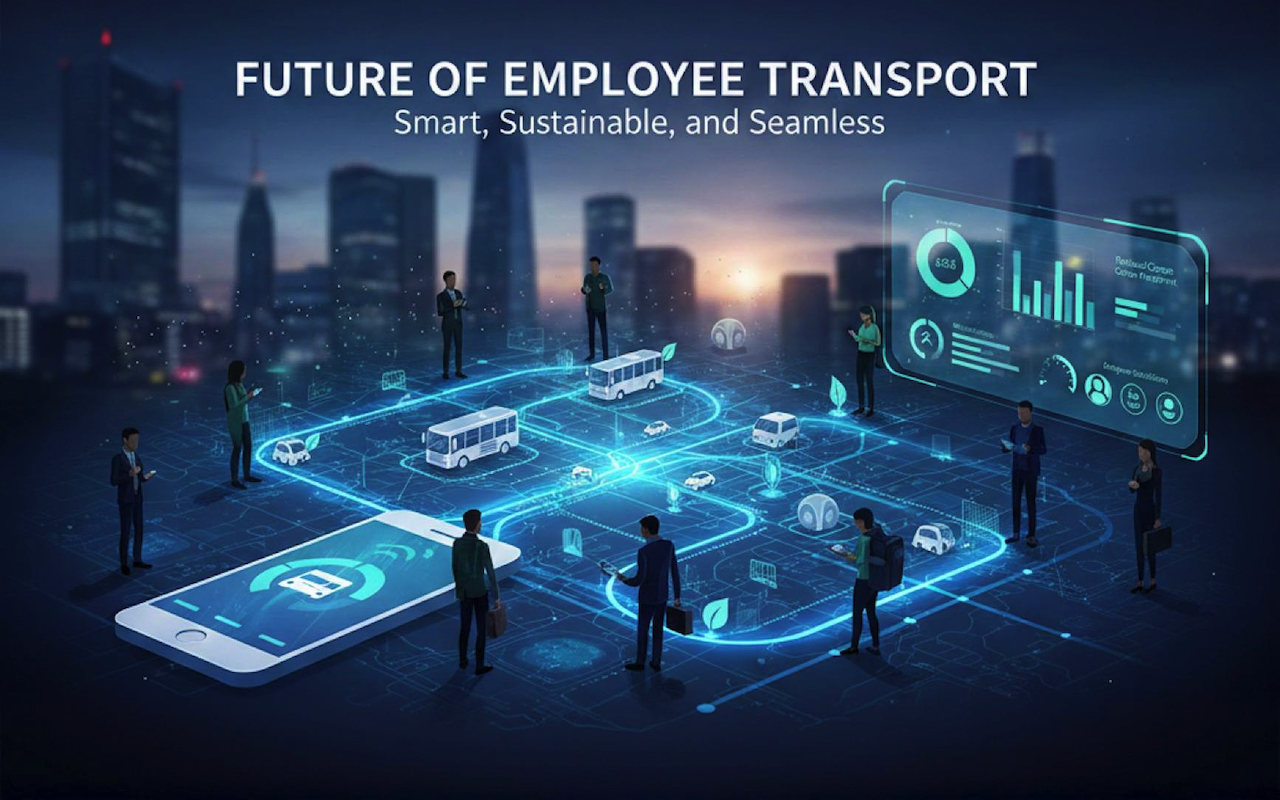
The transportation of employees is becoming more complex as the business grows and adapts to the changing needs of the workforce. The logistics of commuting are usually a challenge for organizations that want to balance employees' comfort and organizational efficiency. A solution to this is an Employee Transport Management System (ETMS) that automates transport processes, enabling businesses to maximize commuting services and cut transport costs while improving employee satisfaction.
The emergence of mobile technology and on-demand services is changing the way employee transport management is done. Companies these days are also increasingly resorting to digital platforms to streamline their transport services. These systems can be easily incorporated into a company's current infrastructure, providing real-time information and data-driven insights to support better decision-making.
The Core Functionality of an Employee Transport Management System
A robust employee transport management system would streamline the scheduling, routing, and tracking of transportation. Automation of such processes will allow companies to eliminate manual errors, reduce operational overhead, and provide employees with timely, safe commutes.
Among the main characteristics of an ETMS, we can distinguish its ability to create optimal routes and to account for employee location, traffic conditions, and vehicle availability. This not only shortens commute time but also reduces fuel use, saving costs and lowering the carbon footprint.
Also, these systems are scaled. With increased business, transportation requirements increase. An ETMS can cope with the rising number of employees without affecting service quality. It is a valuable addition for enterprises operating in industries that experience high and low worker levels, or whose work model is remote or hybrid.
Real-time Tracking and Employee Safety
Businesses are concerned about their employees' safety, and a transport management system may be necessary to improve security. The majority of modern systems provide real-time vehicle monitoring, which can be used by both employees and transport managers to track vehicle movement. This guarantees that cars remain on track and that any delays or accidents are resolved promptly.
In addition, these systems allow drivers to exchange information about the vehicle's condition or any unexpected events, such as a traffic jam or road closure, that may affect the anticipated arrival time. Businesses can offer real-time updates, thereby improving communication and transparency with employees and eliminating stress and uncertainty.
Besides safety monitoring, the information obtained from these systems can be used to enhance future transportation logistics. For example, historical data may reveal patterns in traffic flow timing, so the manager could make better arrangements for routes and schedules. This is a proactive strategy that not only enhances employee satisfaction but also yields long-term efficiency gains.
The Role of On-Demand Apps in Employee Transport
As the demand for flexible and responsive transportation solutions grows, many businesses are turning to on-demand apps to manage employee transport more efficiently. These applications offer user-friendly interfaces that make it easier for both employees and administrators to coordinate daily commuting needs through their smartphones.
Using an on-demand app, employees can schedule rides, choose preferred pickup times, and track vehicles in real time. Administrators benefit from centralized dashboards that provide visibility into vehicle usage, driver activity, and route schedules, allowing adjustments to be made quickly when conditions change.
On-demand transport apps can also integrate with existing business systems such as HR platforms and attendance tools. This connectivity helps centralize data, reduce manual coordination, and support more informed decisions about transportation planning and resource allocation.
By simplifying access to reliable transportation and improving communication, on-demand apps contribute to higher employee satisfaction and retention. When commuting becomes predictable and convenient, employees experience less stress, which can positively influence productivity and overall workplace engagement.
Cost Savings and Environmental Impact
One of the main advantages of an employee transport management system is its ability to manage transportation costs. Businesses can save a lot of money by removing inefficiencies and ineffective route optimization, thereby cutting transportation costs.
Besides, these systems can reduce the company's carbon footprint by reducing the number of cars on the road and maximizing their utilization. This is more applicable in the modern business environment, where environmental responsibility is increasingly a significant concern. A company investing in sustainable transportation not only helps save money but also establishes itself as a green company, which can be a powerful way to stand out in a competitive world.
The savings are not limited to fuel only. Automated scheduling and route optimization will help eliminate manual coordination, freeing up time and resources to perform other activities. Also, it will achieve greater efficiency, resulting in fewer breakdowns and maintenance challenges and, consequently, lower vehicle-related costs.
Integration with Business Operations
A good employee transport management system is not only a transportation logistics system, but it is also integrated with general business operations to provide greater value. For example, the system can use information about employee transport use to provide valuable insights into overall attendance, punctuality, and work habits. This information can be used to streamline shift schedules, predict staffing needs, and even help in payroll and benefits management.
In addition, when incorporated with other business functions, including performance management, security, and communications, the transport management system enables a single platform that simplifies day-to-day operations. This degree of incorporation will ensure that the transport system serves the needs of employees as well as the broader organizational objectives.
Future Trends in Employee Transport Management
With the continuous development of technology, the possibility of ETMS solutions improving will only increase. Employee transport could be enhanced with AI-driven predictive analytics to forecast travel patterns, autonomous vehicles to minimize human error, and mobile capabilities that would give employees greater control over their travel experience.
For example, the adoption of electric vehicles (EVs) in employee transportation may increase as companies strive to achieve sustainability goals. On top of this, intelligent parking systems and compatibility with urban mobility platforms can further optimize transport systems and reduce congestion within corporate campuses.
On-demand platforms may also be developed to offer ride-sharing, which would bring fewer vehicles to the road and offer more flexible transportation options to employees. This becomes especially true as cities become even more intelligent and interconnected.
Final Thoughts
The employee transport management system is not a simple rides management tool, but rather a holistic solution capable of optimizing expenditures, enhancing worker satisfaction, and streamlining business operations. By applying technology to transport logistics, companies can address some of the most urgent workforce management issues and create a more sustainable future.
With the market still showing the need to establish solutions on demand, companies that invest in automated transport management systems will be well-positioned to stay ahead of the curve. The future of transportation in the country, whether through developing their own applications or adopting new technologies such as AI and EVs, is brighter and more efficient than ever.
Featured Image generated by Google Gemini.
Share this post
Author

Read the latest articles from Rosie Anna
Why Every Business Needs a Software Development Strategy

January 7, 2026
Strategy without software is theater. Markets now move at machine speed, and businesses that treat software as a support function are structurally disadvantaged. Every operational edge—pricing agility, customer experience, supply-chain resilience, decision velocity—runs through code. That reality expl [...]
Learn moreAI Search Is Changing Brand Visibility—Here’s How Smart Teams Are Tracking It

December 19, 2025
For years, brand visibility meant one thing: Google rankings. If you were on page one, you were winning. If not, you were invisible.
Learn moreLeave a comment
All comments are moderated. Spammy and bot submitted comments are deleted. Please submit the comments that are helpful to others, and we'll approve your comments. A comment that includes outbound link will only be approved if the content is relevant to the topic, and has some value to our readers.
Comments (0)
No comment