
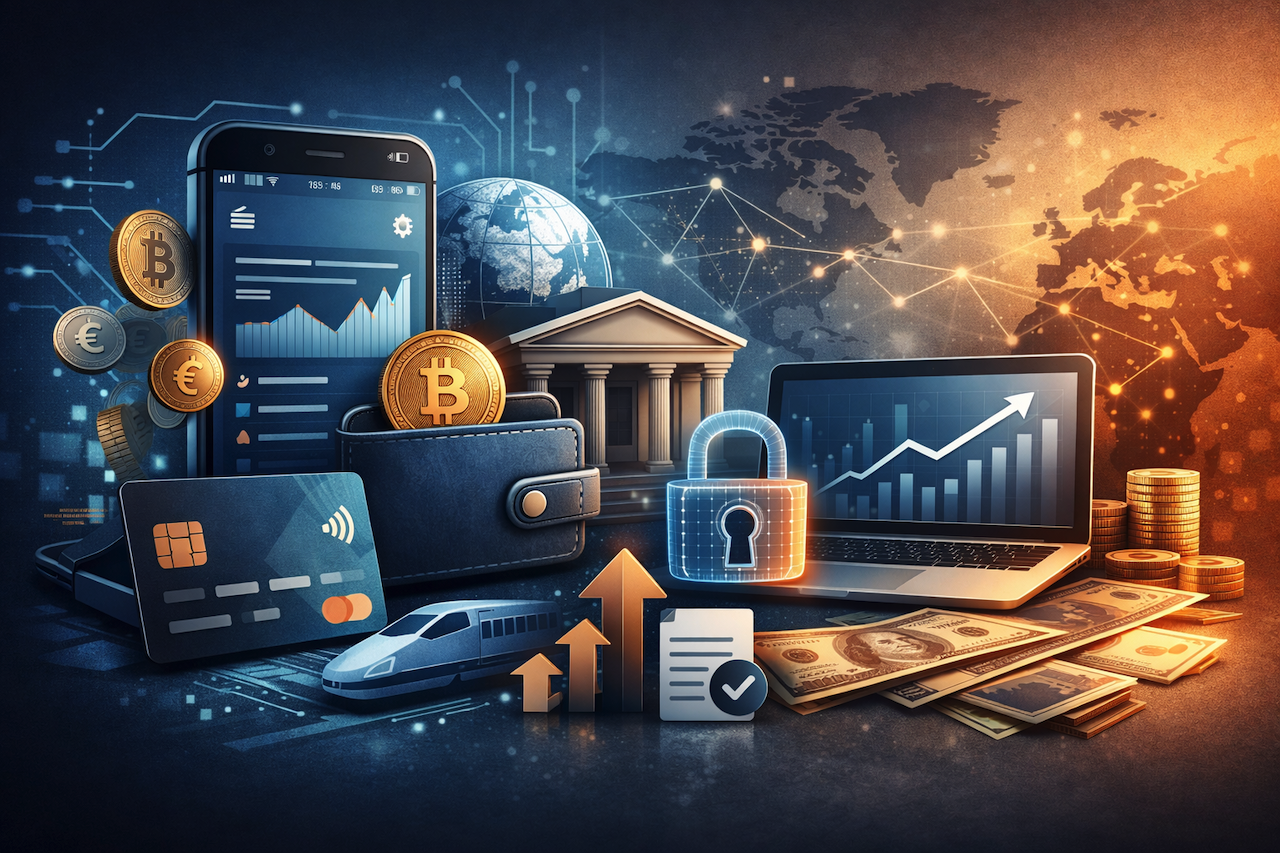
The financial landscape is evolving rapidly, driven by the growing demand for speed, flexibility, and convenience in managing money. Traditional banking systems, once the cornerstone of financial services, are now being complemented—and in some cases challenged—by modern fintech solutions. Among these innovations, all-in-one financial apps are emerging as tools that combine mobile banking, digital payments, and cryptocurrency management into a single platform.
The Rise of All-in-One Financial Platforms
In today’s fast-paced digital economy, users increasingly expect more than basic banking services. Many look for platforms that allow them to send money, make payments, and manage digital assets without switching between multiple applications. This demand has contributed to the growth of multi-functional fintech platforms designed to streamline financial management.
Apps like these illustrate a broader trend of offering a range of financial services within a single ecosystem. From everyday transactions to longer-term financial management, these platforms aim to consolidate functionality into one mobile experience.
Seamless Mobile Banking with IBAN Accounts
At the core of many fintech platforms is mobile banking functionality supported by IBAN accounts. These accounts enable users to receive funds, pay bills, and manage their finances in ways similar to traditional banks, while offering the convenience of a mobile-first approach.
Some platforms allow users to create multiple IBAN-linked accounts, which can help with organizing finances. For example, users may separate funds for daily expenses, savings, or specific financial goals. This structure can provide greater visibility and control over personal finances.
Integrated Payment Cards for Everyday Use
In addition to banking features, many all-in-one apps offer integrated payment cards for both online and offline use. These cards are typically linked directly to user accounts, allowing for straightforward transactions across different payment environments.
Features such as contactless payments and mobile wallet compatibility are commonly supported. While some platforms highlight transparent fee structures or low-cost services, users should review terms and conditions carefully to understand any applicable charges.
Fast and Efficient SEPA Transfers
Support for SEPA transfers is another common feature among European-focused fintech platforms. SEPA Instant and standard transfers enable users to send and receive euro payments efficiently across participating countries.
This functionality can be particularly useful for freelancers, remote workers, and businesses operating across borders. Faster transfer times and reduced reliance on intermediaries are often cited as advantages of these systems.
A Unified Crypto Wallet Experience
As cryptocurrency adoption continues to grow, many fintech platforms now incorporate crypto wallet functionality. This allows users to store, transfer, and manage digital assets alongside traditional financial accounts.
In some cases, platforms enable users to convert between fiat currencies and cryptocurrencies within the same interface. This integration reflects a broader trend toward combining traditional financial services with digital asset management. However, users should be aware of the volatility and regulatory considerations associated with cryptocurrencies.
Multi-Wallet Architecture for Better Control
A notable feature of some fintech platforms is a multi-wallet structure, where users can create separate wallets for different purposes. These wallets may support fiat currencies, cryptocurrencies, or both.
This approach can help users organize their finances more effectively—for example, separating personal spending, business income, and investments. It may also provide an additional layer of control and clarity when managing multiple financial activities.
Convenient Money Management in One App
One of the main advantages of all-in-one fintech platforms is convenience. By consolidating banking, payments, and digital asset management into a single application, users can reduce the need to switch between multiple services.
Features such as real-time balance updates, transaction tracking, and spending insights are often included to support day-to-day financial management. While these tools can improve usability, their effectiveness may vary depending on the platform and user needs.
Security and Compliance
Security is a key consideration for any financial platform. Many fintech apps operate within regulated frameworks and implement measures such as encryption, secure authentication, and transaction monitoring to protect user data and funds.
Even with these safeguards, users should take precautions such as enabling two-factor authentication and understanding the regulatory status of the platform they use.
The Future of Digital Finance
As fintech continues to evolve, platforms that combine traditional banking with digital asset management are likely to play an increasingly important role. The ability to manage multiple types of financial assets within a single environment is becoming more common.
Solutions offering a combination of services designed to meet changing user expectations. However, as with any financial product, individuals should evaluate features, costs, and risks before adopting a new platform.
The Final Words
All-in-one fintech apps are reshaping how individuals interact with financial services by integrating multiple functions into a single platform. By combining IBAN accounts, payment cards, SEPA transfers, and crypto wallets, these solutions aim to simplify financial management.
For users seeking greater convenience and flexibility, such platforms may offer an alternative to traditional banking models. However, careful research and consideration are essential to determine whether a particular solution aligns with individual financial goals and risk tolerance.
Disclaimer
This article is for informational purposes only and should not be considered financial, investment, or legal advice. The content provided does not constitute a recommendation to use any specific financial platform, service, or product. All financial decisions involve risk, including the potential loss of funds.
Readers are encouraged to conduct their own research and consult with a qualified financial advisor or professional before making any financial or investment decisions. The suitability of any financial service or product depends on individual circumstances, goals, and risk tolerance.
This article may contain links to third-party websites for informational purposes. iplocation.net does not control, endorse, or assume responsibility for the content, accuracy, or practices of any external websites. iplocation.net shall not be held liable for any losses, damages, or issues arising from the use of or reliance on third-party links or services.
Featured Image generated by ChatGPT.
Share this post
Leave a comment
All comments are moderated. Spammy and bot submitted comments are deleted. Please submit the comments that are helpful to others, and we'll approve your comments. A comment that includes outbound link will only be approved if the content is relevant to the topic, and has some value to our readers.
Comments (0)
No comment