
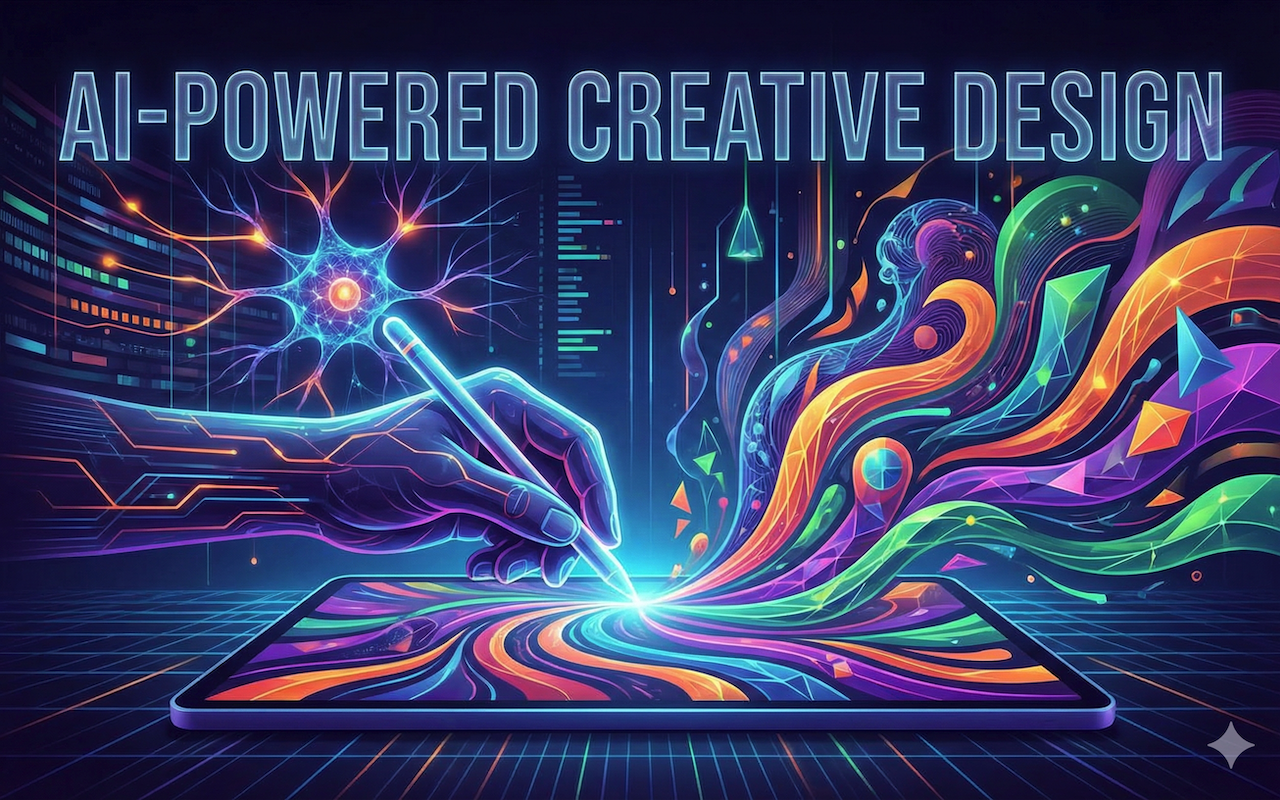
Artificial intelligence is reshaping how visual content is created, edited, and distributed. From what we see across modern design workflows, AI image generation has moved beyond experimental novelty and is now a practical tool used by designers, marketers, developers, and content creators. By combining machine learning with vast visual datasets, modern AI systems can generate original images, adapt styles, and accelerate creative workflows in ways that were previously impossible.
Rather than replacing human creativity, AI-powered design tools are increasingly positioned as creative assistants, helping users explore ideas faster, reduce repetitive work, and expand visual possibilities.
How AI Image Generation Works
AI image generation relies primarily on deep learning models trained on large collections of images and text descriptions. These models learn patterns related to composition, color, lighting, perspective, and style. When given a prompt, they generate new visuals that align with the request while remaining distinct from any single source image.
Key capabilities include:
- Generating images from text descriptions
- Modifying existing visuals (backgrounds, colors, layouts)
- Creating variations of a design concept
- Adapting outputs to specific formats or styles
This flexibility allows both technical and non-technical users to participate in visual creation.
Creativity in the Age of AI
Creativity has traditionally been limited by skill level, time, and access to professional tools. AI lowers these barriers by enabling rapid experimentation. Designers can test multiple ideas in minutes, while non-designers can visualize concepts without extensive training.
AI does not decide what is meaningful or effective—that responsibility remains with humans. Instead, it supports creativity by:
- Speeding up ideation and prototyping
- Offering alternative visual interpretations
- Reducing the effort required for repetitive design tasks
The result is a more iterative and exploratory creative process.
AI-Powered Design Tools in Practice
Modern AI design tools are now integrated into workflows across industries. They are used to produce marketing visuals, user interface elements, social media graphics, product mockups, and educational content.
For example:
- Product teams use AI to visualize interface elements and layouts
- Marketers generate campaign visuals adapted to multiple platforms
- Developers incorporate visual assets directly into applications
We often treat AI outputs as starting points rather than final assets. Once the direction feels right, we refine details like spacing, contrast, and consistency so the visual fits the rest of the product or campaign.
Assets such as 3D icons are increasingly generated or refined using AI, allowing teams to maintain consistent visual styles across products without manually designing every element from scratch.
AI and Editable Visual Assets
One of the most practical applications of AI in design is the creation of flexible visual resources that can be customized on demand. Instead of working with static images, creators can adjust colors, shapes, lighting, or composition after generation.
This is where AI editable stock images play a role. Unlike traditional stock images, AI-generated visuals can be modified to better match branding, layout requirements, or audience preferences, reducing the need to search for perfect pre-made assets.
This approach saves time while improving visual consistency.
Benefits and Limitations
Benefits
- Faster design cycles
- Lower cost of content production
- Greater accessibility for non-designers
- Easier experimentation and iteration
Limitations
- Outputs depend heavily on prompt quality
- AI lacks contextual understanding and intent
- Ethical concerns around originality and dataset usage
- Human judgment is still required for quality and relevance
AI-generated visuals are most effective when combined with human oversight and creative direction.
The Future of AI in Creative Design
As AI models improve, design tools will likely become more interactive and adaptive. Instead of generating a single image, future systems may collaborate with users in real time, suggesting improvements, adapting designs based on feedback, and learning individual creative preferences.
Rather than replacing designers, AI is expected to augment creative roles, shifting focus from manual execution to concept development, storytelling, and strategic thinking.
Conclusion
AI image generation is transforming creativity by making visual design faster, more flexible, and more accessible. Through intelligent design tools, creators can explore ideas, refine assets, and scale visual production with greater efficiency. Used responsibly, AI can make the creative process more flexible and accessible, and we see it working best when humans stay in control of the intent, standards, and final decisions.
Featured Image generated by Google Gemini.
Share this post
Leave a comment
All comments are moderated. Spammy and bot submitted comments are deleted. Please submit the comments that are helpful to others, and we'll approve your comments. A comment that includes outbound link will only be approved if the content is relevant to the topic, and has some value to our readers.
Comments (0)
No comment