
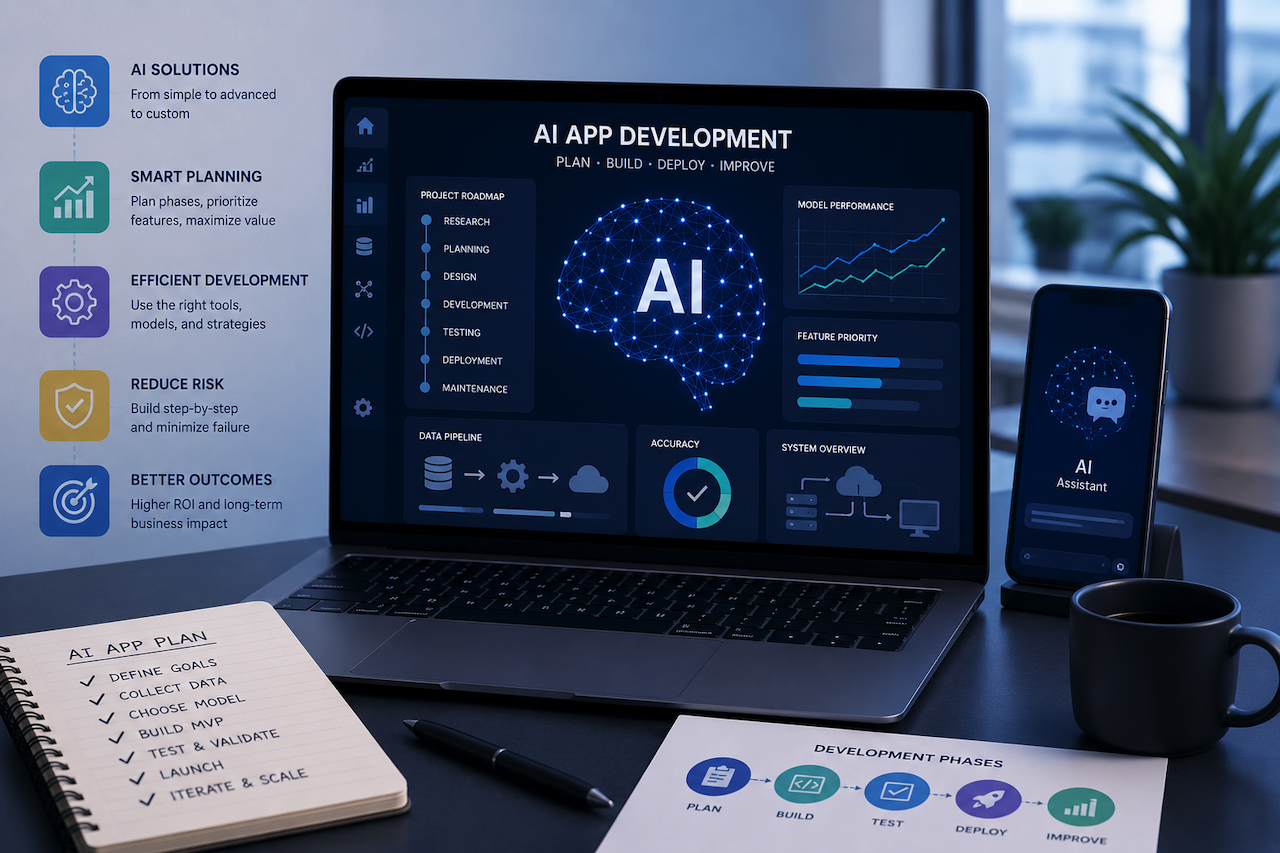
Looking to develop an AI-powered solution for your business? One of the first questions founders and technology leaders ask is how much the project will cost. Intelligent software systems are no longer considered niche capabilities and have become increasingly important for businesses across multiple industries.
In fact, Grand View Research estimates that the artificial intelligence market will expand at a CAGR of 30.6% through 2033. In addition, a Microsoft study found that investments in intelligent technologies now generate an average return of 3.5x, with some companies reporting returns as high as 8x.
Although the growth potential is significant, project expenses remain one of the biggest challenges for many businesses. Understanding the factors that influence implementation costs before starting a project can help organizations plan more effectively and build a stronger foundation.
This blog covers the complete cost breakdown for businesses looking to build AI software applications from scratch or add AI-powered features to an existing product. You will also discover strategies to help you stay on budget throughout the entire implementation process.
Why Is Cost Planning Important in Software Development?
Many teams begin software projects without fully evaluating the financial requirements. Poor budget planning is one of the main reasons many technology initiatives fail to reach full production.
Understanding project costs from the beginning helps businesses allocate resources more effectively, prioritize features, and reduce the risk of unexpected expenses during implementation.
Better Budget Planning
Estimating implementation costs early helps organizations avoid unexpected financial challenges later in the project lifecycle. It also allows decision-makers to evaluate funding requirements, prioritize features, and establish more realistic development timelines.
Clear Project Roadmap
If you estimate costs for each phase, teams can plan implementation more effectively. Further, a phased roadmap allows you to test and validate features in advance, before committing to the full build. This approach helps reduce uncertainty during implementation.
Higher Return on Investment
By planning your costs strategically, your budget will align with features that positively impact your business, such as automation and a better user experience. Therefore, every dollar spent will be directly correlated to a business outcome. Careful planning can also improve long-term return on investment.
Reduced Risk of Project Failure
Teams often struggle with complex software builds when they attempt to implement everything at once. A phased approach that begins with wireframing, prototyping, and launching an MVP before expanding functionality can help reduce financial and operational risks throughout the implementation process.
Cost Estimation for Different Types of Intelligent Software
Software projects involving machine learning and automation can vary significantly in complexity, infrastructure requirements, and data processing needs. As a result, project costs often differ depending on the type of solution, the technologies involved, and the level of customization required.
Cost Overview at a Glance
The table below outlines estimated pricing ranges, key characteristics, and common use cases for different levels of software implementation. Use it as a quick reference when evaluating project scope and budgeting requirements.
| Solution Type | Cost Range | Key Characteristics | Best For |
|---|---|---|---|
| Basic Solutions | $20,000 - $80,000 | Pre-trained models, simple UI, minimal customization | Startups and single-feature automation projects |
| Advanced Solutions | $50,000 - $150,000 | Custom training, multi-system integration, richer data use | Growing businesses requiring more customized solutions |
| Custom Solutions | $100,000 - $500,000+ | Proprietary models, large datasets, specialized infra | Enterprises developing core machine learning platforms |
| Post-Launch Maintenance | 15 - 20% of the build cost per year | Retraining, monitoring, and security updates | All deployed software platforms |
AI software projects are generally grouped into three pricing categories based on complexity, customization requirements, and infrastructure needs.
Basic Solutions
Basic applications typically range from $20,000 to $80,000, depending on factors such as features, integrations, and customization requirements.
Examples include chatbots, recommendation engines, sentiment analysis tools, and basic image recognition systems. These applications often rely on pre-trained models, allowing teams to develop AI-powered features more quickly and with lower project costs.
For instance, you can create an automated customer support chatbot powered by OpenAI or Google Dialogflow APIs for as little as $20,000.
Ideal for: Enterprises that want to pilot a concept or integrate a new capability into an existing product.
Advanced Solutions
Advanced applications generally range from $50,000 to $150,000, depending on factors such as system integrations, custom model training, infrastructure requirements, and data processing complexity.
Some of the advanced innovations include fraud detection systems, computer vision applications, workflow automation, and content management platforms. The projects involve custom model training, complex data processing, and integration with the current business system.
These projects frequently combine multiple machine learning and automation technologies. For example, integrating predictive analytics with natural language processing. This results in slower and more resource-intensive testing and quality assurance cycles.
Ideal for: Mid-sized businesses looking for more customized solutions beyond basic or off-the-shelf applications.
Custom Solutions
Custom platforms can range from $100,000 to $500,000 or more, depending on factors such as proprietary models, large-scale datasets, infrastructure requirements, integration complexity, and regulatory compliance needs.
Custom solutions may include advanced trading platforms, medical diagnosis systems, and predictive maintenance tools. These projects often require proprietary algorithms, large datasets, specialized infrastructure, and compliance with industry regulations.
The complexity of the AI model alone can account for 30%-40% of the whole project cost. Data preparation and collection contribute an additional 15% to 25%. The technological stack and infrastructure account for 15% to 20%.
Ideal for: Businesses without access to off-the-shelf options that develop their own systems.
Tips to Reduce Project Costs
There are several practical strategies organizations can use to reduce software development costs without compromising quality. Whether working with a startup budget or managing a larger enterprise project, careful planning and phased implementation can help control expenses more effectively.
Begin an MVP
An MVP, or Minimum Viable Product, is the shortest path to a functional product. Do not build everything at once; start with the core AI features and add as you get feedback from your users.
A phased approach spreads project expenses over time and reduces the risk of investing heavily in features that may not provide long-term value to users. Post-launch maintenance expenses can also add 15% to 20% of the initial project cost annually, making phased implementation a more manageable long-term strategy.
Use Pre-Trained Models
Creating a custom model from scratch takes a lot of time and money. Rather, take advantage of existing foundation models through services such as OpenAI or Google Cloud AI. These models come with a high level of accuracy.
They also reduce training time and data labeling costs. Executing a 100,000-sample dataset takes between 300 and 850 hours for a manual process, which pre-trained models largely avoid.
Work with an Experienced Implementation Team
Building an in-house machine learning team can require a significant long-term investment in salaries, infrastructure, and training. Some organizations manage costs more effectively by collaborating with experienced external teams in regions with lower operational expenses. When outsourcing, businesses should evaluate technical expertise, project experience, communication practices, and long-term knowledge transfer requirements before selecting a service provider.
Use Open-Source Tools
Open-source frameworks such as TensorFlow, PyTorch, and Hugging Face are widely used across machine learning and automation projects because they provide strong foundational tools without additional licensing costs.
By combining open-source libraries with cloud infrastructure, organizations can build more cost-effective software environments. Many teams begin with open-source technologies before expanding into proprietary platforms or enterprise tooling as project requirements grow.
Wrapping Up
The cost of developing AI-powered software in 2026 can range from approximately $20,000 for basic solutions to more than $500,000 for enterprise-grade platforms. These costs vary depending on factors such as model complexity, infrastructure requirements, data processing needs, integrations, and long-term maintenance.
With a clearly defined use case, realistic budgeting, and a phased development strategy, bbusinesses can manage implementation projects more effectively while reducing unnecessary costs and implementation risks.
Featured Image generated by ChatGPT.
Share this post
Leave a comment
All comments are moderated. Spammy and bot submitted comments are deleted. Please submit the comments that are helpful to others, and we'll approve your comments. A comment that includes outbound link will only be approved if the content is relevant to the topic, and has some value to our readers.
Comments (0)
No comment