

You've probably heard the term "AI agent" floating around more and more lately. Maybe you saw a headline about it, or a colleague mentioned it in a meeting. Either way, if you haven't dug into what agentic AI actually is yet, now's a good time because this isn't just another buzzword. It's a genuine shift in what AI can do, and it's already changing how industries operate.

From Answering Questions to Taking Action
Think about how you've used AI tools so far. You type a question, you get an answer. When you paste into a document, you get a summary. That's the pattern most of us are familiar with. You prompt, the AI responds, and then you take it from there.
Agentic AI flips that model.
Instead of waiting for your next instruction, an agentic AI system can be given a goal and then go figure out how to reach it. It plans the steps, uses tools, checks its own work, adjusts when something goes wrong, and keeps moving until the job is done. You don't have to babysit it at every turn.
This is the difference between a tool that answers and one that acts.
What Makes an AI "Agentic"?
A few things set agentic AI apart from a standard chatbot or AI assistant:
- It can plan: Given a high-level objective, it breaks the task into steps and figures out a sequence to follow.
- It uses tools: An agentic system can browse the web, run code, call APIs, query databases, write and send emails, basically anything a human could do on a computer.
- It has memory: It can keep track of what it's already done in a session (or even across sessions), so it doesn't start from scratch every time.
- It loops and self-corrects: If something doesn't work, it tries a different approach. It doesn't just stop or throw an error; it adapts.
Put those together, and you have something that behaves less like a search engine and more like a capable, autonomous collaborator.
Real Examples Already in the Wild
This isn't theoretical. Agentic AI is showing up in real workflows right now.
Software Development
Tools like Devin and GitHub Copilot Workspace can take a task description, such as "fix this bug and write a test for it," and carry out the whole process by reading the codebase, proposing a fix, running tests, and iterating until it works. You review the output, but the heavy lifting is done.
Customer Service
Instead of a chatbot that can only answer FAQs, agentic systems can handle an entire support flow. A travel AI agent can rebook your flight, issue a refund, and update your reservation, without a human touching a single step.
Finance
AI agents at companies like Ramp are managing expense approvals, flagging anomalies, and adjusting budget categories in real time. The agent monitors, decides, and acts, not just reports.
Legal Work
This is one of the most interesting areas. Legal research used to mean hours of digging through case law. Now, agentic AI systems like those from Thomson Reuters and Harvey.ai can take a legal question, develop a research strategy, search across multiple databases, synthesize findings, and produce a first draft of a research memo, all within a single workflow. Early adopters like Allen & Overy have integrated these tools into their daily workflows, handling tens of thousands of requests across global teams.
Legal technology platforms are also beginning to incorporate agentic AI capabilities into their workflows. For example, MyClaw is one of several platforms exploring how AI can assist with legal research, document analysis, and workflow automation within legal services.
Why Is This Happening Now?
A few things came together to make this possible.
First, large language models (LLMs) have gotten much better at reasoning. Earlier versions were good at generating text but unreliable when asked to do multi-step logical tasks. That's improved significantly.
Second, developers built better frameworks for giving AI systems access to tools, so a model can actually do something with the reasoning it does, not just describe what should be done.
Third, there's now real business pressure to automate complex knowledge work, not just simple repetitive tasks. The economics are compelling enough that companies are investing seriously.
The result: agentic AI went from a research curiosity to production deployments in major enterprises. Gartner named it a top strategic technology trend, and by some estimates, 40% of enterprise applications will embed AI agents by the end of 2026.
The Part You Should Think About Carefully
All of this is exciting, but it comes with real questions.
When an AI agent takes an action in the real world, such as sending an email, executing a financial transaction, or filing a legal document, who's responsible if something goes wrong? The autonomy that makes these systems useful also makes them harder to audit and correct in the moment.
There's also the question of security. If an AI agent has access to your systems and data to do its job, that also creates a larger surface for things to go wrong. Prompt injection, where someone embeds malicious instructions in data the agent processes, is a real threat.
The practical answer most serious deployments have landed on is "human in the loop at critical decision points." The agent handles the routine, but a human reviews before anything irreversible happens. That balance between efficiency and oversight is something every organization needs to figure out in its own context.
What This Means for You
You don't need to be a developer or a data scientist to feel the impact of agentic AI. If you work in any industry where a lot of time goes into repetitive, multi-step knowledge tasks, such as research, document review, compliance, customer support, or finance, you're likely to encounter these tools soon, if you haven't already.
The smart move isn't to wait for your company to roll something out and hand it to you. It's to start understanding how these systems work, what they're good at, where they fall short, and how to work with them effectively.
Because the shift isn't AI replacing you, it's AI taking on the tasks that were too slow or expensive before and freeing you up to do the parts that actually require judgment.
That's a genuinely useful change. It just helps to understand what you're working with.
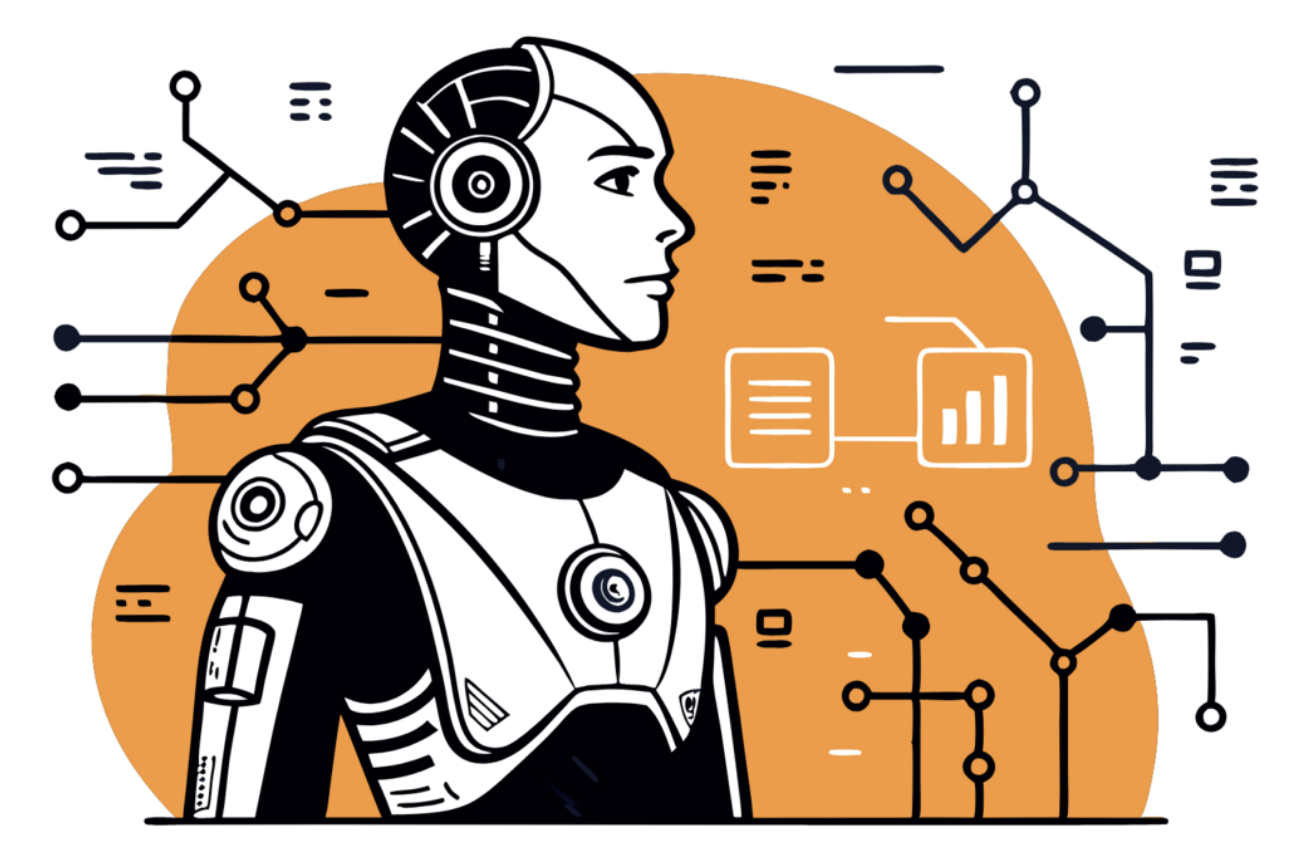
Featured Image generated by ChatGPT.
Share this post
Author

Read the latest articles from Olivia
Nano Banana API Documentation Compared: 9 Platforms That Make Integration Easier in 2026
June 10, 2026
When choosing an API provider for Google's Gemini 3.1 Flash Image (Nano Banana 2) or Gemini 3 Pro Image (Nano Banana Pro), most comparisons focus on price or speed. But there's a quieter factor that often determines whether a project ships on time or stalls for days: documentation quality. Clear docs mean a devel [...]
Learn moreTop 10 Custom AI Development Companies

June 5, 2026
Financial institutions no longer struggle to identify AI use cases. They struggle to move those use cases into production while meeting compliance requirements, integrating with legacy systems, and maintaining customer trust.
Learn moreLeave a comment
All comments are moderated. Spammy and bot submitted comments are deleted. Please submit the comments that are helpful to others, and we'll approve your comments. A comment that includes outbound link will only be approved if the content is relevant to the topic, and has some value to our readers.
Comments (0)
No comment