

7 Simple Shopping Habits That Helped Me Find Better Prices

I used to think finding a good price was mostly about luck, catching a sale at the right moment, or stumbling on a discount code that actually works. Over time, though, I realized there’s a lot more happening behind the scenes of online pricing.
As I paid closer attention to how prices changed over time, I started noticing patterns that influenced when and how I made purchases.
That shift didn’t come from one big strategy. It came from small, consistent shopping habits that slowly made me a smarter buyer and helped me consistently find better deals without spending hours hunting for them.
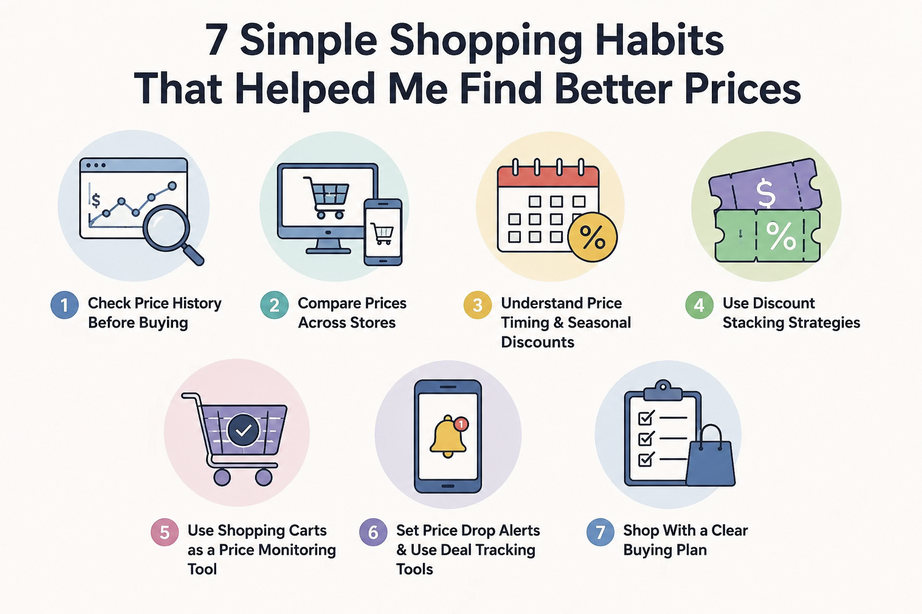
Habit #1: Checking Price History Before Buying
One of the most effective habits I developed was checking how prices move over time before making a purchase. Instead of trusting a “discounted” label, I now try to understand whether the price is actually low compared to its usual range. Many products go through frequent price fluctuations, especially on major e-commerce platforms. Research into dynamic and surveillance pricing practices, including a surveillance pricing research study by ClothingRIC, highlights how factors such as demand, browsing behavior, and timing signals can influence online prices. Once you start noticing these patterns, you stop falling for fake urgency or inflated original prices.
I use price tracking tools or browser extensions that show historical price charts for products. I also take a quick screenshot of the item when I first see it, so I can check later whether the “discount” is actually real.
Habit #2: Comparing Prices Across Different Online Stores
Another habit that consistently saves me money is comparing prices across multiple online stores before buying. It sounds simple, but many people still rely on a single app or website out of convenience. I used to do the same. Now I quickly check a couple of platforms before finalizing anything. This habit often reveals hidden differences, such as shipping costs, platform fees, or ongoing promotions that can make one store significantly cheaper than another.
Habit #3 Understanding Price Timing and Seasonal Discounts
Timing plays a bigger role in pricing than most people realize. I’ve noticed that waiting even a few days can sometimes lead to noticeably better prices, especially during seasonal sales or clearance cycles. Electronics, fashion items, and travel bookings are especially sensitive to timing. Instead of buying immediately, I now observe the price trend for a short period. This simple delay has helped me avoid impulse purchases and take advantage of better pricing windows.
Habit #4 Using Discount Stacking Strategies
Instead of relying on a single coupon code, I now focus on stacking multiple savings opportunities together. This can include combining seasonal sales, cashback offers, credit card rewards, and store-specific discounts. At first, it felt complicated, but once I understood how different promotions interact, it became a natural part of my shopping process—the key to realizing that most real savings come from combining offers rather than relying on just one.
Habit #5 Using Shopping Carts as a Price Monitoring Tool
One habit that surprisingly works well is leaving items in the shopping cart before completing a purchase. Many online retailers track abandoned carts and sometimes send follow-up discounts or reminders. Even when they don’t, the waiting period gives me time to reassess whether I actually need the item. This habit reduces impulse buying and often results in better decision-making, especially for non-essential purchases.
Habit #6 Setting Price Drop Alerts and Using Deal Tracking Tools
Instead of manually checking prices every day, I now rely on price drop alerts and tracking tools. This allows me to monitor products in the background without constant effort. When the price drops, I get notified and can quickly decide whether to buy. This approach not only saves time but also reduces emotional buying triggered by endless browsing. It keeps me focused on actual deals rather than random scrolling.
I always set alerts in price-tracking apps or on shopping sites for specific items I want to buy. I also enable browser extensions that automatically notify me when the price drops or a deal goes live.
Habit #7 Shopping With a Clear Buying Plan
The most underrated habit that changed my spending behavior is shopping with a clear plan. Before I start browsing, I write down exactly what I need. If something else catches my attention, I don’t immediately buy it. I wait and reassess later. Most of the time, the urge fades, and I realize it wasn’t necessary. This habit has been one of the strongest ways to avoid unnecessary spending and stay focused on real needs.
Conclusion
At the end of the day, finding better prices isn’t about chasing every discount or spending hours comparing every option manually. It’s about understanding how modern pricing works and building simple, repeatable shopping habits around it. Once you start noticing price patterns, shifts in timing, and how platforms respond to your behavior, you naturally become a more intentional buyer. The real savings don’t come from one trick; they come from consistency in your shopping.
Related Articles

November 20, 2025
How Digital Coupons Are Changing Consumer Habits in the Global Market
As online shopping becomes a dominant force in the global economy, digital savings tools are shaping the way consumers evaluate products, choose retailers and manage their budgets....
Read More
July 22, 2025
How Evolution of Ecommerce is Shaping Online Shopping
Buying behavior has changed significantly over the past twenty years. What began as a basic concept—an online transaction—has evolved into a powerful industry that has reached ever...
Read More
November 25, 2024
How Your IP Address Impacts Your Black Friday Shopping: What You Need to Know
Black Friday is just around the corner, and it’s time to prepare for the massive discounts, doorbusters, and unbeatable offers. Whether you’re planning to refresh your tech gadgets...
Read More
Comments
Comments are available to signed-in users and are moderated to keep the discussion useful and respectful. Spam, automated submissions, and low-value promotional comments are removed. Outbound links may be approved when they are relevant and genuinely helpful to readers, but they are displayed as plain text rather than clickable hyperlinks.
No comments have been published yet.
Please sign in to submit a comment.