
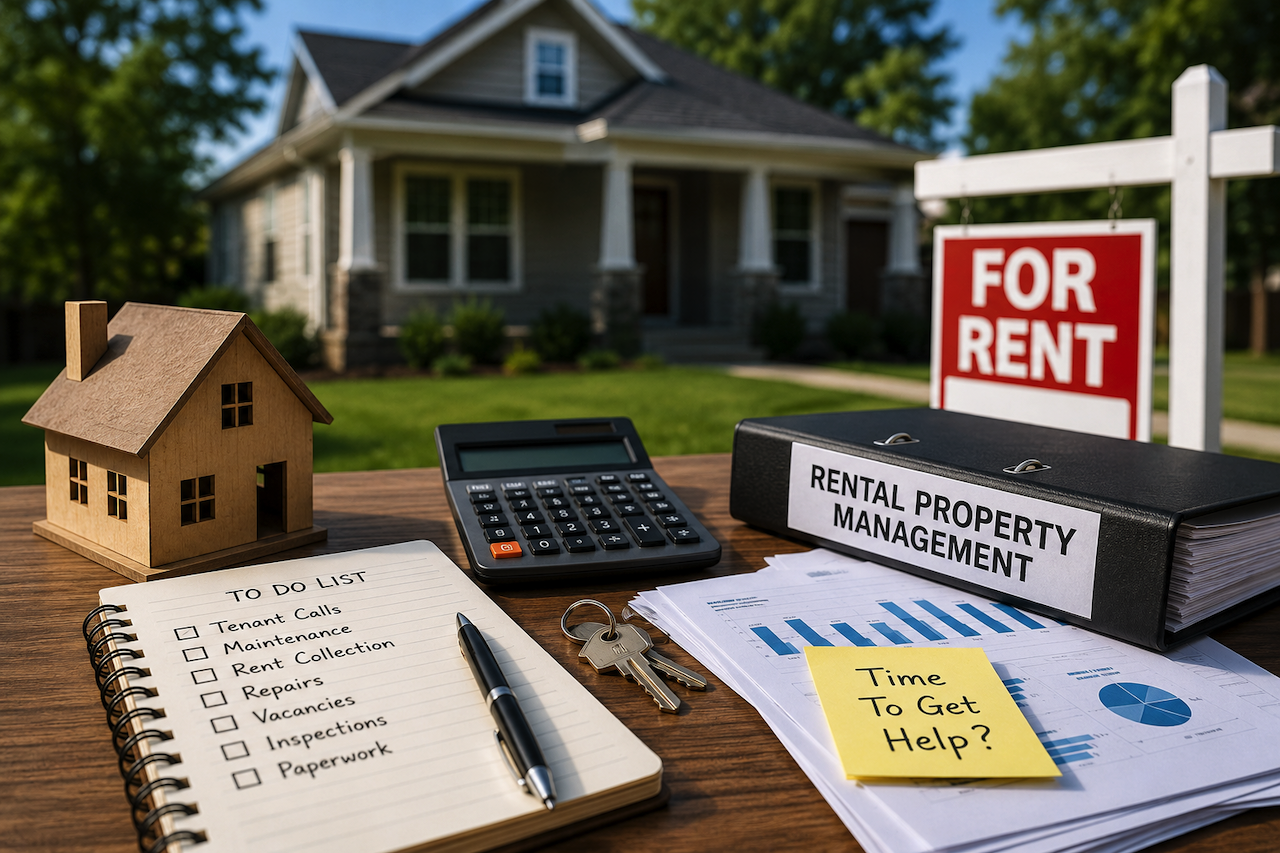
Owning rental property can be one of the most effective ways to build long-term wealth. But many landlords eventually discover that managing tenants, maintenance, and legal responsibilities can quickly become overwhelming.
Whether you own one rental home or several investment properties, there may come a point where getting outside help with day-to-day operations saves time, reduces stress, and improves overall efficiency.
Here are seven common signs that self-managing your rental property may no longer be sustainable.
1. Your Rental Property Is Taking Up Too Much Time
Many landlords underestimate how much time rental management actually requires.
Between:
- Answering tenant calls
- Coordinating repairs
- Collecting rent
- Handling late payments
- Advertising vacancies
- Screening tenants
- Managing move-ins and move-outs
…rental properties can easily begin to feel like a second full-time job.
If you constantly feel distracted, stressed, or tied to your phone because of rental-related responsibilities, it may be a sign that your current system is no longer working efficiently. Delegating operational tasks can help free up time for your career, family, or other investments.
2. You’re Struggling to Find Reliable Tenants
Problem tenants can become expensive very quickly through:
- Unpaid rent
- Property damage
- Legal disputes
- Extended vacancies
Tenant screening is one of the most important parts of successful rental ownership. A more structured screening process often includes:
- Income verification
- Rental history checks
- Background screening
- Reviewing references
- Following fair housing regulations
If you’ve experienced repeated late payments, lease violations, or evictions, it may be time to improve your tenant selection process or seek additional support handling applications and screening.
3. Maintenance Requests Are Becoming Overwhelming
Every landlord eventually deals with:
- Plumbing leaks
- Appliance breakdowns
- HVAC problems
- Emergency repairs
- After-hours maintenance calls
Maintenance issues rarely happen at convenient times, and coordinating repairs can quickly consume evenings and weekends.
As rental responsibilities grow, many landlords find that working with a property management company or building reliable systems with trusted contractors becomes essential to keeping properties running smoothly.
4. You Own Multiple Properties
Managing one rental property may feel manageable. Managing several properties is often much more demanding.
As your portfolio grows, so do:
- Tenant communications
- Accounting responsibilities
- Lease renewals
- Maintenance coordination
- Vacancy management
Without clear systems in place, organization can become difficult. Many investors eventually reach a point where they need more streamlined processes to maintain consistency across multiple properties.
In many cases, scaling a rental portfolio successfully requires shifting from hands-on management to a more structured operational approach.
5. You Live Far Away From Your Rental Property
Long-distance landlording can create additional challenges.
If you live in another city or state, handling:
- Showings
- Inspections
- Emergencies
- Contractor scheduling
- Tenant concerns
…becomes significantly more complicated.
Remote ownership often requires dependable local support and faster response systems to ensure the property is properly maintained and tenant issues are addressed promptly.
6. You’re Unsure About Landlord-Tenant Laws
Landlord regulations continue to evolve, and even small mistakes can become costly.
Property owners may need to understand:
- Fair housing regulations
- Lease requirements
- Security deposit laws
- Notice requirements
- Eviction procedures
Failing to follow local or state regulations properly can expose landlords to legal and financial risk. Staying informed and maintaining compliant processes becomes increasingly important as rental operations grow.
7. Vacancies Are Hurting Your Cash Flow
Every day a rental sits vacant represents lost income.
Reducing vacancy periods often depends on:
- Effective marketing
- Competitive pricing
- Fast response times
- Efficient showings
- Smooth tenant turnover processes
Long vacancies and frequent turnover can sometimes cost more than the operational expenses associated with better management systems and processes.
Improving efficiency during tenant transitions can have a significant impact on long-term profitability.
Is It Worth Getting Help Managing Rental Properties?
For many landlords, the answer eventually becomes yes.
As rental portfolios grow, so do the operational demands involved in maintaining properties, handling tenants, coordinating repairs, and staying compliant with regulations.
The right systems and support can help:
- Reduce stress
- Improve organization
- Streamline maintenance
- Reduce vacancy periods
- Protect the property
- Save time
- Support long-term investment growth
Successful rental ownership often depends less on doing everything personally and more on creating reliable processes that allow the investment to operate efficiently over time.
Featured Image generated by ChatGPT.
Share this post
Leave a comment
All comments are moderated. Spammy and bot submitted comments are deleted. Please submit the comments that are helpful to others, and we'll approve your comments. A comment that includes outbound link will only be approved if the content is relevant to the topic, and has some value to our readers.
Comments (0)
No comment