

Network, Cybersecurity, Cloud Services
Best MDR Solutions for 2026: 10 Managed Detection and Response Services Compared

Enterprise security teams face fast-moving attacks, expanding cloud footprints, and more alerts than any in-house team can review around the clock. Managed detection and response, or MDR, closes that gap with a 24/7 service that pairs detection technology and expert analysts to investigate and respond.
This guide explains what MDR is, how it differs from an MSSP and managed XDR, what changed in 2026, and how to choose. It then compares ten leading services, so you can match a provider to your team and stack.
Key Takeaways
- MDR delivers 24/7 monitoring, human-led investigation, and coordinated response as a service.
- The strongest providers validate detections, hold clear response authority, and report measurable outcomes.
- Coverage should span endpoint, network, identity, cloud, and SaaS.
- MDR differs from an MSSP that mainly manages tools and forwards alerts. Managed XDR extends the same model across integrated telemetry.
- In 2026, automation and AI handle triage and investigation, while analysts keep authority over response.
What Is MDR and How Does It Fit Into Modern Security?
Managed detection and response delivers security operations as a service. It combines detection technology with human analysts to monitor, investigate, and remediate threats across endpoint, network, cloud, and identity, around the clock.
The value is the expertise gap it fills. Most teams cannot staff a 24/7 SOC or keep pace with ransomware and supply-chain attacks that now unfold in under an hour. Strong network security practices still matter, but they rarely cover every gap on their own. MDR adds monitoring, validated detections, and analyst-led response on top of the controls already in place.
The strongest services share a common shape:
- 24/7 coverage when the internal team is offline.
- Human-led validation that confirms threats and cuts false positives.
- Response authority to contain and remediate, not just alert.
- Cross-domain visibility across endpoint, network, cloud, and identity.
- Measurable outcomes such as mean time to detect and respond.
MDR vs MSSP vs Managed XDR
These labels get mixed up, but they describe different service models. An MSSP manages security tools and forwards alerts, without hands-on threat hunting or remediation. MDR goes further, investigating threats and taking response actions on your behalf.
Managed XDR extends that model across integrated telemetry from endpoint, network, cloud, and identity, so detection and response span layers rather than a single tool. The simple test is ownership of the response: MDR and managed XDR act, while an MSSP mostly monitors and notifies.
The MDR Landscape in 2026: Key Shifts and Developments
Two shifts define MDR in 2026. First, automation is operational. AI-driven triage and autonomous investigation now handle routine detection and enrichment, so analysts spend their time on judgment and response rather than sorting alerts. Second, detection engineering and security-posture management have moved to the center, with providers building custom detections and closing exposure gaps before they are exploited.
Buyer expectations have risen with the technology. Enterprises now judge a service on validated detections, clear response authority, and measurable outcomes such as mean time to detect and respond, not on how many alerts it forwards. Regulators and insurers reinforce this, since MDR reporting increasingly feeds cyber insurance questionnaires and audit evidence.
10 Best MDR Solutions for 2026
1. ESET
ESET runs its MDR as a 24/7 service that combines AI with human analysts for continuous monitoring, expert-led threat hunting and containment. It comes in two tiers: ESET MDR for smaller teams and ESET PROTECT MDR Ultimate for enterprises, with XDR through ESET Inspect, Cloud Sandbox analysis, and digital forensics and incident response on call. ESET reports a 6-minute mean time to respond and was named a Market and Product Leader in KuppingerCole's 2024 MDR Leadership Compass, a Leader in the 2024 IDC MarketScape for Modern Endpoint Security, and a Top Player in Radicati's 2024 APT quadrant.
Best for: Prevention-first teams that want research-led detection and a platform that scales from SMB to enterprise.
Watch for: Like other platform-native services, it fits best when you run or plan to run the ESET PROTECT stack.
2. CrowdStrike Falcon Complete

CrowdStrike delivers fully managed detection and response on its cloud-native Falcon platform, with a 24/7 SOC handling investigation and hands-on remediation. Detection spans endpoint, identity and cloud, backed by CrowdStrike threat intelligence.
Best for: Teams standardizing on Falcon that want the vendor to run detection and response end-to-end.
Watch for: Strongest when you adopt the wider Falcon platform, which can raise total cost.
3. SentinelOne Singularity MDR
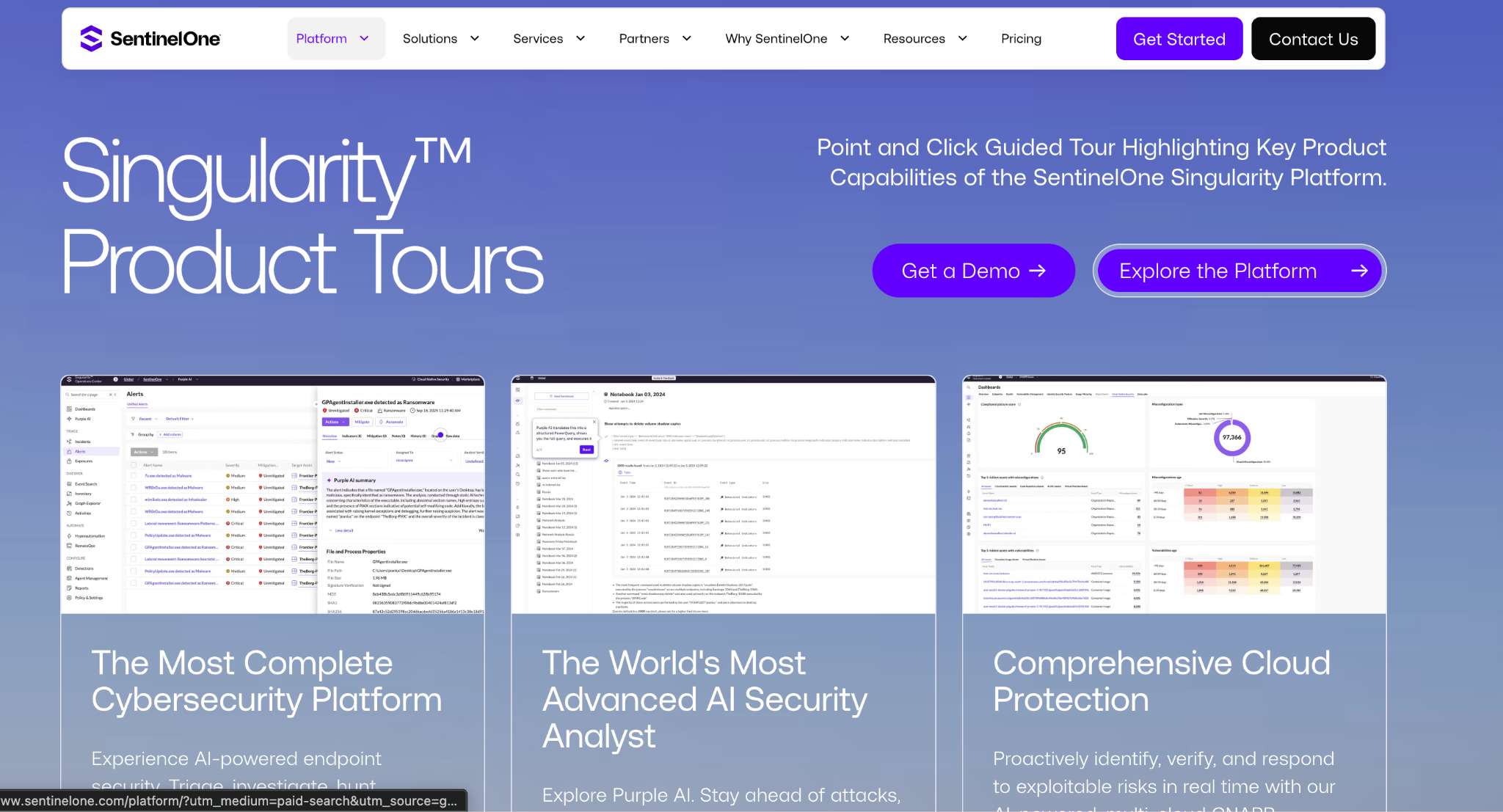
SentinelOne pairs its AI-driven Singularity platform with managed analysts through its Vigilance service, emphasizing autonomous endpoint detection and rapid containment. It suits teams that want machine-speed response with human oversight.
Best for: Organizations that value autonomous endpoint response on a single platform.
Watch for: Coverage centers on the SentinelOne platform rather than broad third-party telemetry.
4. Arctic Wolf

Arctic Wolf is a pure-play provider whose concierge model layers a named security team over your existing tools. It ingests telemetry across mixed environments rather than requiring one vendor's stack.
Best for: Lean teams that want an outsourced security operations function across multi-vendor tooling.
Watch for: It works with your tools rather than replacing them, so outcomes depend on the telemetry you already collect.
5. Sophos MDR
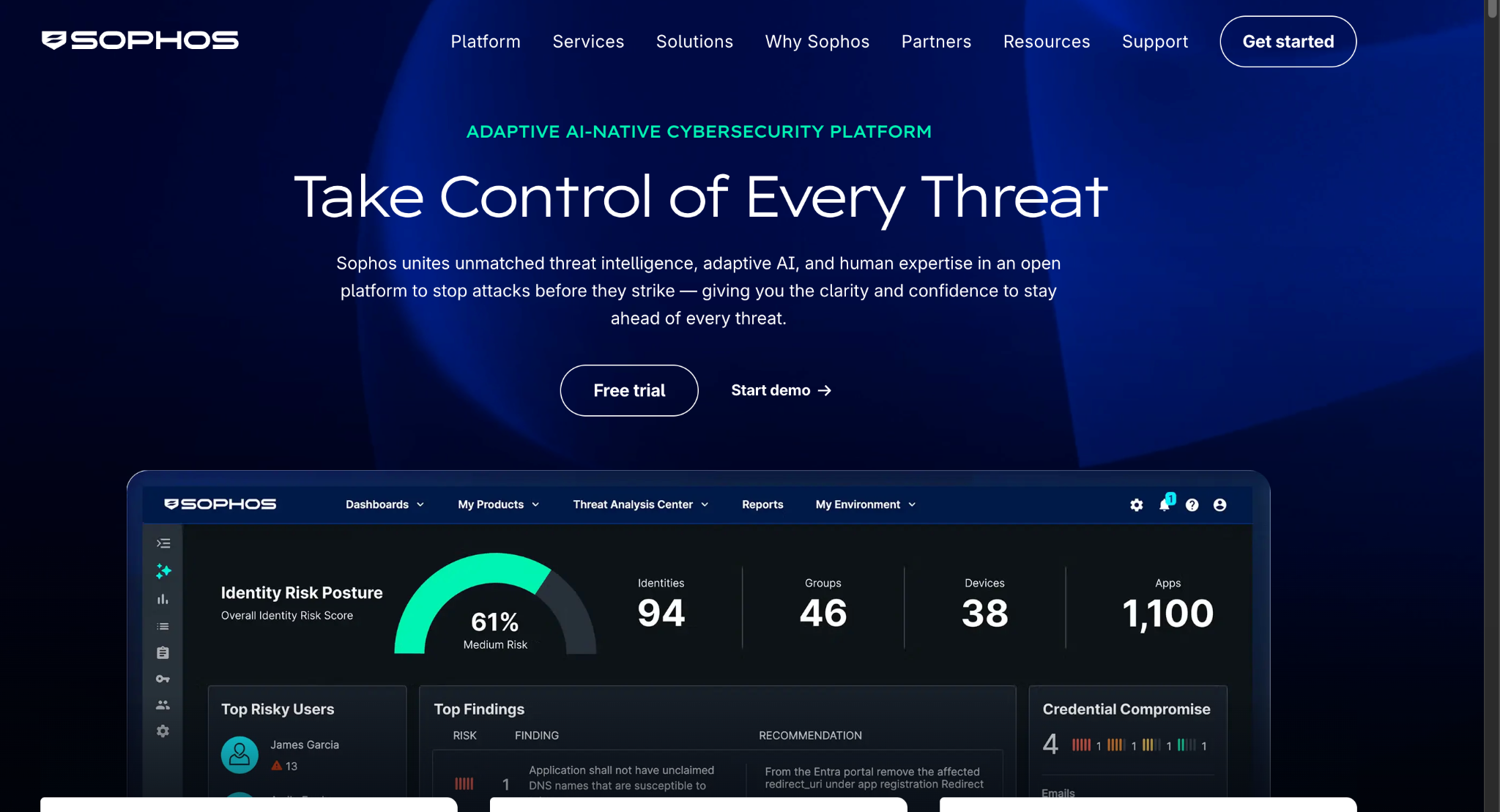
Sophos runs one of the most widely deployed MDR services, working with both Sophos and third-party telemetry across endpoint, network, cloud, and identity. It was named a Leader in the IDC MarketScape for Worldwide MDR Services and is a frequent Gartner Peer Insights Customers' Choice.
Best for: Organizations that want broad telemetry support with strong service reviews.
Watch for: The widest capability set assumes deeper adoption of the Sophos platform.
6. Rapid7 MDR
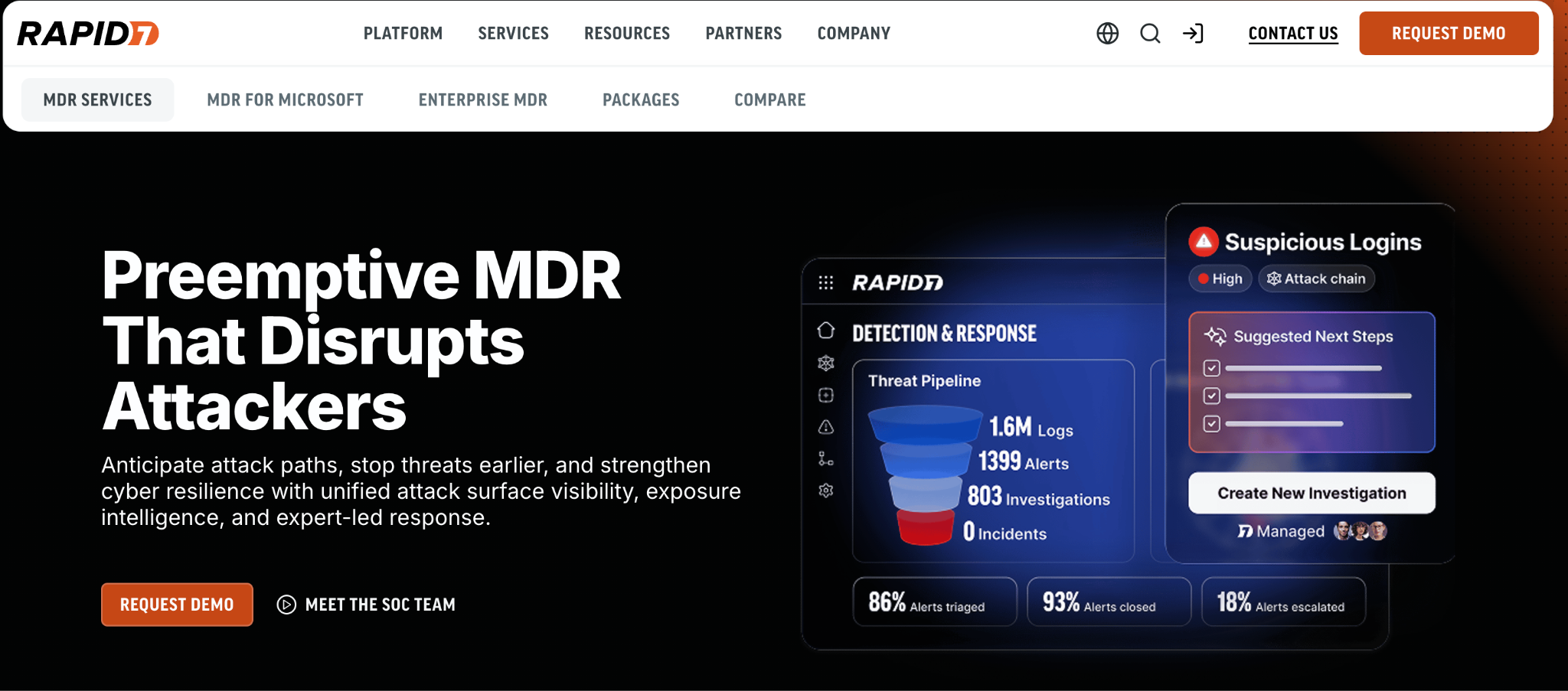
Rapid7 delivers MDR on its Insight platform, pairing detection engineering with SIEM heritage through InsightIDR. Analysts investigate and guide response, with useful context from vulnerability and exposure data.
Best for: Teams that want SIEM-backed MDR with vulnerability context in one place.
Watch for: Value is highest when you use the broader Insight platform.
7. Palo Alto Networks (Cortex and Unit 42)

Palo Alto Networks delivers MDR on its Cortex platform, combining automated detection and response with Unit 42 threat intelligence and incident response. It targets enterprises that want platform-native breadth.
Best for: Enterprises invested in the Cortex or Palo Alto stack.
Watch for: Enterprise-grade and platform-centric, with pricing to match.
8. Expel

Expel offers transparent, analyst-led MDR across cloud, SaaS, endpoint, and identity, with a strong focus on automation and clear reporting. It is known for showing its work through an open interface.
Best for: Cloud-first teams that value transparency and fast onboarding.
Watch for: A managed layer rather than a full security platform, so it relies on your existing tools.
9. eSentire

eSentire is a pure-play MDR provider built on its Atlas platform, combining 24/7 SOC operations with threat hunting and named response commitments. It emphasizes rapid containment during active incidents.
Best for: Organizations that want an outsourced SOC with firm response commitments.
Watch for: Pure-play focus means you coordinate it alongside your existing platform choices.
10. Bitdefender GravityZone MDR

Bitdefender delivers MDR on its GravityZone platform, pairing strong prevention and endpoint detection with a managed SOC. It suits teams that want prevention-first protection with managed oversight.
Best for: Teams that want prevention-led endpoint security with a managed service on top.
Watch for: Tightest when paired with the GravityZone platform.
MDR solutions compared
| Solution | Focus | Best for | Pricing |
|---|---|---|---|
| CrowdStrike Falcon Complete | Platform-native MDR on Falcon | Falcon-standardized teams | Quote |
| ESET | Prevention-first MDR on ESET PROTECT | SMB to enterprise, research-led detection | Tiered, quote |
| SentinelOne Singularity MDR | Autonomous endpoint MDR | Machine-speed endpoint response | Quote |
| Arctic Wolf | Vendor-agnostic concierge MDR | Outsourced SOC across mixed tools | Quote |
| Sophos MDR | Broad-telemetry MDR | Wide coverage with strong support | Quote |
| Rapid7 MDR | SIEM-backed MDR on Insight | Vulnerability-aware detection | Quote |
| Palo Alto Cortex and Unit 42 | Platform-native enterprise MDR | Cortex and Palo Alto stacks | Enterprise quote |
| Expel | Transparent cloud-first MDR | Cloud and SaaS visibility | Quote |
| eSentire | Pure-play MDR on Atlas | Outsourced SOC with response SLAs | Quote |
| Bitdefender GravityZone MDR | Prevention-led MDR | Prevention-first endpoint teams | Quote |
Selecting Your MDR Partner: Critical Decision Factors
The best provider depends on your stack, your team, and your regulatory needs, not on the longest feature list. Weigh these factors before you commit.
- Response authority: Can the provider contain and remediate, or only recommend?
- Coverage breadth: Does it span endpoint, network, identity, cloud, and SaaS?
- Analyst and detection quality: How deep is the threat hunting and detection engineering?
- Measurable outcomes: Does it report mean time to detect and respond and closure quality?
- Integration and onboarding: Does it integrate with your SIEM and SOAR, and how quickly can it go live?
- Data residency and audit: Does reporting support your compliance and insurance needs?
Conclusion
Managed detection and response has evolved from an optional security service into a core component of modern cyber defense. As attacks become faster and more sophisticated, organizations increasingly rely on MDR providers to deliver continuous monitoring, validated threat detection, and expert-led response that internal teams often cannot sustain on their own.
While leading providers share many capabilities, they differ in platform integration, response authority, telemetry coverage, and operational approach. Evaluating how each service aligns with your existing security stack, compliance requirements, and available resources is essential to selecting the right fit. By focusing on measurable outcomes rather than feature lists alone, organizations can choose an MDR solution that strengthens resilience and reduces risk over the long term.
FAQ
MDR Solutions FAQs
01What is managed detection and response?
MDR is a 24/7 service that combines detection technology with human analysts to monitor, investigate, and respond to threats across endpoint, network, cloud, and identity.
02How is MDR different from an MSSP or managed XDR?
An MSSP mainly manages tools and forwards alerts. MDR adds human-led investigation and response, and managed XDR extends that model by integrating telemetry across multiple layers.
03How do I choose an MDR provider?
Start with response authority and coverage, then check analyst quality, outcome reporting, and how well it fits your SIEM, SOAR, and compliance needs.
04Do smaller businesses need MDR?
Yes. Lean teams often gain the most, since MDR provides 24/7 coverage and expert investigation without building an in-house SOC.
05What outcomes should executives track?
Track mean time to detect and respond, alert validation rates, escalation quality, and unresolved coverage gaps, so the service shows risk reduction rather than ticket volume.
Comments
Comments are available to signed-in users and are moderated to keep the discussion useful and respectful. Spam, automated submissions, and low-value promotional comments are removed. Outbound links may be approved when they are relevant and genuinely helpful to readers, but they are displayed as plain text rather than clickable hyperlinks.
No comments have been published yet.
Please sign in to submit a comment.