

Cybersecurity, Proxies, Digital Marketing
10 Bot Traffic Signals Inflating Your Marketing Reports

Bot traffic is probably lying to you in your marketing reports right now, and you would never know it. You see a nice jump in visitors and feel pretty good. The problem is, a big slice of that might not be people at all. It is software, and it is padding your numbers while you make decisions off them.
So let's sort out what is real and what isn't. First up, what bot traffic actually is and how it gets into your analytics without asking. Then 10 dead giveaways that it is skewing your reports, from a fake spike to click fraud wasting your ad budget. And finally, 6 ways to clear it out and keep it out.
What Bot Traffic Is And Why It Wrecks Your Reports
Quick bit of groundwork before we go looking for bots in your data. Bot traffic refers to visits generated by automated software rather than people. They are not all bad, and knowing the difference matters. The ones we care about here are the deceptive kind, the ones made to look exactly like legitimate users.
Good Bots, Bad Bots, And The Ones Pretending To Be You
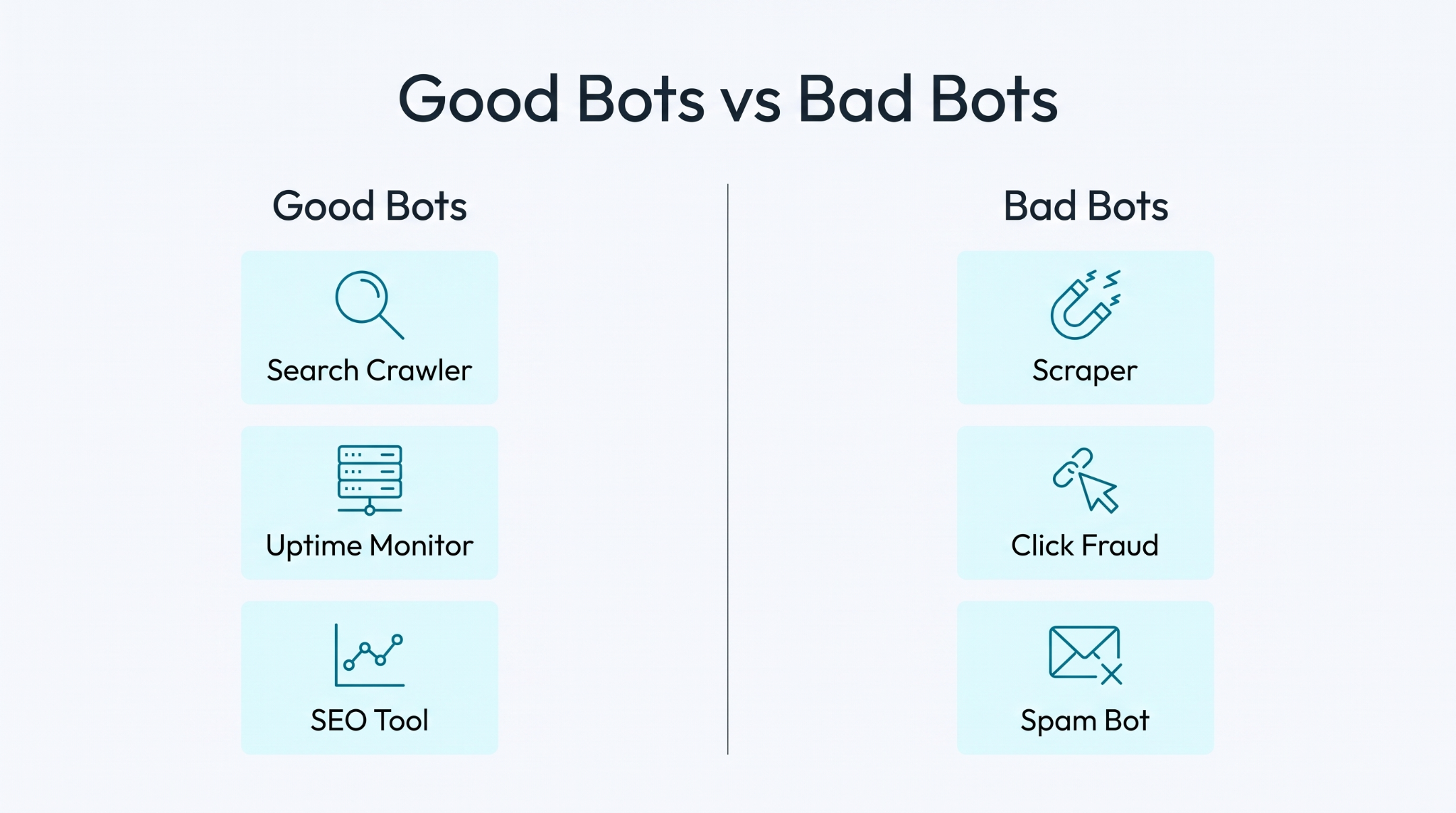
Plenty of bots are doing you a favor, so you need to distinguish between good and bad bots. Search engine bots read your pages so you can rank. Other web crawlers may also visit for indexing or research.
AI crawlers also access pages to collect information for AI systems. And an uptime monitor pings your site to make sure it hasn't fallen over. That is good bot traffic which performs automated tasks, and you generally want to leave it alone.
Then you have the harmful bots, increasing your prices or dumping spam in your forms. The worst of the bunch fake a real browser, so your analytics waves them through as human traffic. That makes it harder to separate fake visits from legitimate traffic.
How Bot Traffic Slips Into Your Analytics In The First Place
And there are a lot of them. In 2024, automated traffic, including search engine crawlers, actually overtook humans and hit 51% of all internet traffic. The malicious bot traffic alone made up 37%.
The clever ones spoof a normal user agent and drive a genuine browser engine. So your tracking script fires exactly like it would for a real person. The visit looks spotless, and it counts in your report as human traffic.
10 Signs Bot Traffic Is Skewing Your Marketing Reports
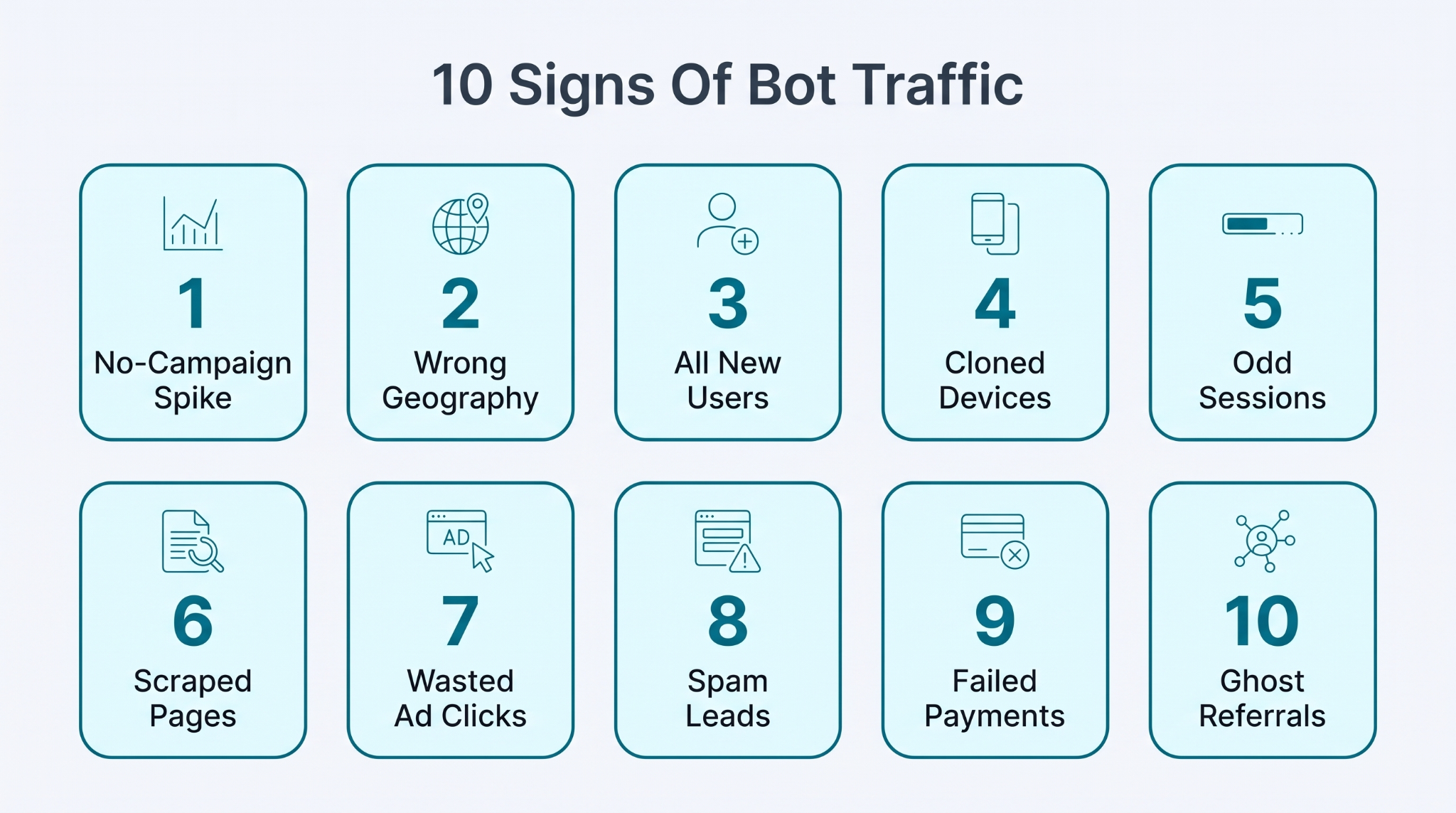
Alright, here’s how to identify bot traffic. Each of these bot traffic signs shows up in a different report, so they won't run together. You won't hit all 10. But if 2 or 3 look familiar, you have almost certainly got bots padding your numbers.
1. A Traffic Spike That Matches No Campaign You Ran
You know the one. Web traffic jumps, and you have no idea why. You didn't send an email or flip on an ad. Nothing went viral. Yet there is a wall of new sessions on Tuesday out of nowhere. Real growth always has a reason you can name. A spike with no story behind it is usually a bot that found you.
2. Swarms Of Visits From Places You Don't Even Sell To
Pull up your map report and look for countries that make zero sense for you. If you only ship inside the US, a sudden rush from a few far-flung regions should make you squint. Your real customers cluster where you actually do business. Advanced bots tend to fire out of data centers and rotating proxies parked all over the globe.
This signal can be particularly useful when a product is designed for a specific geographic market. Differences in voltage, plumbing connections, certifications, shipping availability, or other regional requirements can limit where a product is commonly purchased or used. An unexpected increase in traffic from outside those markets may therefore warrant further investigation.
For example, Brondell’s Swash 1400 bidet seat is designed around North American electrical and plumbing specifications, including 120V/60Hz power and a ⅞-inch T-valve connection. A product with regional specifications like these provides a useful example of why geographic traffic patterns should be compared with the markets a business actually serves.
International traffic does not automatically indicate bot activity, since people can research products from anywhere. However, if traffic from an unexpected region suddenly increases without corresponding sales, campaigns, referrals, or other activity to explain the change, automated traffic may be a possibility worth investigating.
If your product is pinned to one market by its voltage or its safety certification, treat far-off traffic as a bot signal first and a lucky break basically never.
3. New Users Skyrocket While Returning Visitors Stay Flat
Bots barely ever come back as the same person. They don't hang onto cookies or log in, so every hit reads as brand-new. Compare your new visitors against your returning ones. If new is rocketing while returning barely twitches, that split is loud. Genuine growth drags both lines up, because real people wander back for another look.
4. A Wall Of Identical, Outdated Browsers And Devices
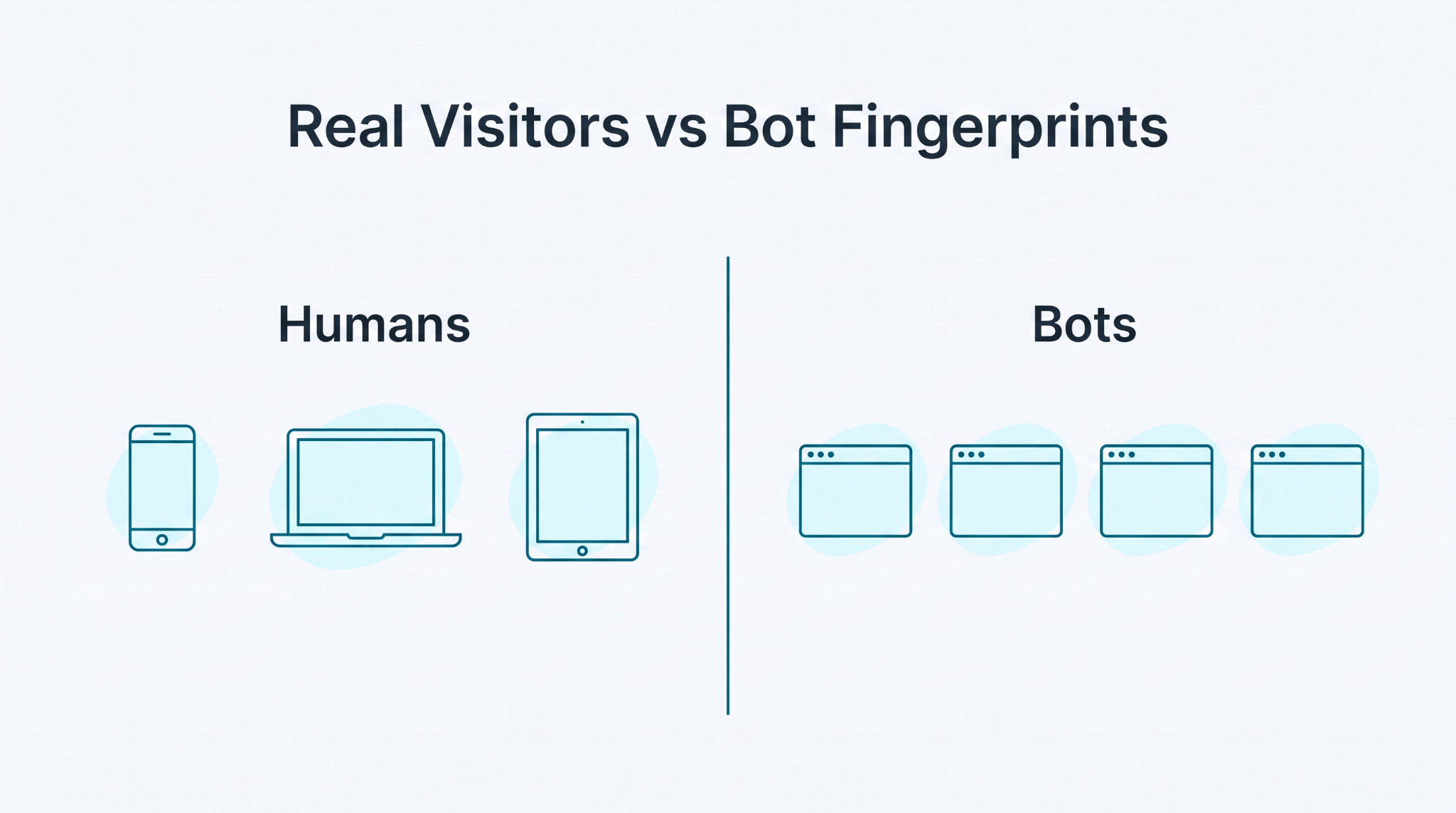
Real people are gloriously inconsistent. They show up on every kind of phone and a dozen browser versions. Bots behavior is different - they don't bother. A big part of fake traffic shares one creaky old browser and one screen size, again and again. If your tech report shows a weirdly uniform crowd, dig into the user agent behind each visit. People are never that samey.
5. Bounce Rate And Session Times That Don't Match Typical Human Behavior
Keep an eye out for engagement stats that just can't be real. A batch of sessions clocking zero seconds means something opened the page and shot straight back out. A bounce rate that jumps to 100% on one page says nobody is actually reading.
It swings the other way too, with sessions running for hours because a bot left the tab open. Human user behavior falls somewhere believable in between.
6. Your Most Popular Pages Get Hammered While Sales Stay Flat
When one page gets huge traffic, but its sales don't move, that is a scraping fingerprint. Bots go where the value is, and your best pages are stuffed with it. They pound your top products over and over to read prices or stock, with no intention of buying. So the pageviews balloon while the conversion rate drops beneath them.
This can be particularly relevant for stores in busy, price-driven categories where similar products are available from multiple sellers. Product pages that display pricing, availability, sizes, or other structured information may attract automated crawlers collecting publicly available data.
For example, Nootropics Depot's mushroom supplements page displays multiple products and purchasing options in one place. Pages organized this way illustrate the type of structured ecommerce content that automated tools may crawl to collect information such as product names, prices, and availability.
If automated requests repeatedly access these pages, pageviews can increase without a corresponding increase in purchases. Marketers should therefore compare unusual traffic increases with conversion data and other signals before interpreting higher pageviews as increased customer demand.
If you sell in a cut-throat retail niche, read a sudden surge on a star product as scraping first rather than a marketing win.
7. Fake Ad Clicks That Drain Budget And Never Convert
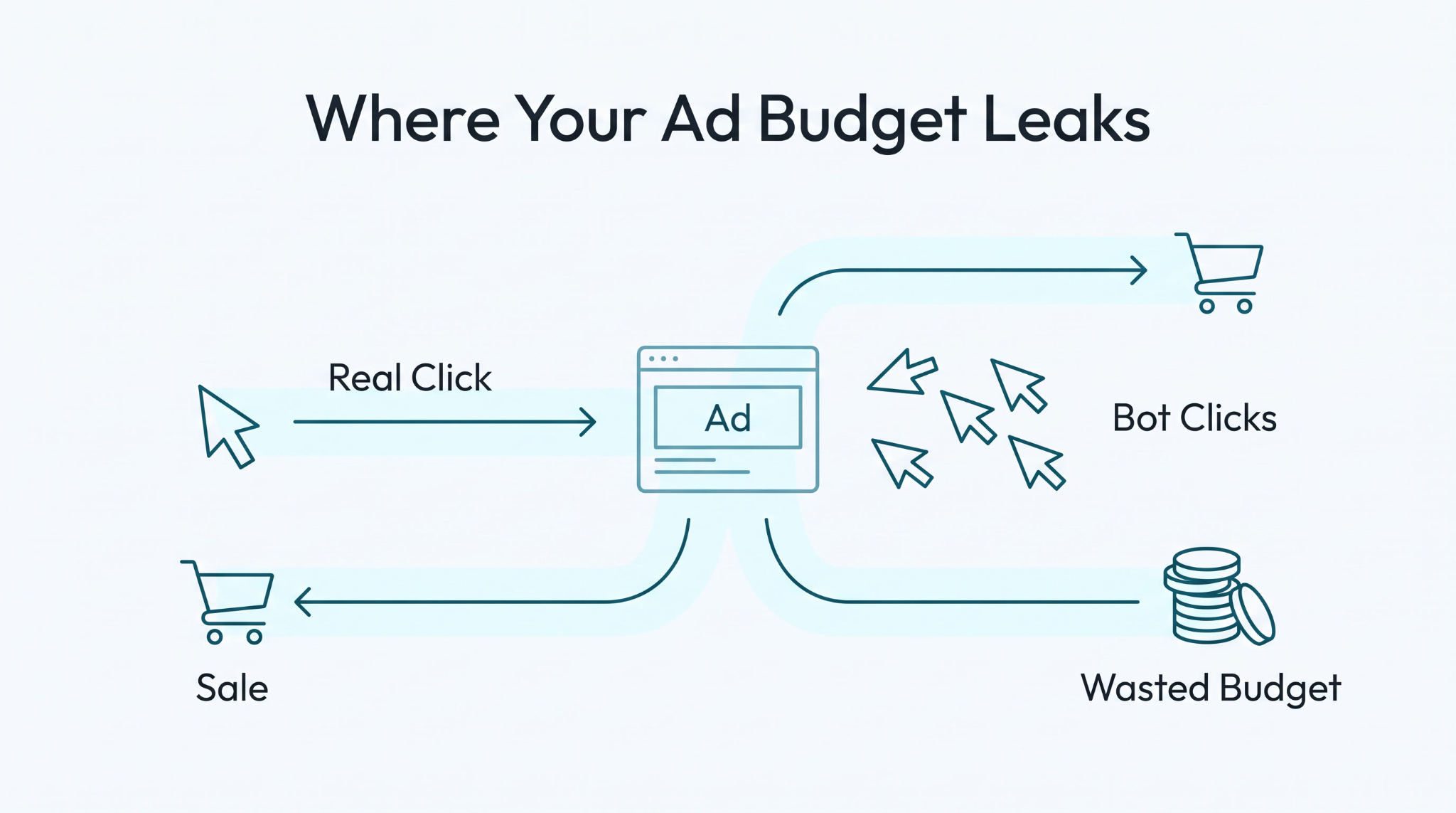
Paid traffic gets its own breed of bot activity, and this one hits your wallet directly. Click fraud involves sending automated clicks to ads, consuming ad budget without generating genuine customer activity. Website owners may see clicks climb while conversions remain flat, making it important to distinguish legitimate visitors from invalid traffic.
And it is not a small issue. According to research cited by MediaPost, roughly 8.51% of paid ad traffic analyzed was invalid, representing an estimated $63 billion in wasted ad spend.
This can be particularly relevant in local service industries where individual advertising clicks may be expensive. When a completed job is worth hundreds or thousands of dollars, businesses may compete heavily for search terms associated with customers who are ready to make a purchase or request service.
For example, water heater installation represents the type of local service where customers may search when they have an immediate need. High-intent service categories can attract significant advertising competition, making unusual patterns of clicks without corresponding inquiries or bookings worth investigating.
A large increase in ad clicks accompanied by little or no change in calls, form submissions, or completed jobs does not automatically prove click fraud. Campaign targeting, landing-page performance, competition, and other factors can also affect conversions. However, the gap can be a useful signal to investigate alongside IP addresses, repeat-click patterns, geographic data, and other indicators of invalid traffic.
Businesses advertising high-value or urgent services should therefore compare paid clicks with downstream actions such as qualified leads and completed bookings rather than evaluating campaign performance from click volume alone.
8. A Pile Of Form Fills And Fake Account Signups That Go Nowhere
If your lead form or user account signup suddenly gets busy but none of it turns into anything, read the entries closely. Spam bots adore a form. These form-filling bots enter gibberish names and throwaway emails by the hundred, inflating your lead count while your sales team wastes hours chasing phantoms. More submissions with no more real conversations is a dead giveaway.
Forms cop the worst of it, too. One recent report found 64% of AI bot traffic heading straight for forms, way ahead of login or checkout pages.
9. Checkout And Payment Attempts That Spike Then Fail
A sudden burst of checkout attempts that nearly all fail is a nasty one to see. It usually means card-testing bots have found your payment form.
They fire stolen card numbers through it in bulk to find out which ones still work, spiking your attempts and your decline rate together. Your report shows a storm of activity that turns into almost no real orders. Other automated cyberattacks may attempt to gain unauthorized access via exposed login or payment systems.
Card-testing attacks also highlight why payment methods and the handling of payment credentials matter. Each time card information is entered into a checkout, the merchant and its payment providers must process that information securely. Limiting unnecessary exposure of payment credentials can reduce the number of systems that handle sensitive financial data.
Alternative payment methods use different transaction workflows. For example, some crypto payment platforms support transactions involving cryptocurrency and local currency, illustrating an alternative to entering card details at checkout.
Using a different payment method does not eliminate fraud or security risks, and the protections, fees, availability, and regulatory requirements can vary by provider and jurisdiction. From a bot-traffic perspective, the broader point is that card-testing activity should be monitored separately from legitimate checkout behavior to prevent automated attempts from distorting payment and conversion data.
10. Referral Traffic From Sites You Have Never Heard Of
Last one. Open your referral report and actually read the source list. Real referrals come from names you would recognize, like a partner or a bit of press. Ghost spam crams that list with random domains you have never once visited, usually junk links dangled to bait a curious click back. If your top referrers are total strangers, bots are padding your acquisition numbers.
How To Detect Bot Traffic And Get Them Out Of Your Reports For Good: 6 Proven Strategies
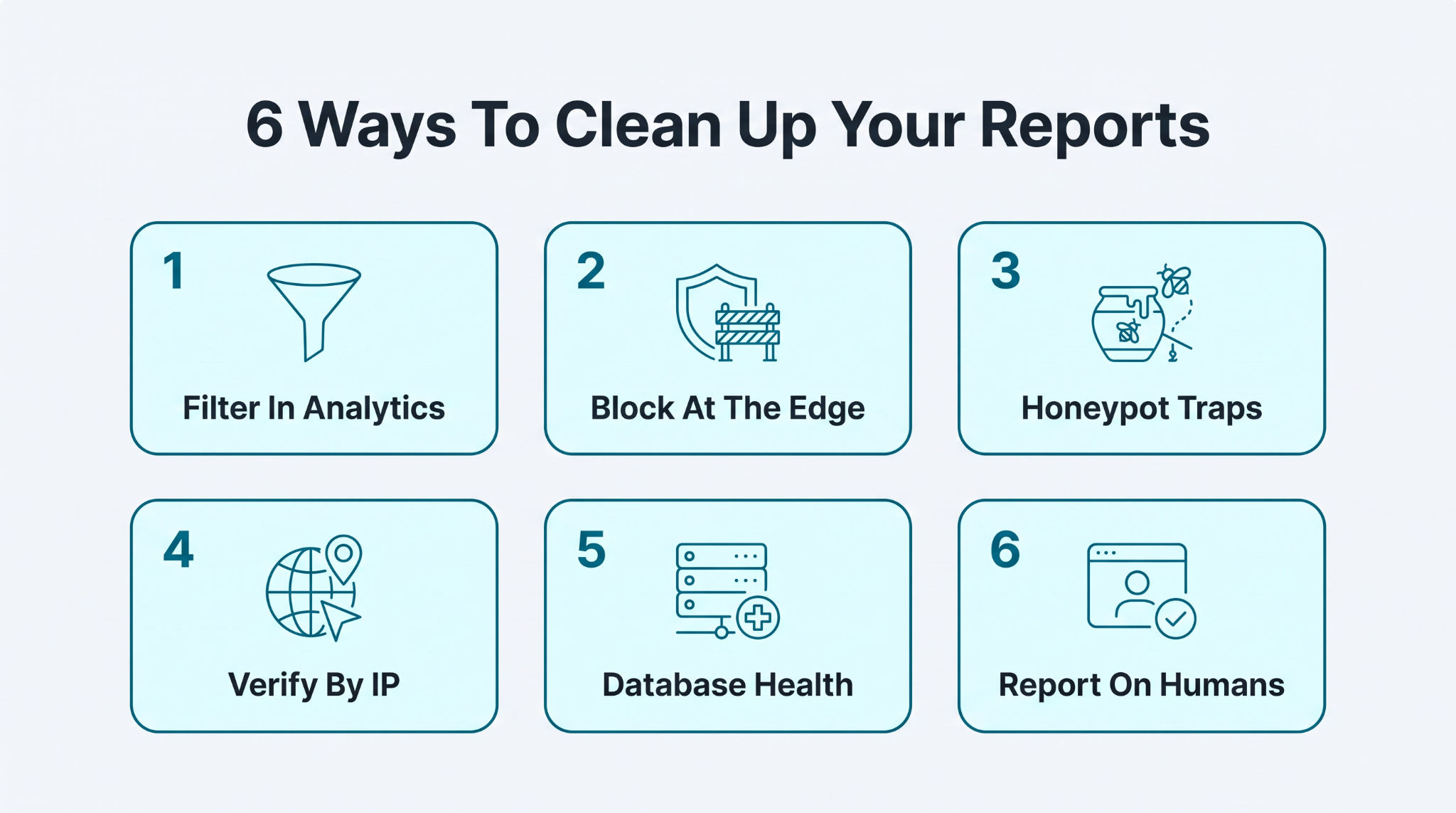
Spotting the bots is only half the job. Now let's boot them out, or at least stop bot traffic from trashing your data. These 6 strategies work as a team, each one covering a different layer to detect bots.
1. Turn On Bot Filtering Inside Your Analytics
The simplest win is free and takes about a minute. Most analytics tools can already block out known bots and spiders on their own; they just don't always switch it on for you. Someone maintains a big list of the usual suspects, and your reports can automatically skip them. It won't stop the crafty new bots, but it sweeps out heaps of obvious junk instantly.
- Switch on the exclude-known-bots setting in your Google Analytics property today.
- Filter out your own office and VPN IPs so staff visits vanish.
- Turn on invalid-click protection inside Google Ads and Meta Ads.
- Create a separate unfiltered view first, so you never lose raw data.
2. Block Bots That Are The Worst Offenders At The Edge
Filtering just hides bots from your reports. They still hit your site and skew everything upstream. Blocking bot access at the edge is the stronger strategy.
A firewall or bot-management solution can bounce known-bad traffic before it even loads a page, so it never reaches your analytics or your server logs. A lot of the worst sources are already flagged on public blocklists, which makes them simple to shut out.
- Put a web application firewall in front of your whole site.
- Rate-limit any IP making dozens of requests a second.
- Block traffic from hosting and data-center ranges you never sell to.
- Add a tool for managing bot traffic that slips past rules.
3. Set Honeypot Traps That Only Bots Trip
Some bots are too smart for blocklists, so you bait them instead. A honeypot is a little trap a person never sees, but a bot can't help touching, like a hidden form field or a link with no visible text. Real visitors skip right past it because it is hidden out of sight. A bot fills it or follows it, and gives itself away on the spot.
- Add a hidden form field and reject any submission that fills it.
- Drop invisible links that only a crawler would ever follow.
- Tag and log anything that trips a trap for later review.
- Feed confirmed bot IPs from your traps straight into your blocklist.
4. Verify Bad Bot Traffic By Its IP
Bot Traffic - Verify Questionable Traffic By Its IP
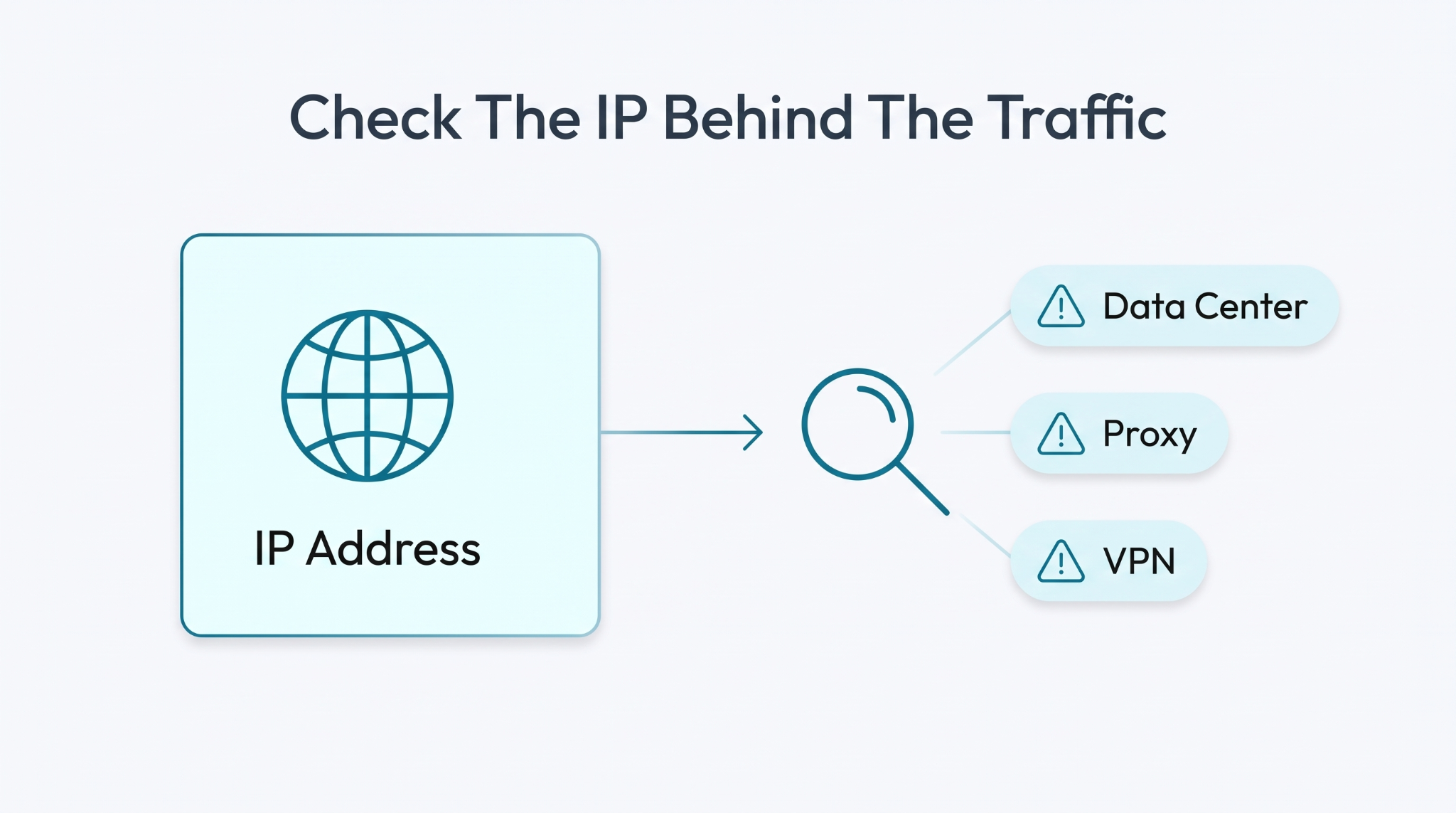
When a visit looks suspicious, its IP address can provide useful context about where the connection originated and which network it belongs to. A quick IP lookup can reveal information such as the associated ISP or organization and approximate location. When combined with hosting, proxy, or other network indicators, that information can help determine whether unusual traffic warrants further investigation.
- Cross-check suspicious IPs against known data-center and hosting ranges.
- Flag connections coming through proxies or Tor as higher risk.
- Watch for many sessions sharing one IP or a tight range.
- Add repeat-offender IPs to a suppression list your reports respect.
5. Keep The Database Healthy Under The Bot Load
Bots don't just dirty your numbers. They batter your actual infrastructure on the way through. Heavy automated traffic can also contribute to DDoS attacks when request volumes become extreme.
A scraper pounding your product pages fires off request after request at your server and the database behind it. That load drags real pages down and swells your stored data with junk. So the data problem and the speed problem end up being the exact same thing.
- Monitor database load and query times during known bot surges.
- Cache heavy pages so scrapers can't tax the database directly.
- Set query timeouts and connection limits to survive a sudden flood.
- Archive or purge junk bot rows so reports query clean data.
This turns into a real headache once you are running at any scale. A busy store or a big content site already keeps its database under steady pressure. Add a long wave of bot traffic on top, and the thing starts to buckle. Slow queries creep in, and pages start timing out, right when you can least afford it. Most small teams have nobody whose actual job is minding that layer.
For sites experiencing sustained automated traffic, database monitoring and maintenance may also become part of the response. Ongoing monitoring, performance tuning, and backup management can help organizations maintain database performance when increased traffic places additional strain on infrastructure.
Database monitoring is only one part of managing automated traffic, since bot filtering and blocking typically happen elsewhere in the technology stack. However, monitoring database performance during unusual traffic periods can help teams identify increased load, slow queries, and other infrastructure effects while keeping reporting data easier to manage.
6. Report On Verified Humans, Not Raw Traffic
Even after all of that, a handful of clever bots will still wriggle through. So the final strategy is really a shift in how you read the numbers. Quit treating top-line sessions as your scoreboard.
Traffic is the easiest figure for a bot to fake and the least useful for any real decision. This is why more stores lean on IP intelligence to tell genuine buyers from masked traffic before the data ever reaches a report.
- Judge campaigns on conversions and revenue, not sessions or clicks.
- Build an engaged-users segment and report from that, not everything.
- Compare trends week over week so a one-off bot spike stands out.
- Reconcile analytics against your backend order data every single month.
Conclusion
Bot traffic isn't about to disappear, and automated activity is getting better at blending in with legitimate visits. But recognizing the warning signs, from unexplained traffic spikes to ad clicks that go nowhere, can make it easier to identify questionable activity before it distorts marketing decisions.
No single signal proves that a visit came from a bot. Geographic patterns, IP and network information, browser characteristics, engagement behavior, conversions, and other indicators are more useful when evaluated together. Filtering, edge protection, honeypots, IP analysis, infrastructure monitoring, and cleaner reporting can all help reduce the impact of automated traffic.
When the numbers look unusually good or simply do not match what is happening elsewhere in the business, investigate the underlying traffic before treating the increase as genuine customer demand.
Comments
Comments are available to signed-in users and are moderated to keep the discussion useful and respectful. Spam, automated submissions, and low-value promotional comments are removed. Outbound links may be approved when they are relevant and genuinely helpful to readers, but they are displayed as plain text rather than clickable hyperlinks.
No comments have been published yet.
Please sign in to submit a comment.