

Privacy, Finance, Online Resources
Your Bank Statement Leaks More Than Your Balance: What to Strip Before Sharing
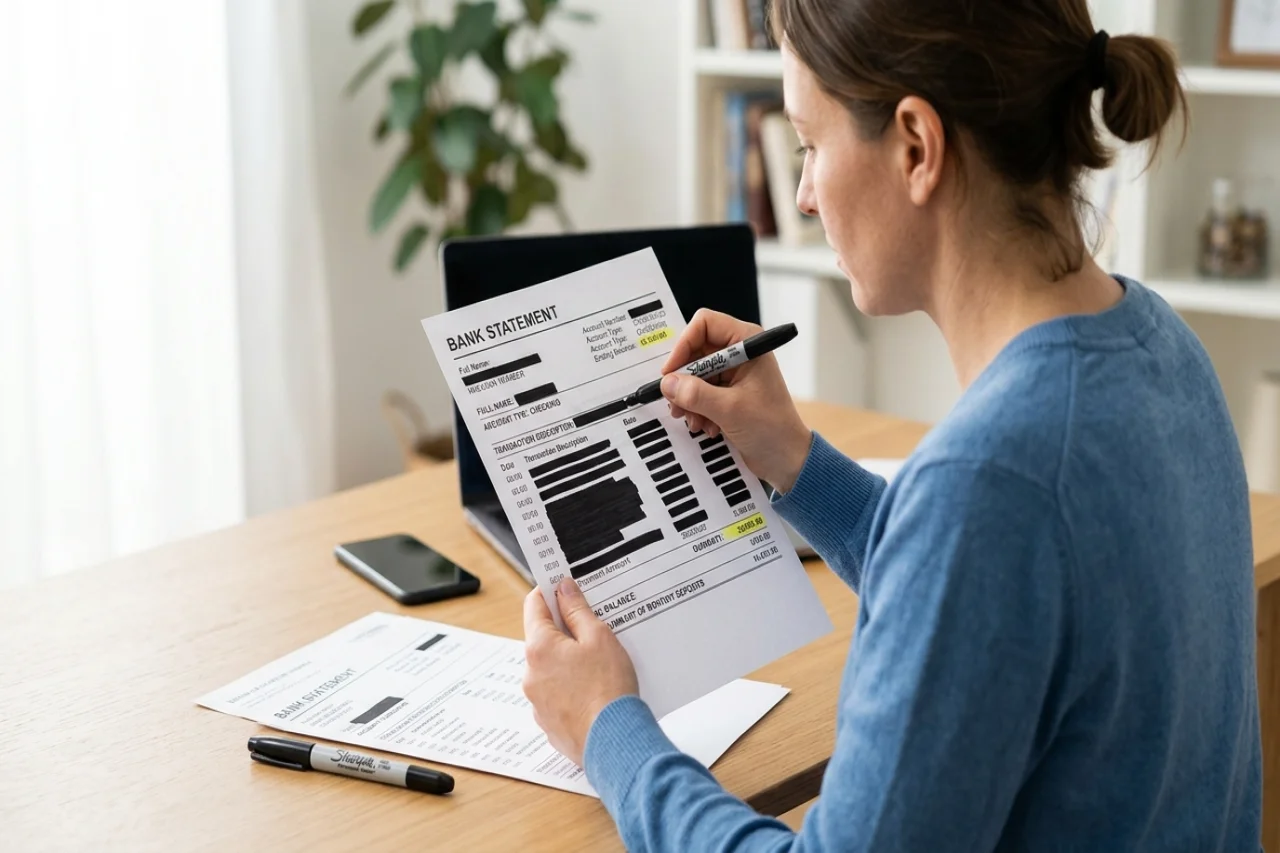
A bank statement is not just a list of numbers. It is a short biography, written in transactions. The balance is the least interesting part. The rest of the page shows where your money comes from, where it goes, who you pay, and how steady your life looks from the outside.
That is why sharing a statement deserves the same care as sharing any other piece of personal data. Readers of this site already know that a public IP address can reveal more than people expect. A bank statement works the same way. One small exposure can tell a stranger a lot, and most of it is information the person you are sending it to never asked for.
The fix is not to refuse to share. Landlords, lenders, accountants and employers often have a genuine reason to ask. The fix is to share less: keep what proves your point, and strip the rest before the file leaves your hands.
What a stranger learns from one statement
Read a statement the way a stranger would, not the way its owner would.
The deposits show your employer, or your clients if you are paid by several people. They show how often you are paid and how regular that income is. The balance shows how much cushion you have. The spending shows your rent or mortgage, your subscriptions, your travel, your medical providers, and the shops and services you use every week.
None of that is secret from your bank. But it is far more than a landlord needs to confirm that you can pay rent, or more than a vendor needs to confirm a payment. Once a file is emailed, uploaded to a portal, or forwarded to a second person, you cannot control where it goes next. So the question to ask before sending is simple: does the person receiving this need this field to do their job?
If the answer is no, it should not be in the file.
Field by field: hide vs. keep
The lists below are a starting point. The person or organization asking for the statement may have its own rules, so if you are unsure about a field, ask them before you hide it. Hiding something they need will only slow down your application.
Hide, or mask so only the last four digits show:
- Your full account number. Show only the last four digits, so the statement can still be matched to your application.
- Your routing number. The recipient does not need it to check your income or balance.
- Private transaction descriptions, such as medical providers, personal purchases, and subscriptions that have nothing to do with the request.
- Phone numbers, and details about another person on a joint account, where that information is not needed.
Keep visible:
- Your full legal name, as it appears on your application or ID.
- The bank name and the statement dates, so the document can be checked as recent and genuine.
- Income deposits, with the employer or payer name and the amounts.
- Your ending balance, so the recipient can see that you have the funds they asked about.
Do not hide without asking first:
- Income deposits, statement dates, or balance figures, including opening and running totals.
- Large deposits that are relevant to the request. If a large deposit looks unusual, be ready to explain it rather than hiding it.
- Any field the recipient has specifically asked to see.
The principle is data minimization: share what is needed for the purpose, and nothing more. It is the same idea behind good privacy practice everywhere else. Collect less, keep less, and send less.
A pre-share strip-down
Work from a copy, never from your only original. Then follow these steps, in order.
- Decide what the recipient needs. A landlord usually needs income and balance. A lender may need more history. Match what you keep to that purpose, and strip the rest.
- Mask the account and routing numbers first. These fields can be reused to commit fraud if the file is forwarded or leaked. Leave only the last four digits of the account number visible.
- Go through the transactions line by line. Keep the deposits and the amounts. Mask the descriptions that reveal health, habits, or other people, where the recipient has not asked for them.
- Check every page. Statements often repeat the account number in a header or footer, and a second page can undo careful work on the first.
- Make a clean copy to send. Do not just draw a black box over the numbers in a normal PDF viewer. In many viewers, that box is only a layer on top of the text, and the numbers underneath can still be selected, copied, or revealed by removing the layer. The redaction has to remove the underlying text, not cover it. Understanding how to redact a bank statement for a rental application is one example of why proper redaction matters when sharing sensitive financial documents.
- If the recipient has a portal or a secure upload link, use it instead of email. Email is easy to forward, and a file sent by email can sit in inboxes long after the application is finished.
Check the file before you send it
A quick check takes two minutes and catches most mistakes.
Open the file you plan to send, not the original. Try selecting and copying the text where a number was hidden. Search the document for the account number. Close it, reopen it, and look at it again with fresh eyes. If you can still read, select, or find the hidden text, the redaction did not work, and the file is not ready to send.
This is also the moment to check that you did not hide too much. If the name, dates, deposits, and ending balance are all clear, the recipient can complete their check without returning to request the unredacted original. That is the whole point: a file that answers their question, and nothing more.
Share the copy, keep the original
Keep your original statement untouched, and keep a copy of exactly what you sent, with the date and the name of the recipient. If the same file is requested again, send the same prepared copy rather than starting over. If a recipient asks for something you masked, ask what they need it for before you send a fuller version. A short question at that point is normal and preferable to sending the full file to everyone who asks.
If you have already sent a full, unredacted statement, do not panic. Ask the recipient to delete it once their check is done, change any details that could be reused if you are concerned, and watch your account for unfamiliar activity. Then use the stripped-down version next time.
Conclusion
A bank statement will always reveal something. The balance is only the start. What it reveals beyond that is, to a large extent, your choice. Strip the file down to what the request actually needs, check that the hidden parts are really gone, and send the copy. The person on the other end gets the proof they asked for, and the rest of your financial life stays yours.
Comments
Comments are available to signed-in users and are moderated to keep the discussion useful and respectful. Spam, automated submissions, and low-value promotional comments are removed. Outbound links may be approved when they are relevant and genuinely helpful to readers, but they are displayed as plain text rather than clickable hyperlinks.
No comments have been published yet.
Please sign in to submit a comment.