

Network, Cybersecurity, Ecommerce
Why Your E-Commerce Shipping Strategy Needs Cybersecurity
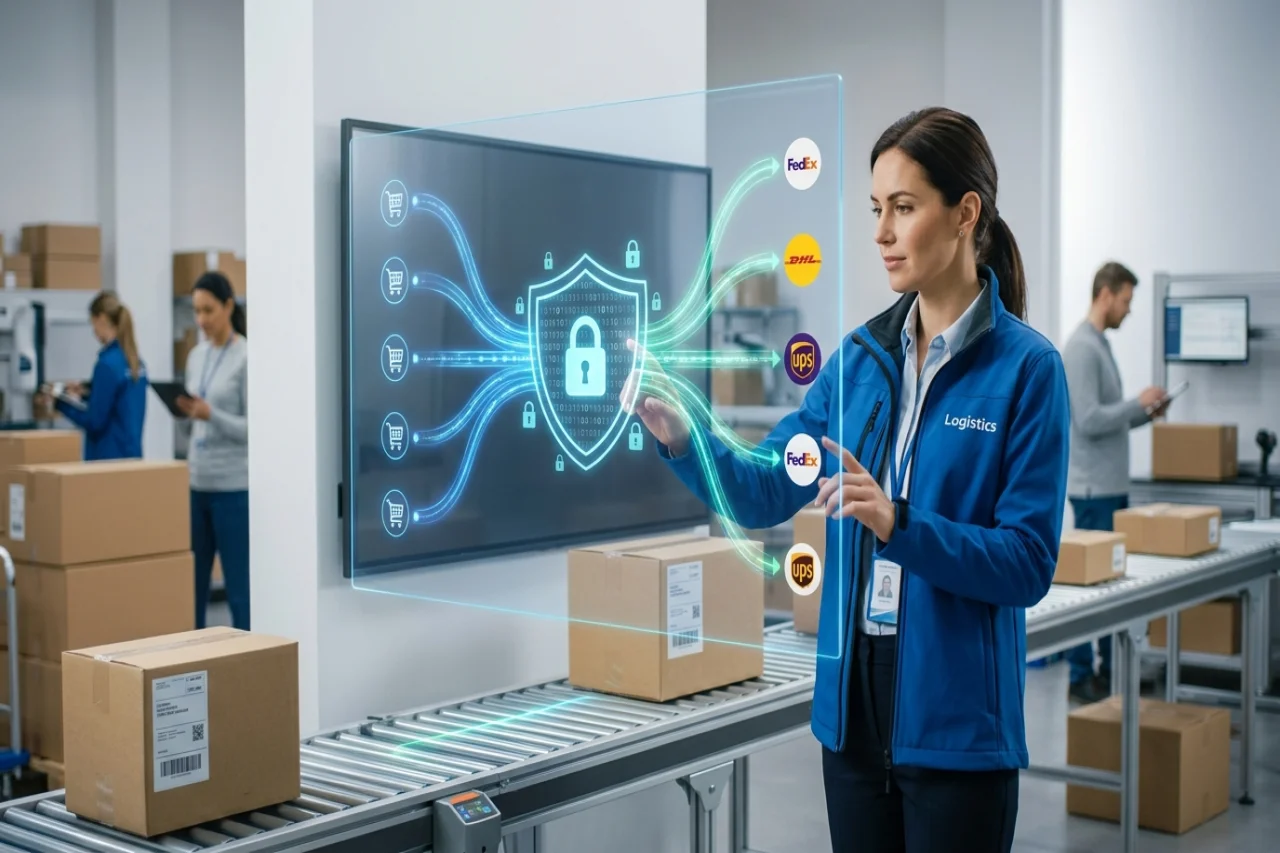
Once an order is paid for, the transaction is not finished from a security perspective. The store still has to pass fulfillment instructions into systems that can create shipments and move customer delivery data outside the commerce platform. A compromised shipping connection can therefore cause real operational damage without ever touching the checkout page.
A multi-carrier shipping API can simplify that handoff by giving an e-commerce system one controlled connection to several carrier services instead of maintaining separate integrations for each one. That consolidation can reduce integration overhead, but it also concentrates authority. The same connection that returns a shipping rate may later create the shipment that incurs the charge.
A closer look at current carrier integrations shows how far that connection can extend after checkout. For example, the Shipduo shipping platform supports functions such as carrier integration, order booking, and shipment tracking. These types of integrations illustrate how shipping APIs may remain involved throughout fulfillment rather than disappearing once a carrier is selected. Cybersecurity therefore has to follow the order into fulfillment, not end at payment authorization.
Shipping APIs Can Do More Than Quote Rates
Developers sometimes think of a carrier API as a lookup service. The application sends package details and receives a price. In a production shipping workflow, the same integration may later receive permission to book a shipment and return a printable label. That is a much more sensitive capability because an authenticated request can now create a real-world transaction.
This changes how you should design access. A storefront that only needs rate estimates at checkout should not automatically get the same credentials as a warehouse service that creates labels. Separating those functions limits what an attacker can do if one part of the application is compromised. The principle is simple: software should have only the permissions it needs to do its job.
Authorization must also be enforced on individual shipment records. An authenticated user should not be able to retrieve another customer’s label simply by changing an order or shipment identifier in a request. OWASP continues to rank broken object-level authorization among the most serious API risks because APIs often trust client-supplied identifiers without verifying ownership strongly enough.
Protect the Credentials That Can Spend Money
A shipping API key is not merely a technical token. If it can create shipments, it can authorize carrier spend. That makes leaked production credentials financially significant even when the attacker never gains access to card data.
Keys should remain on trusted server-side systems and outside public application code. Production credentials should also be kept separate from development credentials, so a test environment cannot quietly become a route into live carrier accounts. Rotation procedures deserve attention before a key is exposed. Teams should know how to revoke a credential quickly and what will stop working when they do.
Human access needs similar restraint. Warehouse employees may need to reprint a label without gaining permission to change integration credentials. Support staff may need shipment status information without the ability to create new shipments. The security model should reflect the different responsibilities rather than treating everyone involved in fulfillment as a single broad administrative role.
Tracking Webhooks Should Never Be Trusted Just Because They Arrived
Shipping systems often learn about delivery events through webhooks. A carrier or shipping provider sends an HTTP request when the shipment changes state, and the merchant updates its own order record. That workflow is efficient, but an exposed webhook endpoint is still an internet-facing input.
The receiving system should verify that a message genuinely came from the expected provider before acting on it. Signature validation is a common approach when the provider supports it. A delivery identifier or timestamp can also help prevent an old valid event from being replayed later. These controls are especially important when an incoming event automatically triggers another business action.
Webhook handlers also need careful input handling. OWASP added server-side request forgery to its API risk guidance, in part because webhooks and similar integrations can allow an attacker to influence where a server makes outbound requests. A shipping event should not be able to persuade the application to fetch an arbitrary URL simply because that URL appeared inside a payload.
Tracking pages deserve separate attention. Public shipment tracking is designed to expose some information without requiring a customer login, but the token or tracking identifier should not reveal more than the customer needs to know. A public tracking page should not become an indirect way to retrieve internal order data.
Shipping Data Should Have a Smaller Footprint Than the Order Record
The shipping layer needs enough information to deliver the package. It rarely needs the complete customer record. Sending unnecessary account data into every carrier or logistics integration increases the amount of personal information exposed if one of those systems is compromised.
The same discipline applies after delivery. If a platform no longer needs a particular field for fulfillment or support, retaining it indefinitely creates exposure without improving the shipping operation. Data-retention decisions should therefore be part of integration design, not left to the default settings of every connected service.
Logs require extra care because they often become accidental copies of sensitive shipping data. Developers may log complete API request bodies while troubleshooting an integration and leave that logging enabled in production. A security review should examine what ends up in application logs as closely as what is stored in the primary database.
Carrier Connectivity Is Also Third-Party Cyber Risk
An e-commerce company does not control the security program of every carrier or shipping technology provider it connects. It does control which provider receives access and how deeply that provider is integrated into internal systems.
That assessment should go beyond uptime promises. The business needs to understand how authentication works and what happens if credentials are compromised. It should also know how security incidents are communicated and how quickly access can be revoked. NIST’s supply-chain security guidance treats acquired software and external services as part of an organization’s cyber risk because a dependency can introduce exposure that the organization cannot correct directly.
Architecture can reduce the impact of that dependency. A shipping provider usually does not need unrestricted connectivity back into the commerce database. Passing only the minimum order information through a defined integration layer creates a clearer boundary and makes it easier to monitor the connection.
Look for Attacks That Resemble Normal Fulfillment
Traditional security monitoring may alert when an unfamiliar IP address logs into an admin panel. Shipping abuse can be quieter because the attacker may be using legitimate credentials and legitimate API endpoints.
The anomaly may appear in the business behavior instead. Label creation suddenly accelerates outside normal warehouse hours. An account starts shipping to destinations that do not resemble its previous activity. A credential that normally originates from one application environment begins making requests from an unexpected network. Those signals become much more revealing when security telemetry is compared with ordinary fulfillment behavior.
IP intelligence can add context here, particularly for administrative access and direct API calls. An unexpected country or hosting network origin can justify additional verification, but IP location should not be an automatic verdict. Remote workers and corporate networks can produce legitimate changes in apparent location. The stronger signal is a location change combined with behavior the shipping operation does not normally produce.
Rate limits can provide another layer of protection. OWASP identifies unrestricted resource consumption as an API risk because automated requests can exhaust computing resources or create direct service costs. For a shipping endpoint, aggressive automation may also trigger carrier-side calls that have financial or operational consequences. Limits should reflect the application's expected transaction volume rather than an arbitrary, universal number.
Conclusion
Shipping APIs can streamline fulfillment, but the access they provide also creates security responsibilities beyond checkout. Protecting credentials, limiting permissions, validating webhooks, minimizing shared customer data, and monitoring unusual activity can help reduce the risks associated with carrier integrations.
As shipping systems become more connected, cybersecurity should extend throughout the fulfillment process. Treating shipping APIs and third-party integrations as part of the broader security environment helps businesses benefit from automation without granting connected systems more access than necessary.
Comments
Comments are available to signed-in users and are moderated to keep the discussion useful and respectful. Spam, automated submissions, and low-value promotional comments are removed. Outbound links may be approved when they are relevant and genuinely helpful to readers, but they are displayed as plain text rather than clickable hyperlinks.
No comments have been published yet.
Please sign in to submit a comment.