

Productivity, Real Estate, Lifestyle
Why Remote Professionals Are Investing in Dedicated Home Offices
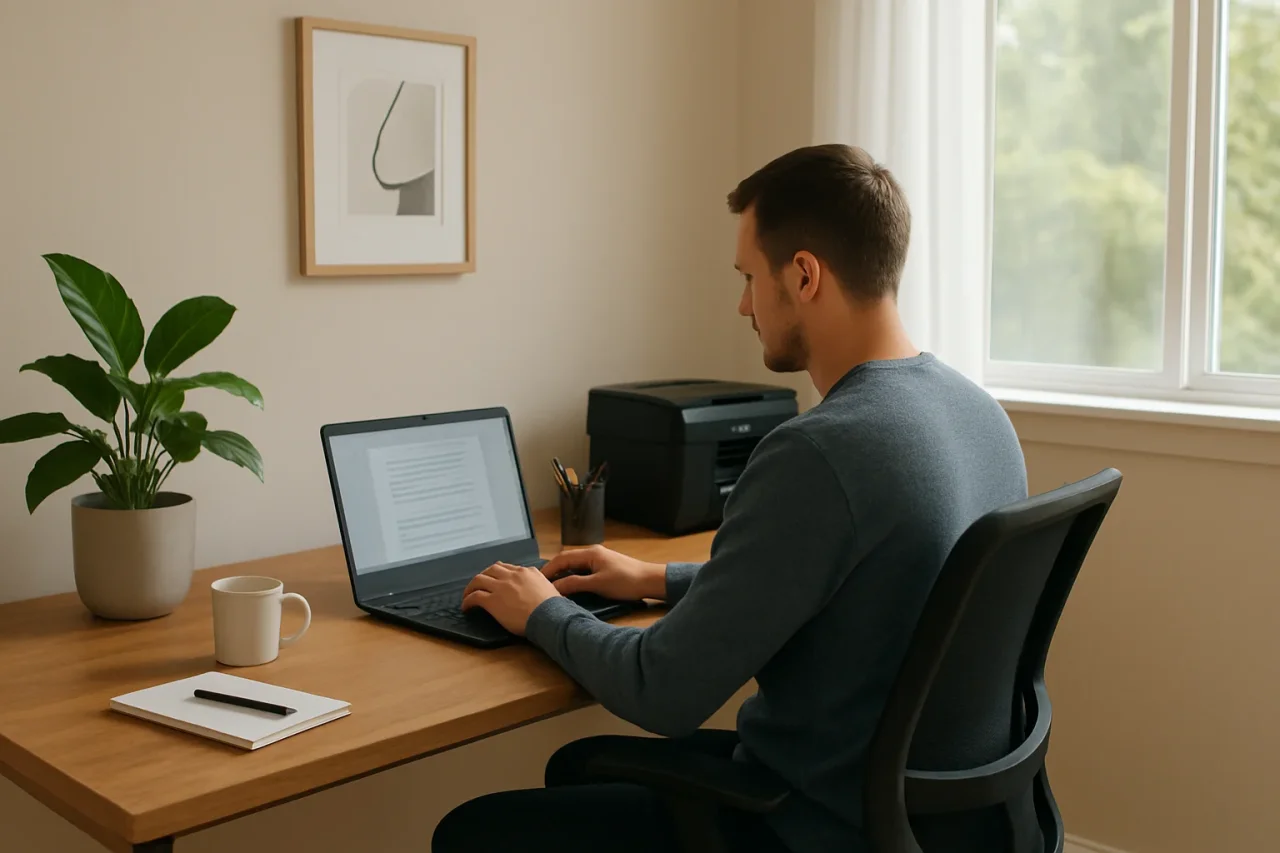
At first, the dining table seemed like a reasonable place to work. There was enough room for a laptop, the coffee machine was nearby, and getting started in the morning took almost no effort.
A few months later, the arrangement wasn't quite so appealing.
There were the cables to move before dinner, the afternoon sunlight reflecting off the screen, and the awkward business of finding somewhere quiet whenever an important call came up. Nothing particularly terrible. Just a collection of small irritations that made working from home more tiring than expected. For people who spend most of their week working remotely, those inconveniences are becoming harder to overlook. And they're changing how people think about the space they live in.
A dedicated home office isn't necessarily a luxury anymore. For some professionals, it's simply a practical response to years of making do.
When a Temporary Setup Becomes a Daily Problem
Most homes weren't designed with a full workweek in mind.
The spare bedroom might double as storage. The dining table already has a job. And the quietest corner of the house may be nowhere near an electrical outlet. You can work around these things, of course. People do it every day. But there's a difference between managing an inconvenience occasionally and dealing with it forty hours a week.
Take something as ordinary as packing away a laptop. It takes a minute or two, perhaps a little longer if you're using an external monitor. Hardly worth complaining about. Yet dismantling your workspace every evening means you never quite feel settled.
That's one reason a dedicated office starts looking attractive. You can leave a document open, keep your notes nearby, and return the following morning without having to recreate yesterday's setup.
It's a small kind of relief, but a welcome one.
The Value of Having Somewhere Quiet
Anyone who's tried to concentrate in a busy household knows how strange interruptions can be. You might have an entire hour without anyone speaking to you. Then, just as you're working through something difficult, three things happen at once.
Someone needs an answer. A delivery arrives. The washing machine finishes its cycle. None of it is a crisis, and that's almost what makes it frustrating. These are normal parts of living in a home. The problem is that concentration doesn't always return the moment the noise stops.
For people writing reports, reviewing financial information, designing projects, or handling detailed tasks, interruptions can make even straightforward work feel unnecessarily demanding. Having a room where you can close the door helps.
Not because it creates perfect silence. Most homes aren't built for that. But it gives you a little control over when you're available and when you need to be left alone.
And that control can be surprisingly valuable on a busy day.
Comfort Becomes Harder to Ignore
There's a point when you stop pretending the dining chair is comfortable.
Perhaps it happens after a long afternoon of video meetings. You stand up, stretch your back, and wonder why you've put up with the same arrangement for so long. You might not even need an entirely new desk. Sometimes the bigger problem is a screen sitting too low or a chair that doesn't support you properly.
Working from home gives people more freedom over their surroundings, but it also means they're responsible for making those surroundings usable.
That includes the less interesting details.
Is there enough room to move your legs beneath the desk? Does sunlight make the monitor difficult to see? Can you reach the things you use regularly without twisting around in your chair? These aren't particularly exciting renovation questions, but they're worth considering.
A comfortable workspace isn't always the one with the nicest furniture. Often, it's the one where you can get through an ordinary Tuesday without constantly having to adjust something.
Leaving Work Behind Without Leaving Home
One evening, you sit down to watch television and notice your laptop on the coffee table.
You remember an email you meant to answer. It should only take a minute, so you open the laptop. Half an hour later, you're still working.
This is one of the awkward parts of having your workplace inside your home. There's no journey back from the office, no physical change of surroundings to mark the end of the day. Work can gradually spread into spaces where it doesn't belong.
A dedicated office gives those responsibilities somewhere to stay.
You can finish a task, shut down the computer, and leave the room without having to look at everything you haven't completed. That doesn't mean you'll suddenly stop thinking about work after hours. Most people have had difficult days that follow them home, even when they work in a traditional office.
Still, there's something reassuring about not having your unfinished projects sitting beside the dinner plates. For households with children or multiple people working remotely, a separate room may also make it easier to establish a routine everyone understands.
When Setting Up an Office Turns Into a Renovation
Not everyone can turn an unused bedroom into a comfortable office over the weekend.
Some rooms need more work than a new coat of paint. An unfinished basement may have poor lighting and limited ventilation. An older room might not have enough outlets for computers and other equipment. In a shared home, sound insulation could be more useful than expensive furniture.
And once contractors become involved, the cost can climb quickly. It's easy to start with a fairly modest idea and gradually add things. Better flooring would be nice. Perhaps some built-in shelves. Maybe another window, if the layout allows it.
Before long, the project looks quite different from the one you originally imagined.
This is where careful budgeting matters.
Some homeowners use savings or complete renovations gradually. Others explore borrowing options when they have substantial improvements in mind.
For example, homeowners considering online home renovation planning can evaluate the scope of a larger home office project, including materials, timelines, and potential improvements. Careful planning can help homeowners make informed decisions before beginning renovations.
And sometimes, after working through the costs, a smaller renovation turns out to be the more sensible choice.
There's no point building a beautiful office if paying for it becomes a constant source of worry.
Getting the Technology Right Without Going Overboard
There's a particular embarrassment in having your video freeze while you're explaining something important. You continue speaking for several seconds, unaware that everyone else is staring at a motionless version of your face. Then the connection returns, and you have to start again.
It happens.
But when unreliable equipment becomes a regular problem, it can affect how smoothly the working day goes. That's why some remote professionals are investing in better internet connections, extra monitors, microphones, and lighting.
The most useful purchases solve an existing problem.
If you spend hours comparing documents, a second monitor might be worth having. If you're constantly on calls, a good headset can make a difference. If your wireless connection struggles in your office, improving network coverage may matter more than buying another accessory.
Not every desk needs three screens and a collection of expensive gadgets. In fact, adding more equipment than you need can make a small room feel cramped. A sensible setup should match the work you're actually doing.
Making Room for a Little Personality
Home offices look different in photographs than they do during a working week. The photographs show tidy shelves, beautiful lamps, and desks with almost nothing on them.
Real desks collect things.
A coffee cup from the morning. A receipt you meant to throw away. A notebook filled with half-finished thoughts. The charger that never seems to stay where you put it. None of that means the office isn't working.
You know, a room can be organized without looking like nobody uses it.
Some people concentrate best with clear surfaces and very little decoration. Others like having books, photographs, or plants nearby. A familiar view through the window might matter more than the wall color. Personally, or perhaps more accurately, practically speaking, the best approach is the one that suits your habits.
If you love reading printed documents, make room for them. If you spend most of your time on video calls, think about lighting and what appears behind you.
The aim isn't to copy a room you saw online.
It's to make a place you won't mind returning to tomorrow morning.
Designing for a Future That Might Look Different
A home office can feel like a permanent necessity when you're working remotely every day.
But jobs change, and so do households. You might eventually return to an office a few days a week. A family member might need the room to study. Or perhaps you'll find a completely different use for the space.
It's worth keeping that possibility in mind, particularly before making expensive changes. A movable desk, adjustable shelving, and general-purpose lighting make a room easier to repurpose later. A highly specialized layout might be perfect for your current job but awkward for anything else.
There's also the question of resale value.
An attractive, functional room could appeal to buyers who work remotely or need an additional study. But that doesn't mean every improvement will increase the property's selling price by the amount spent.
Housing markets vary, and buyers have their own priorities.
It's usually more sensible to renovate because a room will improve your daily life, rather than counting on a future buyer to pay for it.
A Place That Makes the Working Day Feel More Manageable
The appeal of a dedicated home office is easy to understand once you've spent enough time working without one.
It's not really about having a beautiful desk or an impressive background for video meetings.
It's about knowing where your work belongs.
You don't have to hunt for your charger every morning. You can take a call without asking everyone else to be quiet. And when the day ends, you have somewhere to leave your laptop rather than carry it into the evening. Some people will get there by renovating an entire room. Others may only need to rearrange the furniture, invest in a decent chair, or make better use of an overlooked corner.
The amount spent isn't what makes the difference. What matters is whether the space removes a few of the everyday frustrations that have quietly become part of working from home. A good home office won't make every day easy. But it can make the ordinary ones a little better.
Comments
Comments are available to signed-in users and are moderated to keep the discussion useful and respectful. Spam, automated submissions, and low-value promotional comments are removed. Outbound links may be approved when they are relevant and genuinely helpful to readers, but they are displayed as plain text rather than clickable hyperlinks.
No comments have been published yet.
Please sign in to submit a comment.