

Crypto & Blockchain, Ecommerce, Finance
Why Global Merchants Need Borders-Free Checkout in 2026
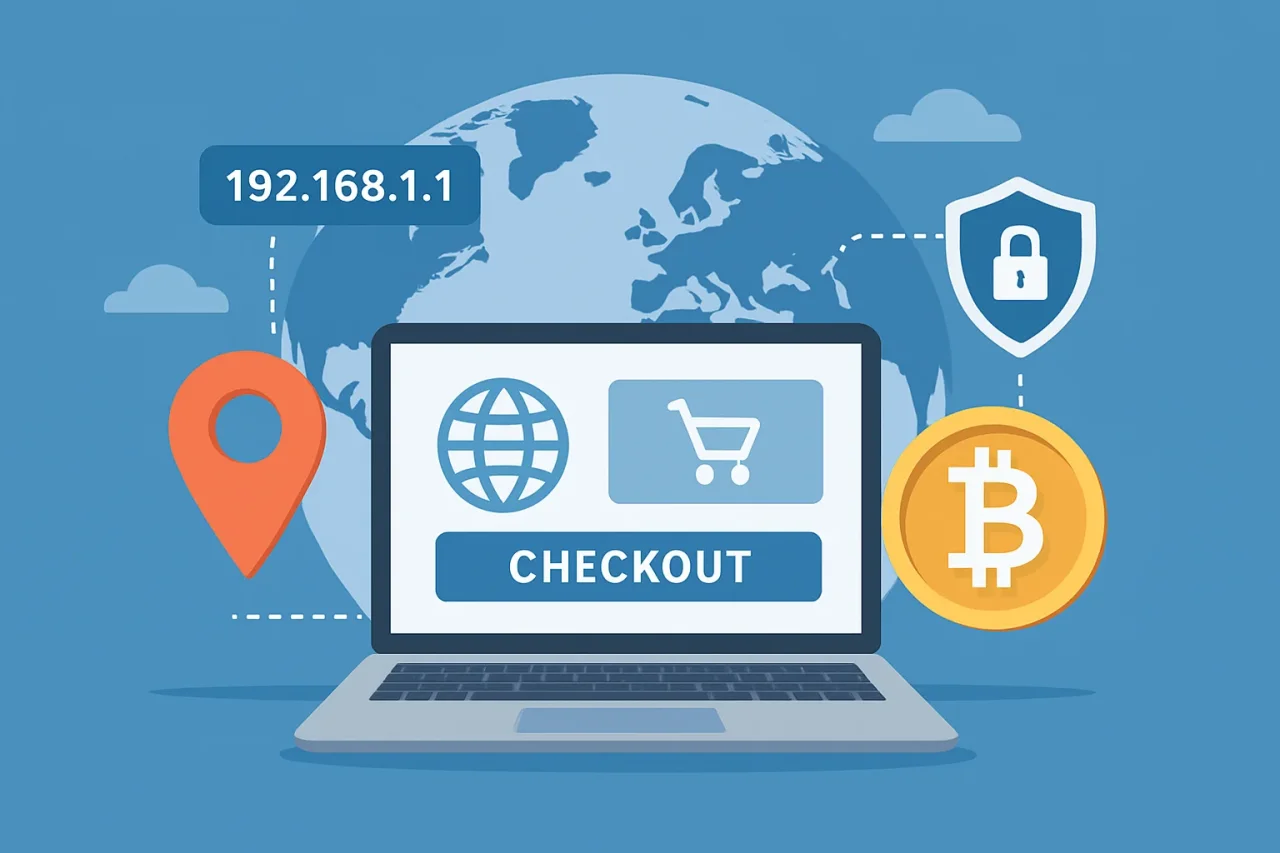
A shopper in Lagos wants a product sold from Warsaw. The card gets declined. Not because of fraud — because the bank simply doesn't recognize the corridor. Multiply that by thousands of failed transactions daily, and you get a picture of why checkout localization stopped being optional. This piece looks at what's actually changing in cross-border payments, who's pushing it, and where the friction still hides.
The Decline Problem Nobody Talks About
Here's a number that should bother every merchant running international sales: cross-border card declines run significantly higher than domestic ones. Some processors report rates north of 30% for certain corridors — Southeast Asia to Europe, for instance, or Latin America to North America. The card itself is fine. The cardholder has money. The bank's fraud model just doesn't trust the geography.
This is where alternative rails earn their keep. An Ecommerce Crypto Payment Solution sidesteps the correspondent banking maze entirely — no SWIFT delays, no currency conversion roulette, no bank in the middle deciding whether your customer "looks right." Money moves peer to peer, settlement happens in minutes rather than days, and the merchant actually gets the sale instead of watching it vanish into a decline screen.
Should every merchant rip out their existing payment stack tomorrow? No. But ignoring the option entirely, in 2026, looks increasingly stubborn.
Why "One Checkout Fits All" Stopped Working
Picture two customers buying the same sneakers. One's in Munich, paying with a SEPA transfer because that's just how Germans shop online. The other's in Manila, and if GCash isn't on the page, they're gone — not annoyed, just gone, tab closed, three seconds flat.
That's the blunt truth behind localized checkout. It's not about flags and currency symbols for decoration. It's about matching payment behavior that's already baked into a market. A few patterns worth knowing:
- Brazil: Pix dominates, full stop. Card-only checkout leaves real money on the table.
- India: UPI handles the volume that cards used to.
- Germany and the Netherlands: bank transfers and direct debit still beat cards for trust.
- Nigeria and Kenya: mobile money (M-Pesa, bank apps) outpaces traditional cards by a wide margin.
- Southeast Asia broadly: e-wallets like GrabPay and GCash are the default, not the alternative.
Merchants who treat checkout as one-size-fits-all are, functionally, choosing to lose a chunk of every market they enter. Harsh? Maybe. Accurate? Also yes.
What "Borders-Free" Actually Means
Let's define it properly, because the term gets thrown around loosely. Border-free checkout isn't a single piece of software. It's an approach — stitching together local payment methods, multi-currency pricing, smart routing, and fraud logic that adapts per region instead of applying one blunt ruleset globally.
Three components tend to matter most:
- Method coverage. Cards, bank transfers, wallets, and increasingly stablecoin rails, all available without forcing the customer to convert mentally between currencies.
- Settlement speed. Nobody wants a refund to sit in limbo for 9 business days because two banks in different countries need to "confirm."
- Compliance that doesn't choke conversion. KYC and AML checks matter — they're not optional; regulators are watching more closely than ever — but they need to run in the background, not as a five-minute form before checkout.
The Regulatory Backdrop — Why 2026 Specifically
A fair question: why now? A few threads converged.
The EU's MiCA framework, fully in force since the back half of 2024, gave crypto-asset service providers actual legal clarity across the bloc — something the industry had been begging for since roughly forever. That clarity didn't kill adoption; it accelerated it because businesses finally had rules they could plan around rather than guessing.
Meanwhile, central banks kept pushing their own digital currency pilots — China's e-CNY, the digital euro exploration, Nigeria's eNaira — each one quietly normalizing the idea that money doesn't have to be a physical note or a single bank's ledger entry. Customers got used to digital-first money faster than most predicted.
And stablecoins? Tether and USDC volumes have at times rivaled those of traditional payment networks in raw transaction throughput. That's not a niche anymore. That's infrastructure.
Where Merchants Actually Lose Money
Let's get concrete, because vague statements about "friction" help no one.
A mid-sized merchant shipping to twelve countries typically deals with: currency conversion fees eating 2-4% per transaction, chargeback rates that climb when customers don't recognize the billing descriptor, and settlement delays that tie up working capital for days at a time. Stack those three together, and the cost isn't abstract — it's a measurable chunk of margin, gone before the product even ships.
Smaller operators feel it worse. A boutique selling handmade goods from Bali to customers in Australia and the US doesn't have the volume to absorb a 4% currency hit on every sale. That's rent money. That's real.
The Practical Fix Isn't Glamorous
So what actually helps? Not magic. Mostly boring, structural choices:
- Local acquiring partnerships instead of routing everything through one global processor that charges a premium for "convenience."
- Dynamic currency display — showing prices in the customer's home currency, calculated at checkout, not buried in a converter link.
- Multiple settlement options for the merchant — some businesses want fiat in their bank account, others are increasingly comfortable holding a portion in stablecoins to skip conversion fees altogether when paying suppliers abroad.
That last point connects to a broader industry shift worth following — analysts tracking this space have documented in detail how Crypto Payment Solutions are Reshaping the Ecommerce Industry, particularly around settlement speed and the shrinking role of intermediary banks in cross-border B2B flows. Worth a read if you're weighing whether this applies to your business model specifically.
What This Doesn't Solve
Fair to be skeptical here. Crypto and alternative rails don't erase volatility risk, tax reporting complexity, or the fact that some customers — plenty, actually — still prefer the familiar comfort of a Visa logo at checkout. Regulatory treatment also still varies wildly country to country; what's compliant in Lithuania isn't automatically fine in Indonesia.
This isn't a call to abandon cards. It's a case for optionality. Give the customer the rail they already trust in the market they're shopping from, and let the backend handle efficiency.
So What Should Merchants Actually Do
A few sober, unglamorous steps:
- Audit decline rates by country. The data usually surprises people.
- Talk to a payments provider that actually specializes in the regions you're expanding into — not a generalist reseller.
- Pilot one alternative method in one market before going global with it. Small test, real data, then decide.
- Keep compliance counsel in the loop from day one, not as an afterthought once volume picks up.
None of this is financial or legal advice — every market has its own regulatory quirks, and what works for one merchant's risk profile won't automatically fit another's. Treat this as a starting map, not a finished route.
The Bottom Line
Borders-free checkout in 2026 isn't a buzzword chasing relevance. It's a response to a genuinely measurable problem: customers abandoning carts because the payment options on screen don't match how they actually pay for things in their own country. Fix that mismatch, and the upside isn't theoretical — it shows up directly in conversion numbers.
Will every merchant need every rail, every wallet, every regional quirk covered? Probably not. But knowing where the gaps are and choosing deliberately instead of defaulting to whatever the first payment provider offered five years ago — that's the difference between growing into new markets and just listing prices there and hoping.
Comments
Comments are available to signed-in users and are moderated to keep the discussion useful and respectful. Spam, automated submissions, and low-value promotional comments are removed. Outbound links may be approved when they are relevant and genuinely helpful to readers, but they are displayed as plain text rather than clickable hyperlinks.
No comments have been published yet.
Please sign in to submit a comment.