

Internet of Things, Privacy, Security
What Your Smart Appliances Know About You — and Who They Tell
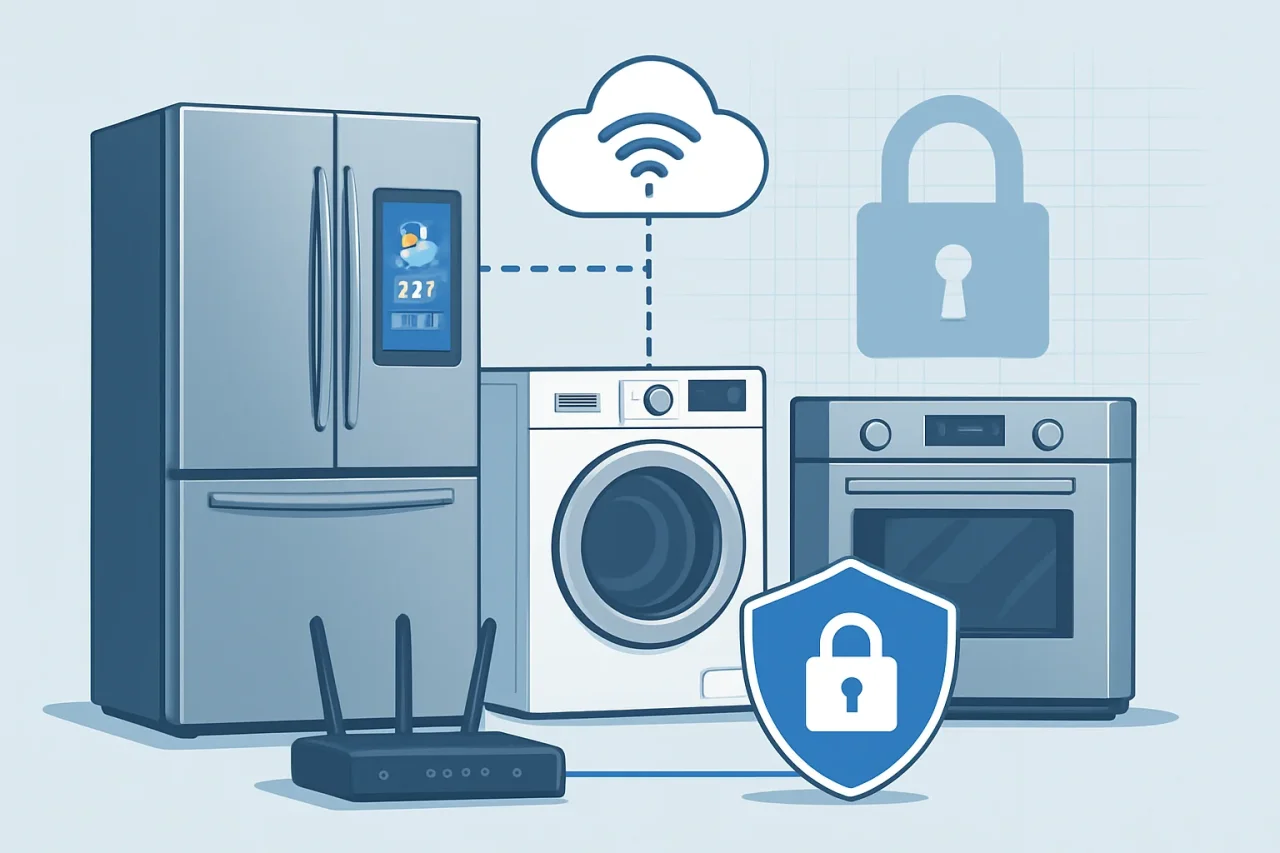
Ask someone to list the devices in their home that collect personal data, and they will name the obvious ones: the phone, the laptop, the smart speaker, maybe the doorbell camera. Almost nobody names the refrigerator. Yet the modern connected kitchen and laundry room have quietly become one of the most detailed behavioral sensors in the house and one of the least scrutinized.
The telemetry you never read about
A current-generation smart refrigerator reports far more than its temperature. Depending on the brand, it logs door-open events with timestamps, compressor runtime, water-filter usage, interior camera snapshots, and in some models voice-assistant queries made in the kitchen. Washers and dryers report cycle types, load frequency, detergent-dispenser levels, and error events. Ovens log preheat times and cooking modes. Individually, these look like harmless maintenance data. Aggregated, they reconstruct a household's daily rhythm with unsettling precision: when you wake, when you leave, when you return, when you travel, how many people are probably home.
That inference is not hypothetical. Door-open frequency alone distinguishes a family of five from a single occupant. A two-week gap in laundry cycles announces a vacation more reliably than a social media post. Utility-facing "demand response" programs already use appliance-level consumption curves to model occupancy, and the same curves are visible to any manufacturer cloud the appliance phones home to.
Where the data actually goes
Every major appliance manufacturer now operates its own cloud platform, and the connected appliance ships with an end-user agreement most buyers accept inside a mobile app without reading. Three destinations deserve attention:
- The manufacturer's analytics stack: Usage and diagnostic data feed product development and, in several publicly documented cases, marketing partnerships. Consumer groups have repeatedly flagged how vague the "we may share with partners" clauses are in smart-home agreements; the Mozilla Foundation's Privacy Not Included project is the rare resource that grades specific appliance brands on exactly this.
- Third-party voice and platform integrations: Once an appliance is linked to a smart-home ecosystem, event data flows under that platform's privacy policy, not the manufacturer's.
- Whoever inherits the account: Appliances outlive owners' attention spans. A refrigerator sold second-hand, or left behind in a home sale, frequently remains bound to the previous owner's account — still reporting, still holding Wi-Fi credentials.
The service-industry view
Interestingly, some of the most practical privacy advice comes not only from security researchers but also from the people who physically work on these machines. Appliance repair technicians, including those working with connected appliances at FiXiFY Appliance Repair, may encounter devices that have never been claimed in an app at all — the owner skipped setup, and the appliance simply broadcasts an open pairing network indefinitely. A practical checklist for users is straightforward: claim the appliance or disable its radio; put IoT appliances on a separate guest VLAN, not the primary home network; and factory-reset any connected unit before selling a home or hauling a machine to the curb, exactly as you would wipe a laptop.
That last point is the one almost everyone misses. An appliance is a computer with a compressor attached. It stores network credentials, account tokens, and behavioral history, and it deserves the same end-of-life hygiene.
A reasonable defense posture
None of this argues for refusing connected appliances — remote diagnostics genuinely shorten repair visits, and early-warning error codes prevent expensive failures. It argues for treating the kitchen like the endpoint it is:
- Segment the network: A dedicated IoT VLAN or guest SSID limits what a compromised appliance can reach.
- Audit the app permissions: Location access for a dishwasher app exists for retailer geofencing, not for washing dishes. Deny it.
- Review data-sharing toggles annually: Manufacturers add new "experience improvement" defaults with firmware updates.
- Wipe before you part ways: Factory-reset appliances on sale, disposal, or move-out.
The refrigerator will keep humming either way. The only question is how much of your household's story it narrates while it does and to whom.
Comments
Comments are available to signed-in users and are moderated to keep the discussion useful and respectful. Spam, automated submissions, and low-value promotional comments are removed. Outbound links may be approved when they are relevant and genuinely helpful to readers, but they are displayed as plain text rather than clickable hyperlinks.
No comments have been published yet.
Please sign in to submit a comment.