

IP Address, Geolocation, Artificial Intelligence
What Your IP Address Reveals in a World Run by AI Answers
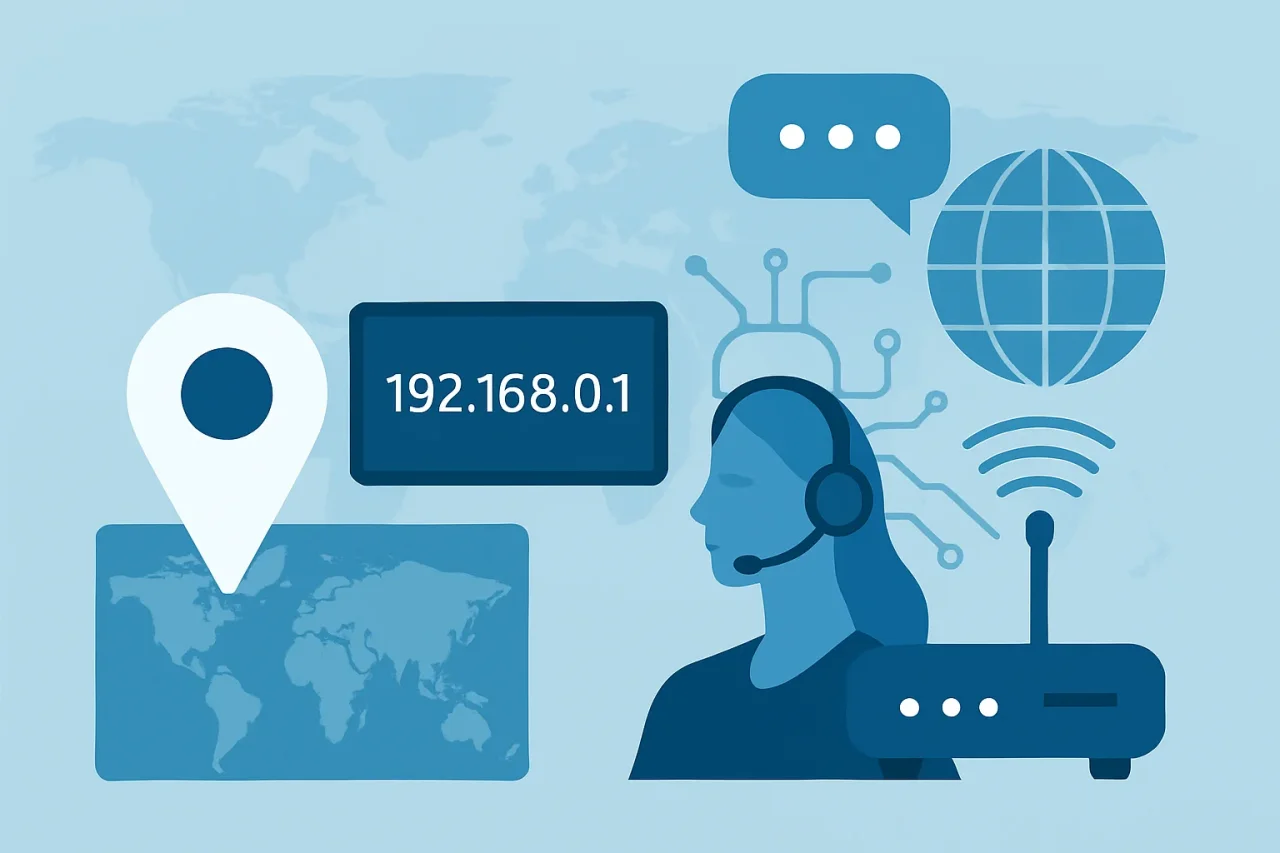
For years, the story of the internet was mostly about search boxes. You typed a question, scrolled through ten blue links, and picked one. Behind the scenes, your IP address quietly did a lot of the heavy lifting: it told sites roughly where you were, which language to serve, whether to show prices in dollars or euros, and sometimes whether to let you in at all. That plumbing hasn't gone anywhere. What's changed is the front door.
More and more people now skip the search box entirely. They ask a chatbot. They talk to a voice assistant. They read an AI-generated summary at the top of the results page and never click through to a single site. The question "where does my traffic come from?" used to have a tidy answer rooted in referrers and IP ranges. Now a growing slice of that traffic doesn't announce itself the old way at all, because the human on the other end got their answer before they ever reached you.
This matters for anyone who cares about who sees their content, and it starts with something as basic as location.
Location data still decides what you see
Your IP address is the closest thing the internet has to a return address. It doesn't spell out your street, but it usually pins you to a city or region, and that's enough for a surprising amount of decision-making. Content delivery networks use it to serve you files from a nearby server so pages load faster. Streaming platforms use it to enforce licensing rules. Fraud teams use it to spot a login coming from a country the account has never touched before.
None of that disappears in an AI-driven web. If anything, it gets more important, because the systems generating answers still need to know who they're talking to. An AI assistant recommending a plumber, a bank, or a takeaway is making a local decision, and location signals, IP among them, feed that. The difference is that you, the business owner, no longer see the person arrive. The recommendation happens inside a model you don't control.
The blind spot nobody budgeted for
Here's the uncomfortable part. If a chatbot tells someone "the best option in your area is X," and you're not X, you may never know the conversation happened. There's no click. No referrer. No line in your analytics. The old dashboards were built to measure visits, and a growing share of buying decisions now happens before the visit, or instead of it.
Companies are starting to treat this as its own discipline. Just as they once obsessed over where they ranked on page one, they now want to know how often an AI model names them, describes them accurately, and points people their way. That's exactly the gap an AI visibility tool is built to close: it checks how large language models actually talk about a brand, product, or website across the assistants people use every day, and flags when the answer is wrong, outdated, or simply missing your name entirely.
It's a strange feeling the first time you run one. You discover the internet has been describing your business to strangers, in a tone you never approved, using facts that may be two years stale.
Why the two worlds connect
You might wonder what any of this has to do with IP addresses. The link is that both are about presence: being findable, being placed correctly, being served to the right person in the right context.
An accurate location signal makes sure a real visitor gets the right version of your site. Accurate AI visibility makes sure the model recommending you tells the truth. Get one wrong and a customer lands on a page priced for the wrong country. Get the other wrong, and they never land at all, because the assistant sent them somewhere else. Both are quiet failures. Neither shows up as an error message.
The practical takeaway is to stop assuming your analytics see the whole picture. Traditional tools measure the traffic that reaches you. They can't measure the conversations that ended before you were mentioned. Checking your IP-based location handling and checking your AI presence are two halves of the same job: making sure the internet represents you correctly, whether a human or a machine is doing the representing.
Where to start
You don't need to reorganize everything. Confirm that your site reads location signals sensibly and doesn't lock out or mis-serve legitimate visitors. Then go and actually ask a few AI assistants about your own business and read what comes back. If it's wrong, that's your to-do list.
The web didn't stop caring about who you are and where you're coming from. It just added a second layer, one that talks back, and one worth listening to.
Conclusion
As AI assistants become a common way for people to discover businesses and information, understanding online visibility requires looking beyond traditional website analytics. IP-based location data continues to support content delivery, security, and regional experiences, while AI-generated recommendations increasingly influence whether users reach a website in the first place. Monitoring both location accuracy and AI visibility helps organizations better understand how they are presented across today's evolving web and identify opportunities to improve their digital presence.
Comments
Comments are available to signed-in users and are moderated to keep the discussion useful and respectful. Spam, automated submissions, and low-value promotional comments are removed. Outbound links may be approved when they are relevant and genuinely helpful to readers, but they are displayed as plain text rather than clickable hyperlinks.
No comments have been published yet.
Please sign in to submit a comment.